How to Tighten a Toilet Base Without Cracking the Bowl
Tighten the closet bolts under the toilet base until the bowl stops rocking, then stop. If the floor is uneven, add shims before the final snugging. If the base still moves, leaks, or the bolts bottom out, the wax ring or flange needs repair. Missing that split can crack the toilet, damage the floor, and turn a small leak into costly rot. This guide shows how to tell which fix you need and how to do it without making the problem worse.
What you’ll need
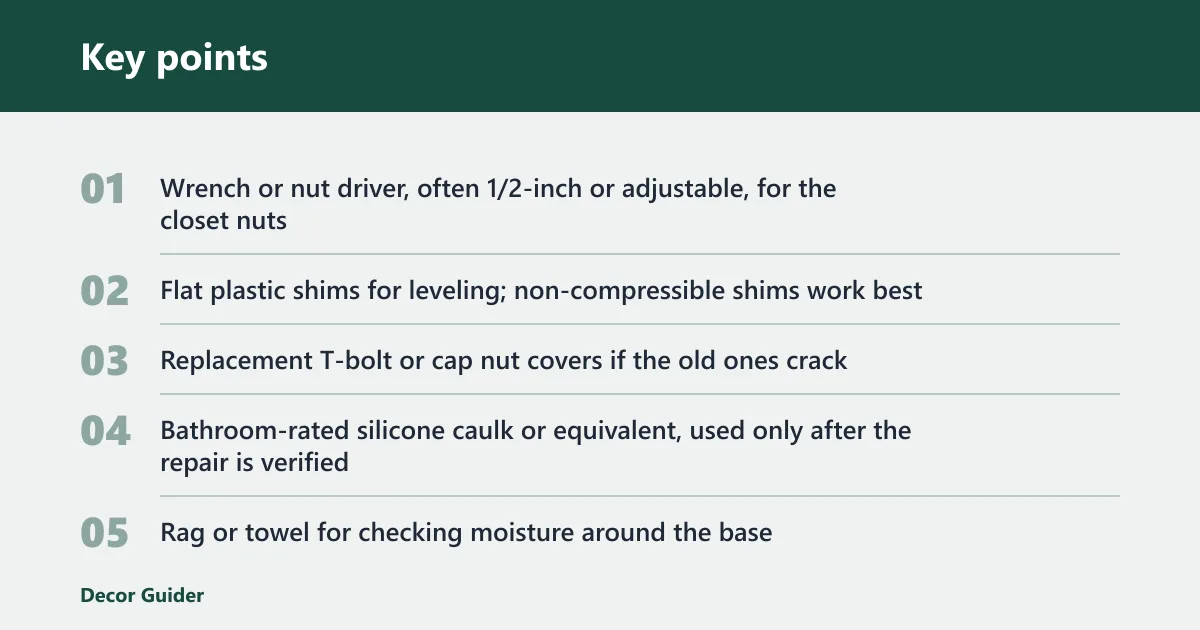
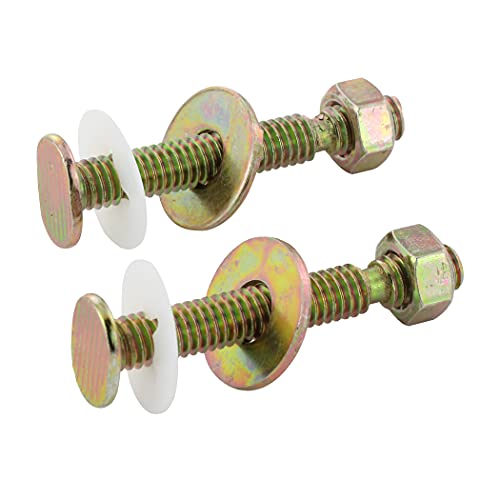


- Wrench or nut driver, often 1/2-inch or adjustable, for the closet nuts
- Flat plastic shims for leveling; non-compressible shims work best
- Replacement T-bolt or cap nut covers if the old ones crack
- Bathroom-rated silicone caulk or equivalent, used only after the repair is verified
- Rag or towel for checking moisture around the base
- Bucket or sponge if you need to remove residual water
Toilet base troubleshooting table
| Symptom | Likely cause | Safe DIY fix | Stop-and-call-plumber trigger |
|---|---|---|---|
| Base rocks, but no leak yet | Loose closet bolts, uneven floor, or compressed wax ring | Tighten evenly, then shim the low side before final snugging | It still rocks after shimming, or the floor feels soft |
| Bolts spin freely | Stripped hardware, damaged flange, or bolts not engaging the flange slots | Remove the caps, inspect alignment, and replace rusted hardware if accessible | Bolts never clamp down, or the flange is cracked or loose |
| Leak appears only after flushing | Wax ring failure or a flange that is not level and secure | Recheck bolt tension and leak-test after several flushes | Leak returns after tightening, or water appears at the floor edge |
| Water shows at the floor edge | Failed seal at the wax ring, cracked flange, or subfloor damage | Stop tightening and inspect for movement at the base and floor | Any visible floor rot, flange damage, or persistent seepage |
| Tank moves, but base does not | Tank-to-bowl bolts, not closet bolts | Check the tank bolts separately; do not force the base nuts | Cracks, leaks, or porcelain strain around the tank |
How do you tighten a toilet base?
Tighten the closet bolts under the bowl until the base stops rocking, then stop. If the toilet still moves after a few even turns, the problem is usually shimming, a failed wax ring, or a flange issue, not more force on the nuts.
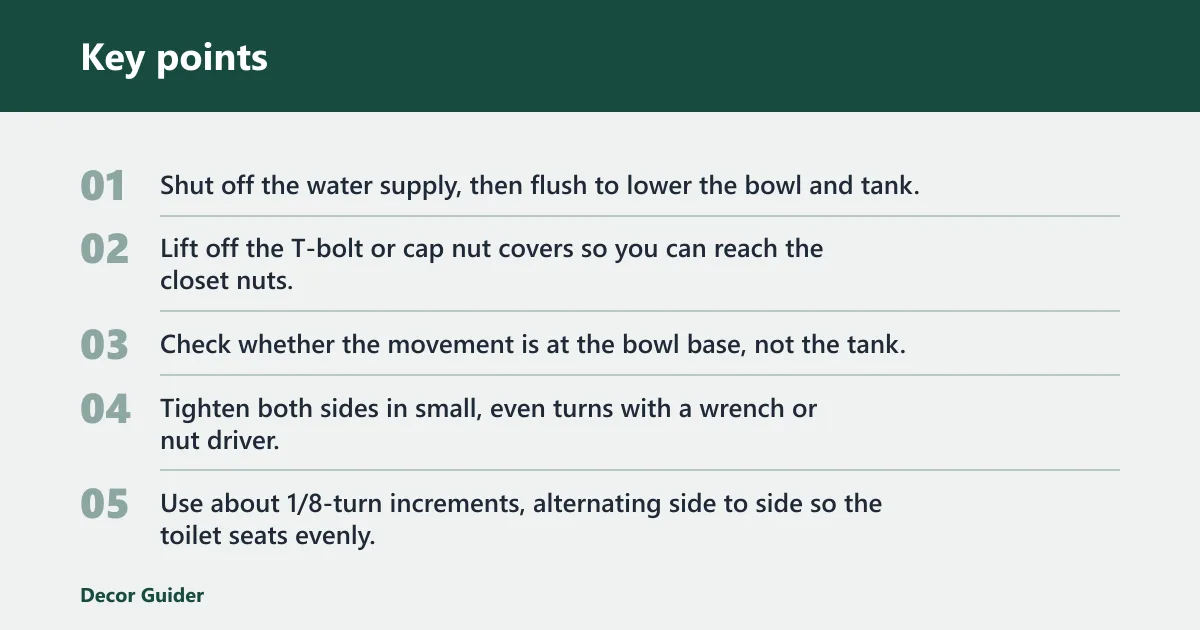
- Shut off the water supply, then flush to lower the bowl and tank.
- Lift off the T-bolt or cap nut covers so you can reach the closet nuts.
- Check whether the movement is at the bowl base, not the tank. Tank wobble uses different fasteners.
- Tighten both sides in small, even turns with a wrench or nut driver.
- Use about 1/8-turn increments, alternating side to side so the toilet seats evenly.
- If the base rocks on one side, slide a plastic shim at the low spot before the final snugging.
- Trim any exposed shim flush, then recheck that the bowl sits flat.
What is toilet flange bolt spacing?
Standard closet bolts are typically set about 5.5 inches center to center on a standard toilet rough-in, while the rough-in itself is usually about 12 inches from the wall. Measure from bolt center to bolt center, not edge to edge. If the spacing is off, the bolts can spin, the bowl may not clamp down, or a damaged slot can prevent a tight seat.
What if the bolts bottom out?
If the nut reaches the end of its threads before the bowl tightens, the bolt may be too long, the flange may sit low, or the hardware may be stripped. Stop there. Forcing it can crack the porcelain or break the bolt. A low flange or damaged hardware often needs replacement parts, not more torque.
How do you fix a toilet base leak?
A leak at the base usually needs a seal check, not just more tightening. If the toilet rocks or the leak returns after snugging the bolts, replace the wax ring and inspect the flange. If water appears only after flushing, the seal is failing under load. Flange height also matters: the flange should sit at or near finished floor level so the toilet can clamp and seal correctly. What should the height of my toilet flange be?
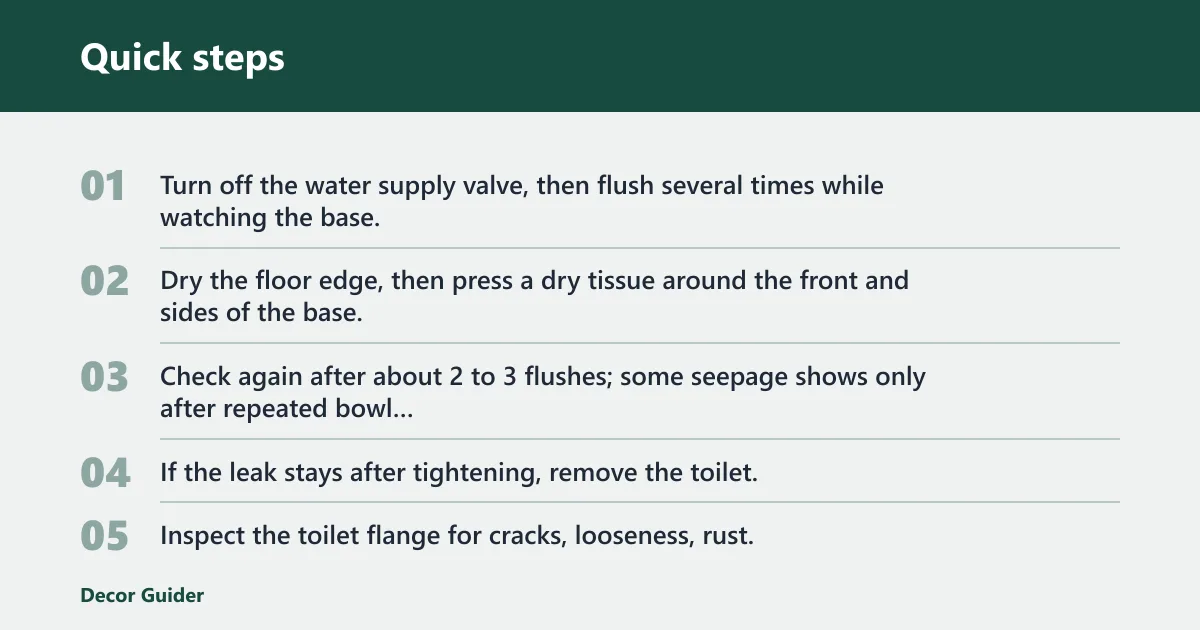
- Turn off the water supply valve, then flush several times while watching the base.
- Dry the floor edge, then press a dry tissue around the front and sides of the base.
- Check again after about 2 to 3 flushes; some seepage shows only after repeated bowl loading.
- If the leak stays after tightening, remove the toilet. Lift it straight up, set it aside, scrape off the old wax ring, place a new wax ring on the flange or toilet horn, and reset the toilet carefully onto the bolts.
- Inspect the toilet flange for cracks, looseness, rust, or a height that sits below the finished floor.
- Reset the toilet on a sound flange, then re-tighten the closet bolts evenly.
How should the flange look?
The toilet flange is the floor-mounted drain connector that holds the closet bolts. It should be level, secure, and firmly attached to the floor. Flanges may be PVC, ABS, or cast iron. If the bolt slots are damaged or the ring moves, the toilet cannot seal and clamp correctly.
Suppose the bolts tighten, but the bowl still rocks and a damp line appears at the back after flushing. That pattern fits a compressed wax ring more than a loose cap cover. In that case, shims alone are not enough; the toilet usually needs to be pulled and reset. Most wax-ring repairs also require a fresh seal rather than reusing the old one, and overtightening after the fact can distort the seal instead of fixing it. How to fix a leaking toilet base
When should you stop and call a plumber?
Stop if the bolts spin without tightening, the flange is damaged, or the toilet still rocks after shimming and tightening. Those signs point to a flange, subfloor, or seal problem that a simple bolt adjustment will not fix safely.
- Stop if the closet bolts spin freely or the nuts never clamp down.
- Stop if the flange is cracked, loose, rusted through, or below floor level and you cannot correct it with an extender or reset hardware.
- Stop if water appears at the floor edge after flushing, even once.
- Stop if the base still rocks after plastic shims and even tightening.
- Stop if the porcelain strains, creaks, or shows any crack line.
Common mistakes
Do not confuse tank bolts with closet bolts. Tank bolts hold the tank to the bowl; closet bolts anchor the toilet to the flange. Tightening the wrong fasteners wastes time and can leave the base loose.
Do not force rusty hardware. T-bolt or cap nut covers can crack if pried hard, and stripped bolts may need replacement instead of more torque. Do not caulk before leak checks are complete, because it can hide the very seepage you need to see. Caulk should be applied only after the toilet is dry and the base has passed a leak test.
Do not seal over a rocking toilet. Movement breaks the wax ring again. If the floor is uneven, use non-compressible plastic shims at the low spots, trim them flush, and recheck before caulking. If the flange opening or bolt slot is damaged, the toilet may never clamp down correctly until that part is repaired.
How to fix a toilet base leak without removing it
You can sometimes stop a minor seepage problem without removing the toilet if the issue is only loose bolts and the bowl sits flat once tightened. If the base still rocks, or the leak returns after a few flushes, the toilet must usually come up so the wax ring and flange can be inspected.
Frequently asked questions
How to fix a toilet base that leaks when flushed
A leak that appears only during flushing usually points to seal failure under load. Tighten the closet bolts evenly first, then test again. If water still shows at the floor edge, remove the toilet, replace the wax ring, and check that the flange is secure and level.
How to tighten toilet bolts
Remove the cap covers, then tighten the two closet bolts evenly from side to side. The usual tool is a 1/2-inch wrench or an adjustable wrench, depending on the hardware. If the threads are stripped or rusted, replace the bolts instead of forcing them.
Products related to this article
Sponsored / affiliate links. As an Amazon Associate I earn from qualifying purchases. I may earn additional commission from eligible campaigns.