
How to Fix a Bed Frame Center Support That Sags
Check whether the sag comes from the floor, center leg, slats, or mattress first. Fix only the failed part, and replace or reinforce the center support if it still drops more than about 1/4 inch under normal load. Ignoring the real cause can leave the bed uneven, shorten mattress life, and let joints fail. This guide shows how to identify the failure mode and apply the smallest repair that restores level support.
This guide is part of our Bed and Bathroom Fixes: Bed Frames, Mattresses, Toilets, Tubs and Vanities series.
How to tell what is sagging

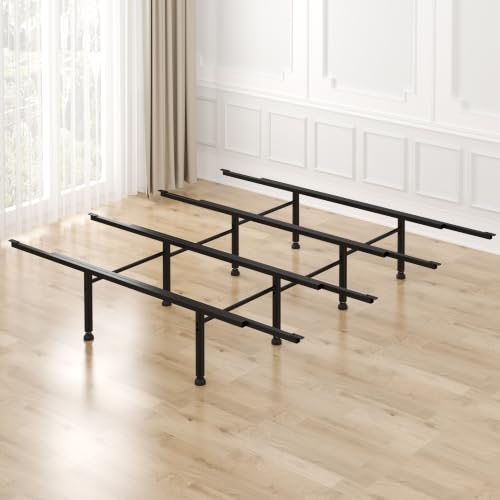

Start by separating frame sag from mattress sag. A frame problem shows up as a gap or drop at the center rail, a leg that no longer touches the floor, bent metal, loose fasteners, or slats that sit unevenly. A mattress problem shows a visible dip even when the frame measures level.
Quick checks with a level and tape measure
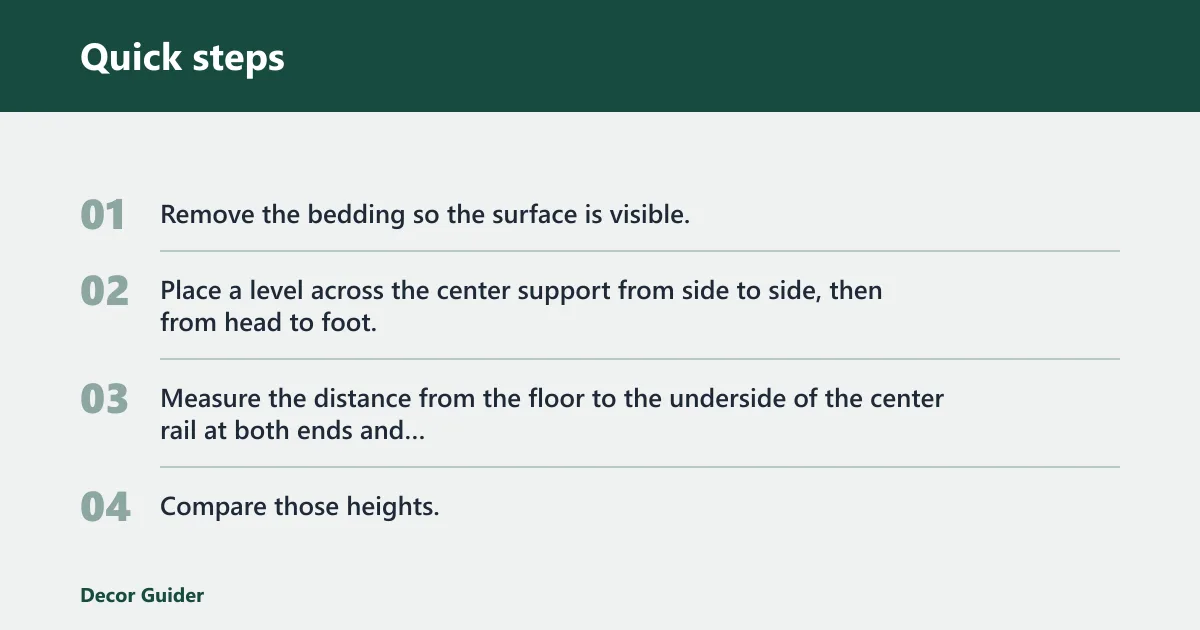
- Remove the bedding so the surface is visible.
- Place a level across the center support from side to side, then from head to foot.
- Measure the distance from the floor to the underside of the center rail at both ends and at the center.
- Compare those heights. A difference of more than about 1/4 inch may point to a support problem, floor slope, or both.
Check the floor next. If the floor slopes, the frame may be sound but still sit low on one side. A shim can help only after the frame is confirmed stable and the leg height is matched, otherwise the bed can twist.
Signs the problem is in the center support
If the mattress looks flat at the edges but dips in the middle, inspect the center rail or beam first. Look for missing feet, a bowed rail, a loose center leg, or fasteners that back out when the bed moves. Those failures usually cause a long center dip, not a broad mattress crater.
Say a queen bed has about a 1/2-inch dip at the center leg while the side rails measure level. That points to support failure, not a worn mattress. Tighten or replace the center leg first; buying a new mattress would hide the real issue.
Bed frame center support troubleshooting matrix
| Symptom | Likely cause | Quick test | Repair method | Tool needed | When to replace the frame |
|---|---|---|---|---|---|
| Center dips only when loaded | Loose fasteners or a weak center leg | Push down beside the leg; watch for movement at the joint | Tighten hardware, then reset or replace the leg | Socket wrench or Allen key, screwdriver, level | Replace if the rail stays bent or holes are stripped |
| One side sits low on the floor | Uneven flooring or a mismatched foot height | Measure floor-to-rail height at both sides | Use a matched riser or adjustable foot, then re-level | Tape measure, level | Replace if the frame twists even after height matching |
| Center leg no longer reaches the floor | Wrong replacement leg length or worn threaded foot | Measure from rail to floor with the mattress off | Fit the correct length leg and thread pitch | Tape measure, wrench, drill/driver if hardware changes | Replace if the attachment point is damaged |
| Broad sag with no frame movement | Mattress wear, not frame failure | Lay the mattress on a known flat surface | Replace the mattress or rotate if allowed by the maker | None beyond tape measure and level | Replace the frame only if support is also failing |
| Slats drop, crack, or shift | Broken, bowed, or misplaced slats; spacing too wide | Check count, spacing, and contact at each end | Replace slats or add a proper cross-support system | Screwdriver, drill/driver, tape measure | Replace if the side rails split or connectors tear out |
| Metal bed: center beam bows | Overload, thin-gauge rail, or bent beam | Measure straightness with a level along the beam | Replace the beam or the entire support assembly | Socket wrench, level | Replace if the metal remains bent after hardware reset |
| Wood bed: leg pulls away from rail | Split wood, stripped screws, or loose bracket | Inspect the joint and screw holes closely | Repair the joint or replace the leg and bracket | Screwdriver, drill/driver, wrench | Replace if the rail is cracked through |
| Platform bed: center area softens | Weak slat field or missing center support | Check slat count, spacing, and center contact | Replace damaged slats or add a matched support assembly | Tape measure, screwdriver, drill/driver | Replace if the deck or internal frame is failing |
Check the frame and hardware
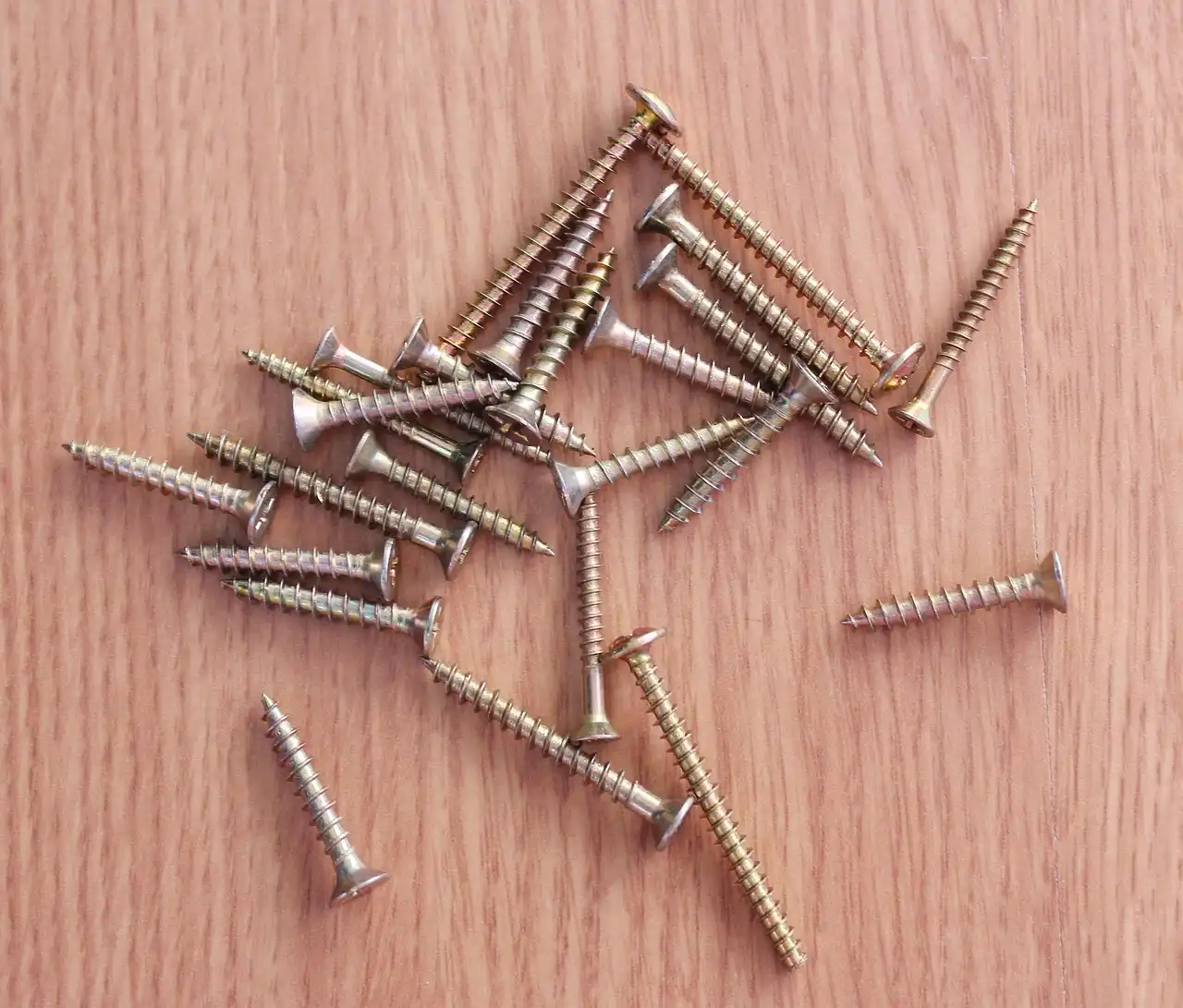
Loose hardware is the simplest failure to repair, but only after you confirm the frame is not bent or split. Start by tightening bolts, screws, and brackets. Then look for stripped threads, missing washers, cracked wood around fasteners, and bent metal at the center beam connection.
Tighten bolts, screws, and brackets
Use the correct hand tool first: socket wrench, Allen key, or screwdriver. Tighten until the joint is snug, not forced. If a bolt spins without tightening, the threads or mating hole may be stripped. Replace the fastener with the same diameter and thread pitch, not just a similar-looking part.
Missing washers matter. A washer spreads load and helps keep soft wood from crushing around the bolt head. On wood frames, over-tightening can split the rail or strip the insert. On metal frames, it can distort the bracket and lock the joint in a crooked position.
Look for bent rails and stripped threads
A bent center rail means the load-bearing spine is no longer straight. Do not shim around a bent rail as a permanent fix. If the rail bows under normal load, the frame has already crossed from a small repair into structural failure.
A common first-timer mistake is to keep tightening a loose bolt until the hole strips completely. If the fastener no longer bites, stop and match the replacement by diameter and thread pitch. When the attachment point is torn out or cracked, part swapping will not restore safe support.
Confirm the frame sits level on the floor
Measure the frame at the floor first, then under load. A level floor with an uneven frame usually points to a leg or rail problem. An uneven floor can make a good frame look bad, but the fix should match the floor height, not force the rail into a twist.
If the floor slopes, use a hardwood shim or a purpose-made support block only under a stable leg, and only as a temporary leveling aid. Match the height carefully. A shim that is too thick can twist the frame and create a new sag elsewhere.
Can you fix the center support leg?
Yes, if the leg itself is the failure point and the rail is sound. Replace a missing, bent, or short leg with the correct height and attachment type. Do not assume all support legs are interchangeable; the foot style, mounting bracket, bolt size, and thread pitch all have to match the frame.
Adjustable vs fixed legs
Adjustable legs work when you need small height corrections or floor compensation. They usually use a threaded foot or glide that turns up or down. Fixed legs are simpler and often stronger, but they must match the needed height exactly or the frame will sit low or twist.
Measure from the underside of the rail to the floor with the mattress removed. That measurement tells you the needed leg length. If the replacement leg includes a threaded foot, make sure the adjustment range covers the gap without leaving only a few threads engaged.
Choosing the right replacement foot or glide
The foot is not cosmetic. It spreads load into the floor and keeps the leg from puncturing carpet or rocking on a hard surface. Choose a foot or glide that matches the original attachment, whether that is a bolt-through bracket, a threaded insert, or a clamp-style mount.
Suppose a metal bed uses a center leg with a bolt around 5/16 inch and a threaded foot. A replacement with a different bolt size may seem close, but it can wobble or strip the bracket. Match the diameter and thread pitch exactly, then confirm the foot reaches level under load.
What to do about slats
Slats can mimic a center support problem because they carry mattress weight into the center beam or side rails. Check spacing, count, and alignment. Cracked, bowed, or misplaced slats can make the middle of the bed sink even when the center leg is intact.
Spacing and count to check
Use the original slat count if possible. Wide gaps let foam and hybrid mattresses sag between supports. Many frames need closely spaced slats; if the mattress maker calls for a specific spacing, follow that requirement to protect both support and warranty claims.
Measure the gap between slats. If the spacing is inconsistent, one area may carry too much load and bow sooner than the rest. Re-seat slats that have shifted out of their notches, and replace any that are warped or cracked.
When a support board is the right temporary fix
A support board can help when the frame is otherwise sound but the slat field is too open for the mattress type. Use plywood of suitable thickness, cut to cover the bed edge to edge, and place it on a stable slat system. Leave room for ventilation if the mattress maker requires airflow.
Do not use a board as a permanent answer for a failing frame. It can hide a bent rail, trap moisture under foam, and trigger warranty issues if the mattress maker requires open slats or airflow. Use it only as a temporary reinforcement while you repair the structure correctly.
Repair by bed type
Metal, wood, and platform beds fail in different ways. The repair should match the structure, not the symptom alone. A center leg that works on one frame may be wrong for another because the attachment points, load paths, and slat support details are different.
Metal bed frames
Metal frames most often fail at bent rails, loose bolts, or missing feet. Tighten hardware first, then inspect the beam for deformation. If the center rail is visibly bent or the bracket holes are ovaled out, replacing the rail or the entire support assembly is safer than trying to straighten it.
Wood bed frames
Wood frames usually fail at joints, screw holes, and leg attachments. Look for split rails, crushed fibers around fasteners, and brackets pulling away from the wood. Reinforce only if the wood is intact; if the rail is cracked through, replacing the affected piece is the better fix.
Platform beds
Platform beds depend heavily on slats or a full deck, so center sag often comes from spacing, broken slats, or missing internal support. Check the count and condition of the slats before you blame the mattress. If the deck is solid and still sags, the internal frame may be failing and should be replaced rather than patched.
When the mattress is the problem
If the frame measures level and the support under the mattress is sound, the mattress may be worn out. Foam mattresses can develop a body impression that stays even on a flat surface. Hybrid and innerspring mattresses can also lose support in the middle or at the edges after long use.
Foam, hybrid, and innerspring wear patterns
Foam sag usually looks like a deep, localized dip that stays visible after the mattress is moved. Hybrid mattresses often sag where the comfort layers compress over pocketed coils. Innerspring models can lose center support when the coil system weakens or when the edge support collapses.
Move the mattress to a known flat surface if the maker allows it. If the dip remains in the same place, the mattress is the likely cause. If the dip changes or disappears, the frame or slat system was the real problem.
How frame support affects mattress warranty claims
Many mattress warranties require a proper foundation, often with closely spaced slats or a center support on larger sizes. If the frame is unsupported or the slats are too far apart, a warranty claim can be denied. Keep the bed support within the mattress maker’s spacing and load rules.
That is why a support board should be used carefully. It may help temporarily, but it can also reduce airflow and conflict with warranty terms if the mattress needs vented support. Check the foundation requirement before you make the bed more solid with a board.
How do I fix a sagging bed?
First identify whether the sag comes from the floor, center support, slats, or mattress. Then repair only the failed part: tighten hardware, replace a missing or mismatched center leg, reset slats, or replace a worn mattress. If the frame still drops more than about 1/4 inch under normal load, move beyond tightening and inspect for structural damage.
How do I fix a bed frame?
Fix the frame by checking its load-bearing parts in order: hardware, center support, slats, and floor contact. Use a level and tape measure before buying replacement parts. If you find bent rails, stripped fasteners, split wood, or missing feet, repair only if the structure is still sound; otherwise replace the damaged section or the frame.
How do I fix a sagging bed mattress?
Before replacing the mattress, confirm the support system is level and intact. A mattress can only be judged fairly on a sound foundation. If the sag disappears on a flat surface, the frame was the issue. If the dip stays in the same spot, the mattress is likely worn out and should be replaced.
How do I fix a broken bed frame?
A broken bed frame is usually beyond simple tightening. Replace cracked rails, bent beams that do not return to shape, and stripped attachment points that no longer hold a fastener. If a center leg, bracket, or slat is the only failed part and the surrounding structure is intact, replace that piece with a matched part.
How do I fix a sagging mattress?
Check the foundation first, because a mattress often seems saggy when the bed support is the real cause. If the frame is level and the support is solid, the mattress wear is genuine. At that point, a temporary board may help only if the maker allows it, but replacement is usually the lasting fix.
How do I fix a sagging mattress without replacing it?
If the mattress is still serviceable but needs firmer support, improve the foundation rather than stuffing the dip. Add the correct center support, replace broken slats, or use a temporary support board only on a stable frame with adequate ventilation. Do not use a board to hide a bent rail or a failing leg.
Frequently asked questions
How do you fix a saggy mattress?
Start by ruling out frame sag, loose fasteners, and missing support legs. If the foundation measures level and the mattress still dips in the same place on a flat surface, the mattress itself is worn. Support additions can help only when the frame is sound and the mattress maker allows that type of foundation.
Products related to this article
Sponsored / affiliate links. As an Amazon Associate I earn from qualifying purchases. I may earn additional commission from eligible campaigns.