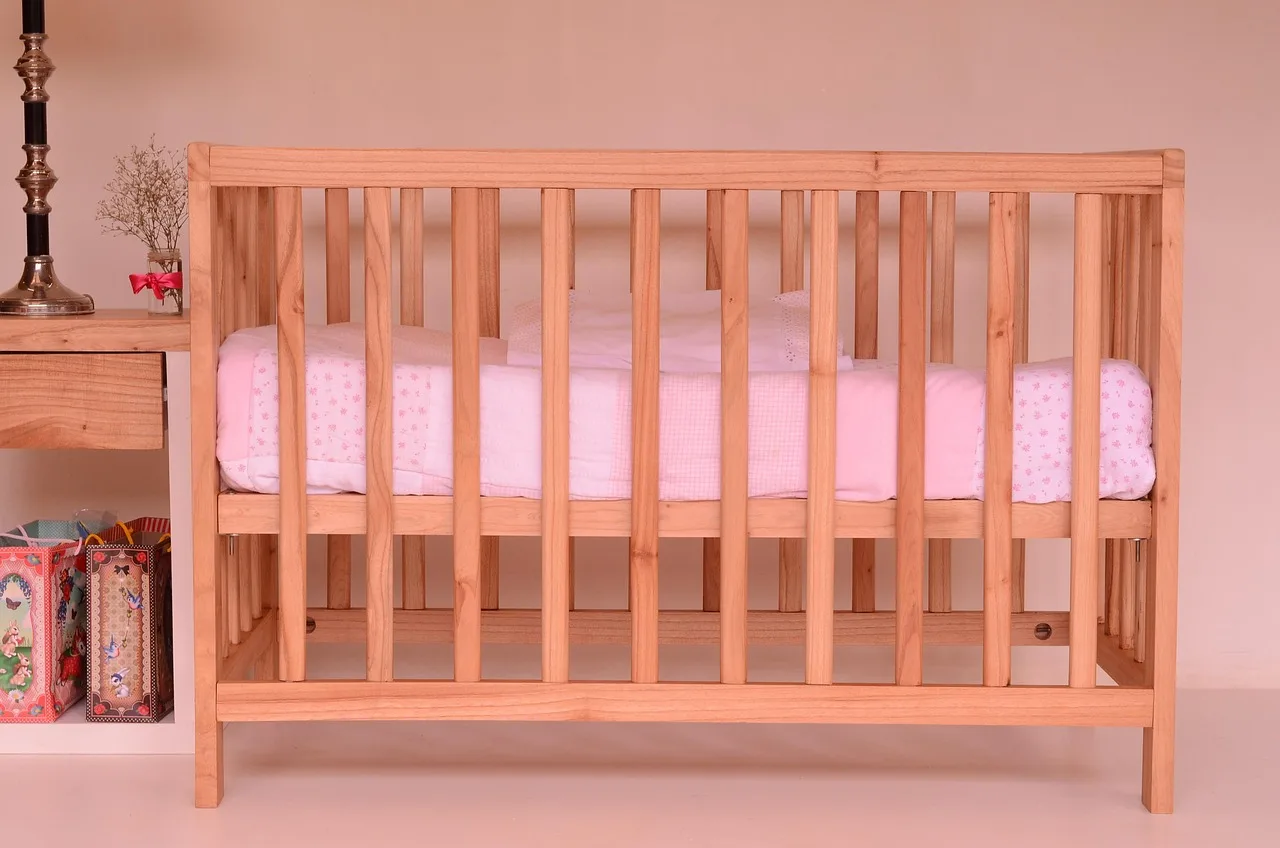
How to Replace Bed Slats on a Platform Bed
Byline: Reviewed and edited by a furniture repair carpenter specializing in bed frame reinforcement and platform-bed rebuilds.
This guide is part of our Bed and Bathroom Fixes: Bed Frames, Mattresses, Toilets, Tubs and Vanities series.
Replace broken platform bed frame slats with parts that match the original thickness and width, or use a single 3/4-inch plywood panel cut to fit if the frame is built for a solid deck. Ignoring failed slats can leave the mattress sagging, create noise, and damage the frame or mattress support over time. This guide shows how to find the cause of failure, choose the right replacement material, and install or reinforce slats correctly.
For support, the key rules come from the mattress and frame, not guesswork: many mattress warranties require slat gaps no wider than about 2 to 3 inches depending on type, foam and latex usually need tighter spacing, and any repair that removes airflow should be checked against the manufacturer’s care and warranty instructions before it becomes a moisture problem.
What you’ll need


- Tape measure
- Straightedge
- Drill/driver
- Saw
- Sandpaper, 120 to 180 grit
- Replacement wood slats, metal slats, or plywood
- Screws matched to the frame
- Slat caps, rubber stops, or metal clips
- Wood glue
- Brackets for center support or repairs
How to check the frame first
Start with the structure, because a bad rail or missing center support will ruin new slats fast. Confirm the frame size, support style, and hardware before buying replacements. A platform bed that is out of square, loose at the corners, or missing midspan support usually needs diagnosis first and repair second.
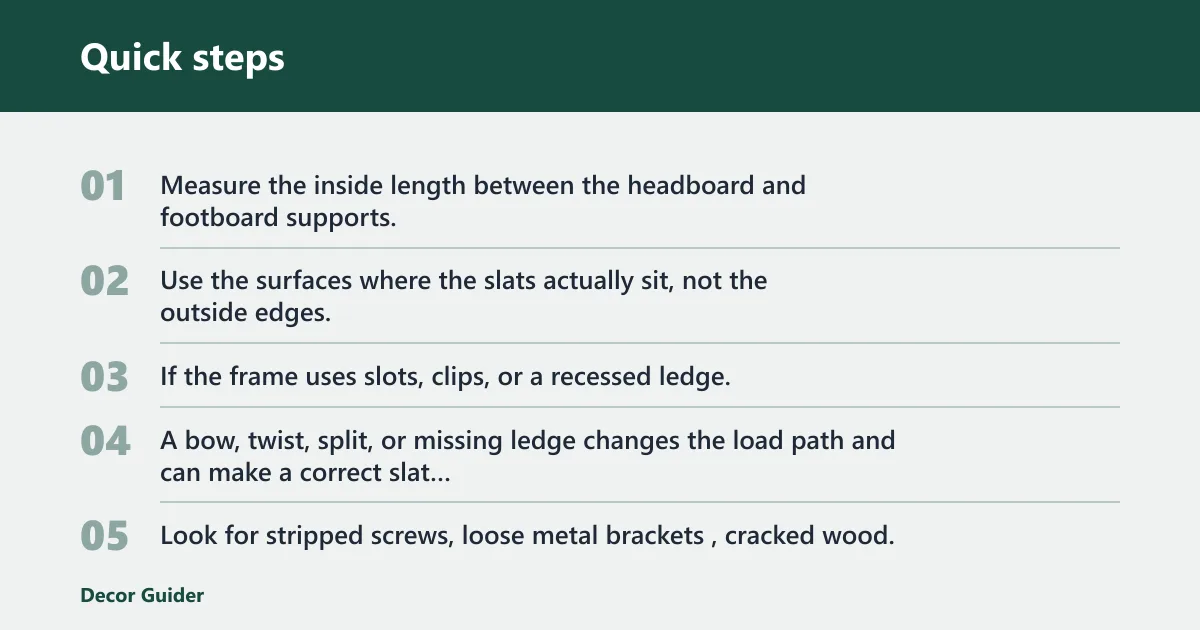
Measure the side rails and ledges
Measure the inside length between the headboard and footboard supports, then measure the inside width from rail ledge to rail ledge. Use the surfaces where the slats actually sit, not the outside edges. If the frame uses slots, clips, or a recessed ledge, note that hardware before ordering replacements.
Check for warped rails, broken supports, and missing hardware
Lay a straightedge across each rail. A bow, twist, split, or missing ledge changes the load path and can make a correct slat size useless. Look for stripped screws, loose metal brackets, cracked wood, or rubber stops that have hardened or fallen off.
Confirm whether the frame needs a center support rail
Most queen and king platform beds need a center support rail, and heavier mattresses usually need one on full or twin XL frames too. If the middle dips now, a center beam or center leg support may be missing, too short, or loose. Fix that before replacing every slat.
Frame-support guidance is not optional. Many platform-bed manufacturers require center support on queen and larger sizes, and industry guidance commonly calls for a support leg or beam wherever the span is long enough to flex under body weight. If the middle sag is visible before the mattress is installed, slat replacement alone will not solve it.
Which replacement material should you use?
The best material depends on span, mattress type, and whether the frame was designed for slats or a solid deck. Wood is easiest to fit, metal is stiffest when the hardware is compatible, and plywood only belongs where the frame can carry a continuous panel without trapping moisture or overstressing the rails.
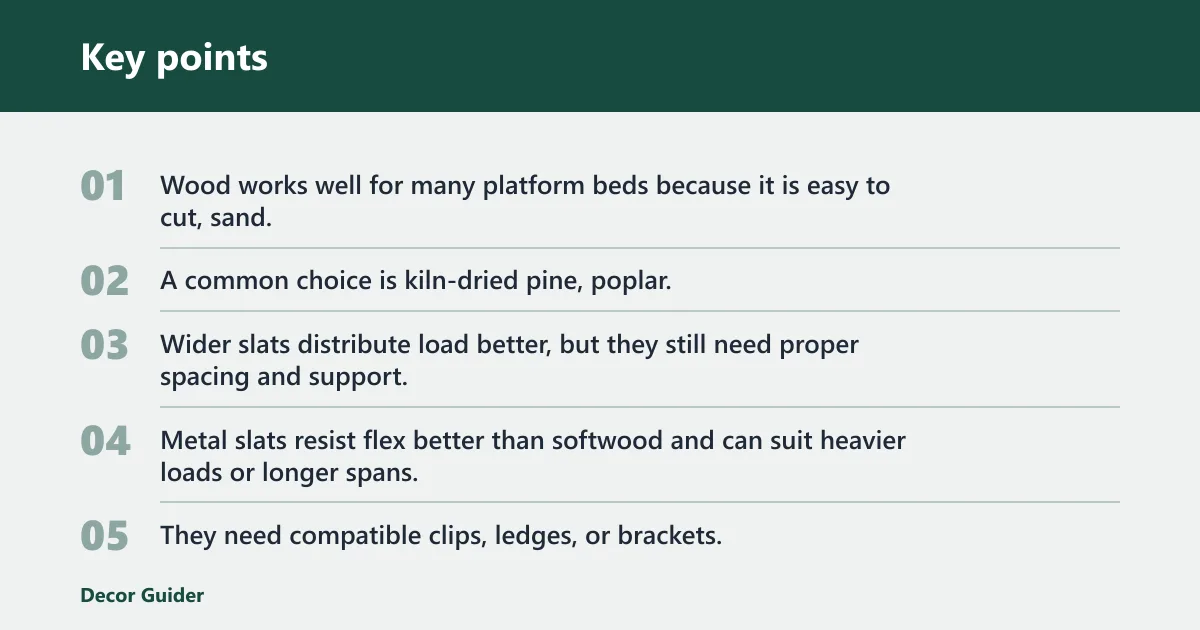
Wood slats for common frame repairs
Wood works well for many platform beds because it is easy to cut, sand, and fit to odd lengths. A common choice is kiln-dried pine, poplar, or hardwood with a thickness that matches the original slat. Wider slats distribute load better, but they still need proper spacing and support.
Metal slats for added stiffness
Metal slats resist flex better than softwood and can suit heavier loads or longer spans. They need compatible clips, ledges, or brackets, so do not assume they will drop into a wood frame without checking the attachment points. If the frame was built for wood, metal may need adapters.
When plywood makes sense
Plywood can replace loose slats if the bed frame has continuous support around the perimeter and enough airflow remains under the mattress. A single 3/4-inch sheet is a common starting point for a solid deck. Thinner sheets flex more and are less suitable for heavier mattresses.
Use plywood cautiously with foam mattresses. Foam beds often need tighter support and even contact, but a full sheet also reduces ventilation. That tradeoff matters more in humid rooms or on beds with little under-mattress airflow.
Most mattress makers prefer slatted support over a solid panel unless the bed is specifically built for a solid deck. If plywood is used, leave the mattress maker’s required air gap under the bed in mind, and confirm that the warranty does not prohibit non-ventilated support. Plywood can be a practical repair, but it should not be treated as a universal replacement.
How mattress type changes the choice
Innerspring mattresses tolerate slightly wider slat spacing than foam models. Memory foam and latex usually need narrower spacing so the foam does not sag between supports. If the mattress warranty calls for tighter spacing, follow that limit even if the old frame used wider gaps.
Warranty thresholds vary by type: many innerspring mattresses can handle about 3 inches between slats, while foam and latex often call for about 2 inches or less, and some brands want 1.5 inches or a fully supported deck. Always follow the strictest rule between the bed frame and the mattress warranty.
How do you measure replacement slats?
Measure slat length from support point to support point, width across the bearing surface, and thickness from top face to bottom face. Match the frame hardware first, then the material. If the slat sits in a slot or clip, even a few millimeters can affect fit and squeaks.
Length, width, and thickness
Length should match the span between the inner rails or the installed ledge-to-ledge distance. Width often runs from about 2 to 4 inches for wood slats, but the original design matters more than a generic size. Thickness should match the load: thinner slats flex more, thicker ones carry more.
Where to measure on the frame
Measure on the inner rail surfaces, not the outer frame edges. If the slats rest on a ledge, measure the ledge depth and the distance between ledges. If the frame uses side slots, measure the slot opening and the distance between slot centers so clips or ends fit cleanly.
How to match slot or bracket hardware
If the frame uses slat caps, rubber stops, or metal clips, buy replacements that match the existing fastener style. A wood slat that is the right length still can rattle if the end hardware is wrong. Keep the same attachment method unless you are also replacing the rail hardware.
Compatibility matters as much as size. Clip-in systems need the correct end profile, slot systems need the correct thickness and insertion depth, and loose-sitting slats often need rubber stops or retainers to prevent walkout. A replacement that fits loosely may seem usable at first but can shift and squeak once the mattress loads the frame.
How do I replace bed slats on a platform bed?
Remove the broken or missing slats, confirm the frame dimensions again, and install replacement slats that match the original support layout. If the frame is sound, this is usually a direct repair. If the rails are warped or the middle sags, stop and fix the frame before adding new slats.
- Clear the mattress and foundation from the frame.
- Remove loose splinters, broken fasteners, and failed clips.
- Cut or buy slats to the measured length, then sand the cut ends smooth.
- Place the first slat at the head end and work toward the foot end at even intervals.
- Secure each end with slat caps, rubber stops, screws, or clips, depending on the frame.
- Set the spacing so the gap stays within the mattress maker’s support limit, then recheck after loading the bed.
If the slats sit loose, add a 1/4-inch rubber pad, a clip, or a short bracket at the end before you change the slat size. Say your queen frame has 2-by-3-inch wood slats and a foam mattress. If one slat is replaced with thinner stock, the bed may feel uneven even though the length is correct.
If that did not work, inspect the center beam and the side ledges again. A common first-timer mistake is replacing every slat while leaving one broken rail bracket in place, which keeps the squeak and the sag.
How do I reinforce bed slats so they stop sagging?

Reinforcement starts with reducing the unsupported span. Add a center support rail on queen and king beds, or on any frame that flexes in the middle under load. If the slats are sound but bend too much, the frame needs more support, not just more slats.
Support sizing should follow span and load. A longer bed span needs more stiffness, not just more slats, and a center beam with legs is the standard fix when the middle panel droops. If the mattress is foam or latex, tightening the layout without addressing the center support can still leave visible bowing.
Add a center support rail
Install the rail so it runs down the centerline of the bed and reaches the floor with legs or brackets. The support should contact the rail firmly, not hang below it. On wider beds, one center beam with adjustable feet is often enough to stop the middle dip.
Center support is especially important on queen, king, and split large-format frames because the span becomes too long for slats alone to carry evenly. If the legs do not reach the floor squarely, shim or reset them; a support that floats even slightly will not prevent sag.
Use extra legs or brackets where needed
Where the frame already has a center rail, add or tighten support legs under the weakest span. Metal angle brackets can also stiffen a loose wooden rail connection. Keep fasteners aligned with solid wood, not with split sections or stripped holes.
Reduce span and movement at the middle
Shorten the unsupported distance by adding an extra slat where the mattress bows most, if the frame layout allows it. Tighten the spacing by 1 inch, then retest the mattress after each change. That keeps the fix controlled and easy to reverse.
Suppose a king bed has 2-inch gaps and a memory foam mattress that dips between slats. Narrowing those gaps to 1 inch and adding center support usually helps more than using thicker slats alone.
Replacement decision table
This table helps you choose a repair based on bed size, mattress type, slat condition, and frame support needs. Use it as a starting point, then confirm the frame’s own hardware and load limits before you cut or buy parts.
| Bed size | Mattress type | Original slat condition | Recommended replacement material | Spacing target | Center support required? |
|---|---|---|---|---|---|
| Twin | Innerspring | One cracked slat, frame sound | Wood, 3/4-inch thick | 2.5 to 3 inches max gap | No, unless the span is unusually long |
| Full | Memory foam | Several bowed slats | Wood or metal, stiffer than original | 2 inches max gap | Often yes if the middle sags |
| Queen | Latex or foam | Missing slats, intact ledges | Metal slats or 3/4-inch plywood | 1.5 to 2 inches max gap | Yes |
| King | Foam or hybrid | Warped rails or loose brackets | Metal slats with support kit | 1.5 to 2 inches max gap | Yes |
| Any size | Temporary repair only | Broken slats, long wait for parts | 3/4-inch plywood panel | Continuous support | Yes if the panel spans the middle |
Common mistakes
Most problems come from matching the old look instead of the load path. Thin slats on a wide span, wide gaps under foam, and ignored center beams are the main reasons repairs fail again. Fix the frame support first, then match the slat material to the mattress.
- Using slats that are too thin for the span.
- Leaving gaps too wide for foam or latex mattresses.
- Ignoring a damaged center beam or missing legs.
- Skipping ledges, clips, or end stops that keep slats from shifting.
- Using plywood without checking thickness and airflow.
Prevention is simple: check the frame twice a year, tighten loose brackets, and replace any slat that starts to bow before it splits.
Frequently asked questions
How far apart should platform bed slats be?
A common target is about 1.5 to 2 inches between slats for foam or latex mattresses. Measure the gap center-to-center or gap-to-gap and stay within the mattress maker’s support limit if one is listed. For innerspring mattresses, a little more space may be acceptable if the warranty allows it.
Can I replace bed slats with plywood?
Yes, if the frame can support a solid panel and the mattress still gets enough airflow. A 3/4-inch plywood sheet is the usual starting thickness. Avoid thin plywood for a full-span replacement, and use it as a temporary fix if heat and moisture buildup are a concern.
What size should replacement slats be for my bed frame?
Match the original length, then match width and thickness to the load and the frame’s ledges or slots. For many wood frames, 2 to 4 inches wide and about 3/4 inch thick is common, but the actual hardware fit matters more than a generic size.
Should I use metal or wood slats for a platform bed?
Use wood for easy cut-to-fit repairs and frames that already rely on wooden ledges. Use metal when you need more stiffness or the frame is built for it. Metal is a better match for heavier loads, but only if the clips, brackets, and rail spacing are compatible.
How do I install replacement slats without tools?
You can sometimes place pre-cut slats into existing ledges or slots by hand, then secure them with rubber stops or snap-in clips. If the frame needs screws, trimming, or bracket alignment, tools are required. Without them, the repair is only safe if the fit is already exact.
What is the best way to make bed support slats?
Use kiln-dried lumber, cut each slat to the measured span, and sand all edges smooth. Choose a thickness that matches the original or slightly increases stiffness without blocking frame fit. For wide beds, pair the slats with a center support rail instead of making each slat excessively thick.
To make slats step by step, measure the inside rail-to-rail span, cut each board to that length, sand the ends, dry-fit the pieces, and then set them at even intervals on the ledges or clips. Finish by confirming that every slat sits flat and that the center support, if required, is carrying load.
Sources
Consult the mattress manufacturer’s installation and warranty instructions for the exact slat-gap requirement, support-rail requirement, and approved decking material. Also check the bed frame maker’s assembly guide for span limits, clip compatibility, and center-leg placement before making permanent changes.
Products related to this article
Sponsored / affiliate links. As an Amazon Associate I earn from qualifying purchases. I may earn additional commission from eligible campaigns.