How to Fix a Toilet Seat That Keeps Sliding
Tighten the hinge bolts first. If the seat still slides, worn washers, missing bumpers, or oversized bowl holes are the usual cause, and a full seat replacement is the last step. A loose seat can shift, crack plastic, and stress the hinges or lid. This guide shows how to find the exact movement source and choose the smallest repair that fits the hardware.
What you’ll need

- Screwdriver or driver bit for the hinge fasteners
- Adjustable wrench or pliers
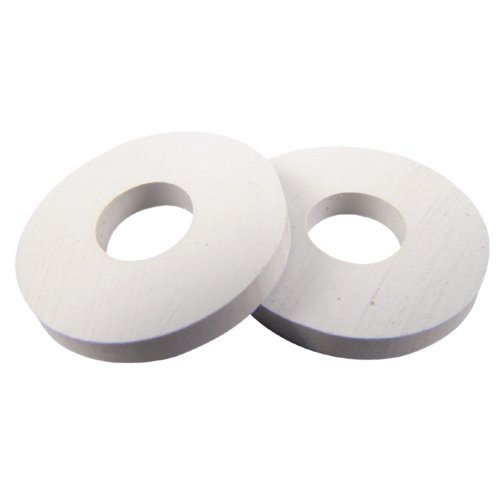
- Replacement rubber washers or bushings
- Toilet-seat tightening kit, if the stock fasteners keep loosening
- Soft cloth or paper towels
- Mild cleaner for the mounting area
- Small flashlight
Toilet seat troubleshooting matrix
| Symptom | Likely cause | Quick test | Best fix | Tools needed | When to replace the seat |
|---|---|---|---|---|---|
| Side-to-side sliding | Loose mounting hardware, worn rubber washers, or bowl-hole clearance | Grip the seat at the hinges and wiggle left and right | Center the seat, tighten both rear bolts gradually, then add new washers or bushings | Screwdriver, wrench, replacement washers | Replace it if the hinge cracks or the seat still shifts after new hardware |
| Forward drifting | Seat not centered, loose rear bolts, or worn stop points under the hinges | Push the seat back against the bowl stops and see if it creeps forward again | Recenter before tightening and check for missing bumpers or worn hinge parts | Screwdriver, wrench, cloth | Replace it if the seat will not hold position after repeated tightening |
| Hinge wobble | Hinge assembly wear or a cracked hinge body | Hold the seat steady and watch whether the hinge moves even with tight bolts | Replace the hinge assembly if it is compatible; otherwise replace the seat | Screwdriver, wrench | Replace the seat when the hinge housing is cracked or soft-close parts are damaged |
| Loose hardware | Mounting bolts loosen over time from use | Check whether the rear bolts turn by hand or shift under light pressure | Snug both mounting points gradually and use a tightening kit if loosening keeps returning | Screwdriver, wrench, tightening kit | Replace it if the threads strip or the fasteners will not hold torque |
| Oversized bolt holes | Excess clearance around the porcelain mounting holes | Look for side play around the bowl holes after the bolts are snug | Add bushings or stabilizers sized to the ceramic thickness at the hole | Wrench, bushings, tightening kit | Replace the seat if the hardware cannot control the movement or the seat base is warped |
| Soft-close hinge failure | Damaged soft-close hinge mechanism | Lift and release the seat; if the hinge no longer controls motion, the mechanism is failing | Use seat-specific replacement hinges if available; otherwise replace the seat | Screwdriver, replacement hinge parts | Replace the seat when the soft-close mechanism is broken or the parts are not sold separately |
How do you fix a toilet seat that keeps moving?
Start with the rear mounting bolts. If the seat moves side to side or creeps forward, loose hardware, worn washers, or extra clearance at the bowl holes are the most likely causes. Tighten both sides gradually, center the seat first, and stop before the porcelain feels stressed.
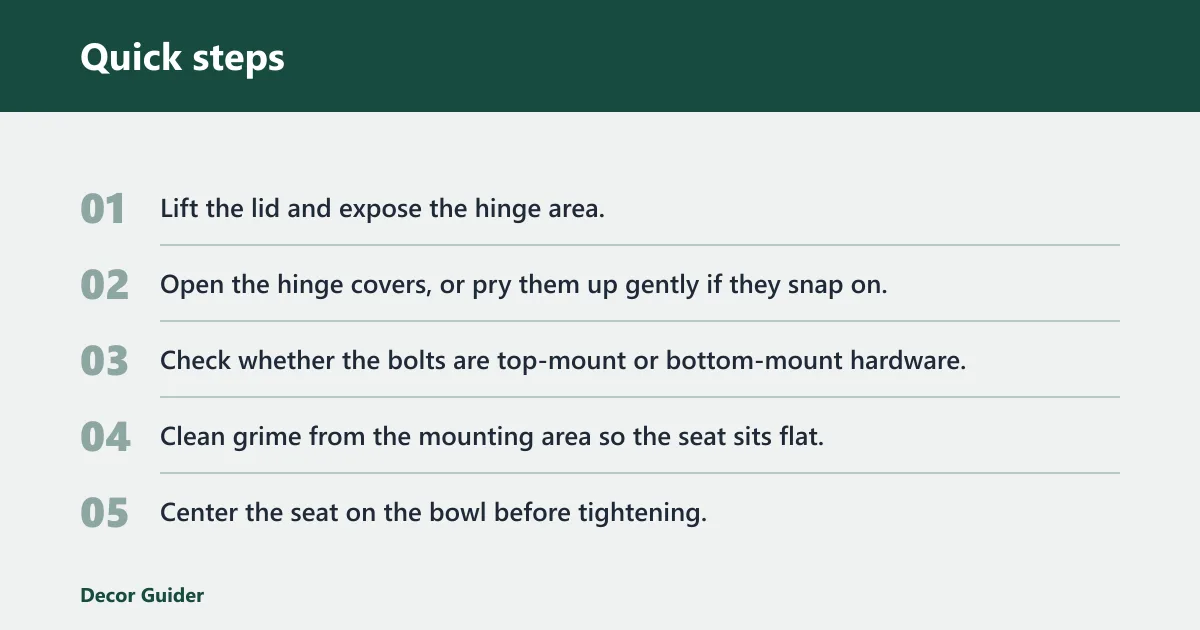
- Lift the lid and expose the hinge area.
- Open the hinge covers, or pry them up gently if they snap on.
- Check whether the bolts are top-mount or bottom-mount hardware.
- Clean grime from the mounting area so the seat sits flat.
- Center the seat on the bowl before tightening.
- Tighten both mounting points gradually, not one side all at once.
- Recheck for movement, then add new washers or bushings if it still slides.
Say your seat shifts left every time you sit down. If the bolts are snug but the base still moves, the problem may be worn rubber washers or extra space around the porcelain holes, not just loose fasteners.
Check the fasteners and covers first
Hinge covers often hide the bolts, and some snap open while others need a small pry point or release tab. Once exposed, inspect the bolt heads, nuts, and washers for cracks, flattening, or missing pieces. A loose seat can often be corrected in 10 to 20 minutes, and common hardware fixes usually cost about $5 to $25.
Use washers or bushings when the fit is sloppy
If the bolts keep turning but the seat still walks, the rubber washer or bushing may be worn. A toilet bowl with slightly oversized mounting holes can let the hardware shift even when the bolts seem tight. In that case, a bushing that matches the ceramic thickness at the bolt hole can steady the fit.
How do you fix a toilet seat that keeps falling down?
If the seat drops forward or the soft-close action fails, the issue is usually in the hinge assembly rather than the bowl hardware. Tightening the rear bolts may help only if they are loose. If the hinge mechanism is damaged, the safer fix is seat-specific replacement parts or a new seat.
- Lift the seat and lid, then watch how the hinge moves as you release it.
- Confirm whether the bolts are still tight at both rear mounts.
- Check the hinge cover for a release tab, then open it and inspect the hinge body.
- Look for cracks, stripped plastic, or a hinge that no longer resists motion.
- Replace damaged hinge parts if the model supports them.
- Install a replacement toilet seat if the soft-close unit is sealed or the seat is warped.
Suppose the seat stays centered but slams down instead of closing slowly. That points to soft-close hinge failure, not a sliding seat problem. A tightening kit will not fix a broken damping mechanism.
Should you replace the hardware or the seat?
Use a tightening kit when the stock fasteners keep loosening but the seat, hinge body, and bowl holes are still sound. A replacement toilet seat is often recommended when the hinge is cracked, the plastic is warped, or the same looseness returns after new washers and bushings. A damaged soft-close hinge often pushes the decision toward replacement.
- Inspect the seat base for cracks and the hinge for wobble.
- Replace only the hardware if the seat shell is solid and the movement comes from loosened bolts.
- Choose a tightening kit if the original fasteners slip or back off repeatedly.
- Choose a replacement toilet seat if the hinge assembly is worn, cracked, or mismatched to the bowl.
- Match the new seat to the bowl shape: round or elongated.
A toilet seat tightening kit is useful when the seat hardware is intact but the original fasteners will not stay put. It is a wasted purchase if the hinge is broken or the seat shell is warped enough that the parts cannot clamp squarely.
Common mistakes
- Tightening one side too far before the other. That can pull the seat off center and add stress to the porcelain.
- Skipping the recentering step. A seat tightened while crooked often slides again.
- Ignoring cracked hinges or warped plastic. No amount of bolt tension will fix broken parts.
- Overtightening the bolts. Toilet bowl porcelain can crack under too much force.
- Replacing hardware without checking the bowl holes. Oversized clearance may need bushings or stabilizers, not just new bolts.
Picture a round seat that shifts side to side after every use. If the bolts are already snug, forcing them tighter is the wrong next move. The better next step is to check the washers and the hole clearance before you stress the bowl.
Prevention
After the seat is centered, snug the rear hardware evenly and recheck it later if the seat gets light daily use. If the same loosening returns, switch to a tightening kit or a seat with stronger compatible hardware before the movement spreads to the hinges.
Frequently asked questions
How do I stop my toilet seat from sliding side to side?
Open the hinge covers, center the seat on the bowl, and tighten both rear bolts gradually. If the movement remains, replace worn rubber washers or bushings, because side-to-side play often comes from hardware wear or extra clearance around the mounting holes.
Why does my toilet seat keep coming loose?
Loose mounting bolts are the most common reason, but repeated movement can also wear the washers, bushings, or hinge body. If the fasteners keep backing off after tightening, a toilet-seat tightening kit or new hardware is the next practical step.
How do I fix a soft close toilet seat that keeps falling?
Check the hinge assembly first. If the bolt tension is fine and the seat still drops or slams, the damping mechanism is likely damaged. Seat-specific replacement hinges may work on some models, but a full replacement is often the cleaner fix.
Should I replace the hardware or the whole toilet seat?
Replace the hardware when the bolts, washers, or bushings are the weak point and the seat shell is still square. Replace the whole seat when the hinge is cracked, the seat is warped, or the same loosening keeps returning after new parts.
How do I fix a toilet seat that keeps slipping?
Slip usually means the seat is not clamping firmly to the bowl. Tighten both mounting points gradually, recenter the seat, and inspect the washers and bowl holes. If the fit is still loose, bushings or a new seat may be needed.
Products related to this article
Sponsored / affiliate links. As an Amazon Associate I earn from qualifying purchases. I may earn additional commission from eligible campaigns.