How to Stop a Toilet From Rocking Without Shims
Stop a rocking toilet by tightening the closet bolts evenly first; if the bowl still moves after that careful check, the usual no-shim fix is a flange repair or a toilet reset with a new wax ring, not patching the wobble. A toilet that keeps rocking can crack the porcelain, loosen the seal, and let water reach the floor.
Why the toilet rocks and what the floor connection means
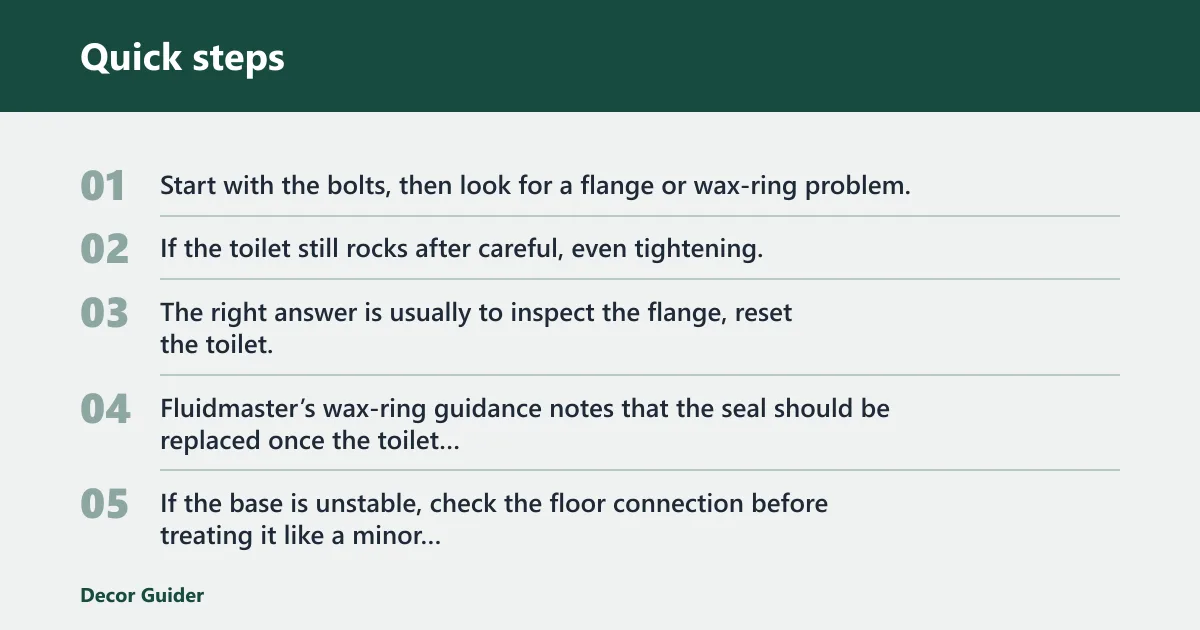


Start with the bolts, then look for a flange or wax-ring problem. If the toilet still rocks after careful, even tightening, shims are not the main fix to reach for. The right answer is usually to inspect the flange, reset the toilet, and install a new wax ring if the toilet has been lifted. Fluidmaster’s wax-ring guidance notes that the seal should be replaced once the toilet is removed, not reused.
If the base is unstable, check the floor connection before treating it like a minor alignment issue. A toilet that rocks can signal a bad seal, a damaged flange, or hidden floor damage. Soft, swollen, or springy flooring is a warning sign that the subfloor may already be compromised and that a leak may be in progress.
Can you just tighten closet bolts?
Sometimes, yes. Loose closet bolts can let the toilet shift, and small, even turns with a socket wrench can settle the base without further repair. Tighten side to side in short increments so you do not tilt the bowl or stress the porcelain. If the toilet stabilizes, stop there.
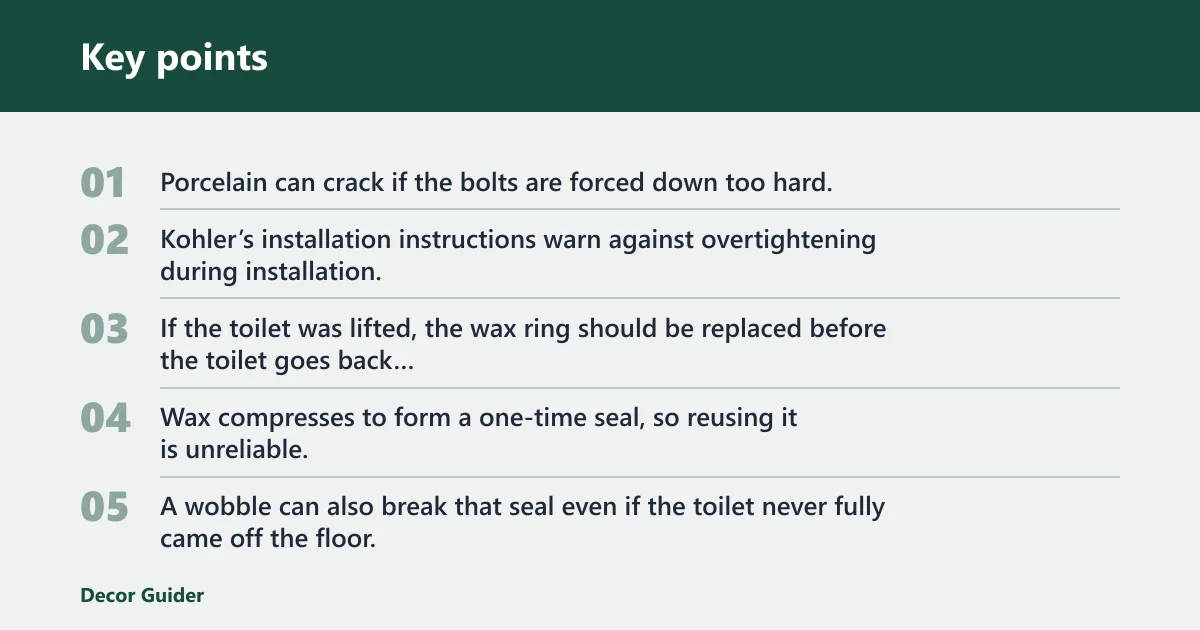
Do not overtighten. Porcelain can crack if the bolts are forced down too hard, and the toilet can be stressed if one side is pulled down more than the other. Kohler’s installation instructions warn against overtightening during installation, which is why a light, even approach matters here.
| Visible symptom | Likely cause | Safe DIY action | Stop-and-call-plumber trigger |
|---|---|---|---|
| Seat moves, bowl stays still | Loose seat hardware | Tighten seat hardware with a screwdriver if needed | None if the base is stable |
| Small side-to-side wobble at one edge | Uneven floor or minor base gap | Tighten closet bolts gradually, then add plastic shims if the wobble remains | If the wobble returns after one adjustment |
| Bolts turn but never snug down | Failing flange or stripped fastener | Stop tightening and inspect the flange | Yes, if the bolts spin or strip |
| Water on the floor after flushing | Failed wax ring or loose seal | Do not keep tightening; inspect for a reset | Yes, because the seal may already be broken |
| Septic smell or sewer odor near the base | Seal failure at the wax ring or flange | Stop using caulk as a cover-up and inspect the base | Yes, if odor keeps returning |
| Soft, swollen, or springy flooring | Subfloor damage from leaks | Do not shim over it; remove the toilet and inspect | Yes, because the floor may need repair |
When is the wax ring the problem?
If the toilet was lifted, the wax ring should be replaced before the toilet goes back down. Wax compresses to form a one-time seal, so reusing it is unreliable. A wobble can also break that seal even if the toilet never fully came off the floor, which is why repeated movement is a leak risk.
Look for water around the base, sewer odor, or a toilet that rocks and then leaves moisture behind after flushing. Oatey’s wax-ring installation guidance explains why the flange height and wax seal have to work together; if the seal is disturbed, the toilet should come back up for a reset rather than being forced tighter.
When is the flange the problem?
If the flange is cracked, split, corroded, loose, or not sitting at the right height relative to the finished floor, shims will not fix the wobble. The flange is the anchor that holds the toilet to the drain. If it is damaged, the toilet may rock no matter how carefully the bolts are tightened.
Flange height matters because the toilet must sit on a stable base and compress the wax ring properly. If the flange sits too low, too high, or lifts under pressure, the seal and the mounting both suffer. Fernco’s flange-repair guidance shows why flange condition, not just bolt tightness, controls stability.
When do shims make sense?
Shims are a last-resort support when the toilet is already basically sound and one corner is only slightly low. They can help if the floor is firm, the flange is intact, and the wobble is minor. Plastic toilet shims are best treated as a finishing support, not the main cure for a rocking toilet.
How to shim a toilet that rocks: slide a plastic shim into the gap at the low edge, test the bowl, and add only what is needed for stability. Trim the exposed ends after installation so they do not catch cleaning tools or collect debris. Plastic toilet shims are preferred over wood shims in bathrooms because they hold up better in damp conditions.
Why this guide avoids shimming as the fix
Shims can stop a small wobble, but they do not correct a broken flange, a failed wax ring, or a weak subfloor. If the toilet rocks after careful, even bolt tightening, the better answer is usually to remove the toilet, inspect the base, and repair the underlying problem. Use shims only after the structure underneath has been ruled out.
How do you tell what is actually loose?
Check the toilet base, not the seat. A loose seat hardware set can be fixed separately, but a rocking bowl means the toilet is not sitting firmly on the flange or floor. Start by pressing at the front, then the sides, and note whether the movement comes from the bowl, the base, or the floor around it.
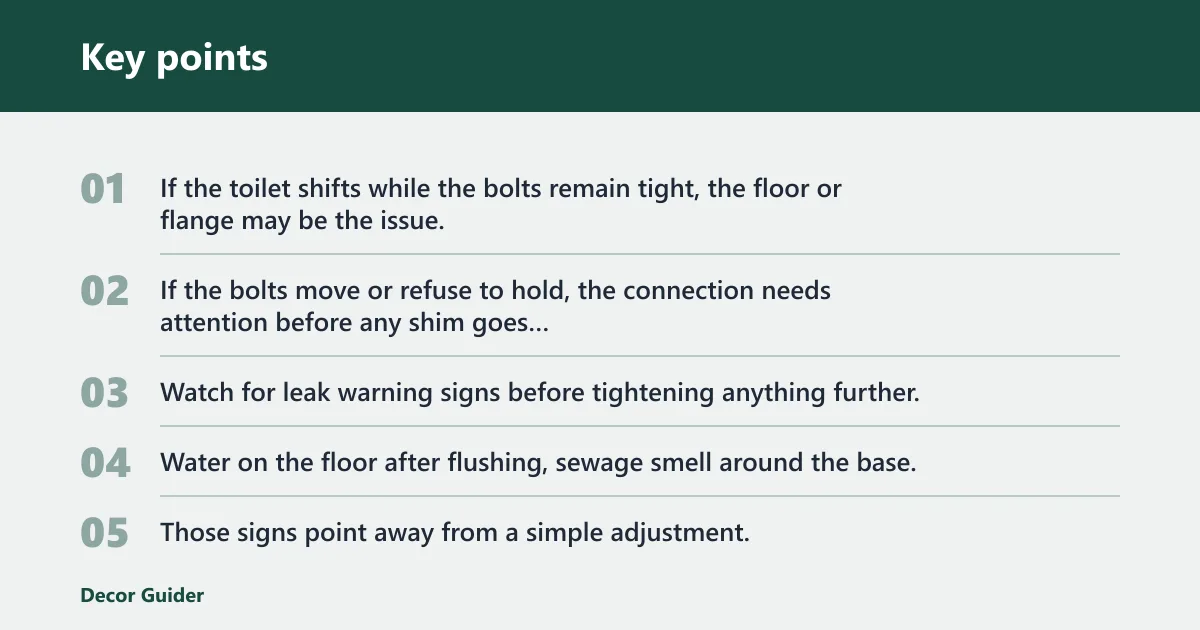
Look for bolt movement and floor flex. If the toilet shifts while the bolts remain tight, the floor or flange may be the issue. If the bolts move or refuse to hold, the connection needs attention before any shim goes in.
Watch for leak warning signs before tightening anything further. Water on the floor after flushing, sewage smell around the base, soft or swollen flooring, and a visible porcelain crack mean you should stop and inspect. Those signs point away from a simple adjustment.
Say your toilet wobbles only on the left front corner, and the floor is firm. That is the kind of minor gap plastic shims can correct. If the same toilet rocks in a wide arc or the floor sinks when you press it, shims are the wrong answer.
What does a soft floor mean under a toilet?
Soft, swollen, or springy flooring usually means the subfloor is getting wet or has already weakened. That can happen from a failed wax ring, a leaking flange area, or repeated movement at the toilet base. A soft floor is not a cosmetic issue; it can mean the structure under the toilet needs repair.
This Old House’s toilet-replacement guidance emphasizes checking for floor damage and a sound base before resetting the toilet. If the floor flexes, remove the toilet and inspect the subfloor before you try to stabilize anything on top of it.
Frequently asked questions
Can I tighten toilet bolts if the floor is soft?
Only lightly, and only as a temporary check. Soft flooring can mean the structure under the toilet may be damaged, so more tightening may hide a leak or make the damage worse. If the floor feels soft or swollen, remove the toilet and inspect the subfloor before you try to stabilize it.
When should I replace the wax ring on a rocking toilet?
Replace the wax ring any time the toilet is lifted. It should also be replaced if the toilet has rocked enough to break the seal, especially when there is water on the floor or sewer odor at the base. Once the toilet comes up, the old wax ring should not go back in place.
Products related to this article
Sponsored / affiliate links. As an Amazon Associate I earn from qualifying purchases. I may earn additional commission from eligible campaigns.