How Deep Is a Japanese Soaking Tub?
Japanese soaking tubs are commonly about 27 to 32 inches deep, though the right size is the one that lets you sit with water at chest level while your feet rest flat or slightly bent. Pick the wrong depth and the tub feels too shallow, wastes water, or sits too high to enter safely. This guide shows how to size depth from seated body measurements, plus the spacing and measurements to check before you buy.
Understanding the Japanese soaking tub design
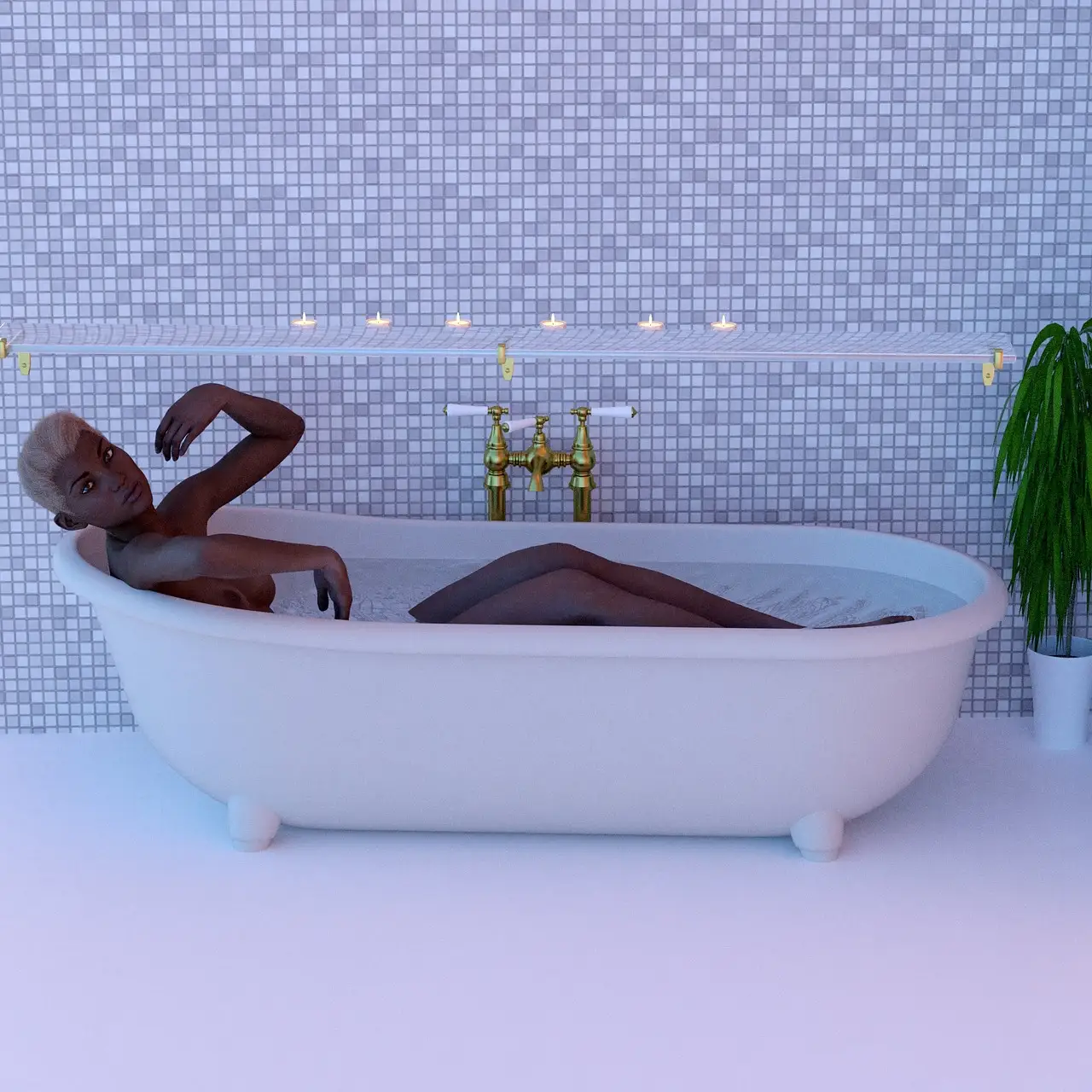


A Japanese soaking tub, or ofuro, is a deep-sided bath built for upright sitting. It is usually deeper than a Western bathtub, and it is often used for soaking rather than washing. Single-person and two-person formats are both common.
Deep-sided design and upright bathing
The upright seated posture is the main design difference. Instead of stretching out, you sit with your knees bent and your torso held higher, which is why interior depth matters more than overall length for many buyers.
How it differs from a Western bathtub
Many Western bathtubs are longer and shallower. A Japanese soaking tub trades length for depth, so you can immerse more of the torso in a smaller footprint. That does not mean every model is small, though. Some two-person versions are large enough to rival a standard bath in overall size.
Single-person and two-person formats
Single-person Japanese tubs often have an internal bench or seat. Two-person models stretch the footprint and usually widen the bathing area so the shorter bather can still sit with useful water coverage. The practical depth target changes with body size, not just with the label on the product page.
How deep is a Japanese soaking tub?
Depth depends on whether you mean the interior soaking space or the outside height of the tub. Many modern manufacturers list Japanese soaking tubs in the 26 to 37 inch range, while traditional ofuro-style proportions are often described as around 27 inches from the interior floor to the upper edge. Water depth is separate and can be shallower than the shell.
Interior depth versus exterior height
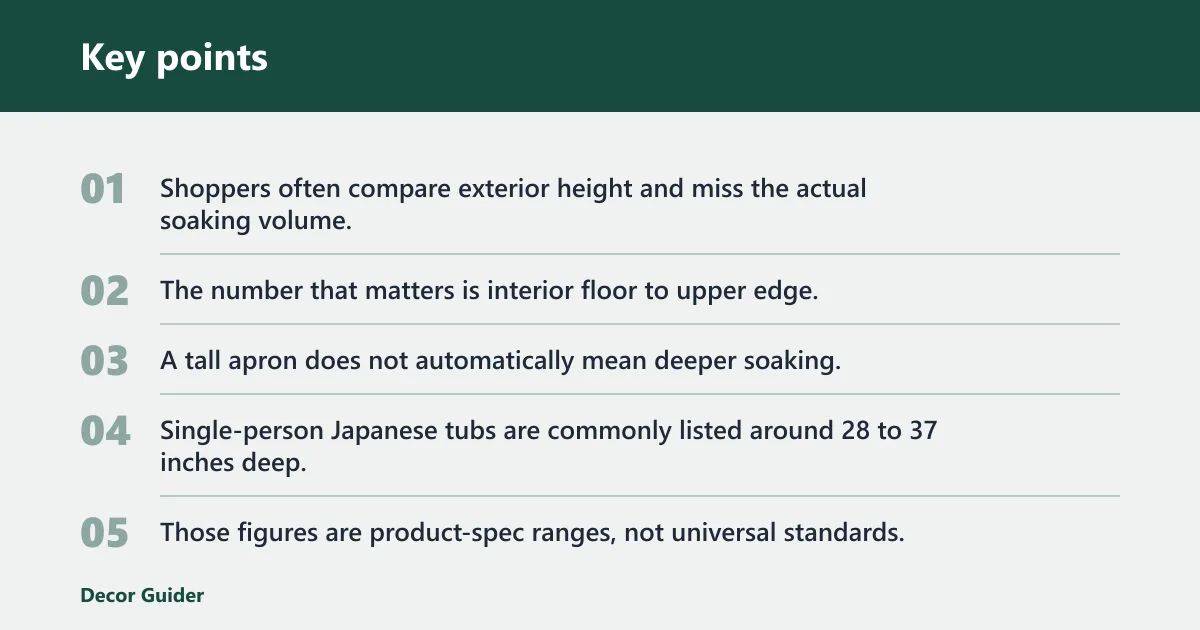
Shoppers often compare exterior height and miss the actual soaking volume. The number that matters is interior floor to upper edge, because that is what controls how much of your torso sits in water. A tall apron does not automatically mean deeper soaking.
Typical depth ranges by tub size
Single-person Japanese tubs are commonly listed around 28 to 37 inches deep, while two-person Japanese tubs are often listed around 26 to 36 inches high. Those figures are product-spec ranges, not universal standards, so the right choice still depends on seated torso fit and how easily you can step over the rim.
Water depth and immersion level
Water depth is a separate specification from shell depth. Product specs and installer guides commonly show usable waterlines around 18 to 24 inches, depending on the tub shape, overflow setting, and how high the bather sits. That gap matters, because the tub shell may look deep while the actual waterline leaves your shoulders exposed or your knees crowded.
Say your seated shoulder height is high enough that 24 inches of water still leaves the top of the chest uncovered. A deeper shell may solve the immersion problem, but only if the step-over height stays manageable and the floor structure can carry the filled tub.
Japanese soaking tub sizing matrix
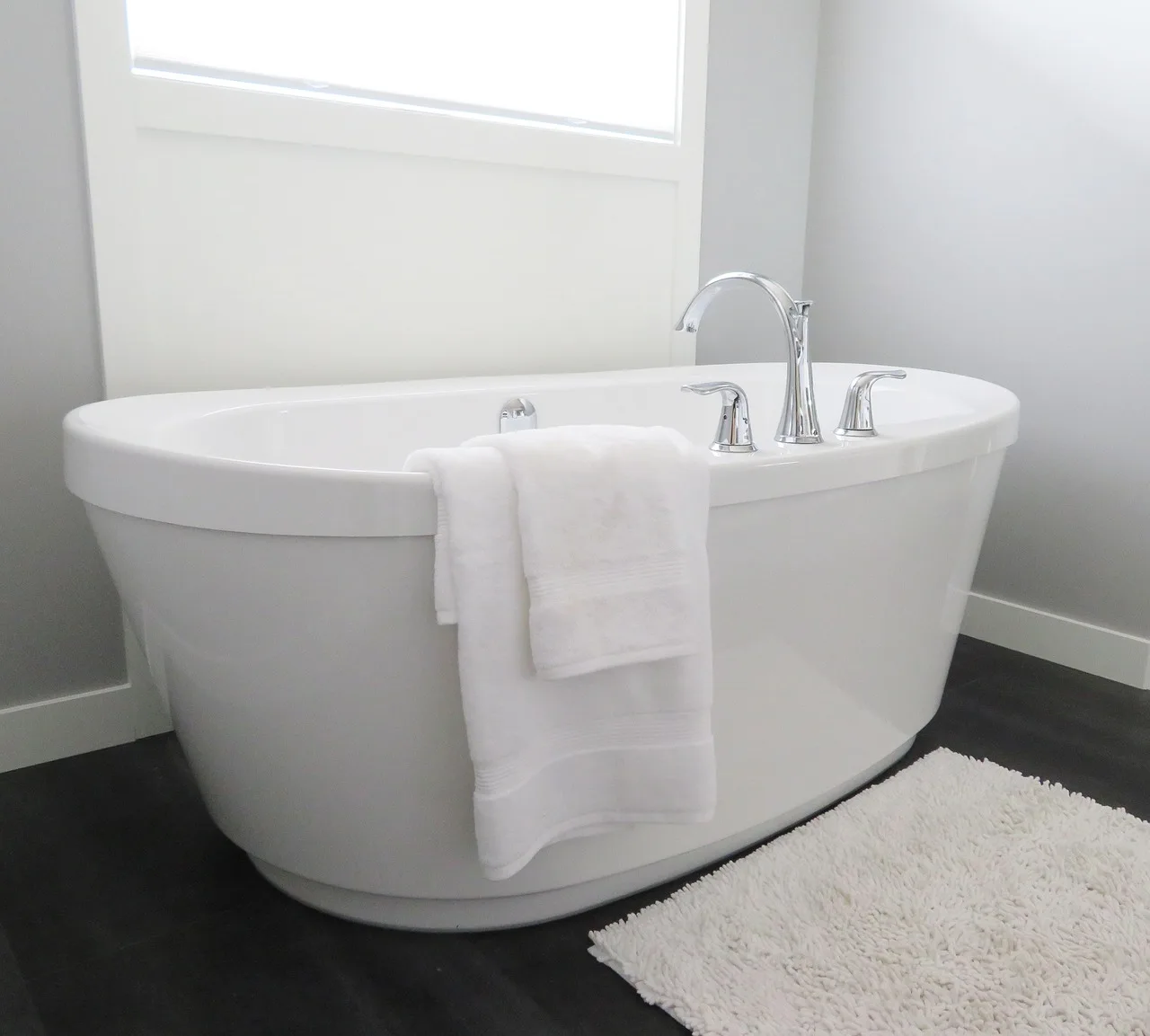
This matrix translates seated body measurements into a depth target. Use it as a buying filter, not as a substitute for the manufacturer’s drawing. The shortest bather in a two-person tub should set the minimum depth, because that person usually determines whether the waterline feels right.
| Seated user height and shoulder or chest height | Recommended interior tub depth range | Likely waterline result | Max comfortable step-over range | Floor-load caution threshold |
|---|---|---|---|---|
| Shorter seated torso, shoulders low relative to hips | 26 to 28 inches | Often an upper-chest waterline if the seat is low and fill level is set near the tub’s practical limit. | Commonly best when the rim stays on the lower end of typical soaking tub heights. | Review structural support if the filled tub is listed near or above 1,000 lbs. |
| Average seated torso, chest near the desired waterline | 28 to 32 inches | Usually a chest-level soak with shoulders partially exposed, depending on seat height and overflow setting. | A common target is a rim that does not require an awkward knee lift or deep side step. | Confirm load capacity carefully if the manufacturer lists a filled weight over 1,000 lbs. |
| Taller seated torso, chest needs more water coverage | 32 to 37 inches | Can produce a deeper chest-to-shoulder soak if the seat is low enough and the waterline can safely rise. | Past the comfortable range, entry can feel awkward and less stable. | Strongly verify floor structure and filled weight before placing the order. |
- Measure seated torso height from the seat surface to your shoulder or upper chest.
- Compare that number with the tub’s interior floor-to-rim depth, not the outside height.
- Check whether your feet can rest flat or slightly bent without forcing your knees too high.
- Confirm the step-over height against the room layout and any nearby ledges.
- Verify the filled weight with the manufacturer before you order, especially for upper floors.
When deeper tubs stop making sense
A deeper shell is not always a better fit. If the rim is too high, the bath becomes harder to enter. If the tub is heavy when full, the bathroom floor may need reinforcement. A full Japanese soaking tub may weigh 1,000 lbs or more, so the structural check is not optional.
Picture a two-person tub that gives the right waterline for a tall user but places the rim high enough that a shorter bather has to lift a knee awkwardly over the edge. The tub may be deep enough on paper, yet impractical in daily use because step-over height and seating position work against each other.
What size fits one person?
A one-person Japanese soaking tub usually fits within a 40 to 49 inches diameter range and a 28 to 37 inches depth range. Many single-bather models include a bench or internal seat, which helps keep the body upright and makes the depth usable instead of excessive.
Common diameter and depth range
The diameter matters because it controls shoulder room and the space for your knees. The depth matters because it determines how much of the torso is immersed. For a one-person layout, those two measurements need to work together, especially if the tub is round or nearly round.
Bench or seat placement inside the tub
An internal seat can make a deep tub easier to use by keeping the bather higher above the floor. That can help shorter users who want less water pressure around the neck and easier entry. It can also reduce the effective soaking depth, so the bench height should be checked with the depth spec.
Best fit for shorter and taller users
Shorter users often do better with the lower end of the depth range, because too much depth can raise the waterline uncomfortably close to the neck. Taller users usually need the upper end, especially if they want the water to reach the chest while the knees stay relaxed.
What size fits two people?
Two-person Japanese soaking tubs often start around 54 by 44 inches, can also be 60 by 40 inches, and may reach 62 by 49 inches in some models. They are often 26 to 36 inches high. The shorter bather should set the minimum depth, since that person is most likely to find the tub too shallow or too steep to enter.
Typical footprint and depth range
Two-person tubs are usually oval or elongated, which gives each bather more elbow room. That larger shape can support a deeper soak, but it also increases water volume and weight. If the model is deep and wide, check the floor plan and structural support before you commit.
Why the shorter bather sets the minimum depth
In a shared tub, the taller bather can often tolerate a little less depth. The shorter bather usually cannot. That makes the lower body and chest position of the shorter user the better sizing reference, especially if you want both seats to feel equally comfortable.
Oval and elongated layouts
Oval tubs spread the load and can feel less cramped at the shoulders. Elongated tubs can fit along a wall or in a long alcove more easily than a round shell. Either way, the interior depth still needs to be checked against the seated body position, not just the room dimensions.
Materials and installation choices
Japanese soaking tubs are commonly available in wood, acrylic, stainless steel, and copper. Freestanding bath formats are common, and they can work indoors or outdoors. The material changes weight, upkeep, and price, but it does not change the need to check floor loading, clearances, and entry height.
Wood, acrylic, stainless steel, and copper
Wood gives a traditional look and can feel close to the classic ofuro style. Acrylic often keeps weight lower. Stainless steel and copper are more modern material choices and can work well in contemporary rooms. The right material depends on the room, the maintenance tolerance, and the installation budget.
Freestanding indoor and outdoor setups
Freestanding tubs are flexible, but they still need clearance for cleaning and access. Outdoor setups can work if plumbing, drainage, and climate are suitable. Indoor installations usually demand more attention to floor support because the filled tub can be extremely heavy.
Water volume, floor load, and step-over height
Large water volume is part of the appeal, but it is also the main constraint. A full Japanese soaking tub may weigh 1,000 lbs or more. That is why buyers should ask about the tub’s filled weight, the floor structure, and the rim height before they sign off on the order. For a sizing reference on room planning, see how much space a Japanese soaking tub needs.
What does a soaking tub cost?
Cost varies by model, material, size, and installation scope. A simple acrylic tub will usually price differently from a custom wood or copper model, and a two-person shell will need more water, more space, and often more installation work. If the listing does not spell out the full package, ask for details before buying.
Why price varies by material and size
Material choice affects the base price. Size affects shipping, plumbing, and often the final water-use profile. Two tubs with the same exterior footprint can still cost differently if one has a deeper shell, a built-in seat, or a more complex finish.
What to budget for installation and reinforcement
Installation costs can rise when the bathroom needs floor reinforcement, special drainage, or plumbing changes. That is especially true for heavy tubs and upper-floor bathrooms. If the manufacturer does not give a complete installation figure, treat the project as a room-level remodel rather than a simple fixture swap.
When to confirm details in the manufacturer listing
Confirm the exact interior depth, exterior height, filled weight, and recommended clearances in the manufacturer’s listing for your model. Those numbers decide whether the tub fits your room and whether the structure can support it. If the listing is vague, do not guess. If you are still comparing options, the linked guide on Japanese soaking tub weight is the best place to sanity-check load concerns.
Frequently asked questions
How big is a Japanese soaking tub?
Single-person Japanese tubs range from 40 to 49 inches in diameter, while two-person models can start at 54 by 44 inches and reach 62 by 49 inches. The shell can be compact compared with a standard bath, but the footprint still needs to match the room and the walk-in space.
How deep should a Japanese soaking tub be?
A good target is the depth that gives you water at chest level while your feet rest flat or slightly bent. For many buyers, that means starting near 28 to 32 inches and adjusting for seated torso height, step-over comfort, and the tub’s filled weight.
How deep is a soaking tub?
The shell depth and the actual water depth are not the same thing, so compare both before you decide on a model.
What is the standard depth of an Ofuro tub?
The closest thing to a standard target is about 27 inches from interior floor to uppermost edge. Modern products vary more widely, with many manufacturers offering depths from 26 to 37 inches. The practical choice still depends on seated body size and entry height.
What does a Japanese soaking tub cost?
Price varies by material, size, and installation scope, so there is no single reliable figure to quote for every model. Ask for the tub price, delivery cost, plumbing changes, and any floor reinforcement before you compare options. That gives you the real project total, not just the fixture price.
Products related to this article
Sponsored / affiliate links. As an Amazon Associate I earn from qualifying purchases. I may earn additional commission from eligible campaigns.