How to Fix a Freestanding Tub That Rocks
To fix a rocking freestanding tub, test it empty first. If it still rocks, check the feet, frame, or floor level; if it only rocks when loaded, look at plumbing strain or shell flex. Letting it move can crack caulk, stress drain parts, and loosen connections. This guide shows how to find the cause and choose the right repair.
Why your tub rocks
A freestanding tub sits away from walls, so a small floor dip, an uneven support point, or a stressed drain can turn into visible movement. Separate normal shell flex from unstable rocking before you touch shims or fasteners.
Start with a spirit level or laser level across the tub deck and the floor. Then check whether the movement comes from one floating support, a soft subfloor, or plumbing that is pulling the tub out of position.
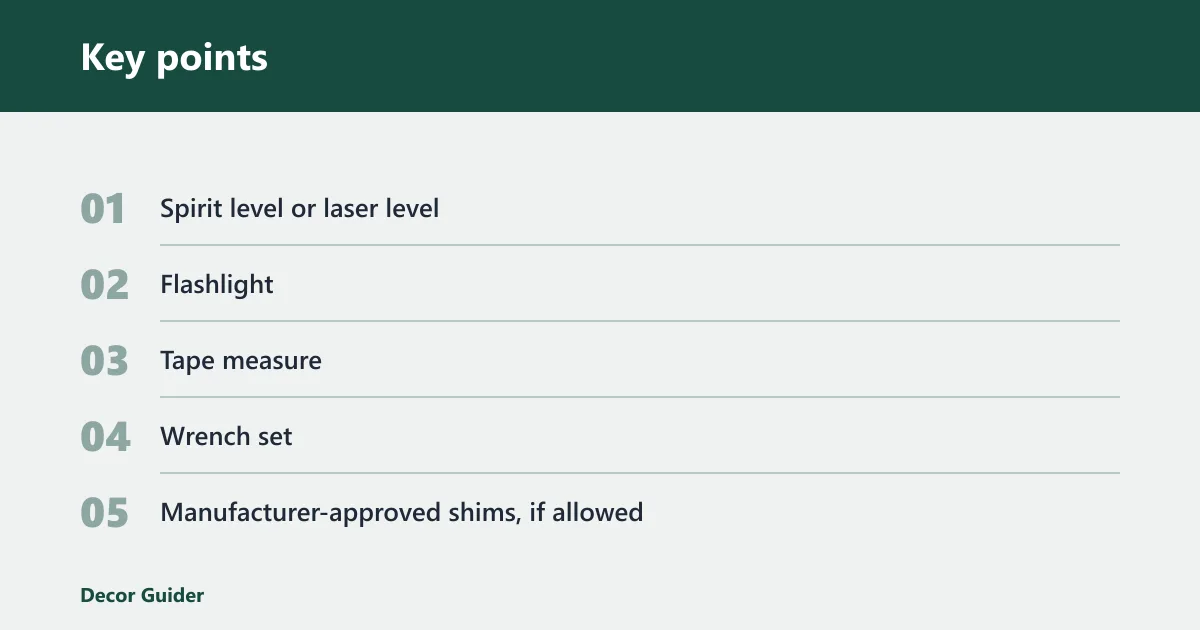
What you’ll need
- Spirit level or laser level
- Flashlight
- Tape measure
- Wrench set
- Manufacturer-approved shims, if allowed
- Lock nuts, if the tub uses adjustable leveling feet
- Shims or supports only if the installation guide allows them
Troubleshooting matrix
| Likely cause | How to test it | Safe fix | When to stop and call a pro |
|---|---|---|---|
| Uneven floor | Set a spirit level or laser level on the floor where the tub sits, then check front-to-back and side-to-side. If the floor slopes under the tub footprint, the tub may rock even when the feet are sound. | Adjust the feet to match the floor, then recheck. Use manufacturer-approved shims only if the instructions allow them. | Stop if the slope is large, the floor feels spongy, or the finish flooring is hiding a dip or rot. |
| Loose or incorrect feet | Look under the apron or edge with a flashlight. Check whether all leveling feet touch the floor and whether any lock nut is loose. If one corner lifts while the others carry load, the tub will rock. | Set each foot so it bears load evenly, then tighten lock nuts. Replace missing or wrong feet with the correct parts listed by the manufacturer. | Stop if a foot will not thread correctly, a mount is cracked, or the tub shell flexes around the foot pad. |
| Drain strain | Loosen the visible strain on the waste and overflow connections, if access allows, and see whether the rock lessens. A drain that pulls sideways can tilt the tub after final tightening. | Realign the drain assembly so the trap, waste, and overflow sit naturally. Tighten only after the tub is level and the drain is not acting like a brace. | Stop if the trap arm, waste joint, or overflow leaks, or if the drain line is fixed in a position that forces the tub out of level. |
| Subfloor flex | Press near the tub footprint and watch for movement in the floor, not just the tub. A laser level can also reveal a dip that appears flat to the eye. | Use only temporary support until the subfloor is repaired or reinforced. Final leveling should wait until the floor is stable. | Stop if you find softness, staining, or signs of water damage. That needs structural repair before the tub goes back into service. |
How do you level a freestanding tub?
Set the tub on a floor that is level enough for the installation, then connect the drain. If the floor is uneven, correct that first if the installation guide calls for it; otherwise follow the tub manufacturer’s support method. A freestanding bathtub can sit perfectly flat in one spot and still rock if the floor slopes under one side.
- Place a spirit level or laser level on the finished floor where the tub will sit.
- Check the tub base at four points, then note which support point is floating.
- Adjust each leveling foot only if the tub design includes adjustable feet; otherwise follow the manufacturer’s specified supports or anchoring method.
- Turn each foot about 1/4 turn at a time, then recheck after each change.
- Tighten the lock nuts once the tub sits flat, if the design uses them.
- Check the deck again after tightening, because some tubs shift when the nuts seat.
Acrylic tubs are lighter and easier to move, but they can flex more if the support is poor. Cast iron tubs are much heavier, and they often need a structural check before final leveling. Cast iron tubs run 250 to 500 pounds before water enters the picture, and a filled freestanding tub can weigh far more once water and a bather are added, especially on an upper floor.
Can you fix a rocking tub without removing it?
Sometimes. A simple support adjustment, a lock nut reset, or a drain realignment can be done in place if the installation leaves access. If the tub only moves because one support point is short, you may not need to lift the shell at all. If the floor or drain is forcing the issue, partial removal is more likely.
Say your acrylic tub rocks only at the front-right corner. If a 1/4-turn foot adjustment stops the movement and the level reads true, you likely have a support issue, not a floor failure.
If the tub still rocks after the supports are even, the issue may be strain on the plumbing, especially if the waste elbow twists when the drain is tightened. That points to plumbing strain, which often needs the tub lifted enough to reset the connection after the water supply and drain are disconnected and the tub is supported safely.
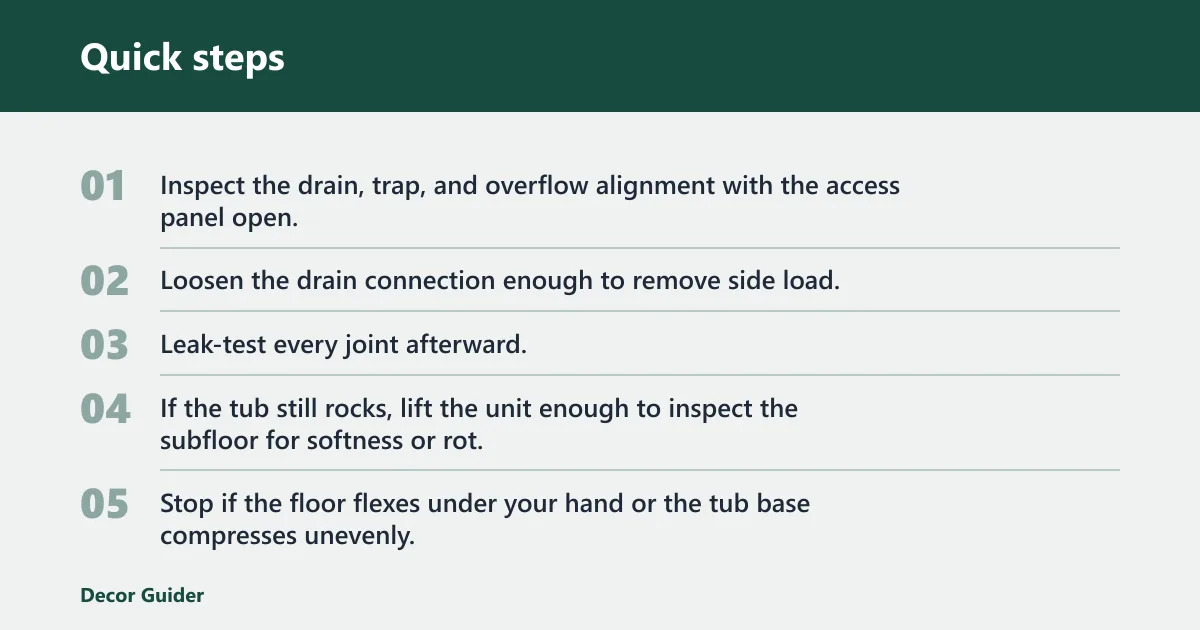
If that didn’t work, try this next
- Inspect the drain, trap, and overflow alignment with the access panel open.
- Loosen the drain connection enough to remove side load, then retighten without forcing the shell.
- Leak-test every joint afterward.
- If the tub still rocks, lift the unit enough to inspect the subfloor for softness or rot, using a helper because freestanding tubs can be extremely heavy.
- Stop if the floor flexes under your hand or the tub base compresses unevenly.
Drain placement is fixed after purchase, so rough plumbing has to meet the tub, not the other way around. A floor-mount faucet valve also has to go in during rough plumbing before flooring goes down, and rough-in distance affects access and clearance even when it is not the cause of the wobble.
Do freestanding tubs need floor reinforcement?
Not always, but some do. Most ground-floor bathrooms sitting on a concrete slab handle a filled tub without extra work. Upper-floor installs, older framing, and heavier materials need a closer look before you trust the floor. Building codes typically require 40 pounds per square foot of live load in a residential bathroom, but the tub load is concentrated in a small area and the total weight can be much higher than that at the support points.
A 1 1/2 inch drain is common, and some larger tubs and some local codes want a 2 inch drain. The drain size does not make the tub rock, but it affects how the waste fits and whether the assembly can sit without strain.
Signs of flex, slope, or soft spots
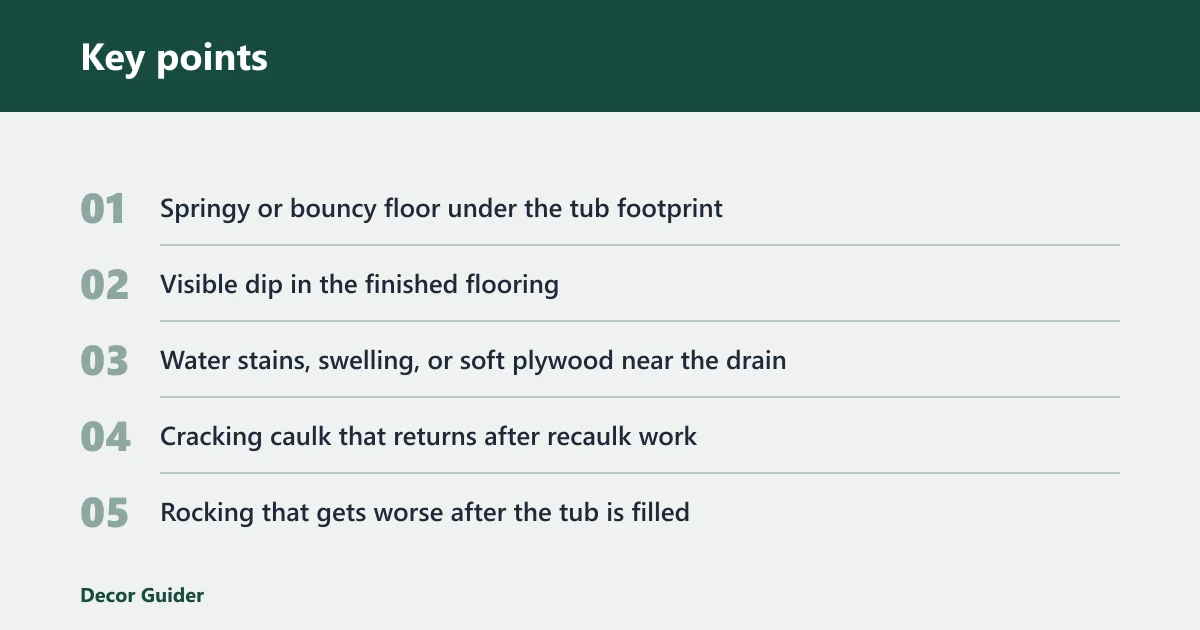
- Springy or bouncy floor under the tub footprint
- Visible dip in the finished flooring
- Water stains, swelling, or soft plywood near the drain
- Cracking caulk that returns after recaulk work
- Rocking that gets worse after the tub is filled
Why material weight changes the check
Acrylic tubs typically weigh 70 to 130 pounds empty, so they are easier to install and easier to move during adjustment. Cast iron tubs hold heat well, but they are very heavy when empty. Stone resin also deserves a structural review because it can be heavy enough to matter on an upper floor.
Floor reinforcement may be needed when joists, spacing, or span do not match the load. A contractor should check the framing if the bathroom is above living space or if the subfloor already shows damage.
How do you keep a freestanding tub from moving?
Keep it from moving by making sure the supports, floor, and drain all agree. A stable tub does not depend on caulk or on force from the drain line. It depends on even contact at every support point, a flat enough floor, and plumbing that sits in position without pulling the shell sideways.
- Confirm the floor is level enough for the tub footprint.
- Set the supports so all contact points carry load evenly, following the manufacturer’s method.
- Install the drain assembly without using it to pull the tub into place.
- Recheck level after the waste and overflow are connected.
- Fill the tub halfway, then watch for movement at the supports and drain.
- Stop if the tub changes position when filled, because that points to flex or strain.
Common mistakes
- Forcing the drain to pull the tub into level
- Using unsupported shims under a foot or edge
- Ignoring hidden subfloor damage because the top tile looks fine
- Stopping when the tub looks level even though it still rocks
- Assuming a heavier tub is automatically more stable
Picture an example with a 60-inch acrylic tub on a second floor. The shell looks level empty, but it rocks after water enters because the drain line is carrying side load. The fix is not a thicker shim; it is relieving the drain strain and checking the subfloor for flex.
How do I know if the drain or plumbing is making the tub rock?
If the tub feels stable until the waste and overflow are tightened, the plumbing is a likely source of stress. The trap, waste, and overflow should connect without twisting the tub shell or lifting one corner. If tightening one joint changes the level, the assembly is pulling.
Open the access panel and watch the tub while a helper tightens the fittings. If the tub moves as the drain seats, stop and realign the parts before final tightening. That matters most on acrylic tubs, which can flex more than cast iron if support is uneven.
When should I call a plumber or contractor for a rocking tub?
Call a plumber when the drain, trap, or overflow will not align without force, when a leak appears, or when the drain assembly changes the tub’s level. Call a contractor when the floor dips, the subfloor feels soft, or the framing needs reinforcement. If the tub is on an upper floor and the rock persists after support adjustment, stop there.
Do not keep tightening parts to hold the tub down. That can crack fittings, damage the shell, or transfer the load into the floor in the wrong place.
Frequently asked questions
What causes a freestanding bathtub to rock?
The usual causes are an uneven floor, uneven support contact, drain strain, or subfloor flex. Check the tub empty first. If the movement appears only when the tub is loaded, look closely at the plumbing and shell support before you change the supports again.
How do I level a freestanding tub on an uneven floor?
Use a spirit level or laser level on the floor and the tub base, then follow the manufacturer’s support method. If the tub has adjustable feet, adjust them in 1/4-turn steps. If the manual forbids shimming and the floor is uneven, do not add shims; instead correct the floor or use the approved support system. Recheck after each turn. If the floor is far out of level or the tub still rocks after the supports are even, stop and inspect the subfloor.
Can I fix a rocking tub without removing the tub?
Yes, if the problem is limited to support adjustment or a loose drain connection. If the drain or overflow is pulling the shell, you may need to lift the tub enough to reset the assembly. If the subfloor is soft, partial removal is usually safer.
How much weight can a freestanding tub add to a floor?
A filled freestanding tub can weigh far more than the empty tub alone once water and a bather are added. Cast iron tubs can weigh 250 to 500 pounds before filling. A floor on a concrete slab usually handles that better than an upper-floor framed bathroom.
Products related to this article
Sponsored / affiliate links. As an Amazon Associate I earn from qualifying purchases. I may earn additional commission from eligible campaigns.