How To Hide Box Spring On Platform Bed: Proven Essential
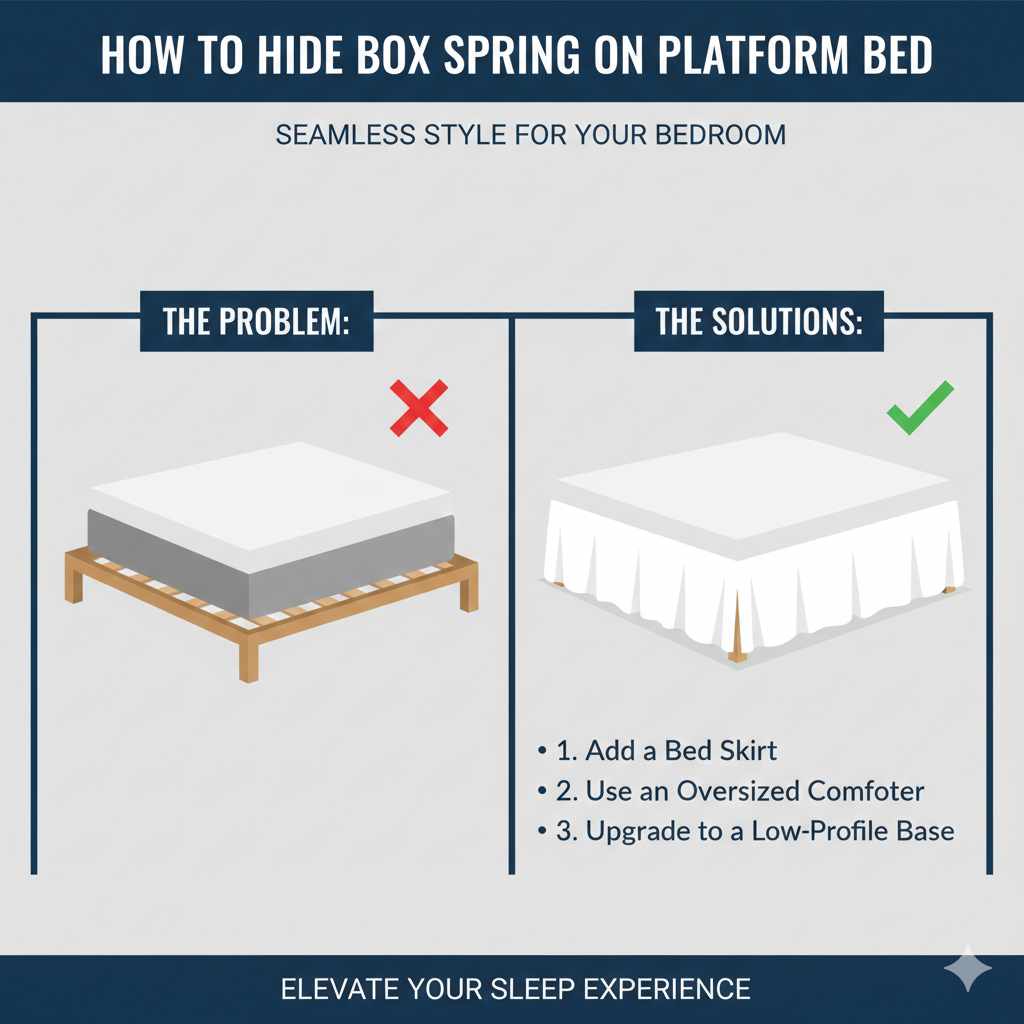
To hide a box spring on a platform bed, the simplest methods involve eliminating the need for the box spring entirely, using modern low-profile foundations, or employing visually appealing aesthetic covers like a bed skirt or attractive frame wrap. Most platform beds are designed to support a mattress directly.

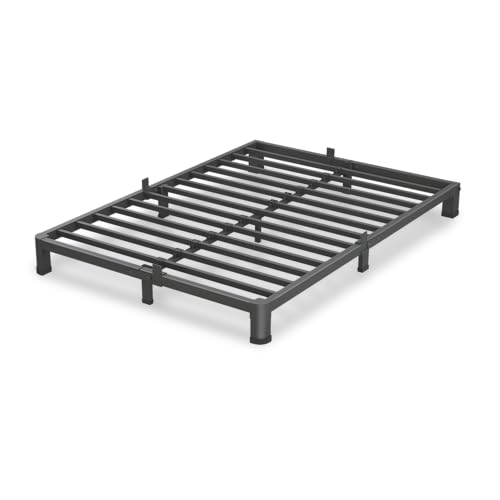
Amazon Basics
Amazon Basics Smart Box Spring Bed Base,…
- COMFORT AND SUPPORT BOOST: Enhances mattress comfort and stability
- VERSATILE MATTRESS COMPATIBILITY: Supports all mattress types - spring, memory foam, latex and hybrid
- IMPRESSIVE WEIGHT CAPACITY: Twin size supports 350 lbs; Full, Queen, King & California King sizes hold up to 700 lbs total (350 lb…
As an Amazon Associate I earn from qualifying purchases.
For a related decorating choice, 79+ Black Bedroom Ideas with Dark Elegance can help readers compare style and placement.
For a related kitchen decision, Who Invented The Zip Fastener: Proven Essential adds another practical detail to check.
For a related kitchen decision, Tatami Mat Vs Futon: The Proven Option adds another practical detail to check.
For a related kitchen decision, How To Wet The Bed: Proven Essential Relief adds another practical detail to check.
For a related kitchen decision, What Do Bed Bugs Like? Proven Essential Facts adds another practical detail to check.
For a related kitchen decision, How To Repel Pigeons From Balcony: Proven Solutions adds another practical detail to check.
It is a common setup headache! You bought a stylish, sturdy platform bed, but now you see that bulky, traditional box spring sticking out, ruining the sleek look. Platform beds are famous for their low profile and minimalist wood frame, which simply doesn’t look right with a standard, tall box spring peeking underneath. Don’t worry; this is easy to fix without buying all new furniture. You do not need specialized tools or advanced carpentry skills. We are going to walk through simple, proven ways to get that clean, streamlined aesthetic you wanted when you bought your platform frame.
This complete guide will show you exactly how to make that old box spring disappear or, even better, how to ditch it altogether. We will cover smart measurements, easy aesthetic fixes, and key compatibility checklists. Let’s get that bedroom looking sharp and modern!
Understanding the Platform Bed vs Box Spring Dilemma
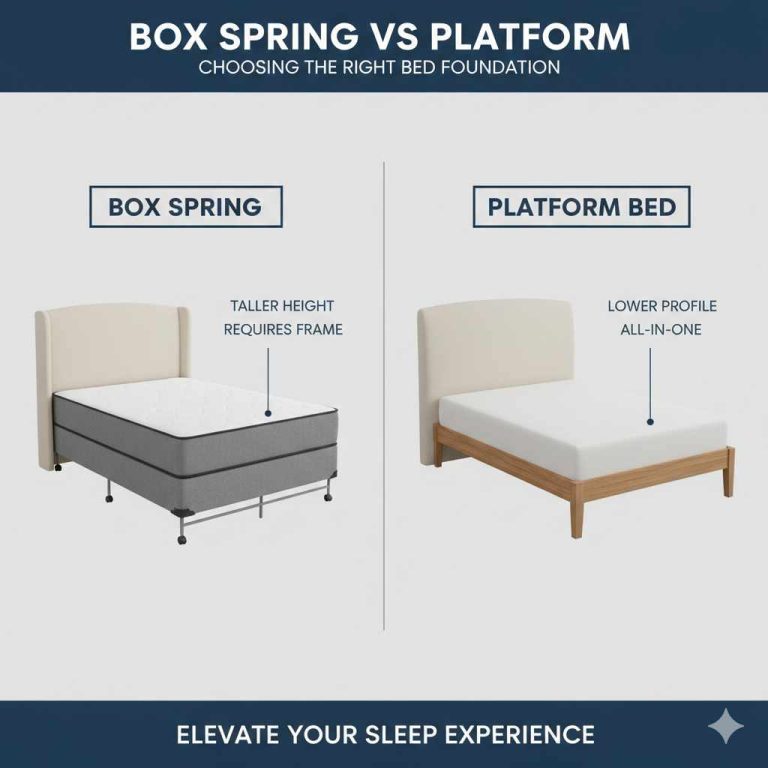
Before we start hiding things, let’s quickly understand why this problem pops up. Platform beds and traditional box springs were designed for different eras of mattress technology. Knowing this helps us choose the best solution.
What Exactly is a Platform Bed?
A platform bed is a bed frame that provides built-in structural support across its entire base. This support usually comes from solid slats (wooden or metal) spaced closely together, or sometimes a solid foundation deck. The key feature is that they are designed to hold the mattress directly, usually eliminating the need for any extra foundation.
Why the Box Spring Doesn’t Match
Traditional box springs are typically tall, rigid metal or wooden grid structures enclosed in fabric. They serve two main purposes:
- To provide necessary support for older innerspring mattresses that need a solid, uniform base.
- To raise the mattress height to a comfortable level, as older platform frames were often very short.
When you put a tall box spring on a modern platform bed, the mattress ends up sitting far too high, and the box spring foundation itself often overhangs the platform frame, defeating the purpose of the sleek design. Our goal in learning how to hide box spring on platform bed is usually to lower the height and clean up the visual lines.

Step 1: The Best Solution – Determining if You Need the Box Spring At All
The absolute best way to hide a box spring is to not use one. Most modern mattresses pair better with, or outright require, a platform base only. Before trying any aesthetic cover-up, check your mattress type.
Mattress Compatibility Checklist
Different mattresses require different support systems. If your mattress is one of these types, you almost certainly should not use a traditional box spring with your platform bed:
- Memory Foam: These require tight, solid support (like slats only 1–3 inches apart or a solid deck) to prevent sagging. A box spring often creates too much gap.
- Latex Mattresses: Similar to foam, they need consistent support across the base.
- Hybrid Mattresses: While they have coils, the top comfort layers (foam/latex) need structure directly beneath them.
If you have a traditional innerspring mattress (the old-school kind), you might need the box spring for comfort or warranty reasons. If you do need support, skip to Step 3.
Action Plan: Inspecting Your Platform Frame
Look closely at the support structure built into your platform bed base. Is it:
- Slats: Are they wooden or metal? Most manufacturers recommend slat spacing no more than 3 inches apart for warranty validity (check your frame’s manual or the bed manufacturer’s guidelines).
- Solid Deck: Does it have a solid piece of wood or particleboard underneath? If so, you absolutely do not need a box spring.
If your platform already offers proper support: Remove the box spring completely. Congratulations, the problem is solved! Now you just need to deal with the height difference, which we address in Step 4.
Step 2: Choosing a Low-Profile Foundation (If Support is Required)
If you have a mattress that requires more rigidity than your current slats offer (or if you have an innerspring mattress that explicitly voids its warranty without a foundation), but you still want to avoid the height of a traditional box spring, the key is downsizing the foundation.
Low-Profile Box Springs vs. Bunky Boards
A standard box spring is often 9 to 14 inches tall. A “low-profile” foundation is the first step toward slimming down the look. These are usually between 5 and 7 inches tall.
Why Low-Profile Works Best
When placed on a platform bed, a low-profile foundation keeps the mattress closer to the frame’s edge, reducing the visible gap that makes the box spring look awkward. For many platform beds, a 5-inch foundation gets the mattress to a comfortable height without looking top-heavy.
Alternatively, some people use a “Bunkie Board” (or foundation board). This is a thin, rigid piece of plywood or particleboard covered in fabric (usually 1 to 3 inches thick). This solves the support issue for foam mattresses without adding significant height. You simply place the Bunkie board directly onto your platform slats or deck, and then place the mattress right on top.
| Foundation Type | Typical Height (Inches) | Best Use Case | Aesthetic Impact on Platform Bed |
|---|---|---|---|
| Traditional Box Spring | 9″ – 14″ | Traditional innerspring mattresses only. | Very high; usually looks awkward and sticks out. |
| Low-Profile Foundation | 5″ – 7″ | Mattresses requiring a full base, but height is a concern. | Moderate reduction in height; easier to hide. |
| Bunkie Board/Foundation Board | 1″ – 3″ | Foam or hybrid mattresses needing just a solid deck layer. | Minimal height increase; sits almost flush with the frame. |
Step 3: Aesthetic Hiding Tactics (When the Box Spring Must Stay)
If you must keep the existing, taller box spring due to mattress warranty or preference, our focus shifts entirely to visual camouflage. We need to make the box spring blend in or disappear completely behind fabric or structure. This is where we master how to hide box spring on platform bed visually.
Method 1: The Classic Bed Skirt (Dust Ruffle)
A bed skirt, or dust ruffle, is the oldest and most effective way to hide the entire base of your bed. It drapes from the bottom of your mattress down to the floor, completely concealing whatever is underneath.
Choosing the Right Bed Skirt
This choice is crucial for platform beds because many platform frames are lower to the ground than traditional frames. You do not want a skirt that drags on the floor if your frame is already low.
- Length Matters: Measure the distance from the top of your box spring down to the floor. Choose a bed skirt with a drop length that matches this measurement exactly. A skirt that is too long looks sloppy; one that is too short exposes the base.
- Platform-Specific Skirts: Look for platform bed skirts. These often use a “tailored” or “pencil pleat” style and may have a solid top piece designed to sit under the mattress, ensuring a crisp line where the fabric meets the mattress edge.
- Color Coordination: Match the skirt to your bedding (e.g., white if you use white sheets) or match it to the color of your platform frame if hiding it completely is the goal (e.g., a dark brown skirt for a dark wood frame).
How to Install a Bed Skirt
- Remove Mattress: Carefully lift or slide the mattress completely off the bed frame. This is safer with two people, especially for king or queen sizes.
- Slide Underneath: Take the bed skirt and slide the flat top fabric panel (the part that goes under the mattress) onto the perimeter of the box spring or platform slats. Ensure the ruffled fabric hangs evenly on all sides.
- Position: Pull the skirt taut so the pleats hang nicely. If it’s a split-corner design (designed for footboards), make sure the split falls on the corners correctly.
- Replace Mattress: Gently set the mattress back onto the foundation. The weight of the mattress holds the skirt in place.
Method 2: Using Upholstered Frame Wraps or Bands
If your platform bed is minimalist and doesn’t have a substantial headboard or footboard, a bed skirt might feel too traditional. A modern alternative is an upholstered frame wrap or band.
These are fabric bands, often with integrated Velcro or elastic, designed to wrap tightly around the visible edges of the platform frame and the box spring combo. They create a clean, tailored fabric envelope around the entire base.
These work exceptionally well if the box spring sits slightly recessed within the platform frame but still casts a shadow or peeks out slightly at the bottom.
Method 3: Full Slipcover Solution (The Total Camouflage)
If you have a very low platform bed and a high box spring, you may need a full slipcover solution. Think of this like putting a tailored suit on your entire bed structure.
Some companies sell specialized, fitted slipcovers that cover the box spring, the mattress (if it’s low), and sometimes even incorporate the look of a headboard, turning the entire bed into one cohesive, upholstered piece. While these are more expensive than a standard bed skirt, they offer the cleanest, most professional-looking finish and completely hide the separation between the box spring and the platform.
Step 4: Addressing Height Discrepancies After Removing the Box Spring
If you successfully removed the box spring (Step 1) because your platform frame provided enough support, you might notice the bed is now drastically lower than you are used to. This isn’t hiding the box spring; it’s optimizing the platform design, but it requires a small adjustment to maintain comfort.
Using Risers for Height Adjustment
Bed risers are inexpensive, sturdy plastic or wood blocks designed to elevate the entire bed structure.
Safety Note: When choosing risers, you must ensure they are robust enough to handle the weight of the mattress and occupants. For reliable support, look for risers made of high-density plastic or solid wood, and always check that they are rated for the size of your bed (Twin vs. King). You can find safe, weight-tested riser options from reputable suppliers like hardware stores or sites like government safety testing organizations often reference standards for furniture stability.
How to Safely Use Bed Risers
- Measure Required Lift: Determine how much higher you want the mattress to sit (e.g., 4 inches).
- Purchase Risers: Buy risers that match that height exactly. Most risers are stackable for fine-tuning, but stacking more than two is generally not recommended for stability.
- Unload Bed: Remove all bedding and the mattress from the frame.
- Install Risers: Place one riser securely under each leg of the platform frame. Ensure the leg sits fully and snugly within the cavity of the riser cup.
- Test Stability Before Use: With the mattress off, push down firmly on different spots of the frame to ensure there is absolutely no wobble or give.
- Reload Bed: Carefully place the mattress back on top.
Using a Thicker Mattress
If you removed a 10-inch box spring and now the bed is too low, you can often compensate by investing in a thicker mattress on your next purchase. A pillow-top or thick hybrid mattress (14–16 inches) will bring the sleeping surface up significantly, achieving the desired height naturally, without any foundation underneath.
Step 5: Specialized Platform Frame Considerations
Some modern platform beds are not just simple frames; they have integrated storage or unique designs that complicate the hiding process.
Platform Beds with Integrated Drawers
If your platform frame has built-in drawers that slide out from underneath, you can use the space around the drawer mechanism for camouflage if the box spring must be present.
Often, these drawer systems leave a small gap between the frame deck and the bottom of the drawers. If the box spring is shorter than the main frame, you can often:
- Use a very low-profile foundation (Bunkie board).
- Install custom fabric panels between the drawer opening and the edge of the platform, creating a unified look where the drawers appear to be part of a larger, skirted base.
However, if you are using a full, standard box spring, it will likely block the drawers entirely. In this case, you must choose one or the other: the box spring or the drawer function.
Platform Beds with Headboards/Footboards (The Look-A-Like Frame)
If your platform bed has an attached headboard, you have an advantage. A tall headboard draws the eye upward, making the base less noticeable. If you must use a box spring here, your best bet is the bed skirt (Method 1), ensuring the skirt fabric matches the color of the headboard or footboard panels perfectly.
If the headboard is low, you might be able to build a simple, short decorative box or fascia around the base of the frame so that the box spring sits inside this new structure, hiding the edges.
DIY Fascia Board: Building a Skirt Alternative
For those comfortable with basic home improvement, you can build a simple decorative fascia board that wraps the bottom perimeter of the bed. This gives you the clean, solid look of a modern frame base, hiding any necessary foundation inside.
Tools and Materials Needed
This project requires minimal cutting and relies on simple assembly. You are essentially building a very short, open box frame. We recommend using lightweight but sturdy materials like pre-cut MDF boards or common 1×4 dimensional lumber.
- Measuring Tape
- Lightweight lumber (1x4s work well) or MDF panels
- Wood Glue
- Brad Nailer or Small Screws (ensure screws won’t interfere with anything underneath if you are storing things there)
- Paint or Wood Stain to match your existing frame
Construction Steps for a Fascia Wrap
- Measure the Perimeter: Measure the exact length and width of your platform frame, including the thickness of the frame wood itself. This measurement defines the outer boundary of your fascia.
- Cut the Boards: Cut four pieces of lumber. You will need two pieces cut to the exact outside length and two pieces cut to the inside width (subtracting the thickness of the two long side pieces—this is crucial for a tight 90-degree corner). Alternatively, you can use mitered (45-degree) cuts on all four corners for a seamless look.
- Assemble the Frame: Using wood glue and small nails or screws, assemble the four pieces into a rectangle that perfectly matches the exterior dimensions of your platform frame.
- Test Fit: Slide your newly built fascia board under the platform bed. It should fit snugly around the bottom perimeter, resting on the floor and covering the exposed box spring underneath.
- Finish: Remove the fascia, paint or stain it to match your bed frame wood color or your floor color. For a clean, seamless hide, paint it the same color as the frame legs or base.
- Installation: Slide the finished fascia back into place. Since it is just resting on the floor, it cleanly conceals the gap and structure of the box spring.
This method is highly effective because it provides a solid visual line all the way to the floor, making the entire base look intentional and integrated, rather than looking like something is peeking out.

FAQs: Beginner Questions About Platform Beds and Box Springs
Q1: Can I put a mattress directly on the slats of a platform bed without any foundation?
A: Maybe. It depends entirely on your mattress warranty and the slat spacing. If your slats are less than 3 inches apart, most foam and hybrid mattresses are fine. If the slats are spaced far apart (over 3.5 inches), the mattress can sag, voiding the warranty. If you have an innerspring mattress, usually you should not skip the foundation.
Q2: If I put a bed skirt on, will it interfere with the platform bed legs?
A: It can, especially if your platform bed has thick, angled, or decorative legs that extend beyond the mattress edge. A traditional bed skirt hangs straight down from beneath the mattress, so if the legs sit outside that perimeter, the fabric may bunch, pull, or look uneven. To prevent this, choose a split-corner or wrap-around style designed for platform beds, and always measure the drop length carefully so the skirt falls neatly to the floor without dragging or catching on the legs.
Q3: Is it bad to keep a box spring on a platform bed long term?
A: In most cases, yes—particularly if the platform bed already provides full support. Combining both can make the bed unnecessarily tall and visually bulky, create uneven pressure where the slats press against the box spring frame, restrict proper airflow between layers, and add excess weight strain to the platform structure over time. Unless your mattress warranty specifically requires a box spring, it is generally better to remove it and allow the platform to function as designed.
Q4: Will removing the box spring make my bed feel firmer?
A: Yes, slightly. A box spring adds a small amount of flex and shock absorption because of its internal structure. When you remove it and place the mattress directly on a solid or closely spaced slatted platform, the support becomes more stable and uniform. Most people notice the bed feels a bit firmer and less bouncy, but also more supportive. For memory foam and hybrid mattresses, this firmer foundation typically improves durability and overall performance.
Q5: Can I cut down my existing box spring to make it shorter?
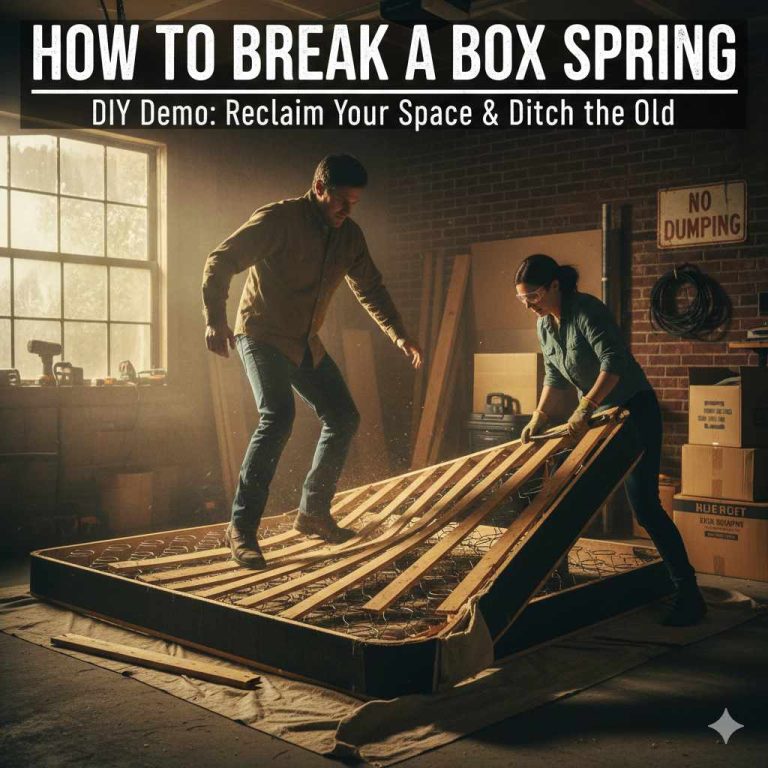
A: While it may seem like a practical DIY solution, cutting down a box spring is generally not recommended. Box springs are built with internal structural components such as wooden frames or metal grids that are designed to distribute weight evenly. Altering that structure can weaken the support system, cause uneven mattress sagging, void your warranty, and potentially create safety risks. If height is the concern, replacing it with a low-profile foundation or a Bunkie board is a safer and more effective solution.
Final Thoughts: Creating a Clean, Functional Platform Bed Setup
At the end of the day, learning how to hide a box spring on a platform bed isn’t just about appearance — it’s about aligning function, structure, and style.
Platform beds are designed to deliver a streamlined, modern look with built-in support. When a bulky box spring disrupts that design, the solution is rarely complicated. In many cases, the best move is simply removing the box spring altogether and letting the platform do what it was built to do. For mattresses that require additional support, switching to a low-profile foundation or Bunkie board keeps everything structurally sound without sacrificing aesthetics.
And if removing the box spring isn’t an option, thoughtful camouflage techniques like tailored bed skirts, frame wraps, or a clean fascia board can completely transform the visual outcome. The goal is cohesion — making the base look intentional rather than like an afterthought.
Related pick: Check today's price on Amazon
Products related to this article
Sponsored / affiliate links. As an Amazon Associate I earn from qualifying purchases. I may earn additional commission from eligible campaigns.