Split Box Spring Vs Box Spring: Essential Guide
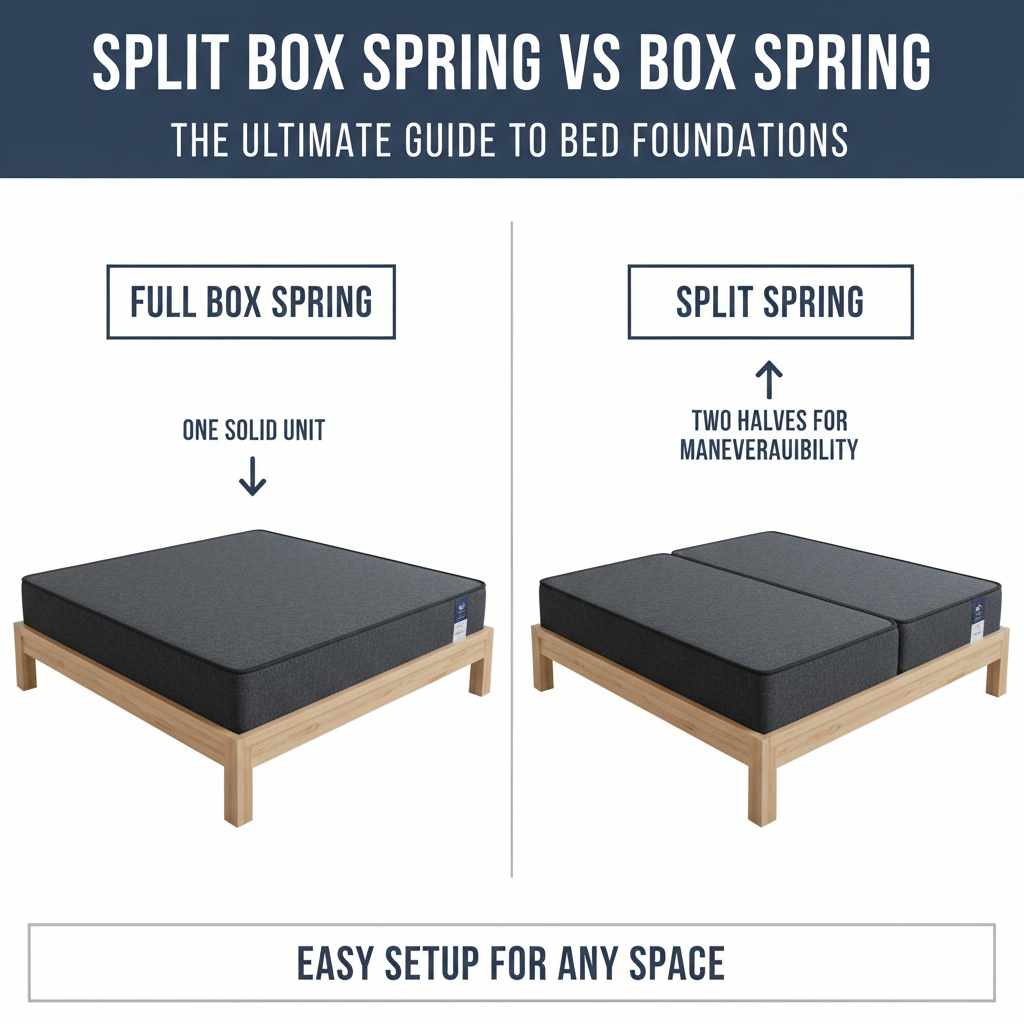
Our quick guide explains the essential difference between a standard box spring and a split box spring: a standard unit is one large piece, while a split unit is two smaller pieces designed for easier moving and fitting through tight doorways. Choosing the right one ensures easy setup and solid mattress support.

EMODA
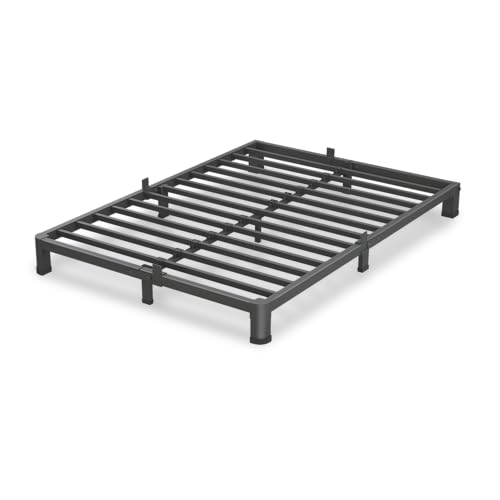
EMODA 7 Inch Split Queen Box Spring…
- 【Easy Move Split Design】: This metal queen sieze box spring splits in two pieces for effortless transport, fitting easily through…
- 【Robust Metal Construction】: Made of heavy-duty steel, this split queen box springs for bed supports 3000LBS. More collapse-resist…
- 【Easy-Clean Fabric Cover】: This 7 inch box spring queen includes a dust-resistant fabric cover with good breathability. It's easy…
As an Amazon Associate I earn from qualifying purchases.
Have you ever bought a brand-new mattress only to realize it won’t fit up your narrow staircase or around that sharp corner in the hall? It’s frustrating when something that should be simple turns into a moving nightmare. Many times, the base—the box spring—is the real culprit! We often overlook the foundation when planning a bedroom setup. But don’t worry, figuring out the difference between a standard box spring and a split box spring is easier than you think. As your friendly guide, I’ll break down exactly what each one is, why you might need one over the other, and how to make the best choice for your home and your sleep setup. Let’s tackle this foundation issue together so your new setup goes smoothly!
What Exactly Is a Box Spring? (The Basics)
Before we dive into the split versus standard debate, let’s quickly review what a box spring even does. Think of your box spring as the unsung hero under your mattress. It’s not just a decorative piece; it plays a crucial role in how your bed feels and lasts.
The Main Jobs of a Box Spring
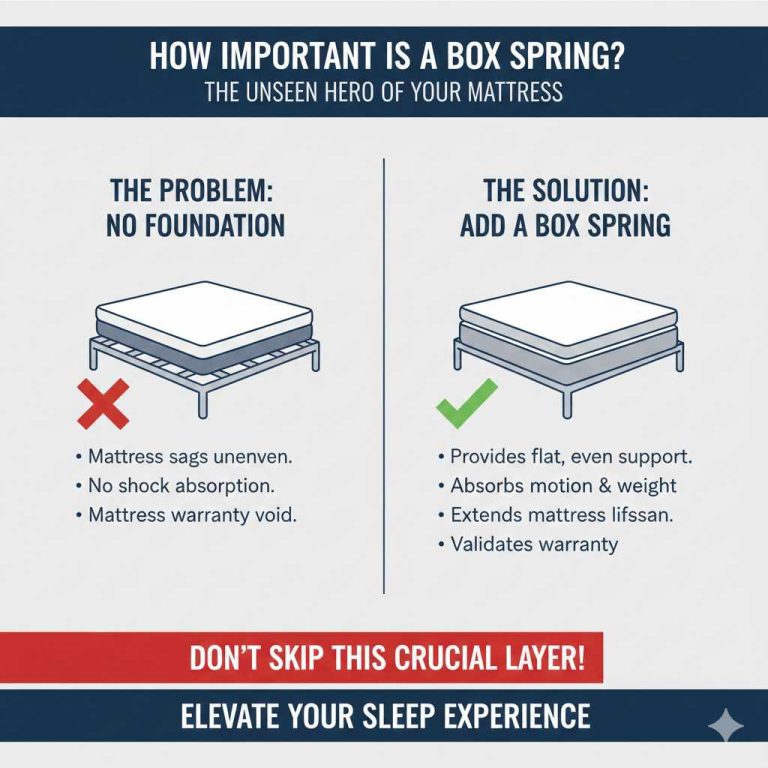
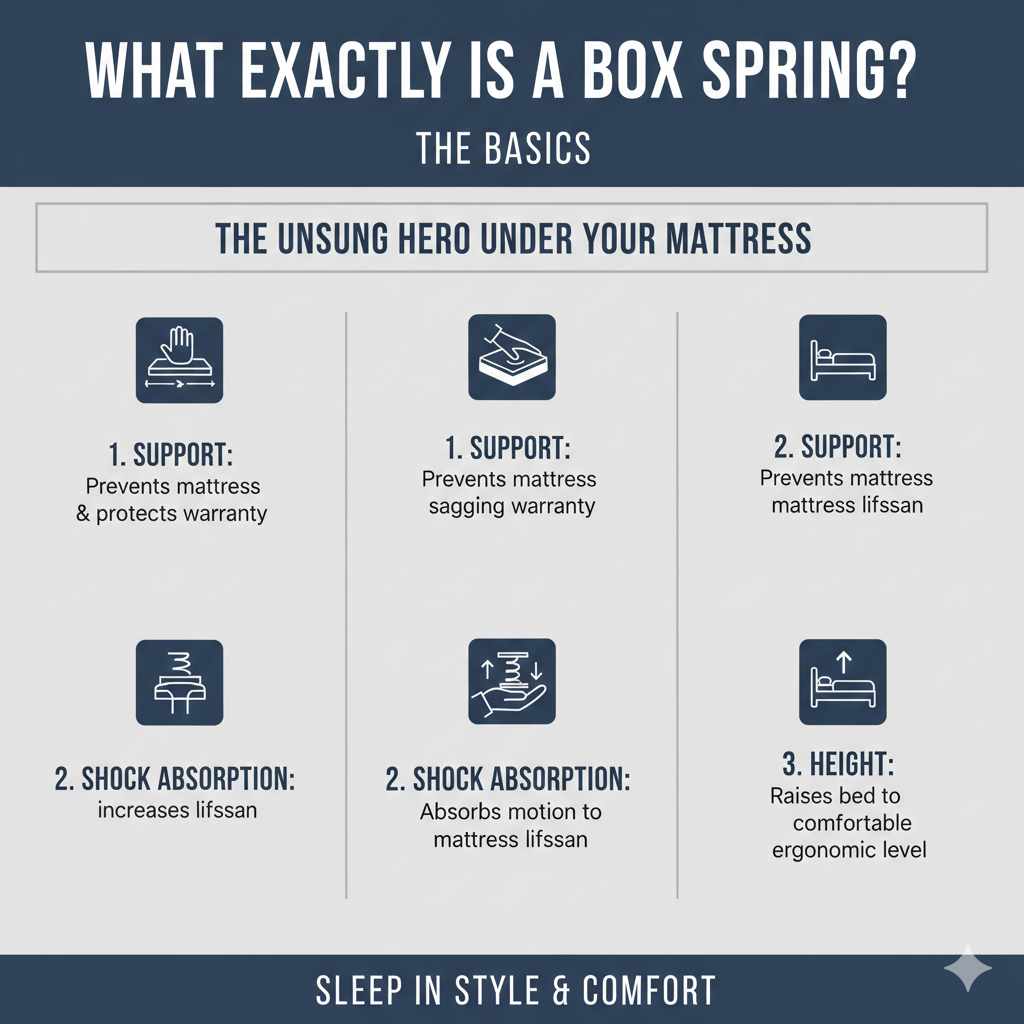
A box spring is essentially a sturdy wooden frame wrapped in fabric, often containing metal coils or a strong grid structure inside. Its job is threefold:
- Support: It provides a flat, level surface that prevents your mattress (especially innerspring or hybrid types) from sagging in the middle. This keeps your warranty valid, too!
- Shock Absorption: The internal structure absorbs some of the motion and pressure from getting in and out of bed, protecting the delicate springs inside your expensive mattress.
- Height: It raises the mattress to a comfortable height, making getting in and out of bed much easier, especially for older adults.
Standard vs Split: Introducing the Difference
The core difference between a standard box spring and a split box spring comes down to the size and number of pieces required for a specific bed size. Both offer the same level of support, but they are constructed differently for logistics.
Standard Box Spring Explained: The One-Piece Solution
A standard box spring is exactly what it sounds like: a single, solid unit designed to fit perfectly under your mattress.
When Do You Use a Standard Box Spring?
Standard box springs are typically used for smaller mattress sizes where one piece can easily navigate through doorways and stairwells.
- Twin (38” x 75”): Always one piece.
- Twin XL (38” x 80”): Always one piece.
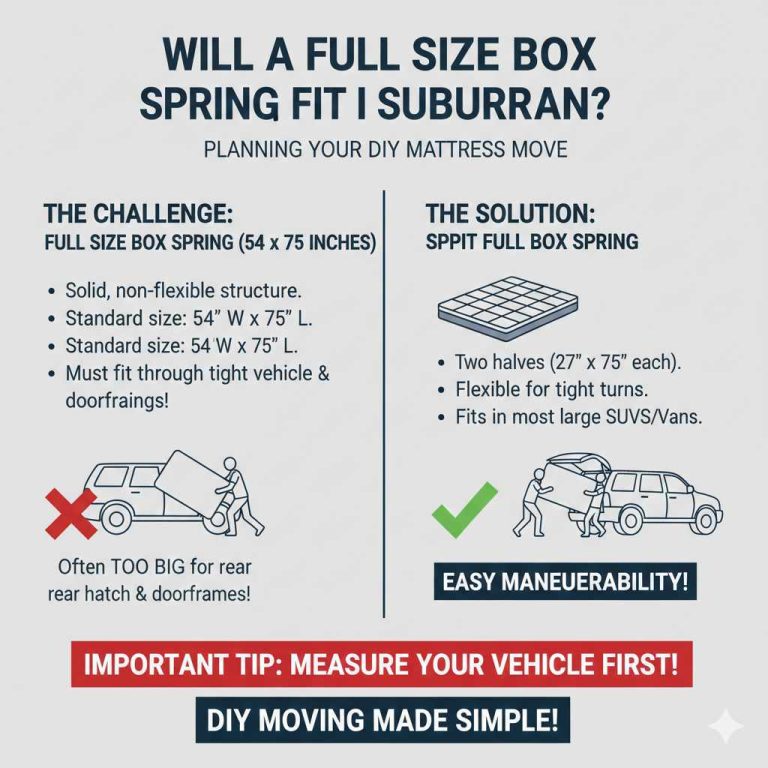
- Full/Double (54” x 75”): Usually one piece.
If you are moving into an apartment with wide hallways or a first-floor bedroom, the standard box spring is usually the simplest, most secure choice because it creates one continuous, solid foundation.
Pros and Cons of a Standard Box Spring
Like any foundational piece of furniture, there are trade-offs to consider when choosing the standard, single piece.
| Pros of Standard Box Spring | Cons of Standard Box Spring |
|---|---|
| Offers the most consistent support across the entire surface. | Extremely difficult, often impossible, to move up narrow stairs or around tight corners. |
| No joining seam means no potential for slight unevenness down the middle. | Requires wider entry access from the delivery truck to the bedroom. |
| Simple setup—just place it down and put the mattress on top. | Can be very heavy and cumbersome for one or two people to handle during setup. |
The Split Box Spring Explained: The Two-Piece Miracle
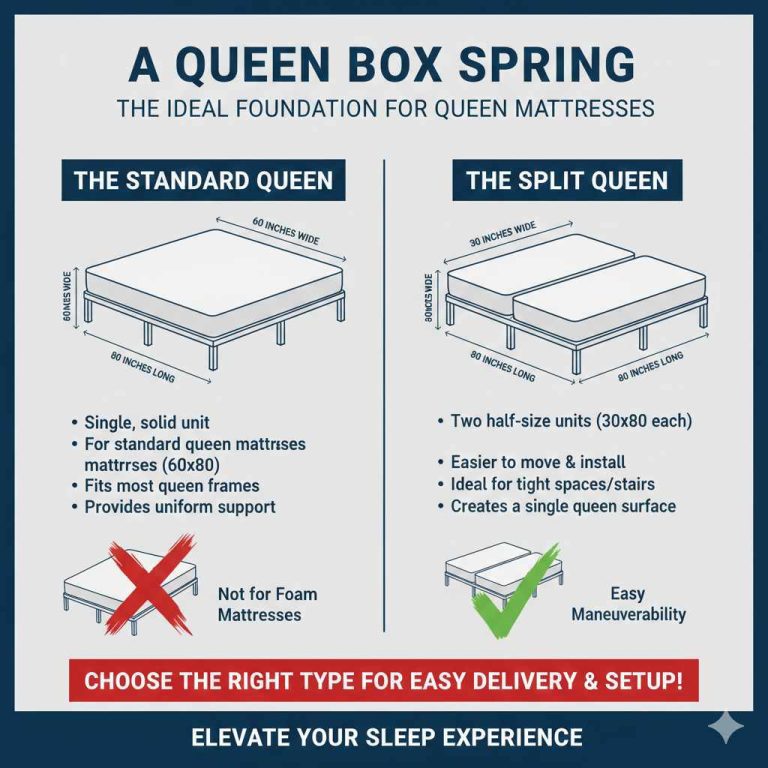
The split box spring is designed specifically to solve the moving puzzle associated with larger beds. Instead of one giant piece, a split box spring breaks the required support base into two equal halves that sit side-by-side under your mattress.
When Do You Need a Split Box Spring?
These are essential for Queen, King, and California King sizes, although they are sometimes used for Full XL beds if moving logistics are very tricky. They are engineered so that when placed together, they function exactly like a single, solid foundation.
- Queen (60” x 80”): Usually requires two separate pieces (each one 30” wide).
- King (76” x 80”): Requires two separate pieces (each one 38” wide).
- California King (72” x 84”): Requires two separate pieces tailored to these dimensions.
For example, a King bed needs a total width of 76 inches. A standard box spring would be 76 inches wide—hard to maneuver! A split set provides two pieces, each 38 inches wide. Two 38-inch pieces fit through nearly any standard doorway (usually 30–32 inches wide) much easier than one 76-inch slab. For more technical information on bed sizing standards, you can check resources from organizations like the Better Sleep Council, though they often focus on mattress dimensions, the box spring must conform to the frame.
Pros and Cons of a Split Box Spring
The advantages of splitting the foundation are mostly logistical, but there are minor structural considerations.
| Pros of Split Box Spring | Cons of Split Box Spring |
|---|---|
| Significantly easier to carry up stairs, around tight corners, and through narrow halls. | Two separate pieces mean a very slight, almost imperceptible seam down the middle. |
| Often easier for delivery drivers to maneuver into irregularly shaped homes. | Requires you to align the two pieces perfectly before placing the mattress on top. |
| Makes repositioning the bed much simpler if you decide to rearrange your room later. | If the two pieces shift over time, you might need to slightly readjust them. |
Split Box Spring Vs Box Spring: The Key Differences Summarized
To make your decision crystal clear, let’s put the primary distinguishing features side-by-side. Remember, the support level is virtually identical once they are installed.
| Feature | Standard Box Spring | Split Box Spring |
|---|---|---|
| Construction | One single, solid unit. | Two separate, equal halves. |
| Primary Use Size | Twin, Full/Double. | Queen, King, Cal King. |
| Moving Ease | Difficult for large sizes. | Excellent for navigating tight homes. |
| Seam Visibility | None. | A slight seam exists down the middle (usually covered by the mattress). |
Does the Split Affect Support or Comfort?
This is the most common concern. If you’re worried that the seam in a split box spring will create a dip, don’t be. Modern split systems are designed to be incredibly robust. When you place the two halves tightly flush against each other under the mattress, the mattress distributes weight evenly across both pieces. Any minimal gap is absorbed by the cushioning layers of your mattress. For modern foam, hybrid, or pocketed coil mattresses, the difference in foundational support between one solid unit and two perfectly joined halves is negligible.
How to Choose: Which Foundation is Right for Your Bedroom?
Selecting between standard and split isn’t about which one is “better”—it’s about which one fits your physical space. Here is a simple checklist to guide your choice.
Step 1: Know Your Bed Size
First, confirm your mattress size. If it’s Twin or Full, you are almost certainly using a standard piece. If it’s Queen, King, or Cal King, you must seriously consider the split option.
Step 2: Measure Your Path (The Crucial Step)
This is where you act like a detective. Measure these three areas before ordering:
- Doorway Width: Measure the narrowest interior doorway leading into the room.
- Stairwell Width: If you have stairs, measure the width of the landing and anywhere the frame has to pivot.
- Hallway Width: Check the tightest turns in your hallway between the main entry and your bedroom.
Remember, a standard Queen box spring is 60 inches wide. A standard King is 76 inches wide! If your narrowest point is less than 64 inches, getting a 76-inch King base through will be tough, if not impossible, unless you have very high ceilings that allow for vertical maneuvering.
Step 3: Consider Your Mattress Type
While most box springs work with most mattresses, some newer types have specific support requirements:
- Memory Foam/All-Foam Mattresses: These often require a solid, non-spring surface, like a platform bed or wooden slats spaced no more than 2–3 inches apart. If you must use a box spring (check the manufacturer’s warranty!), ensure the box spring is a “high-density foundation” or “bunkie board” style, which minimizes springs and maximizes flat surface area.
- Innerspring/Hybrid Mattresses: These are generally compatible with both standard and split box springs. The coil structure within the box spring pairs well with the coils in the mattress.
If you have an all-foam mattress, you might actually be looking for a “foundation” rather than a traditional box spring, which is often flatter and lower profile. Always check your warranty details—ignoring this can void your mattress coverage! You can research best practices for various mattress types on reliable consumer information sites.
The Setup Process: Installing Both Types
Setting up the foundation correctly ensures years of comfortable sleep. While the standard setup is easier, knowing how to manage the split setup will save you a huge headache later.
Setting Up a Standard Box Spring
This is straightforward:
- Clear the area where the bed will go.
- Unwrap the box spring base.
- Carefully carry the assembled unit into the room (this is the hard part for large sizes).
- Place it squarely on the bed frame or directly on the floor if using a low profile.
- Place your mattress on top.
Safety first: Due to the awkward size, always lift with your legs. If it’s a King or Queen, get another person to help you lift and carry it.
Setting Up a Split Box Spring (The Two-Part Synchronization)
This requires a little more coordination, but it’s very manageable.
- Unwrap Both Halves: Unwrap the two separate foundation pieces. They should be identical in size and covering.
- Position the First Half: Place the first piece where you want the bed to sit.
- Position the Second Half: Carefully slide the second piece next to the first one. Ensure the edges that meet are touching perfectly flat against each other.
- Check Alignment: Step back and visually check that the two halves form one large, continuous rectangle. The tops should be perfectly level.
- Secure (Optional but Recommended): Some split box springs come with small metal brackets or clips that slip over the seam on the bottom or sides to lock the two halves together. Use these if provided.
- Place the Mattress: Gently lower your mattress onto the prepared double foundation. The weight of the mattress will help keep the two pieces firmly pressed together.
When to Use Alternatives to a Box Spring Entirely
Sometimes, neither a standard nor a split box spring is the best choice. If you prefer a modern, low-to-the-ground look or have a specialty mattress, you might skip the base altogether.
Platform Beds
Platform beds have built-in support using slats or a solid panel system. They are designed to support the mattress directly, meaning you do not need a foundation or box spring underneath. This saves you the cost and height of an extra piece.
Metal Bed Frames with Closely Spaced Slats
Many modern metal frames use tightly spaced wooden slats (usually 2–3 inches apart). If your slats meet the requirements of your mattress warranty, you can place the mattress directly onto the slats, eliminating the need for any box spring, split or standard.

Frequently Asked Questions (FAQ) for Beginners
Q1: Can I use a split box spring with a standard Queen mattress?
A: Yes, you can. Most Queen beds are designed for a split foundation. Using two halves ensures you maintain the correct height and support for a Queen mattress, making it much easier to move.
Q2: Will my mattress warranty be voided if I use the wrong foundation?
A: Potentially, yes. Mattress warranties are very specific. You must use the foundation type (standard box spring, high-density foundation, or platform) recommended by the mattress manufacturer for your specific model. Always check the paperwork!
Q3: How much taller is a split box spring setup compared to just a low platform?
A: A standard or split box spring typically adds 7 to 9 inches of height. A low-profile foundation or platform bed might only add 5 to 6 inches. This difference impacts how easy it is to get in and out of bed.
Q4: What if my existing bed frame is too wide for split pieces?
A: If you have an old metal frame that uses cross-support bars but no solid center support, and the opening is too wide for two split halves to fit snugly against each other, you may need to purchase a center support beam or switch to a different frame style that supports the foundation evenly.
Q5: Do split King and standard King box springs have the same measurement?
A: Yes, for the overall footprint. Both cover a 76” x 80” area. The difference is that the split system delivers that 76 inches as two 38-inch wide units, whereas the standard would be one 76-inch unit.
Q6: Is a split box spring better for avoiding squeaks?
A: When installed correctly and tightly together, no. However, if the two halves of a split box spring shift over many years, that seam could become a slight hinge point, causing noise. A single standard unit will never develop that specific seam-related noise.
Conclusion: Making the Confident Choice
Deciding between a split box spring and a standard one boils down to geography—specifically, the geography of your home. If you are dealing with a Twin or Full bed in easy-to-access areas, the standard, single piece offers ultimate foundational continuity. For Queen, King, and Cal King users, the split design transforms a potential moving disaster into a manageable task.
Remember this simple rule: If you struggle to carry a large, awkward piece through your front door, the split option is your best friend. Both choices provide the necessary support for your mattress to last longer and keep your sleep comfortable. Take your measurements, trust the sizing guidelines, and you can confidently order the right foundation for your perfect night’s rest. You’ve got this!
Related pick: Check today's price on Amazon
Products related to this article
Sponsored / affiliate links. As an Amazon Associate I earn from qualifying purchases. I may earn additional commission from eligible campaigns.