Roasting Pan Size Chart for Home Kitchens
Choose a roasting pan that leaves at least 1 inch of space on all sides inside your oven and fits the food: 16–18 inches for most turkeys and large roasts, 13–15 inches for chickens and smaller cuts, with 2- to 3-inch sides for better drippings control. Tight pans block airflow, let juices spill, and make basting and lifting harder. This guide maps oven-fit math, pan depth, handle clearance, and food type to the right roasting-pan size.
Roasting pan size basics
The three most common roasting pan sizes are 14 inches, 16 inches, and 18 inches. Size is measured by length, not diagonal, so the number on the box should be treated as a starting point rather than the full fit picture. Width, depth, and handle shape can all change whether the pan works in your oven.
Interior cooking space is different from the outside measurement printed on the label. A pan may be sold as 16 inches long, yet the usable base can be smaller because the walls angle outward and the handles extend beyond the body. That is why you should compare the oven opening and the handle span, not the label alone.
Width and depth still matter. A wide pan can block airflow around the food, and a very deep pan can trap steam under the bird or roast. The goal is a pan that fits the oven, leaves room for heat to move, and gives the food enough sidewall to hold drippings.
Roasting pan fit calculator
Use this worksheet before you buy. Measure the oven interior width and depth, then compare those numbers with the pan body plus handle span. The safest choice leaves about 1 inch of open space on each side, with enough room for a rack if you plan to use one.
| Oven interior width | Oven interior depth | Handle span | Minimum clearance needed | Recommended pan size |
|---|---|---|---|---|
| Under 15 inches | Any standard depth | Fixed or wide handles | At least 1 inch on each side | Compact-oven fallback: 13 to 14 inches, or a smaller sheet-style roaster |
| 15 to 17 inches | At least 12 inches | Short or fold-down handles | 1 inch side clearance, plus rack space | 14-inch pan for chickens or small roasts |
| 17 to 19 inches | At least 13 inches | Moderate handle span | 1 inch side clearance and room to lift straight out | 16-inch pan for most home cooks |
| 19 inches or more | At least 14 inches | Longer fixed handles or larger rack | 1 inch side clearance, plus rack and grip room | 18-inch pan for large turkeys and big roasts |
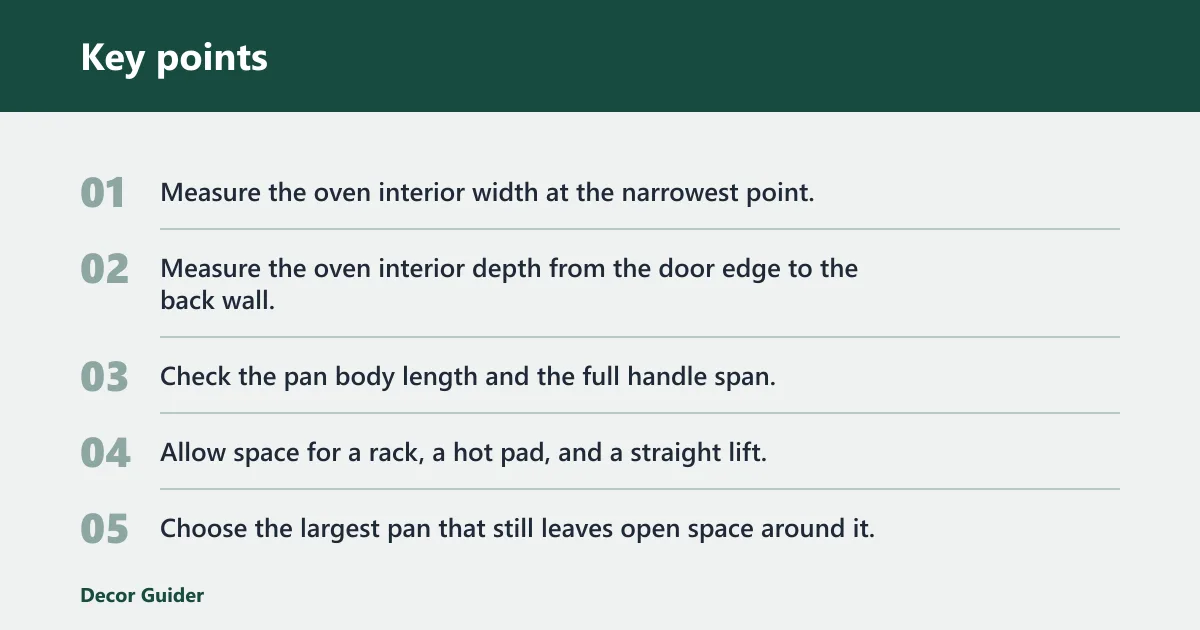
- Measure the oven interior width at the narrowest point.
- Measure the oven interior depth from the door edge to the back wall.
- Check the pan body length and the full handle span.
- Allow space for a rack, a hot pad, and a straight lift.
- Choose the largest pan that still leaves open space around it.
Say your oven is 16 1/2 inches wide and the pan handle span is close to that number. A 16-inch pan body may still fail the fit test if the handles hit the side walls before the pan clears the rack rails. That is why handle-inclusive measuring matters as much as the listed length.
What size roasting pan do you need for a turkey?
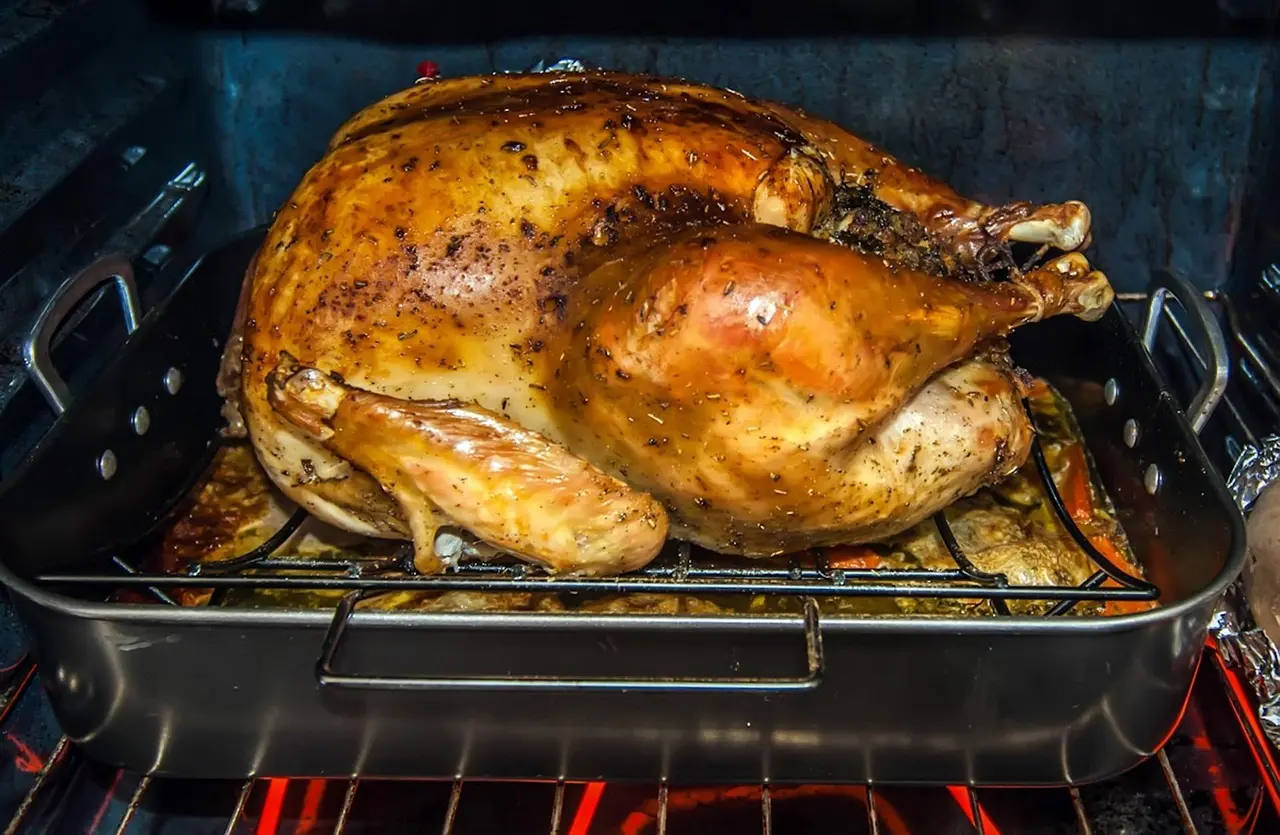
For turkey, start with the pan size and then confirm the bird weight. A 14-inch pan can typically accommodate around a 12 pound bird, a 16-inch roasting pan is a medium-sized option for most home cooks and can fit about a 16 pound turkey, and an 18-inch pan can fit up to a 24 pound turkey. Shape and rack style can shift those ranges a bit.
14-inch pan guidance
A 14-inch pan is the compact choice in the common size range. A small roasting pan about 14 x 10 inches fits a turkey up to about 12 pounds. That size is often enough for chicken, smaller turkeys, and weeknight roasts, especially if your oven is tight on clearance.
16-inch pan guidance
A 16-inch pan is the middle option and the most flexible for average ovens. A medium roasting pan about 16 x 13 inches fits up to about 18 to 20 pounds, and one common reference point lists about a 16 pound turkey for a 16-inch pan. It is the usual starting point for a family turkey.
18-inch pan guidance
An 18-inch pan is typically the largest size available for a home kitchen. A large roasting pan about 18 x 14 inches or more fits turkeys up to about 24 to 25 pounds, and one common guide puts the upper limit at 24 pounds. Confirm oven depth and handle span before choosing it, because large pans may not fit smaller ovens.
A common first-timer mistake is choosing the pan by bird weight only. A 20-pound turkey may fit the pan but still sit too close to the oven walls, which slows browning and makes it awkward to baste or turn the pan. The oven opening is part of the sizing decision.
How deep should a roasting pan be?
The ideal depth is often about 3 to 4 inches, and many cooks find 2 to 3 inches useful for lighter meals and drippings control. Depth changes browning, steam, and spill control at the same time. Too-deep pans can trap moisture around the food, while too-shallow pans can let juices run over the edge.
Depth for browning and air flow
A shallower pan allows more exposed surface area around the food, which helps hot air move across the top and sides. That matters for crisp skin on poultry and better browning on roast beef or pork. If the pan walls are too high, steam can build around the lower half of the food.
When deeper pans help
Deeper pans make sense when you expect a lot of drippings, plan to baste often, or want enough room for vegetables under the meat. They also help when you are roasting a bird with a rack and want to avoid splatter. Just avoid extra depth that climbs too far above the food line.
When shallower pans work better
Shallower pans suit chicken, smaller roasts, and foods that benefit from drier heat. They also make it easier to slide the pan in and out of the oven without catching the rack. If your main goal is crisping rather than braising, shallower usually works better.
Do you need a rack?
A removable rack is usually worth having. It lifts the meat out of the drippings so heat reaches the underside, which improves air circulation and helps skin crisp. It also keeps the roast from sitting in fat or juices, which can make the bottom softer than the top.
Racks matter most for turkey, chicken, and large roasts. They can also keep vegetables from stewing in their own moisture. If you are roasting something delicate or very small, you can sometimes cook without a rack, but the food will sit lower in the pan and pick up more moisture from below.
Suppose you are roasting a chicken in a deep pan without a rack. The skin on the bottom can soften while the breast browns normally, because the bird is resting in the pan juices. Add a rack, and the hot air reaches more of the skin while the juices collect below.
Materials and handle design
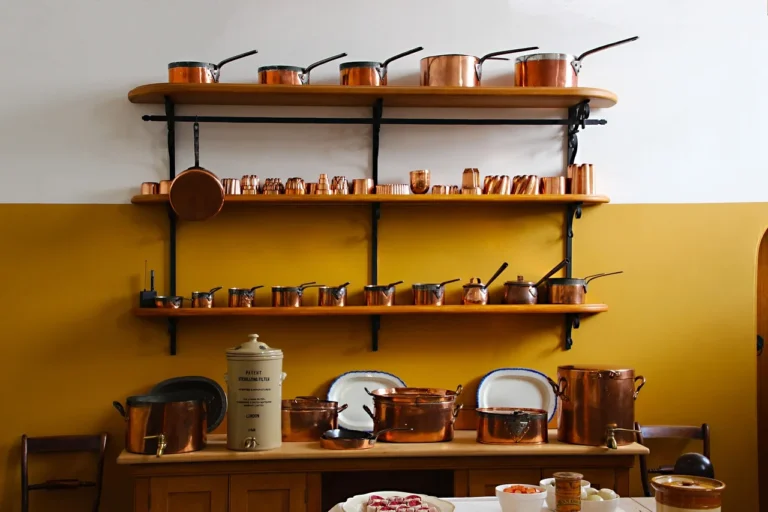
Stainless steel is a strong material option for many home kitchens. It resists rust, handles high heat well, and is commonly used in pans meant for frequent use. Copper and cast iron are also used, but they are heavier and can be harder to lift when loaded with food.
Stainless steel, copper, and cast iron
Stainless steel is the most straightforward choice for fit and cleanup. Copper conducts heat well but is less common in ordinary roasting pans. Cast iron holds heat well and can brown well, but the weight makes handle clearance and oven lift more important.
Enameled, carbon steel, and foil aluminum
Enameled and carbon steel pans sit in the middle for many cooks. Enameled surfaces are easier to wipe clean, while carbon steel can be sturdy without the bulk of cast iron. Disposable foil aluminum pans are useful for simple transport or holiday overflow, but they are less rigid and should not be treated like a heavy-duty permanent pan.
Fixed handles versus fold-down handles
Fixed handles can make lifting more secure, but they often increase the total span of the pan and can interfere with oven fit. Fold-down handles can solve a clearance problem, especially in compact ovens. Check the folded and unfolded measurements, since the handle shape can change both fit and grip.
Roasting pan fit by food
Match the pan to the meal, not only to the turkey chart. A pan that is perfect for a large bird may be awkward for vegetables, while a smaller pan may be ideal for chicken, weeknight roasts, or a lasagna that needs shallow, even heating. Food height and moisture level should guide the choice.
Turkey and whole chicken
Whole turkey usually needs the larger end of the common size range, with 16-inch and 18-inch pans doing most of the work. Whole chicken can fit comfortably in a 14-inch pan, especially if the oven is small. Keep enough room for the rack, because poultry benefits from lifted airflow.
Roast beef, pork, and vegetables
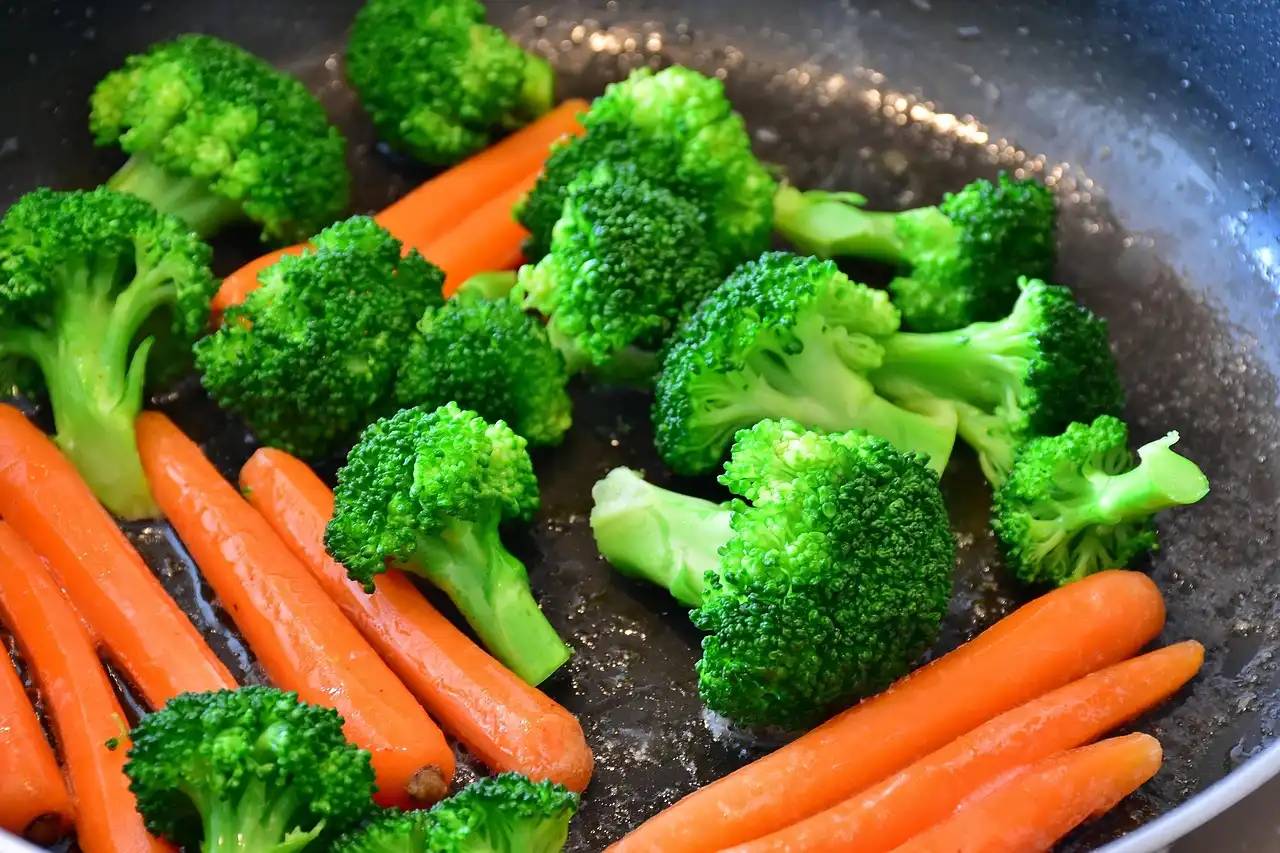
Roast beef and pork often do well in 14-inch or 16-inch pans, depending on the cut. Vegetables need enough floor space for a single layer, or they will steam instead of brown. A pan that is too large for the amount of food can spread drippings too thin and dry them out early.
Lasagna and other oven meals
Lasagna can fit in a roasting pan when you need a deeper, broader vessel for a crowd, but check the interior base size before assuming the labeled length is enough. Other oven meals, such as casseroles or layered vegetables, can also use a roasting pan when you need high sides and a sturdy body.
Frequently asked questions
How do I choose between a 14-inch, 16-inch, and 18-inch roasting pan?
Start with your oven size, then match the pan to the food. Choose 14 inches for chickens and smaller roasts, 16 inches for most home cooks, and 18 inches for large turkeys or big batches of food. If the handles or rack push the pan too close to the oven walls, step down a size.
How deep should a roasting pan be for best browning?
The ideal depth is 3 to 4 inches, though shallower sides can brown food faster when spill risk is low. Deep pans help contain drippings and suit wetter foods, but they can trap steam around the lower sides of the roast. For crisp skin or stronger browning, avoid overly deep walls.
Will a roasting pan with handles fit in my oven?
It may or may not, depending on the handle span, not just the pan length. Measure the oven interior width and depth, then compare that with the full outside span of the pan, including handles. Fold-down handles can help in compact ovens, but fixed handles may block the rack or side walls.
What is the difference between interior and exterior roasting pan measurements?
The exterior measurement is the full outside size of the pan, including walls and handles. The interior measurement is the usable cooking space inside the sides. A pan can be sold as 16 inches long while offering less usable base length, so check both numbers before you buy.
What pan size works best for a small oven or compact kitchen?
A compact oven usually does better with a 14-inch pan or a smaller foil aluminum option. Leave at least 1 inch of clearance on all sides, and watch the handle span carefully. If the oven is especially tight, choose a pan with fold-down handles or a lower-profile body.
Do I need a rack in a roasting pan?
A rack is strongly useful for most roasts because it lifts the food out of the drippings, improves air circulation, and helps skin crisp. It is less necessary for foods that need to sit in liquid or sauce. If you skip the rack, expect softer bottoms and less even heat around the meat.
What’s the largest turkey that fits in a standard roasting pan?
For a standard home kitchen, the largest common size is usually an 18-inch pan, which can fit up to a 24 pound turkey. That is only part of the decision, though. If the oven is narrow or the handles are wide, the pan may still be too large to use safely.
Products related to this article
Sponsored / affiliate links. As an Amazon Associate I earn from qualifying purchases. I may earn additional commission from eligible campaigns.
 Golden Home Essentials XXXL Heavy Duty Couch Support for Sagging Cushions - 30in x 68in Extra Wide Sofa Cushion Board - 0.4in Saggy Cushion for Seat Support
 Mohawk Home Non Slip Rug Pad 3' x 5'- 1/4" Thick Felt + Latex Rubber Gripper - Dual Surface Cushion for Hardwood, Carpet, Tile Floors, Made in USA