Best TV Stands for Renter-Friendly Homes (2026): we compared
The best TV stand for renter-friendly homes is a freestanding console with a wide base, felt or rubber feet, and no-drill cable management; choose one with a bit more weight capacity than your TV requires. Cheap stands scratch floors, mark walls, and can cost you part of your deposit. This guide compares the renter-safe features that matter most: lease-friendly setup, floor protection, portability, and easy move-out.
This guide is part of our TV stand guide: types, sizes, setup, and style series.
Quick comparison
| Product | Badge | Best for | Price | ||
|---|---|---|---|---|---|
 |
Universal TV Stand – Table Top TV Stand for 27-60 inch LCDHemudu | Our pick | 27-60 in · 88 lb · 9 levels | $26.99
Price as of 1 Oct 2026
|
View |
 |
Ameriwood Home Carson TV Stand for TVs up to 50", BlackAmeriwood Home | Also great | Up to 50 in · 55 lb · Black | $101.99
Price as of 1 Oct 2026
|
View |
 |
Walker Edison Portsmouth Classic 2 Glass Door TV Stand forWalker Edison | Upgrade pick | Up to 80 in · Dark Walnut · Glass | $223.99
Price as of 1 Oct 2026
|
View |
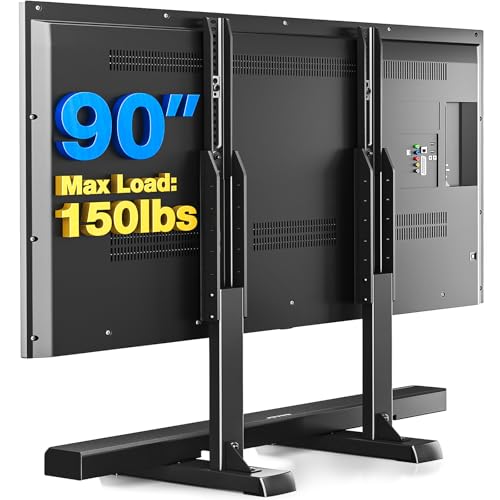 |
Rfiver Table Top TV Stand with Height Adjustable TV LegsRfiver | Budget pick | 37-90 in · 150 lb · 6 levels | $34.99
Price as of 1 Oct 2026
|
View |
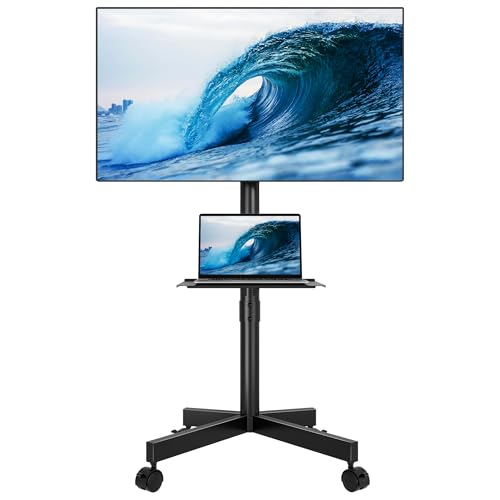 |
BONTEC Rolling TV Stand for 23-65 Inch TVs,Mobile TV CartBONTEC | Pair with it | 23-65 in · Mobile · Wheels | $39.98
Price as of 1 Oct 2026
|
View |
For strict leases, the safest route is usually a no-drill or freestanding stand with built-in cord control and anti-tip hardware. For larger TVs, weight capacity and base width matter more than the finish or door style.
Small rooms usually do better with a compact console or tabletop stand. I see frequent movers get fewer headaches with a rolling stand, because it comes apart cleanly and goes back together without much fuss. Large TVs and homes with kids or pets need the stiffest base and the best tip resistance, not the prettiest cabinet.
According to realhomes.com — The Real Homes article was published on 17 February 2024.
How we chose
We compared each option against the rental failure points that cause the most trouble: wall damage, wobble, floor scuffs, cord clutter, and move-out hassle.
We also checked TV width fit, surface depth, height for viewing angle, and stated weight capacity, since a stand that looks right can still be wrong for the television.
Storage mattered too, but only after safety and lease compliance. Open shelves help airflow; closed cabinets hide clutter, but they can trap heat and block a soundbar if the opening is too tight.

Hemudu universal tabletop stand: best for strict leases
The Hemudu stand is the strongest fit for renters who want a simple, damage-free setup on a media console or dresser. It suits apartments where drilling is off-limits and the TV needs a stable tabletop base with easy height adjustment.
What stands out is the 9-level height range, tempered glass base, and wire management, all of which help with viewing angle and cord control without touching the wall. Based on the spec sheet and owner feedback patterns, it is especially practical for first apartments and temporary housing.
The drawback is that it is a tabletop solution, so it depends on the furniture underneath it. If the console is shallow, wobbly, or too low, the setup can still feel cramped or unstable.
Ameriwood Home Carson TV stand: best for hidden storage
The Ameriwood Home Carson fits renters who need closed storage for remotes, games, and extra cables. It works well in living rooms where visible clutter is the bigger problem than having lots of open shelf space.
Its two doors and adjustable shelves make it useful for hiding media gear while keeping the front clean. The built-in wire management helps, and the size is a sensible match for smaller screens and moderate room footprints.
The drawback is the 50-inch TV limit, which rules it out for many larger sets. Closed storage also means less airflow than an open design, so hot consoles need more careful placement.
Walker Edison Portsmouth classic TV stand: best for large TVs
The Walker Edison Portsmouth is the better pick when the TV is large and the renter wants a low-risk cabinet with real storage. It fits homes that have room for a wider console and need a more substantial base than a light tabletop stand.
Its three adjustable shelves and open center cubby help separate a soundbar, game consoles, and streaming devices without crowding everything into one compartment. The glass-door design gives access while still hiding some visual clutter.
The drawback is size: this is not the easiest choice for tight apartments, narrow doorways, or frequent moves. It is also heavier in presence, so it needs more careful floor clearance planning than a compact stand.
Rfiver height-adjustable tabletop stand: best for large TVs on a console
The Rfiver stand is a strong choice for renters with larger TVs who still want a no-drill setup. It is especially useful when the television sits on an existing console or desk that needs a more stable replacement for the stock feet.
The double T-shaped steel base is the main selling point here, and the six-level height adjustment gives more control over viewing angle than many basic tabletop stands. Based on the spec sheet, it is the most convincing option in this group for bigger screens that still need a furniture-top solution.
The drawback is that it still depends on the stability of the furniture below it. If the stand is on a thin-top cabinet or a soft, uneven surface, the stronger base cannot solve every problem.
BONTEC rolling TV stand: best for frequent movers
The BONTEC rolling stand is the best fit for renters who change rooms often, rearrange furniture, or need the TV to work in more than one spot. Locking brakes make it practical for temporary setups without wall drilling.
Its mobility is the main advantage, and the adjustable media shelf gives room for a laptop or console. For roommates, studio apartments, or short-term leases, that flexibility can matter more than a closed cabinet or decorative finish.
The drawback is that wheels add another point of attention. On thick carpet or uneven flooring, any rolling stand needs the brakes engaged and the load centered carefully before use.
What is the best TV stand for a renter-friendly home?
The best TV stand for a renter-friendly home is a freestanding console or tabletop stand that avoids wall drilling, protects the floor, and keeps cords under control. The right pick depends less on style than on the home’s failure point: wobble, tip risk, tight clearance, or move-out speed.
For most renters, the safest default is a stand with a wide footprint, anti-tip parts, and enough storage for the devices you actually use. If the home has children or pets, safety beats hidden storage. If the lease is strict, wall-safe setup comes first.
Best fit by renter type
First apartment renters usually do best with the Hemudu or Rfiver because both keep setup simple and avoid wall work. Frequent movers often prefer the BONTEC because rolling furniture is easier to reposition and disassemble.
Pet owners and child-safe homes should favor the stiffer base and stronger anti-tip approach, which makes the Rfiver the safest all-around bet in this list. If hidden storage is the main need, the Ameriwood Home Carson is the cleaner choice.
Do I need to drill into the wall for a TV stand in an apartment?
No, you usually do not need to drill into the wall for a TV stand in an apartment. A freestanding TV stand or tabletop stand is often the better answer because it avoids lease conflict, wall patching, and the risk of leaving anchor holes behind.
Drilling becomes a different decision when a true wall mount is required. For most renters, a stand plus anti-tip hardware is easier to remove, easier to relocate, and less likely to trigger a deposit dispute.
When a freestanding stand is better than a wall mount
Choose a freestanding stand when the lease forbids drilling, when you expect to move soon, or when you want to avoid patching and repainting. It is also the safer call when furniture must sit on a floating floor or be moved between rooms often.
A wall mount can make sense only when the landlord allows anchors and you have a long-term setup. Even then, many renters still prefer a stand because it changes with the room instead of permanently changing the wall.
When anchors or adhesives are enough, and when they are not
Anti-tip straps or renter-safe anchor alternatives help when a stand could shift or tip, especially with children or pets around. Adhesive products can be useful for light accessories, but they are not a substitute for structural support.
Use adhesive wall accessories only on smooth surfaces and only within the stated weight limits. Command Strips are described as damage-free, and renter-friendly DIYs include hanging shelves with adhesive strips; floating shelves can attach with sticking adhesive strips. Those are good for small items, not for carrying the TV itself.
What TV stand features are best for renters?
The best renter features are a wide, stable base, floor-safe feet, cord routing, anti-tip hardware, and easy disassembly. Storage matters, but it should never come before safety or lease compliance.
Look for a stand that matches the TV’s width, depth, and weight while leaving space for the room layout. A beautiful cabinet that blocks airflow, crowds the soundbar, or scratches the floor is the wrong furniture in a rental.
TV size, surface depth, and height
The TV should sit comfortably within the stand’s width, with enough edge support that the screen does not feel top-heavy. Surface depth matters because shallow furniture can make feet hang too close to the edge, which increases wobble.
Height affects viewing angle. A tabletop stand with adjustable levels can help line the screen up with seated eye level, while a console that is too low can force neck strain during long viewing sessions.
Weight capacity and room clearance
Weight capacity should leave margin above the TV’s real load, especially if a soundbar or other gear sits on the same unit. Room clearance matters too, because a stand that blocks a doorway, radiator, outlet, or vent creates daily friction.
For small rentals, measure the stand’s footprint and the path around it before buying. A compact footprint can be more valuable than extra shelves if the room already feels tight.
Media storage and ventilation
Open shelves are best for airflow and quick access to game consoles. Closed cabinets hide clutter better, but they can trap heat and make it harder to route cables cleanly.
Soundbars need clear front space and enough height so the speaker is not buried inside a cabinet opening. If the shelf opening is too low, the sound can bounce oddly or the front display can be blocked.
How do I hide TV cords in a rental without drilling?
The easiest no-drill method is to route cords behind the stand, conceal the power strip inside a shelf or cabinet opening, and use adhesive cable clips where the cord path stays visible. This keeps the setup tidy without leaving holes or damaged paint.
For renters, the goal is not perfect invisibility. It is controlled cable routing that can be removed later without tearing drywall or pulling finish off the wall.
No-drill wire hiding methods that work
Use baskets to hide wires when the cords drop behind a console, since baskets are one of the rental-friendly DIY solutions already recommended in the source material. That works especially well for excess slack, power bricks, and the small items that collect around a TV.
Keep the power strip on the stand, not loosely on the floor, so the plug cluster stays accessible and less exposed to pets or vacuum traffic. Adhesive clips are best for short wall runs or the final drop behind the furniture.
What to avoid with adhesive products
Adhesive wall products work best on smooth, clean surfaces and should stay within their stated weight limits. Rough paint, textured walls, and humid rooms can reduce hold, which is why renters should treat them as light-duty helpers, not structural support.
If a cable path needs to carry real weight, such as a surge protector or a heavy adapter bundle, keep that load on the furniture itself. That is safer for both the wall and the lease deposit.
Are no-drill TV stands stable enough for large TVs?
Yes, some no-drill TV stands are stable enough for large TVs, but only when the base is wide, the weight limit is generous, and anti-tip parts are installed correctly. Stability depends on the stand’s structure and the room setup, not just the screen size on the box.
Large TVs increase the importance of load capacity, feet design, and balance. A stand that feels fine with a 43-inch set may be too flexible for a much bigger one.
What to check before buying
- Confirm the TV width fits the stand with room on both sides.
- Check the stated weight capacity and leave margin above the TV weight.
- Inspect the feet or base shape for wobble resistance.
- Look for included straps or a renter-safe anchor alternative.
- Make sure the stand leaves space for cords, consoles, and ventilation.
If any of those points fail, the stand may still work for a smaller TV but not for a large one. For child-safe or pet-safe homes, tip resistance matters as much as storage.
How do I choose a TV stand that won’t damage rental walls or floors?
Choose a stand with felt or rubber feet, a stable footprint, and no need for wall drilling. Then check whether it can be assembled and moved without scraping paint, denting baseboards, or crushing soft flooring.
Renter-safe furniture should come apart cleanly and leave the room looking the same when it leaves. That is the real test, not how good it looks on day one.
Floor protection and furniture risers
Furniture risers can help when a stand needs more under-storage or a little more height for viewing. They should only be used with a clear load rating and with floor protection underneath if the flooring is soft or easily marked.
Risers are a fix for specific problems, not a universal upgrade. If the stand already sits too high or the room already feels cramped, extra height can make the setup worse.
Adhesive wall accessories as a limited rental tactic
Command Strips are described as damage-free, which makes them useful for light accessories like remotes, small organizers, or cable guides. They are not the answer for holding a TV, a heavy shelf, or anything that can strain the adhesive.
Adhesive mounting is best when the item is light, the surface is smooth, and removal matters more than permanence. That keeps the wall intact and the move-out process simpler.
Renter decision matrix
Use this matrix when the apartment rulebook matters more than the style of the cabinet. The best stand is the one that solves your most likely failure point without creating a new one.
| Renter type | Zero-wall-damage setup | Move-out ease | Storage capacity | Safety | Short recommendation |
|---|---|---|---|---|---|
| Strict lease, first apartment | 5 | 5 | 3 | 4 | Hemudu for a simple tabletop setup with easy removal. |
| Frequent mover | 4 | 5 | 3 | 4 | BONTEC for quick relocation and locked wheels. |
| Pet owner | 4 | 4 | 3 | 5 | Rfiver for the stiffer base and stronger tip resistance. |
| Family with children | 4 | 4 | 4 | 5 | Rfiver or Ameriwood Home Carson, depending on whether safety or hidden storage matters more. |
| Small-room renter | 5 | 4 | 4 | 4 | Hemudu for compact placement, or Ameriwood Home Carson if closed storage is needed. |
The scorecard points to a simple rule: strict leases favor no-drill setups, heavy screens favor the stiffest base, and busy family rooms need the best anti-tip protection. Storage should be the last tie-breaker, not the first filter.
Which one should you buy
Buy the Hemudu if you want the safest all-around choice for a lease that forbids wall work. It is the cleanest answer for a small or medium TV on a furniture top.
Buy the Rfiver if the TV is large, the base needs more stiffness, or pets and children are part of the risk profile. Its steel base gives the most confidence in this group for bigger screens.
Buy the Ameriwood Home Carson if hidden storage matters most and the TV is within its size range. Buy the Walker Edison Portsmouth if you need a larger cabinet with room for multiple devices and can spare the floor space.
Buy the BONTEC if your setup changes often or the TV has to move between rooms. A rolling stand is the most adaptable rental-friendly alternative when fixed placement is not the priority.
If your lease is strict and your wall is off-limits, skip any setup that depends on anchors you cannot remove cleanly. Furniture risers and adhesive wall accessories are useful only for small, light tasks, not for supporting the television itself.
Frequently asked questions
Can I use a TV stand instead of a wall mount in a rental?
Yes, and for many renters that is the better option. A stand avoids wall damage, is easier to move, and is simpler to remove at move-out. It is especially practical when the lease is strict or when the TV setup may change again soon.
Products related to this article
Sponsored / affiliate links. As an Amazon Associate I earn from qualifying purchases. I may earn additional commission from eligible campaigns.