Best TV Stands for Storage: we compared (2026)
The best TV stand for storage is the one that fits your mess: closed cabinets for remotes, games, and boxes; open shelves for consoles and sound bars; pick one ventilated bay and a weight rating above your TV plus gear.
Choose badly and you get blocked airflow, cable tangles, wobbly furniture, and space that sits empty.
This guide compares concealed and open storage, fit, ventilation, cable paths, and stability so you can buy by what you need to store.
Quick comparison
| Product | Badge | Best for | Price | ||
|---|---|---|---|---|---|
 |
ETELI Tall Black TV Stand with Storage Small EntertainmentETELI | Budget pick | Tall 3-tier · Up to 50 in TV | $52.99
Price as of 28 Sep 2026
|
View |
 |
Walker Edison Mid Century Modern-TV Stand Console with 3Walker Edison | Upgrade pick | 60 in · 150 lb capacity · Mid-century style | $437.59
Price as of 28 Sep 2026
|
View |
 |
74" Large LED Farmhouse TV Stand for 80/75/70 Inch TVs withchartustriable | Also great | 74 in · Up to 80 in TV · USB | $221.96
Price as of 28 Sep 2026
|
View |
 |
Martin Furniture Floating Tv Console, 60", Stone GrayMartin Furniture | Pair with it | 60 in · Floating console · Stone gray | $57.58
Price as of 28 Sep 2026
|
View |
 |
Modway Render Mid-Century Modern Low Profile 59 Inch TVModway | Also great | 59 in · Low profile · Walnut finish | $183.58
Price as of 28 Sep 2026
|
View |
The best picks sort by storage need, not style. In apartments, I usually favor shallower, lighter consoles. Family rooms and media-heavy setups need deeper cabinets, better cord routing, and enough interior height for consoles and baskets.
Storage layout matters more than a finish photo. One smart bay can beat a larger piece with wasted compartments.
How we chose
We compared storage layout first: number of shelves, cabinets, or drawers; how much of that storage is open versus closed; and whether the shelves are actually useful for bins, books, and devices.
Then we checked TV fit, support layout, and stability. A useful stand needs enough top width for the set, sensible center support, and a weight rating that leaves room for accessories instead of running the load limit to the edge.
We also weighed cord management, ventilation, and assembly time. Rear cutouts, open backs, and decent cable paths matter more than marketing language once a router, console, and power strip all live in the same cabinet.
Finally, we looked at material durability and price-to-feature tradeoff. Solid wood, veneer or laminate quality, hardware durability, chip resistance, and stain cleanup all change how a stand holds up after the first month.
Best overall: Ikea Havsta TV Unit: best for balanced concealed storage
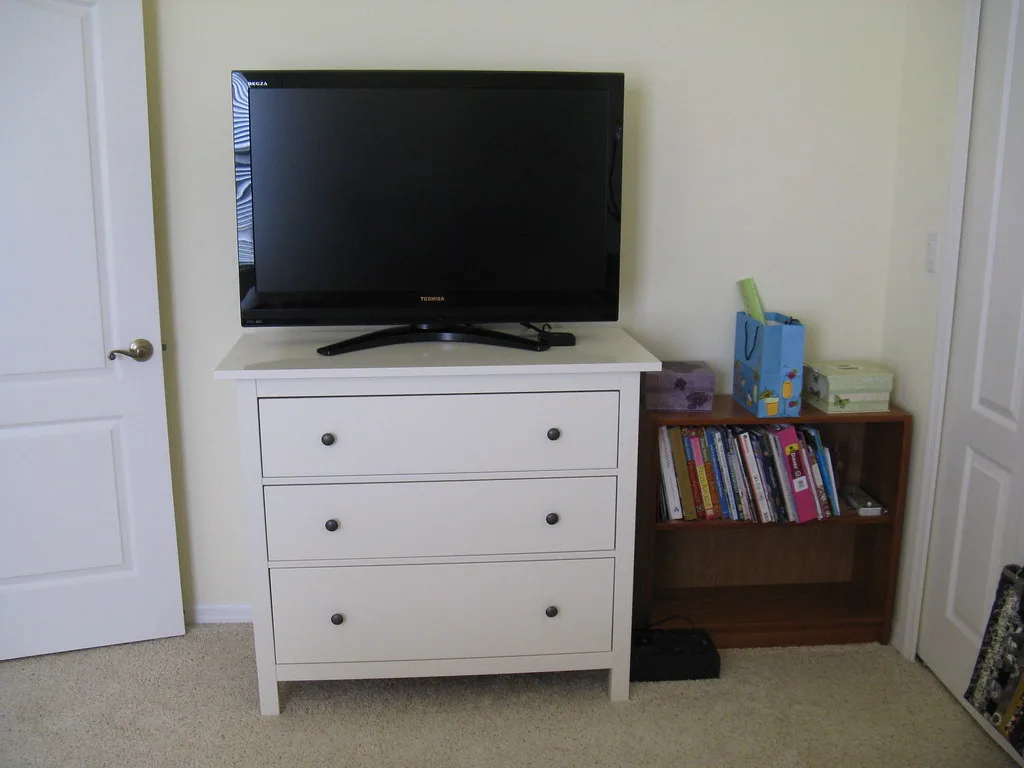
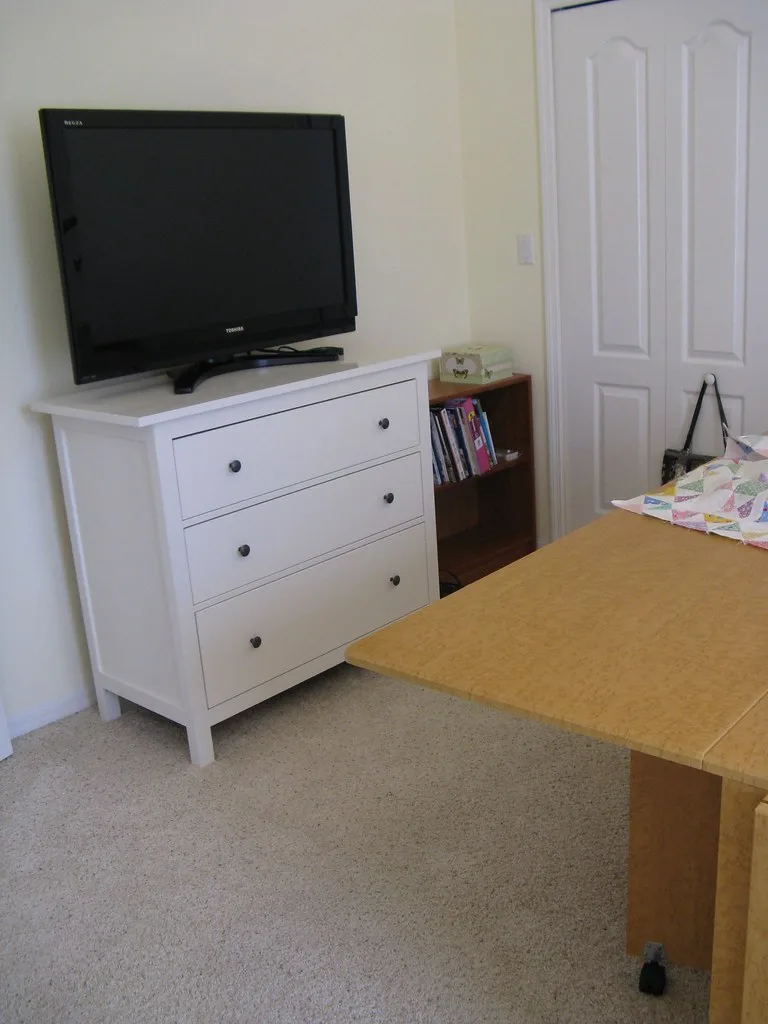
This is the best overall pick for storage-first shoppers because it balances closed storage, open access, and a clean layout that can handle everyday clutter without forcing everything onto display. The editor’s best overall pick is the Ikea Havsta TV Unit, and it fits the brief when you want one stand to handle mixed storage instead of a single use case.
It stores remotes, spare controllers, books, and baskets well, especially for people who want some items hidden and others easy to reach. The open back helps with router and extension cord use, which makes it friendlier to streaming gear than many fully enclosed cabinets.
The main limit is that it is not the deepest or most aggressive storage piece on this list. The thin acrylic lacquer finish also means it deserves more care than a rough-and-tumble utility stand, especially around sharp objects and repeated wipe-downs.
Best for small apartments: Martin Furniture Floating Tv Console: best for a tight footprint
This is the best apartment choice when floor space matters more than maximum capacity. A floating console keeps the room visually lighter, and the wall-mounted layout can work well when you need a place for audio/video components without taking up the same footprint as a full cabinet.
It suits small living rooms, narrow entryway walls, and renters who need the room to feel open. The compartmentalized storage is simple and practical, but it will not swallow large baskets or bulky board games the way a deeper freestanding console can.
The drawback is obvious: wall mounting raises the commitment level and can limit flexibility if your layout changes often. If you want to move the TV from room to room, or you need tall cabinet space for toys, a floating unit is less forgiving.
Best for families: chartustriable 74-inch farmhouse TV stand: best for mixed closed and adjustable storage
This is the family-friendly pick because it blends adjustable shelves with closed cabinets and extra charging convenience. The built-in charging socket and USB port help in busy rooms where controllers, tablets, and streaming accessories all need a place to land.
It is useful for toys, baskets, books, and extra media boxes because the larger footprint gives you more placement choices. Adjustable shelving matters here; it lets the same cabinet shift between taller items and low bins instead of forcing a one-size-fits-none layout.
The tradeoff is that bigger farmhouse stands can collect dust on open areas and may show wear faster if kids drag toys across the surface. Rustic finishes also vary in durability, so the buyer should look closely at the hardware feel and surface cleanup expectations.
Best for consoles and routers: Walker Edison Mid Century Modern-TV Stand Console: best for media gear
This is the best pick for consoles, routers, and day-to-day media gear because it gives you closed cabinet storage with drawers while still keeping the layout organized for devices that need quick access. The editor’s best modern pick is the Walker Edison Modern Scandinavian Console, and its fluted cabinets and black hardware give it a cleaner front than most mixed-storage stands.
It is especially useful when you want to hide remotes, game cases, and power strips without burying the equipment too deeply. The two tiers of shelf storage inside make it easier to separate living-room clutter from electronics, which helps when multiple people use the same setup.
The drawback is that closed storage can work against airflow if the gear load is heavy. It also took about two hours to assemble, so buyers should expect a real build rather than a quick flat-pack task.
What to store in tv stand
A TV stand is best for items you use often but do not want scattered across the room: remotes, controllers, game cases, streaming boxes, books, baskets, extra chargers, and a few decorative objects. The best storage layout keeps daily items in the easiest-open section and bulkier clutter behind doors or in deeper cabinets.
For most homes, the right question is not what can fit, but what should live there. If an item needs airflow, quick access, or signal visibility, keep it on an open shelf or in a ventilated bay.
What to store in tv cabinet
A TV cabinet is better for items that benefit from concealment: board games, DVDs, spare cables, manuals, seasonal decor, and kid clutter that you do not want on display. Closed cabinets are also useful for pets and small children because they protect gear and reduce grab-and-toss access.
If the cabinet will hold electronics, leave space for heat and remote signals. Doors that block controllers or trap warm air turn good storage into a nuisance fast.
Best for small apartments: Modway Render Mid-Century Modern Low Profile TV Stand: best for compact open-and-closed storage
This is the better choice for buyers who want a lower-profile stand with sliding doors and adjustable shelves. The best modern low-profile option works well in apartments because it can hide some clutter while keeping the silhouette lighter than bulky cabinets.
It is a good fit for remotes, streaming boxes, and a few books, especially when you want one side open for living-room access and the other side concealed. Sliding doors are useful in tighter rooms because they do not need swing clearance.
The drawback is that sliding-door systems can limit the usable opening at one time, so very large baskets or oversized gear may be awkward. The laminate finish also asks for care around sharp corners and heavy daily use.
Best budget option: ETELI Tall Black TV Stand: best for basic open storage
The Vivo Artistic Easel Studio TV Display Stand is the budget pick in the lineup, but for storage-first shoppers this ETELI stand fills a similar low-cost role by giving you simple open shelving without paying for cabinet complexity. It is a straightforward option for smaller rooms where the goal is to organize, not to hide everything.
Open shelves work well for consoles, a router, and a few baskets if you do not need full concealment. Numbered parts can make assembly easier, which matters for buyers who want a fast setup more than a heavy furniture project.
The obvious downside is dust visibility. Open shelving also means every cable and device stays on display, so it suits tidy households better than clutter-prone rooms.
Best splurge option: BDI Furniture Corridor Stand for TVs: best for premium concealment
The BDI Furniture Corridor Stand for TVs is the splurge pick, and that makes sense for buyers who want better hardware, tighter fit and finish, and a more polished cabinet experience. Premium stands usually justify their cost through smoother doors, more dependable storage geometry, and a more refined visual profile.
This type of stand is the right answer when the TV area also functions as a formal living room. It tends to suit households that want concealed storage for media clutter without giving up a furniture-grade look.
The drawback is price-to-feature tradeoff. If the room is casual, or the contents are mostly game consoles and toy bins, a more modest stand often gives better practical value.
Best with electric fireplace: Festivo TV Stand with Electric Fireplace: best for warmth and display
The Festivo TV Stand with Electric Fireplace is the fireplace option, and it makes sense when the stand has to do double duty as a focal point. These units trade some pure storage flexibility for warmth, ambiance, and a more built-in appearance in the room.
It can be a good match for living rooms where the TV stand also anchors seating. The fireplace section often limits lower storage depth, though, so buyers should confirm there is still enough useful cabinet space for media gear and baskets.
The drawback is ventilation and layout compromise. Fireplace inserts reduce the amount of truly flexible storage, and they raise the need to think carefully about heat, clearance, and placement of electronics.
What size tv stand do i need for a 65-inch tv
For a 65-inch TV, the stand should be wider than the base footprint of the television and leave stable support at both sides, especially if the TV sits on feet at the edges. If the TV will be mounted above the stand, the top surface can be narrower, but the cabinet still needs enough width to look balanced and hold gear safely.
Check the center support layout and the weight rating, not just the “fits up to” label. A wider stand also gives you more room for speakers, baskets, and cable management without crowding the screen.
Should I choose open shelf or closed storage tv stand
Choose open shelves if your priority is airflow, signal access, and easy access to consoles or routers. Choose closed storage if your priority is hiding clutter, protecting gear from dust, or keeping toys and remotes out of sight in a family room or shared space.
A mixed layout is often the best compromise. One ventilated bay for electronics and one closed cabinet for clutter gives the room better function than all-open or all-closed storage.
Storage-fit checklist: what fits where
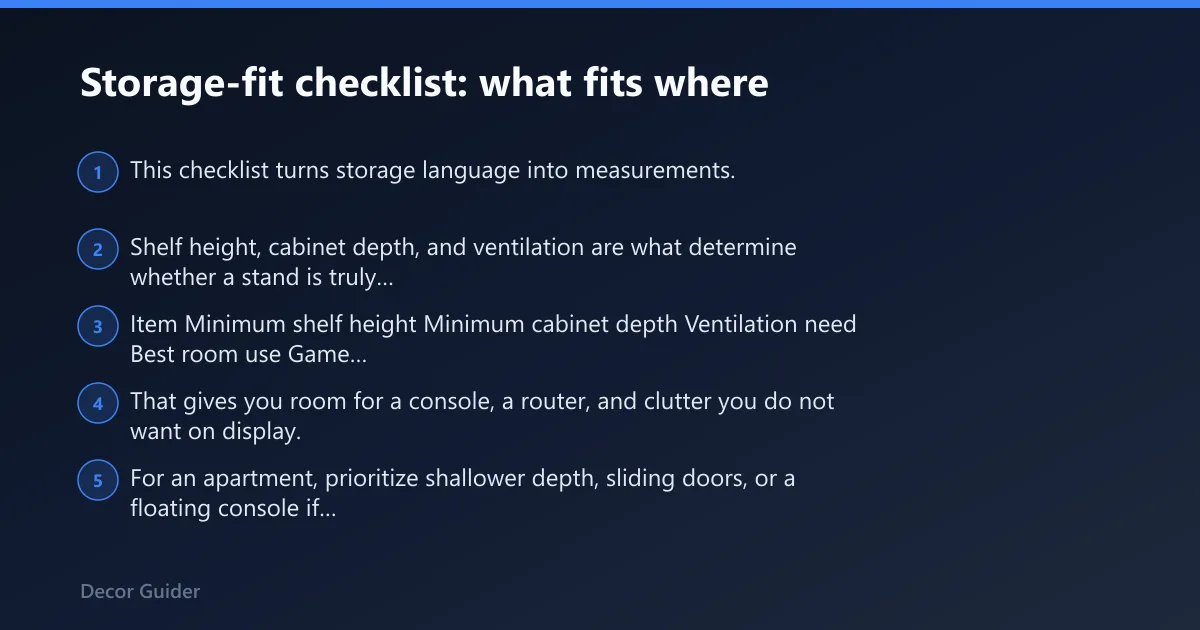
This checklist turns storage language into measurements. Shelf height, cabinet depth, and ventilation are what determine whether a stand is truly useful, especially when the room has consoles, routers, toys, and baskets all competing for space.
| Item | Minimum shelf height | Minimum cabinet depth | Ventilation need | Best room use |
|---|---|---|---|---|
| Game console | 6 in | 14 in | High; leave rear opening and side space | Living room media bay |
| Soundbar | 4 in | 8 in | Medium; open front preferred | Below-TV shelf or open shelf |
| Router | 3 in | 6 in | High; open back or cutout needed | Upper open shelf |
| Remotes | 2 in | 4 in | Low | Drawer, tray, or shallow cabinet |
| Toys | 10 in | 12 in | Low | Family room closed cabinet |
| Books | 11 in | 10 in | Low | Open shelf or side cabinet |
| Baskets | 12 in | 13 in | Low | Lower cabinet or shelf bay |
Room-by-room recommendations
For a living room, choose a mixed layout with one open, ventilated bay and at least one closed cabinet. That gives you room for a console, a router, and clutter you do not want on display.
For an apartment, prioritize shallower depth, sliding doors, or a floating console if wall mounting is acceptable. The goal is to save floor area without making device access painful.
For an entryway, a low console can work as dual-use storage for baskets, mail, and small electronics. Corner suitability depends on depth more than width, so compact front-to-back proportions matter most.
For a corner setup, avoid deep doors that swing awkwardly into traffic. Corner use is easiest when the stand has an open back and a simple rectangular footprint.
What is the best tv stand for storage
The best TV stand for storage is the one that fits the clutter you actually own, not the one with the most shelves on paper. For most buyers, that means a mixed-layout console with at least one ventilated bay, one closed cabinet, and enough shelf height for consoles, baskets, and media boxes.
If the room is small, a compact or floating design wins. If the room is busy, a deeper console with doors, drawers, and stronger cable routing usually wins.
How much weight can a tv stand hold
A TV stand should hold more than the TV alone because the real load includes the television, soundbar, consoles, and the pressure from daily use. The useful number is not the largest marketing claim; it is the rating that leaves margin after adding the equipment you plan to store.
Check whether the support is centered or spread across the ends. A stable layout with better hardware often matters more than a single high rating printed on the box.
How do I hide cords in a tv stand
The best cord hiding method starts with a rear cutout or open back, then places the power strip and router in the least visible lower bay. Cable pass-through holes, rear channels, and a dedicated spot for the power strip keep cords from bunching behind the TV or under the shelf.
If the cabinet is closed, leave slack for airflow and plug access. Cords should be easy to reach without moving the entire stand.
Which one should you buy
If you want the best balance of storage, fit, and everyday usability, buy the Ikea Havsta TV Unit. If you need a smaller footprint, choose the Martin Furniture floating console or the Modway low profile stand. If you need family-friendly hidden storage, the chartustriable farmhouse unit makes the most sense.
If your room is a media hub, the Walker Edison console is the most practical choice for consoles and routers. If your budget is tight, the ETELI open-shelf stand does the basic job well. If the room is formal and budget is less important, the BDI splurge pick is the premium route.
Choose open shelves when airflow and access matter most. Choose closed cabinets when dust, pets, toys, or visual clutter are the problem. Choose a mix when you want the easiest compromise.
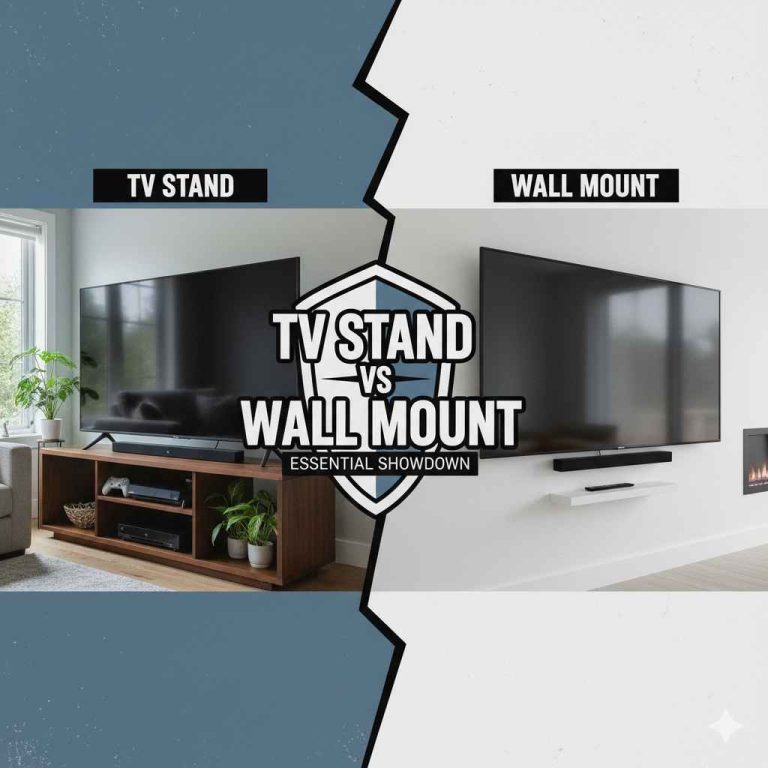
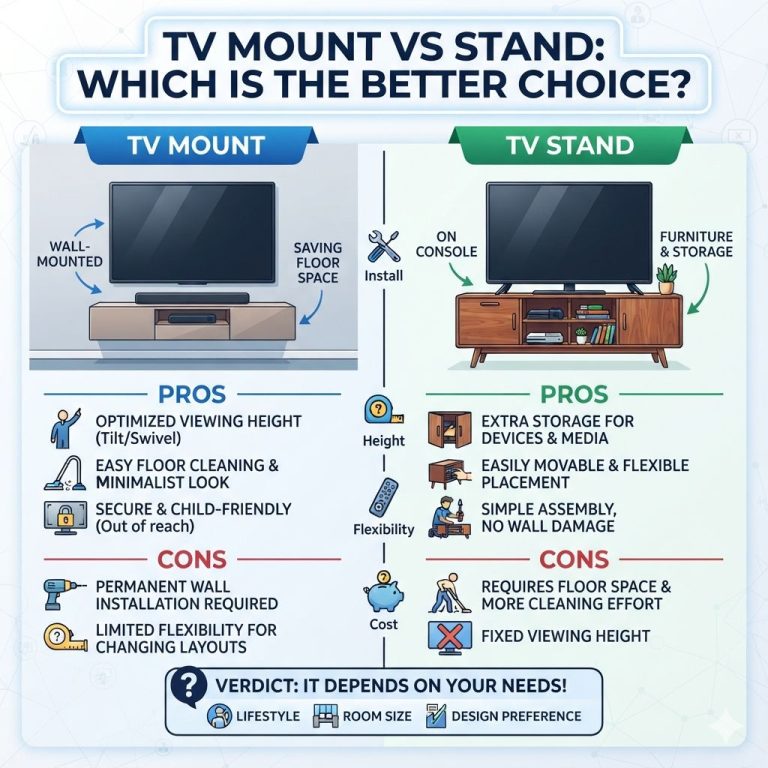
A TV stand is unnecessary when a wall mount plus a low credenza gives better storage and cleaner circulation for the room. That setup works especially well when floor space is tight and the TV itself does not need to sit on furniture at all.
Frequently asked questions
does smart tv have storage
A smart TV does not usually provide meaningful storage for household items. It may store apps, settings, and account data, but that is separate from furniture storage. If you need a place for media gear and clutter, the stand or cabinet has to do that work.
is a tv stand necessary
A TV stand is not always necessary. If you wall-mount the television and use a credenza, shelves, or built-ins for storage, you may get a better room layout. A stand becomes necessary when you want TV support, cable management, or a central storage base in one piece.
Products related to this article
Sponsored / affiliate links. As an Amazon Associate I earn from qualifying purchases. I may earn additional commission from eligible campaigns.