5 Best TV Stands for Budget Buyers (2026): we compared
For budget buyers, a stand in the roughly $70–$150 range is often a practical choice if it is a bit wider than your TV, supports well above the TV’s weight, and includes cable holes or some form of closed storage. Spend less than that and I usually see wobble, shelf bowing, and finishes that look tired fast. This guide compares price tiers, acceptable tradeoffs, and the low-cost features that prevent regret.
This guide is part of our TV stand guide: types, sizes, setup, and style series.
Quick comparison
| Product | Badge | Best for | Price | ||
|---|---|---|---|---|---|
 |
Convenience Concepts Designs2Go 40 inch TV Stand with 2Convenience Concepts | Budget pick | Espresso · 36" TVs · No tools | $73.99
Price as of 27 Sep 2026
|
View |
 |
Geelife Tv Stand, 48 Inch, Console, Media EntertainmentGeelife | Upgrade pick | 48" L · Dark taupe · Adjustable shelves | $210.59
Price as of 27 Sep 2026
|
View |
 |
PRAISUN 54 Inch Fluted TV Stand for TVs Up to 55, 60 Inch,PRAISUN | Also great | 54" Fluted · Fits 55" TVs | $94.99
Price as of 27 Sep 2026
|
View |
 |
VASAGLE Farmhouse TV Stand for 65” TV, Media Console,VASAGLE | Pair with it | 65" Farmhouse · Sliding barn doors | $129.99
Price as of 27 Sep 2026
|
View |
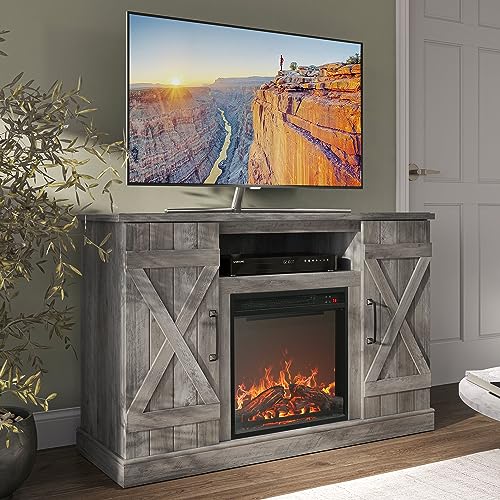 |
BELLEZE Veropeso 47" TV Stand with 18" Electric Fireplace –BELLEZE | Our pick | 47" · Electric fireplace · Grey wash | $237.49
Price as of 27 Sep 2026
|
View |
The fastest way to shop budget stands is by price band, not brand hype. A good match fits the TV base, gives cords a place to run, and avoids the weak spots that show up first in low-cost furniture.
Best Buy’s U.S. store locator and shopping flow can help with side-by-side browsing, and Trusted Reviews labels its advice as unbiased and independent while saying it assesses more than 1,000 products a year. For a sizing mindset, even Display Solution’s published dimensions show how much measurable space matters: 11.75 inches by 17.5 inches for a tabletop mini banner stand, 78 inches for a floor model, and widths from 11.75 inches up to 59 inches.
How we chose
We compared budget stands by four things that matter most once the box is opened: price per usable inch, fit for common TV sizes, storage and cable access, and the weak points that usually fail first. That means weight support, leg design, shelf sag, and how much time the hardware asks from the buyer.
| Price band | What it typically buys | Common dimensions | Typical storage | Assembly difficulty | Likely tradeoffs |
|---|---|---|---|---|---|
| About $50 | Basic engineered wood or MDF stand, simple shelf layout | About 47 1/4 in wide, shallow depth, low height | Open shelves or one cabinet pair | Low to moderate | More wobble, lighter hardware, thin edge banding, lower load margin |
| About $100 | Better hardware, cleaner finish, usable cable cutouts | About 57 3/4 in to 63 in wide, 13 3/4 in to 18 1/2 in deep | Mix of shelves and doors, sometimes drawers | Moderate | Still some shelf sag risk and occasional chip-prone corners |
| About $150 | Wider top, stronger base, better doors or sliding fronts | About 63 in to 70 7/8 in wide, taller low-profile formats | Closed storage with better cable routing | Moderate to higher | Heavier carton, more parts, still not full solid-wood durability |
Engineered wood and particleboard are common at this price, and that is fine when the stand’s span, thickness, and hardware match the TV load. The bad buys are the ones that look wide enough but have weak backs, thin shelves, and short screws that do not hold the cabinet square.
Convenience Concepts Designs2Go 40 inch TV Stand: best overall for most budget buyers
This is the smartest value pick for small budgets if you want simple storage and quick assembly. It fits buyers who need a no-fuss stand for a smaller TV, a bedroom, or a rental where tool-free setup matters more than a long feature list.
What stands out is the practical layout: two storage cabinets, a shelf, and assembly in minutes without requiring tools. The opaque plastic doors are useful when you want clutter hidden, not on display.
The drawback is size. It holds TVs up to 36 inches, so it is not the answer for most 55-inch living room setups, and the materials are aimed at convenience rather than long-life abuse.
Why it wins on value
For the price tier, this is the kind of stand that saves money twice: once at checkout and again in setup time. It gives enough storage for a streaming box, remotes, and a game controller without pushing buyers into a heavier, pricier cabinet.
Best fit range
It makes the most sense when the TV is genuinely small and the room is tight. If the room can take a wider stand, buyers should move up a tier rather than force a compact unit to carry a larger television.
Main tradeoffs to accept
The compromise is obvious: smaller width, less visual presence, and less future-proofing. If a buyer plans to upgrade the TV soon, this stand can become too small too quickly.
PRAISUN 54 Inch Fluted TV Stand: best under $100
This is the strongest low-cost buy for shoppers who need real living-room scale without jumping far past the budget ceiling. It suits a 55-inch TV, and the 5.3-inch clearance is useful when a robot vacuum needs to pass underneath.
It also gets the basics right. Magnetic doors help with clutter, and the cable management holes keep streaming boxes and consoles from turning into a cord pile behind the cabinet.
The honest drawback is that this is still a budget build. Treat it as a careful mid-range buy, not a brute-force stand for very heavy setups or repeated moves.
What you usually get at this price
A buyer around this mark usually gets a wider top, a more finished front, and storage that feels built for a real media setup rather than a temporary fix. This tier is where cable access stops being a bonus and starts being standard.
Where cheap stands fail
The failures to watch are thin back panels, doors that go out of alignment, and shelves that sag when stacked with game consoles or books. Poor edge finish is another common issue, especially on corners that get bumped during vacuuming or moving.
Who should buy this tier
Buyers who want a living-room stand that still feels disciplined on a budget should start here. It is a better fit than the lowest tier when the TV is 43 to 55 inches, the room is shared, or storage matters as much as price.
VASAGLE Farmhouse TV Stand: best for storage without a big price jump
This is the right choice for buyers who want more hidden storage and a wider tabletop for a larger TV. The sliding barn doors make it easier to keep consoles, boxes, and extras out of sight while still giving quick access.
The tabletop supports TVs up to around 65 inches and is rated for up to about 170 lbs, which can be a useful point when comparing it with lighter bargain models. The tradeoff is that the style and moving door hardware add cost and bulk.
For small rooms, the footprint may feel larger than necessary. Sliding doors are useful, but they also mean more parts that can rattle if the assembly is rushed.
Open shelves versus cabinets
Open shelves are better for airflow and fast access. Cabinets are better when the buyer wants cords, dongles, and game boxes hidden, but they can trap heat if the devices run warm and the back panel is too closed off.
Drawer and door tradeoffs
Drawers are best for smaller items like remotes and spare cables. Doors are better for larger equipment, but they are only worth it if the hinges or sliders feel solid and the interior depth actually matches the gear.
Ventilation for consoles and boxes
Families with consoles should prefer open sections or cabinets with rear openings. Heat buildup is a bigger issue than many budget buyers expect, especially when a soundbar and streaming box are both squeezed into one shelf.
Geelife 48 Inch TV Stand: best for small spaces and rental setups
This is the better fit when the room needs a longer, flatter media piece but still has limited floor space. Its adjustable center and side shelves make it easier to fit a mix of devices, and the full wood-look finish on all sides helps when the stand sits away from a wall.
The honest drawback is the price. At this level, buyers should expect more finish and flexibility, but they are also paying above the entry budget tier, so the value depends on whether the adjustable storage will actually be used.
It works well for renters who move often and want a stand that can function in a bedroom, living room, or shared space without looking temporary.
Depth and footprint limits
Shallow stands around 13 3/4 inches to 18 1/2 inches deep are useful in apartments because they save walkway space. The tradeoff is tighter cable routing and less forgiveness for devices that overhang the shelf edge.
When low-profile height helps
Lower stands are easier on the eyes when seating is low and the TV sits at a natural viewing height. Higher stands help when the buyer wants easier access to shelves without bending down, especially in bedrooms or rooms where the TV doubles as a storage zone.
Cable clearance and device overhang
Even a shallow stand should leave room behind the rear panel for HDMI plugs, power bricks, and thick cords. If the depth is too tight, the back of a console can press against the wall, which makes setup frustrating and can strain the connectors.
BELLEZE Veropeso 47 inch TV Stand with 18 inch Electric Fireplace: best for buyers who want storage and heat
This is for buyers who want the stand to do more than hold a screen. The electric fireplace adds room presence and gives the cabinet a different job in a bedroom or family room where warmth and storage both matter.
The drawback is cost and specialization. It is the least budget-friendly option in the group, and the fireplace feature means buyers are paying for something not everyone needs, especially in rentals with limited control over room layout.
Its open and closed storage gives flexibility, but the fireplace insert also eats into the simplicity that makes cheaper stands easier to move or replace.
Who it fits
This works best for buyers who want a focal point piece and are willing to spend more to get it. It is less suited to pure bargain shopping, but more suited to a room where the stand is expected to do visible decorating work.
Main drawback
The main drawback is that the fireplace adds complexity. More features mean more reasons the buyer will care about assembly, cord routing, and long-term placement.
Which one should you buy
Choose by budget first, then by TV size and storage need. The right stand is the one that fits the screen width and base footprint, carries the load without flexing, and leaves enough room for cables and devices without paying for extras you will never use.
If your budget is around $50
Buy only if the TV is small and the room is light use. At this level, the main goal is to avoid obvious wobble and shelf sag, so keep expectations modest and prioritize a simple cabinet or shelf layout with real back support.
If your budget is around $100
This is the sweet spot for many budget buyers. You can usually get a better width, more credible storage, and cable holes that actually help, which makes this tier the best balance of price and day-to-day usefulness.
If your budget is around $150
Spend here if the TV is larger, the room gets more use, or hidden storage matters. A buyer can get better doors, a sturdier base footprint, and less compromise on depth, which reduces the chance of replacement regret.
If you need the most storage
Pick the stand with the best closed storage and the least wasted interior space, then check ventilation. Sliding doors or cabinets beat open shelves when the goal is hiding accessories, but open pockets are safer for warm-running devices.
If you have a 55-inch TV
Start around the 54-inch to 63-inch stand width range, and do not buy on width alone. The TV base footprint, not just the screen size, should decide whether the top feels stable and visually balanced.
If you are buying for a rental
Choose a stand that assembles cleanly, moves without drama, and avoids delicate finishes that chip at the first corner bump. Shallow depth, moderate height, and a manageable box matter more in rentals than decorative detail.
What size TV stand do I need for my TV?
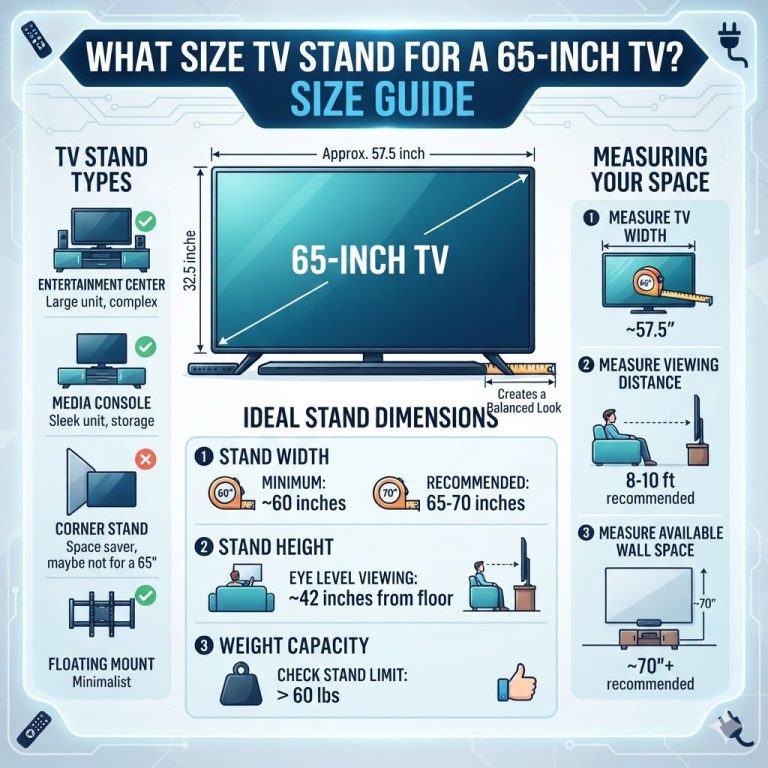
A TV stand should be wider than the television’s base footprint, not just the screen. For budget shopping, a stand that is at least 2 inches wider than the TV is a practical minimum, while 47 1/4 in, 57 3/4 in, 63 in, and 70 7/8 in widths are common checkpoints for comparing value.
Measure the TV’s feet or pedestal first. A 55-inch TV can still sit awkwardly on a stand that is technically wide enough if the base lands too close to the edge or the weight is concentrated in the middle without enough support.
How much should I spend on a cheap TV stand?
Most budget buyers should expect to spend about $70 to $150 if they want to avoid the most common regrets. Under that range, the buyer often gives up stability, finish quality, or useful storage, while the jump above it usually buys better hardware and less sag risk.
The right number depends on the room. A bedroom stand can stay cheaper if the TV is small, but a family room stand needs more structure because it holds more devices and gets more daily use.
Is a low-priced TV stand strong enough for a large TV?
Sometimes, but only if the load rating, base width, and center of gravity all make sense together. A low price alone does not mean weak, yet a large TV on a light stand can tip or flex if the top is narrow, the shelf spans are long, or the back panel is thin.
Check the weight capacity before buying, then compare it with the TV and accessory load. A soundbar, console, and center stand can add enough stress to expose weak shelves fast.
Do cheap TV stands come with cable management?
Some do, but many budget models treat cable access as an afterthought. Rear cutouts, pass-through holes, and partial back panels are the details that stop cord clutter from building up and make it easier to place a streaming box or console without pinching plugs.
If the stand has closed storage, check whether the opening is large enough for power bricks and HDMI heads. A cheap stand with poor cable access can be harder to live with than a more expensive open shelf unit.
Should I choose open shelves or closed doors on a budget TV stand?
Choose open shelves if ventilation and easy access matter most, especially for consoles, streaming boxes, and soundbars. Choose closed doors if you want the room to look calmer and need to hide remotes, discs, and spare cords; the tradeoff is more heat management work.
In a family room, mixed storage is often best. Open in the middle, closed on the sides gives access where heat builds and concealment where clutter collects.
Frequently asked questions
What is the best TV stand for a budget buyer?
The best TV stand for a budget buyer is the one that matches TV width, base footprint, storage needs, and weight capacity without paying for features that never get used. In practice, that usually means a $70 to $150 stand with cable holes, a stable base, and enough width to keep the TV from crowding the edges.
Which budget TV stand is best for a 55-inch TV?
For a 55-inch TV, a stand around 54 inches to 63 inches wide is the safer starting point. Look for a solid top, cable access, and enough depth for plugs and devices, because a wider shell means little if the shelf flexes or the cords cannot clear the back panel.
Are IKEA TV stands good for small budgets?
They can be, if the buyer picks the right size and does not overload the shelves. The main thing to check is whether the stand has enough width, acceptable depth, and a load rating that leaves room for a TV plus accessories without wobble.
Which budget TV stand has the most storage?
The stands with the most storage usually combine closed cabinets with shelves or drawers, rather than relying on open space alone. Buyers should look for usable interior depth and ventilation, because a deep cabinet that traps heat is less helpful than a slightly smaller one that works well.
Products related to this article
Sponsored / affiliate links. As an Amazon Associate I earn from qualifying purchases. I may earn additional commission from eligible campaigns.