Furniture Strap Length Chart: Choose the Right Size
Choose furniture straps by usable wrap length, not label length: subtract about 6 to 10 inches for buckles and overlap, then size the strap to the item’s girth. Wrong sizing can leave a load loose, waste time, or force you to re-strap heavy pieces. This guide gives a furniture strap length chart, explains label measurements, and matches strap type to common furniture tasks.
What furniture strap length means


Furniture strap length is the full end-to-end measurement you see on the label when the strap is laid flat in a straight line. That number is not always the amount that can wrap around a sofa, mattress, or appliance, because hardware, sewn loops, and overlap reduce the usable wrap length.
Nominal length vs usable wrap length
Nominal length is the listed total length. Usable wrap length is the part left after you account for hardware, sewn ends, buckle body, and the overlap needed to lock or tension the strap. For many moving straps, that deduction is commonly about 6 to 10 inches, but the exact loss depends on the buckle and end fitting.
That difference matters most on bulky items. A 96-inch strap may look long enough for a dresser, but if 8 inches disappear into hardware and overlap, the usable wrap is closer to 88 inches.
Whether hardware is counted
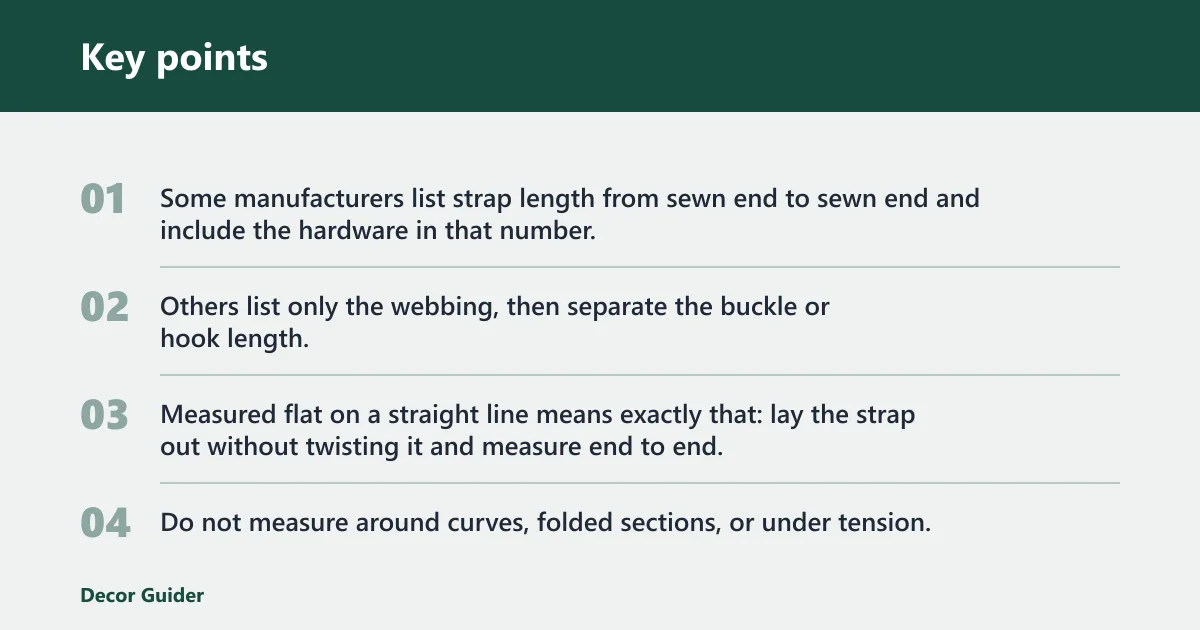
Some manufacturers list strap length from sewn end to sewn end and include the hardware in that number. Others list only the webbing, then separate the buckle or hook length. Read the product details closely, because a flat hook, S-hook, cam buckle, or ratchet buckle can change the measured total by several inches.
Measured flat on a straight line means exactly that: lay the strap out without twisting it and measure end to end. Do not measure around curves, folded sections, or under tension.
Which strap width should you choose?
Strap width affects load distribution, hand comfort, and hardware fit. Wider straps spread pressure across a larger area and usually feel better when you are carrying by hand, while narrower straps can fit tighter hardware or smaller anchor points more easily.
Common widths and what they do
Common moving and lifting strap widths are about 1 inch, 1.5 inches, and 2 inches. A 1-inch strap is easier to thread through compact buckles and hooks. A 2-inch strap spreads force better across a shoulder or hand grip, which helps on heavier furniture and stair carries.
Width also affects compatibility. Some cam buckles and hooks are made for a specific webbing width, so a wider strap will not seat properly if the hardware opening is too small.
Hand comfort for carrying
For two-person furniture carry straps, a wider strap usually feels less sharp in the hand. That matters on long stair runs or awkward turns. A narrow strap can cut into the hand sooner, especially when the furniture shifts and the grip loads up.
How to measure furniture before you buy
Measure the item’s perimeter, not just one visible side. Strap length must cover the full path around the object, plus the hardware allowance and a little working slack. A sofa, bed frame, dresser, or appliance each creates a different wrap length.
Sofa and sectional perimeter
For a standard sofa, measure around the widest outside path: front width, one side depth, back width, and the second side depth if the strap must encircle the frame. For sectionals, measure each module separately if the pieces disconnect. An oversized sectional often needs more than one strap, or a much longer nominal length than a standard sofa.
Bed frame and mattress dimensions
Mattresses are simple rectangles, so perimeter is twice the length plus twice the width. A king mattress is about 76 by 80 inches, which gives a perimeter near 312 inches. That is why mattress moving often uses a strap system with long webbing or a pair of straps rather than a short hand-carry strap.
Dresser, appliance, and stair-carry checks
Dressers usually need less wrap than mattresses, but drawers, handles, and trim add bulk. Appliances need clearance for corners, cords, and protrusions. On stairs, add length for the angle and hand position so the strap does not pull tight before the item clears the risers.
Say your dresser is 60 inches wide, 18 inches deep, and 34 inches tall. The perimeter around the body is about 224 inches if you wrap the full rectangle. A shorter strap can still work if you are using two straps or only wrapping a partial path, but the hardware allowance still comes off the top.
-
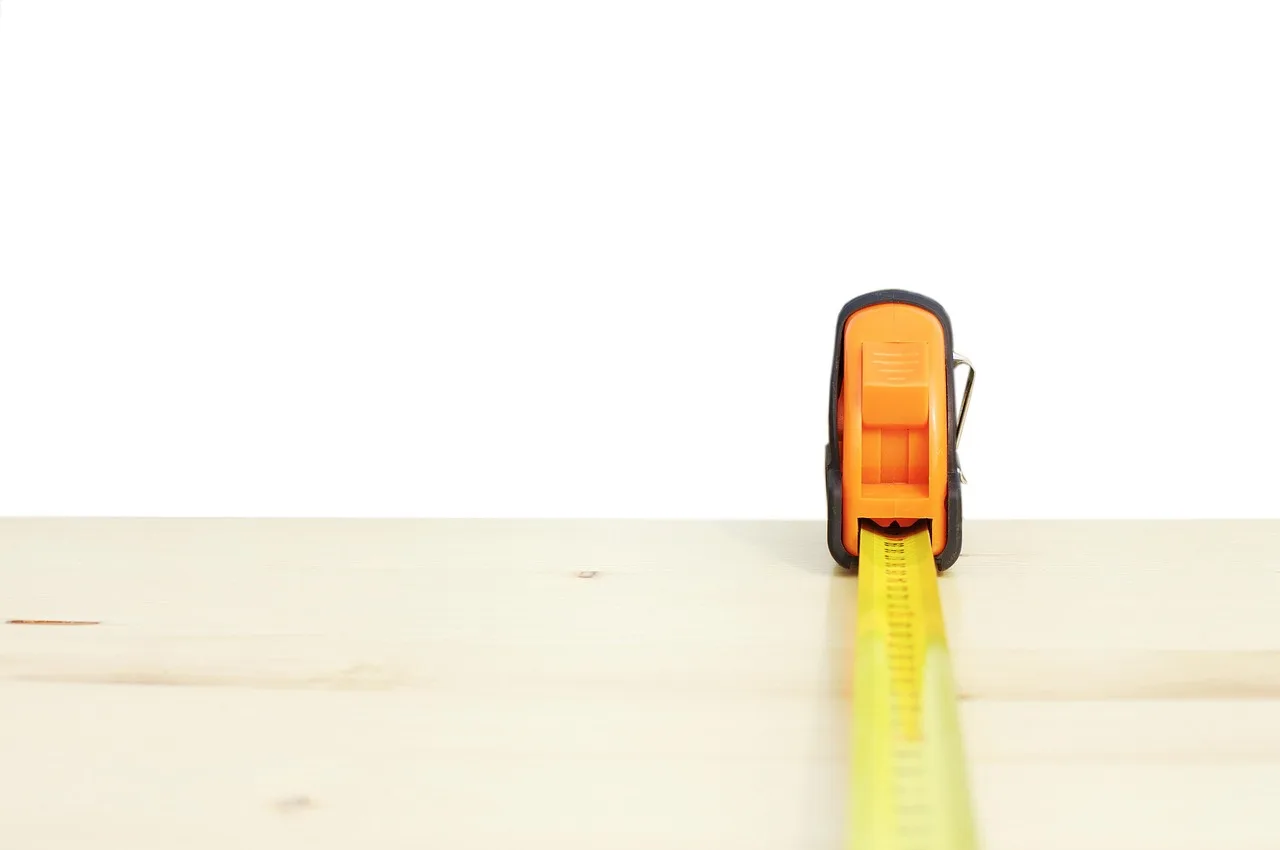
Measure the full perimeter. Use a tape measure around the outside path the strap must follow. Include handles, feet, and trim if they force the strap outward.
-
Subtract hardware allowance. Remove about 6 to 10 inches for buckle body, hook length, and overlap. Use the larger end of that range for ratchets and bulky buckles.
-
Check the load rating. Compare the item weight to the strap’s working load limit, not the breaking strength. Leave a safety margin so the strap is not working at its limit.
-
Confirm the fit points. Make sure the hook, buckle, or sewn loop fits the strap width and the anchor point on the furniture or truck. A mismatch can waste usable length and reduce hold.
Furniture strap length selector
This selector separates estimated girth, recommended nominal strap length, and minimum usable wrap length. The usable wrap number is the one that matters after hardware allowance and overlap. Treat the values as practical starting points, not exact limits, because padding, corners, and hardware shape can change the final fit.
| Furniture type | Estimated girth / perimeter | Recommended nominal strap length | Minimum usable wrap length | Hardware notes |
|---|---|---|---|---|
| Dining chair | 80–100 in. | 96 in. | 88–90 in. | Light hardware, small buckle body, 1 in. width usually fits well. |
| Two-door dresser | 120–150 in. | 144 in. | 134–138 in. | Cam buckle or simple sewn loop often works better than a bulky ratchet. |
| Standard sofa | 160–190 in. | 180 in. | 170–174 in. | Allow extra for cushions and arms; 1.5 in. or 2 in. width helps hand comfort. |
| Loveseat | 130–160 in. | 144–180 in. | 136–174 in. | Choose based on arm bulk; flat hooks can shorten usable length at the ends. |
| King mattress | 300–320 in. | 324 in. or two shorter straps | 314–316 in. | Often better with a long wrap system; check seam bulk and corner protectors. |
| Apartment refrigerator | 110–140 in. | 144 in. | 134–138 in. | Mind door handles, compressor hump, and any protruding trim. |
| Washer or dryer | 100–130 in. | 120–144 in. | 112–138 in. | Ratchet hardware can eat length quickly, so account for a larger deduction. |
| Oversized sectional module | 180–240 in. | 240 in. or longer | 230–234 in. | One strap may be insufficient; use multiple straps or a dedicated moving system. |
How figure 8 straps change sizing
Figure 8 straps change the carry geometry. Instead of one continuous wrap with a buckle, the strap creates two hand loops and a central span under the furniture. That can shorten the usable length for wrapping, while improving hand position and control during lifting.
Handle-loop geometry
Figure 8 straps place each carrier’s hands in a loop, so the load hangs from a centered span. The loop length affects how high the item rides and how much slack remains before the hands meet the object. If the loops are too large, the item can sag more than expected. If they are too small, the lift feels cramped.
When to choose a standard strap instead
Choose a standard moving strap when you need to wrap around the item and cinch it tight for a truck, stair carry, or appliance tie-down. Choose a figure 8 strap when the main task is shared lifting by hand. The two products are related, but they do not size the same way.
Suppose two people are carrying a 70-pound recliner up a narrow stairwell. A figure 8 strap can keep the hands separated and the chair centered. If the same recliner needs to be tied inside a truck, a standard strap with a buckle and enough wrap length is the better choice.
What hardware changes the length
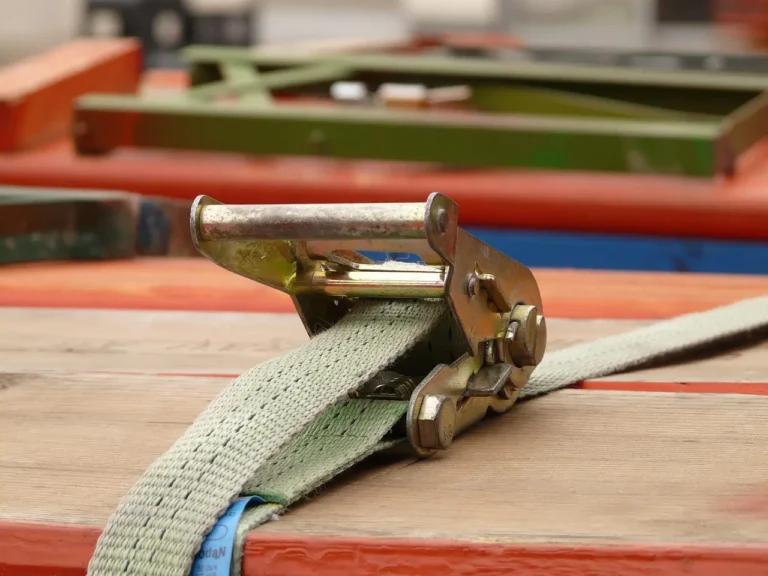
Hardware changes both measured length and usable length. Flat hooks, S-hooks, cam buckles, and ratchet buckles all consume space at the ends, and each one changes how much strap remains for wrapping the furniture.
Flat hook and S-hook ends
Flat hooks sit more flush against an anchor point and usually waste less space than bulky hooks. S-hooks are simple and quick, but they can reduce effective length if the curve of the hook sits far from the object. Both styles must match the anchor point and the strap width.
Cam buckle and ratchet buckle
A cam buckle tightens by feeding webbing through a spring-loaded cam. It usually offers a smaller length penalty and a finer adjustment range than a ratchet. A ratchet buckle gives stronger tensioning, but the hardware body is larger and can remove more usable wrap length.
Adjustment range and slip control
An adjustable buckle should hold without creeping under load. Look for a locking method that grips the webbing securely and leaves enough adjustment range to fine-tune the fit. If the strap is too long, the tail can get in the way; if it is too short, the buckle may never fully tension.
-
Match hardware to the task. Use a cam buckle or flat hook for lighter moving jobs, and a ratchet only when the load and anchor setup call for stronger tension control. Do not mix hardware styles unless the strap system is designed for that combination.
-
Measure the hardware loss. Lay the strap flat and measure from the load-bearing end to the point where the working webbing begins. Subtract that amount from the label length to estimate usable wrap.
-
Test the buckle path. Thread the strap exactly as directed by the hardware design. A wrong threading path reduces slip resistance and can change the effective length by several inches.
How much slack should a strap have?
Allow only enough slack to thread, tension, and lock the strap without straining the hardware. For most furniture tasks, extra length should be small and intentional, not loose enough to flap or catch on corners. As a practical rule, think in terms of the needed wrap plus 6 to 10 inches for hardware and adjustment.
Working load limit and weight margin
Working load limit is the safe rating for normal use. Breaking strength is much higher and should not be treated as a usable target. Choose a strap with a working load limit above the expected furniture weight, then leave margin for jerks, stairs, uneven floors, and turning angles.
When extra length helps
Extra length helps on oversized sectionals, king mattresses, and appliances with protruding parts. It also helps when you need to route the strap around padding or corner protectors. In those cases, a longer nominal strap can make the job easier if the hardware still leaves enough usable wrap.
When extra length creates problems
Too much excess can get in the way during a stair carry or make truck tie-downs sloppy. Long tails can snag on handles, corners, or door frames. If the strap is much longer than needed, choose a shorter nominal size or a different hardware layout rather than hiding the extra length in loose loops.
Frequently asked questions
What is the strap’s total length?
The strap’s total length is the full end-to-end measurement taken flat on a straight line. That number may include sewn ends or hardware, depending on the product listing. It is the nominal length, not always the usable wrap length around the furniture.
What is a strapping chart
A strapping chart is a sizing guide that matches strap length to item size, usually by perimeter, girth, or category such as sofa, mattress, or appliance. A good chart separates total length from usable wrap length so you can buy the right strap the first time.
Figure 8 straps vs normal straps
Figure 8 straps use two hand loops and a central support span, which changes hand position and carrying control. Normal moving straps wrap around the object and usually include a buckle or tensioning point. Use figure 8 straps for lifting by hand, and normal straps for cinching or truck securing.
How long should furniture straps be for a sofa?
For a standard sofa, a 180-inch strap is a practical starting point, with a usable wrap target near 170 to 174 inches after hardware allowance. Oversized sectionals may need 240 inches or more, especially if the strap must travel around wide arms or deep cushions.
How do I measure a furniture strap correctly?
Lay the strap flat and measure from one end to the other in a straight line. Then subtract the hardware and overlap loss, which is often 6 to 10 inches. That gives a closer estimate of usable wrap length, which is the number that matters for furniture fit.
What strap length do I need for a bed frame?
For a bed frame, size the strap to the frame perimeter rather than the mattress size if the frame is the item being moved. A queen or king setup often needs a long strap or multiple straps, because the perimeter is large and the hardware deduction is significant.
Products related to this article
Sponsored / affiliate links. As an Amazon Associate I earn from qualifying purchases. I may earn additional commission from eligible campaigns.