Woodpile Tarp Size Chart: Choose the Right Fit
A common rule of thumb is to choose a tarp that is about 2 to 4 feet longer and wider than the firewood stack, so it drops about 12 to 24 inches on each side while still leaving the bottom edges open for airflow. Small covers split at the corners, trap moisture, and let snow or rain soak the top rows. This guide turns stack length, width, and height into a woodpile tarp size chart, with overhang, venting, and thickness tips.
How do you size a woodpile tarp?
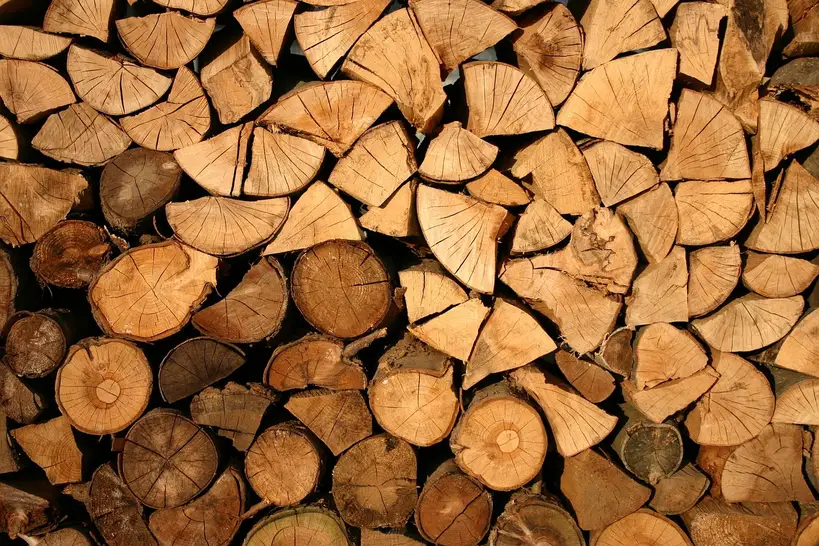


Start with the stack itself. Measure the firewood pile’s length, width, and height, then add extra span for side drop and tie-down space. You want a cover that sheds rain and snow while still letting air move under the lower edges, especially along the open sides of a stacked pile.
Simple sizing formula: recommended finished length = stack length + overhang allowance; recommended finished width = stack width + 2 × desired side drop. Keep the lower edges open enough for ventilation so moisture does not stay trapped against the wood.
-
Measure the stack length. Record the long side of the woodpile from end to end in feet, then add the overhang you want on both ends. A 2 to 4 foot total increase is the usual starting point for a tarp that can drape without stretching at the corners.
-
Measure the stack width. Measure front to back, including any split-row or double-row depth. This number tells you whether a flat tarp can cover the top with side drop or whether you need a wider sheet to avoid pulling the edges tight.
-
Measure the stack height. Height matters because a taller pile needs more side drop before the tarp can be tied off. If the cover reaches too low, it can trap moisture near the lower rows; if it stops too high, wind can get under it.
-
Leave venting clearance. Keep the lower edges open enough for airflow. A full wrap looks tidy, but it can hold damp air against the wood and slow drying. The best fit usually covers the top and upper sides while leaving the bottom edges loose.
Say your stack is 8 feet long, 4 feet wide, and 4 feet high. A tarp around 10 by 8 feet gives limited side drop, while a larger finished size around 12 by 10 feet gives better edge coverage and a safer tie-off margin for seasonal outdoor storage.
What size tarp do you need for firewood?

The right size depends on the stack layout you need to cover, such as a single row, a double row, or a split stack. For woodpiles, size should be based on the finished coverage area, not the label alone. Wind exposure also changes the choice because a breezier site needs more drop and more tie-down points.
Single-row stack examples
A single-row pile usually needs less width than a double-row stack, but it still needs enough overhang to shed water. A common rule is to add 2 to 4 feet to the stack footprint so the tarp can hang past the top edge without pulling tight across the wood.
For a narrow stack, a 6×8 tarp can work only for small, low piles. An 8×10 tarp is a common product size option and fits many short rows better. Larger outdoor stacks often need 10×15 or 10×20 coverage to get the needed drop.
Double-row and split stack examples
Double-row and split stacks are wider and often taller, so they need more finished coverage than people expect from the nominal label. A wider tarp helps keep the top covered while still letting the lower sides breathe. That balance matters more than simply choosing the heaviest sheet available.
A 16×32 tarp size is listed for larger coverage needs, which makes it a better reference point for broad woodpiles, long rows, or awkward stacks that need extra drape. For very wide piles, width is often the limiting dimension, not length.
How wind exposure changes the size choice
Calm sites can use a smaller overhang, while windy sites need more side drop and stronger tie-off planning. If the tarp lifts at the corners, increase the finished size before you move to a heavier thickness. Size first, then durability.
A common first-timer mistake is choosing a tarp that fits the top exactly. That leaves no edge for tie-downs, and the cover will flap against the stack. Give the tarp enough extra span so the grommets sit below the top edge, not right on it.
Woodpile tarp sizing table

Use this table as a woodpile-first reference. It converts common stack dimensions into a finished tarp size, with added overhang, a minimum thickness suggestion, and a tie-down count based on wind exposure. Finished size means the coverage you should target, not the label printed on the package. When the site is especially windy, sizing up one step is often the safer buy so the tarp can keep its drop without stretching tight at the corners.
| Woodpile size | Recommended finished tarp size | Added overhang | Minimum thickness | Tie-downs, calm | Tie-downs, moderate wind | Tie-downs, windy | Best tarp size format to buy when finished size is the target |
|---|---|---|---|---|---|---|---|
| 6 ft × 3 ft × 3 ft | 8 ft × 6 ft | 12 to 18 in. per side | 5 mil | 4 | 6 | 8 | Buy the next common nominal size up if the pile sits in open wind |
| 8 ft × 4 ft × 4 ft | 10 ft × 8 ft | 12 to 24 in. per side | 8 mil | 4 | 6 | 8 | Choose a nominal label that meets or slightly exceeds the finished span |
| 10 ft × 4 ft × 4 ft | 12 ft × 10 ft | 12 to 24 in. per side | 10 mil | 4 | 6 | 8 | Size up if the tarp will face regular wind or exposed corners |
| 12 ft × 4 ft × 5 ft | 14 ft × 12 ft | 18 to 24 in. per side | 14 mil | 6 | 8 | 10 | Pick the next larger nominal label when side drop matters more than a tight fit |
| 16 ft × 6 ft × 5 ft | 20 ft × 12 ft | 18 to 24 in. per side | 14 mil | 6 | 8 | 10 | Size up to preserve overhang on a wider or irregular stack |
| 20 ft × 8 ft × 6 ft | 24 ft × 16 ft | 24 in. per side or more | 22 mil | 8 | 10 | 12 | Choose the larger nominal label when wind exposure is part of the setup |
For reference, common product sizes include 6×8, 8×10, 10×15, and 16×32. Those labels can help you narrow the search, but the actual fit depends on the finished coverage dimensions and how much side drop your pile needs.
How are tarps measured?
Tarps are usually sold by nominal length and width, such as 8×10 or 10×15. The usable coverage can be smaller because hems, seam allowances, and edge reinforcement take up some material. For a woodpile, that difference matters more than it does for a flat patio cover.
Nominal label size versus finished coverage
Nominal size is the package label. Finished size is the real span you get after hems, seams, and corner reinforcement are included. If you need a tarp to cover a 10 foot stack with side drop, buy for finished coverage, not for the headline number alone.
How hems and seams affect the usable span
Hems fold material back at the edge, which slightly reduces the open span. Seams can do the same, especially on larger sheets. That is why a tarp advertised as 10×15 may not drape exactly like a flat 10 foot by 15 foot rectangle once it is pulled over a stack.
Feet, inches, and centimeter conversions
Many labels use feet, but you may need inches or centimeters when measuring a woodpile. A simple method is to keep the stack in feet, then convert only when comparing products. A 10×15 tarp is easier to compare if you know the target coverage in the same unit system.
For quick comparison, 1 foot equals 12 inches and about 30.5 centimeters. That makes an 8×10 tarp roughly 244 by 305 centimeters, while a 10×15 tarp is roughly 305 by 457 centimeters. Use the same unit across the stack and the tarp.
What thickness works best for firewood?
Thickness in mils affects handling, abrasion resistance, and how much stress the tarp tolerates in wind. For woodpiles, the best choice depends on exposure. A lighter tarp is easier to fold and move; a thicker one is better when the cover stays outside for longer periods.
5 mil and 8 mil for lighter seasonal use
A 5 mil tarp is the light end of this range. It suits short-term, calmer-season coverage where the main goal is rain shedding and dust control. An 8 mil tarp adds more body and usually handles outdoor firewood storage better than a very thin sheet.
How thick is a 5 mil tarp? It is 5 mil thick, which is about 0.005 inch. How thick is a 10 mil tarp? It is 10 mil thick, about 0.010 inch. The larger number means more material, but it also means more weight to handle over a stack.
10 mil and 14 mil for regular outdoor storage
A 10 mil tarp is a practical middle ground for many woodpiles. A 14 mil tarp adds more durability for longer outdoor exposure and repeated tie-down use. That extra body can help around reinforced corners and grommets where stress tends to build.
22 mil for heavy-duty exposure and abrasion
Use 22 mil when the tarp will face rougher handling, stronger wind, or repeated contact with bark and uneven splits. It is harder to move, but it can be a better choice for larger stacks that stay covered for long stretches. Heavier is useful only when the job needs it.
Grommets, corners, and tie-downs
Grommets matter because they are the points that hold the tarp in place. Aluminum grommets are rust-free tie-down points, which helps in wet outdoor use. Reinforced corners and edge reinforcement reduce tearing at the spots that take the most pull.
Aluminum, metal, and rustproof grommets
Aluminum grommets are a good fit for wet storage because they resist rust. Some metal grommets are stronger in feel, but rust resistance matters when the tarp stays outside through rain and thaw cycles. Rustproof tie points also help keep the hole from weakening over time.
Edge reinforcement and corner stress
The corners carry the most load when wind catches the tarp. Reinforced corners slow tear growth and help the sheet survive repeated tension. Edge reinforcement also helps the fabric hold shape near the tie points, which matters more on large woodpiles than on small flat covers.
Tie-down placement for calm and windy sites
Plan tie-downs around the perimeter, not only at the corners. For calm sites, four points may hold a small tarp. Moderate wind usually calls for six to eight points. Windy sites often need ten or more points so the tarp does not balloon between grommets.
Suppose a 12×10 tarp covers a split woodpile in a breezy yard. If the tie points sit too far apart, the center edge can lift and pull moisture under the sheet. Adding more tie-downs along the long sides keeps the lower edge steadier without sealing the pile shut.
Waterproof and UV-resistant tarp features
For firewood storage, waterproof and UV-resistant materials matter because the tarp has to handle both rain and sun. A waterproof cover sheds precipitation, while UV resistance helps the tarp hold up through seasonal exposure. Those features do their best work when the fit also allows airflow.
Tarps can be used to protect woodpiles, and that use depends on more than a quick cover. Rain protection matters on the top surface, but the underside still needs breathing room. A fully wrapped pile can stay wet longer than a looser top cover with open lower edges.
Look for outdoor-storage features such as reinforced corners, rustproof grommets, and a thickness that matches the exposure. A tarp with UV resistance is a better choice for a stack that stays outside through summer sun, while a waterproof sheet is the baseline for keeping rain off the top rows.
Frequently asked questions
What sizes do tarps come in?
Tarps come in many sizes, from small covers like 6×8 and 8×10 to larger sheets such as 10×15 and 16×32. The label gives the nominal size, but the usable coverage can differ once hems and seams are included. For woodpiles, match the finished span to the stack footprint plus overhang.
What size tarp do I need calculator?
A simple sizing calculator uses stack length, width, and height. Add 2 to 4 feet to the length and width for overhang, then choose a finished size that leaves the lower edges open for airflow. If the stack sits in wind, move up one size and add more tie-down points.
What size tarp do I need for a woodpile?
For a woodpile, choose a tarp that is 2 to 4 feet larger than the stack in both directions. That gives enough drop to protect the top and upper sides while keeping the lower edges open. Single rows often fit smaller sizes; double rows usually need larger finished coverage.
What is the right tarp overhang for firewood?
A good starting point is 12 to 24 inches of overhang on each side. That range helps block rain without sealing the pile shut. If the site is windy or the stack is tall, aim toward the larger end so the tarp can be tied down without pulling tight across the corners.
How thick are tarps?
Tarp thickness is usually given in mils. Common examples for firewood storage include 5 mil, 8 mil, 10 mil, 14 mil, and 22 mil. Lower numbers are lighter and easier to handle. Higher numbers usually add durability, especially for long outdoor exposure or rougher tie-down conditions.
How thick is a 5 mil tarp?
A 5 mil tarp is about 0.005 inch thick. That makes it a lighter option for short-term or calmer seasonal use. It can cover firewood, but it is better suited to mild exposure than to repeated wind, abrasion, or long outdoor storage.
How thick is a 10 mil tarp?
A 10 mil tarp is about 0.010 inch thick. For firewood, that is a practical midrange choice because it offers more body than a light cover without becoming too stiff to handle. It works well when the tarp needs to stay outside for a normal season and still be manageable at tie-off points.
Products related to this article
Sponsored / affiliate links. As an Amazon Associate I earn from qualifying purchases. I may earn additional commission from eligible campaigns.