Bedroom Rug Size Chart: Choose the Right Fit for Any Bed
Use a rug at least 2 feet wider than the bed on each side: 5×8 works for a twin or full, 8×10 fits most queens, and 9×12 suits most kings. Get it wrong, and the room can feel tight at the bed, off balance, or hard to move through. This guide shows how to size a bedroom rug from bed dimensions, clearance, furniture layout, and placement style.
Bedroom rug size basics
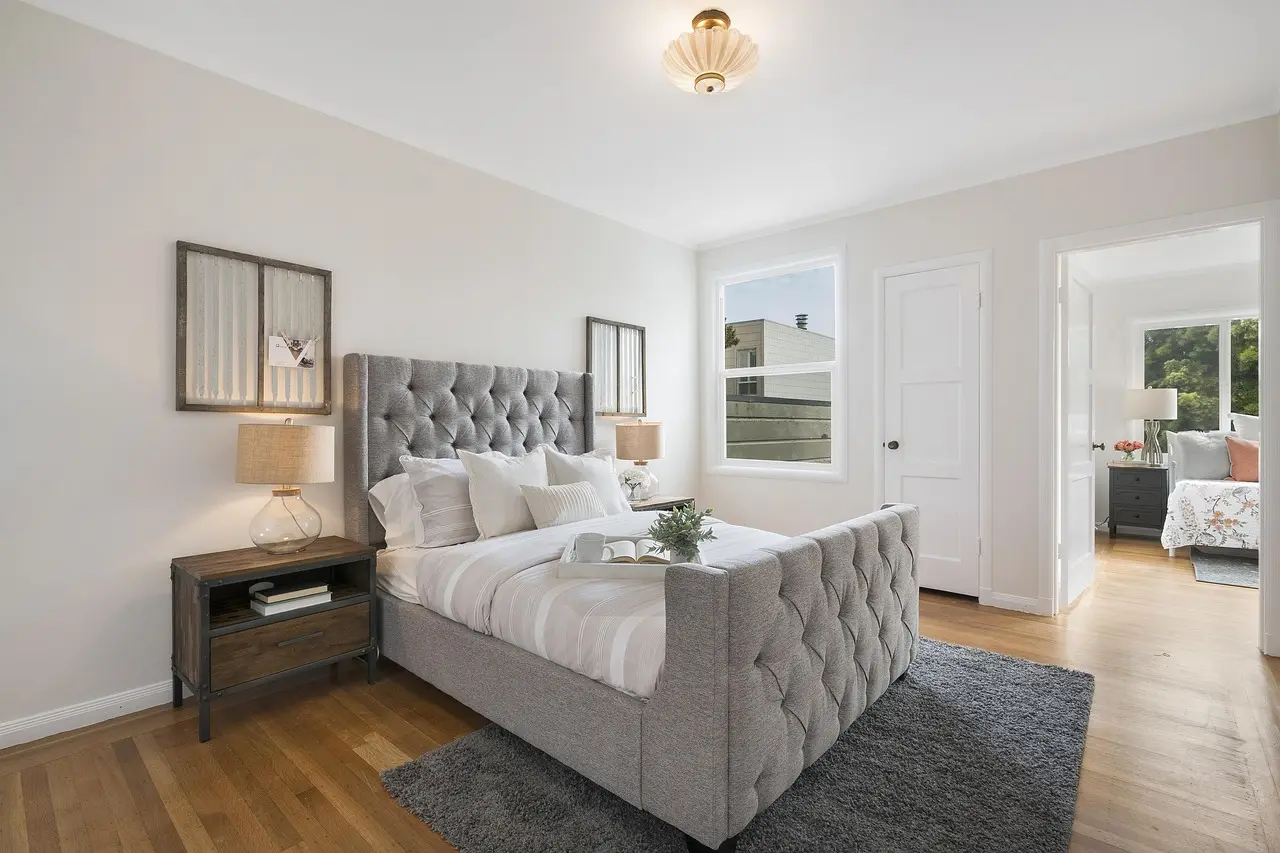


Start with the bed, then check the room. A queen bed is 60 x 80 inches, a king bed is 76 x 80 inches, and a California king bed is 72 x 84 inches. Those mattress dimensions set the starting point, but the right rug also depends on nightstands, door swing, and the amount of clear floor you need to move around.
Use bed size as the starting point
Bedroom rug size should relate to the bed footprint, not the wall size alone. A rug that is too short can stop at the mattress edge and make the room read in sections. A rug that is too large can crowd doors or stop drawers from opening fully.
Set the visible border target
A good target is to show about 18 to 24 inches of rug beyond the bed. Under about 12 inches can look undersized, especially in a larger room. For a queen bed, about 18 to 30 inches can show on each side depending on placement. For a king bed with a 9×12 rug, about 34 inches can show on each side.
Check room clearance before you buy
Measure the room before choosing a rug size. Keep open floor on both sides of the bed, and check that nightstands and the door can still function without catching on the rug edge. In a smaller room, two-thirds placement or runners may fit better than a full-size under-bed rug.
How much rug should show around a bed?
Most bedrooms look balanced when the rug extends 18 to 24 inches past the bed, with a little more room possible on larger layouts. That border helps the bed feel anchored without swallowing the floor. If the visible border drops under 12 inches, the rug often reads as too small for the furniture scale.
Queen bed border ranges
Queen beds are 60 x 80 inches and commonly pair with an 8×10 rug. With that size, the rug often shows about 18 to 30 inches on each side depending on orientation and how much of the rug sits under the bed. That range works well when you want a balanced frame around the bed.
King and California king border ranges
King beds are 76 x 80 inches and commonly use a 9×12 rug. California king beds are roughly 72 by 84 inches and often pair with a 9×12 rug. A larger king room may need 10×14 if you want a wider border and more floor coverage at the foot and sides.
When a smaller border still works
A tighter border can work in a narrow room where the rug must avoid the door swing or keep a clear path to closets. In that case, runners or a two-thirds placement usually read better than forcing a larger rug into a crowded layout. The key is to keep the rug centered on the bed, even if the exposed border is smaller than ideal.
Bedroom rug decision matrix
This matrix gives a room-by-room starting point for common bedroom sizes and bed types. Use it to compare rug size, placement style, minimum walkways, and fallback options when the ideal rug will not fit. It is a practical decision aid, not a hard rule.
| Bedroom size | Bed type | Recommended rug size | Placement style | Minimum walkway target | Fallback if the ideal size will not fit |
|---|---|---|---|---|---|
| Small bedroom | Queen | 6×9 or 8×10 | Two-thirds under-bed or runners | Keep at least 24 inches on the main path if possible | Two runners, each 2.5 to 3 feet wide |
| Standard bedroom | Queen | 8×10 | Full under-bed | Keep 24 to 30 inches around the bed where possible | Layer a smaller rug at the foot if side clearance is tight |
| Standard bedroom | King | 9×12 | Full under-bed | Keep 30 inches or more on major walkways | Use runners if the room cannot hold the rug plus traffic lanes |
| Large bedroom | King | 10×14 | Full under-bed | Keep wide clearances at both sides and the foot | Use a 9×12 with runners in the open zones |
| Long, narrow bedroom | California king | 9×12 | Two-thirds under-bed | Keep a clear line from the door to the bed | Two runners on each side instead of one large rug |
| Tight room with furniture obstacles | Queen or king | Runners or layered rugs | Side runners or layered approach | Leave a clean path around nightstands and doors | Choose one anchor rug plus smaller accent runners |
What size rug fits your bed?
Match the rug to the mattress size first, then adjust for the room. Queen beds commonly use an 8×10 rug. King beds commonly use a 9×12 rug, and larger king rooms may need 10×14. California king beds commonly use a 9×12 rug. If the rug cannot extend far enough beyond the bed, move to runners or a two-thirds placement.
Queen bed rug sizes
A queen bed measures 60 x 80 inches, so an 8×10 rug is the most common starting point. That size usually gives enough visual frame around the bed without taking over the room. If the bedroom is smaller, a 6×9 or side runners can work better than forcing a larger rug into narrow walkways.
King bed rug sizes
A king bed measures 76 x 80 inches, so a 9×12 rug is the common match. In larger rooms, 10×14 may be a better fit because it leaves more rug visible at the sides and foot. If the room is tight, a full 9×12 may block walkways, which is a sign to switch to a different placement style.
California king bed rug sizes
A California king measures 72 x 84 inches, and it commonly uses a 9×12 rug. The extra mattress length can make foot clearance more important, especially when the bed sits near a door or dresser. If the room is short on width, two runners can be a cleaner solution than shrinking the rug too far.
Which placement style works best?
Placement changes the result as much as rug size does. Full under-bed placement gives the most grounded look. Two-thirds placement helps when the room is tight. Runners work well when you need coverage but cannot spare the full footprint. Layered rugs help when you need to stretch the budget or work around an awkward layout.
Full under-bed placement
Use full under-bed placement when the room can handle the rug plus walkways on both sides and at the foot. This is the cleanest choice for most queen and king bedrooms because it visually anchors the bed and nightstands together. It also tends to work best when the door swing is not in conflict with the rug edge.
Two-thirds under-bed placement
Choose two-thirds under-bed placement when the rug cannot extend fully beyond the foot of the bed without crowding the room. This option often works in smaller bedrooms because it still gives the bed a clear base while saving floor space. The look is more practical than full coverage, but it is better than forcing a rug that blocks traffic.
Runners and layered rugs
Runners are the better choice when side clearance is tight or the room is narrow. Two runners can be 2.5 to 3 feet wide, which gives you coverage beside the bed without filling the center of the room. A layered rug approach works when you already have a smaller rug and want to build coverage around the bed without buying a single oversized piece.
Say your queen bed sits in a 10-by-11-foot room with a closet door near the foot of the bed. An 8×10 rug may fit the mattress, but the door swing could get tight. In that case, two runners or a two-thirds placement may keep the room usable while still giving the bed a finished base.
How do room layout details change the size?

Nightstands, footboards, and door swing can change the right rug size as much as the mattress does. A rug that works on paper may fail once the room’s traffic path, furniture footprint, and drawer clearance are added. The goal is not the largest rug possible. It is the largest rug that still lets the bedroom function well.
Nightstands and footboards
Nightstands often decide whether a rug should run fully under the bed or stop short. If the nightstands sit on the rug, they need enough footprint to stay level and stable. A footboard also matters because it reduces the visible rug area at the foot of the bed and can make a rug feel too short if the size is already borderline.
Door swing and walkway width
Check the path from the door to the bed and closet before choosing a rug. If the door opens over the rug edge, the size may be too large for the room even if it matches the bed correctly. The same issue comes up with dresser drawers and closet access, where a low-pile runner may work better than a thick full-size rug.
Small rooms and awkward dimensions
Small rooms often suit two-thirds placement or runners because a large rug can swallow the available floor and make the layout feel tighter. Awkward dimensions, such as a long narrow room, usually need a layout that follows the room shape rather than the mattress shape. In those cases, a smaller rug used well is more useful than a larger rug that blocks the room.
- Measure the bed first. Record the mattress width and length, then note whether there is a footboard or large nightstands. Those details tell you how much rug can actually remain visible.
- Map the walkways. Mark the main traffic paths from the door, closet, and dresser. If a rug would shrink those paths too much, move down to a smaller size or switch placement styles.
- Test the border target. Aim for 18 to 24 inches beyond the bed where the room allows it. If the border falls under 12 inches, the rug is likely too small for the layout.
- Choose the fallback early. If the ideal rug will not fit, pick runners, a two-thirds placement, or a layered rug plan before buying. That keeps you from ending up with a rug that fits the mattress but not the room.
Rug materials and pads for bedrooms
Material choice should follow the room’s use. Wool or wool blend gives softness and durability. Polypropylene and polyester are practical for easy care. Jute or sisal brings texture but feels firmer underfoot. Cotton flatweave is lighter and easier to move. Viscose has a smoother look, but it is usually better for low-traffic spaces.
Material tradeoffs by use case
For pet homes, low-pile polypropylene or tightly woven wool blend is usually easier to maintain than thick shag or high-sheen fibers. For kids’ rooms, washable cotton flatweave or durable synthetic options are often the practical pick because spills and frequent cleanup are more likely. For allergy-sensitive bedrooms, low-pile rugs that trap less dust are generally easier to manage than thick, plush styles.
Suppose a king bed needs a rug in an allergy-sensitive bedroom with a tight closet door. A low-pile 9×12 in a synthetic or wool blend may be a better fit than a thick pile or layered setup, because it keeps the path clear and is easier to clean around the edges.
Pad size and floor compatibility
A rug pad prevents slipping and adds cushion. It should be cut slightly smaller than the rug so the edges do not show. On some floors, vinyl-safe pad types matter because the wrong backing can discolor or damage the surface. If the rug sits on a hard floor, a pad also helps keep the rug from shifting when you get in and out of bed.
Frequently asked questions
What size rug for bedroom?
Start with the bed size, then check the room. Queen beds commonly use an 8×10 rug, king beds commonly use a 9×12 rug, and California king beds commonly use a 9×12 rug. If the room is tight, runners or a two-thirds placement can work better than forcing a larger rug into the space.
How big should a bedroom rug be?
A bedroom rug should usually extend about 18 to 24 inches beyond the bed where the room allows it. That gives the bed a clear frame without crowding the walkways. Under 12 inches of visible border often looks too small, especially in a room with nightstands and open floor around the bed.
What size rug goes under a king bed?
A king bed is 76 x 80 inches and commonly uses a 9×12 rug. That size usually gives enough room for a balanced border and clear walkways in a standard bedroom. In a larger room, 10×14 may be the better choice if you want more rug visible around the bed.
Will an 8×10 rug fit under a queen bed?
Yes. Queen beds commonly use an 8×10 rug, and a queen is 60 x 80 inches. The rug can show about 18 to 30 inches on each side depending on placement. If the room is narrow or the door swing is tight, a runner or two-thirds placement may still be the safer choice.
How much should rug show around a bed?
A good target is 18 to 24 inches beyond the bed. That amount usually looks balanced and gives the room enough visual frame. If the visible border drops under 12 inches, the rug can look too small for the bed and the room may feel off-center.
Products related to this article
Sponsored / affiliate links. As an Amazon Associate I earn from qualifying purchases. I may earn additional commission from eligible campaigns.