Bedroom Dresser Size Chart: Fit the Right Dresser
A bedroom dresser size chart starts with three checks: measure the wall space, reserve about 24 to 36 inches in front for drawer swing and standing room, and match width to storage need, with common dressers often ranging from about 30 to 72 inches wide and 16 to 20 inches deep. Pick the wrong size, and the dresser can block doors, crowd walkways, or leave you short on storage. This guide breaks down common dresser widths, depths, drawer counts, and room-fit rules so you can choose the right size before you buy.
How wide is a typical dresser?
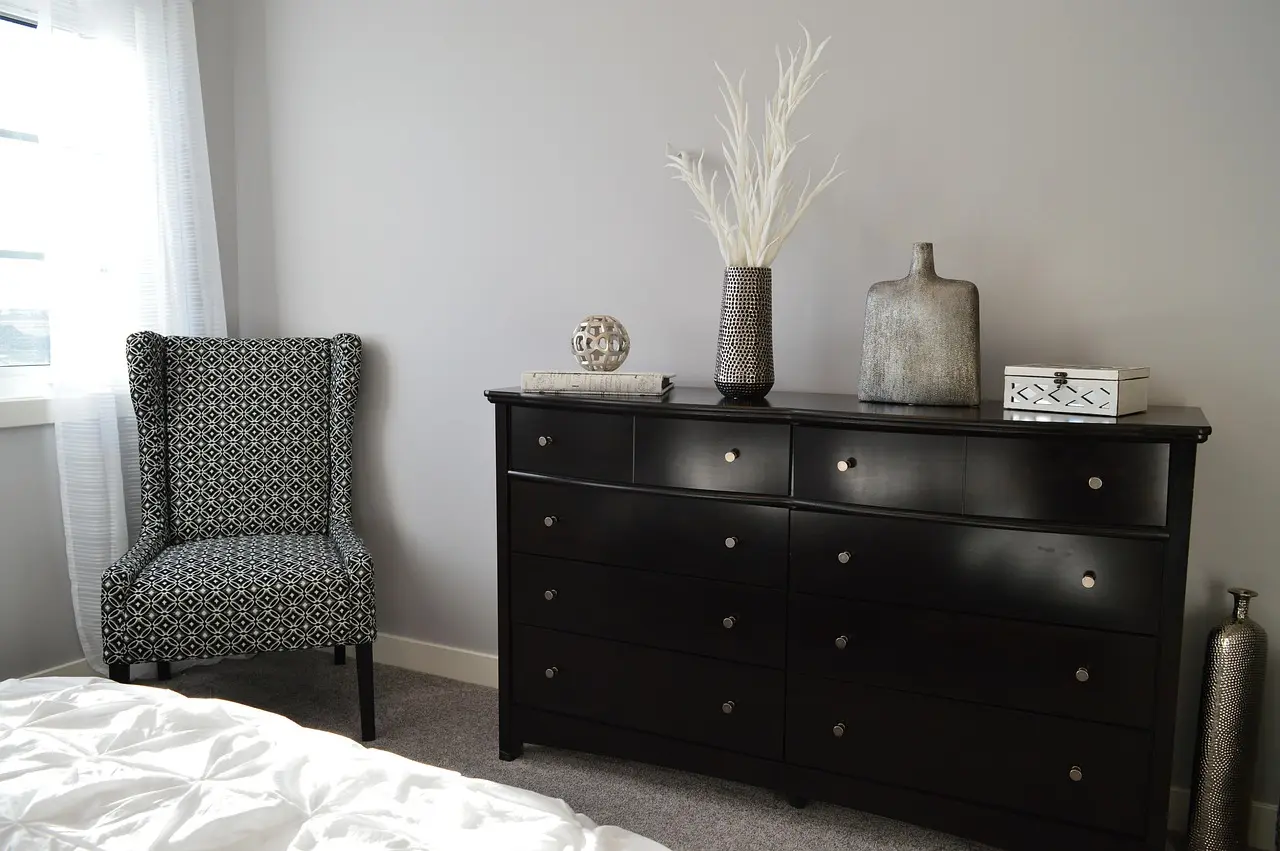
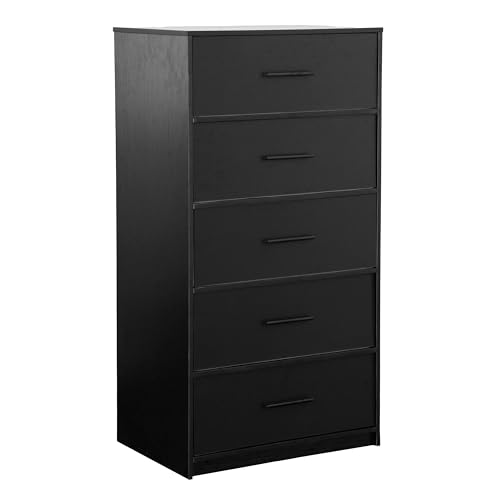


A typical dresser is usually wide enough to matter on your wall more than it does in the center of the room. Common dresser widths run from about 30 inches on compact pieces to 72 inches on wide double dressers, and width has the biggest impact on wall space.
For small bedrooms, width is usually the first limit to check. A narrow wall beside a closet or doorway may only support a tall chest or a smaller standard dresser, while a longer empty wall can handle a wider piece without squeezing the room.
Width also affects what you can place above the dresser. A shorter dresser leaves more visual room for a mirror, framed art, or a wall light, while a longer dresser can anchor a larger bed wall and keep the room from feeling top-heavy.
Common width ranges by dresser type
- Tall chest: often about 30 to 40 inches wide.
- Standard dresser: often about 48 to 60 inches wide.
- Double dresser: often about 60 to 72 inches wide.
- Combo dresser: often about 54 to 72 inches wide, depending on the mix of drawers and cabinet space.
Picture a 10-by-11-foot bedroom with a queen bed and one free wall beside a closet. A 66-inch dresser may fit the wall length, but if the closet door needs swing room, the usable width may shrink fast. In that case, a 36-inch chest is often the safer choice.
How much depth does a dresser need?
Depth usually sits in a narrower range than width, but it can be the difference between a comfortable room and a cramped one. Most dressers fall around 16 to 20 inches deep, and depth matters especially in small bedrooms because it controls how far the piece projects into the walkway.
You also need room to stand comfortably in front of drawers. If the dresser sits too close to the bed, a door, or a closet, the drawer may open but still be awkward to use. That is why depth matters both for the footprint and for the space the drawer needs when it slides out.
Typical depth ranges
- Shallow dressers: about 16 to 17 inches deep.
- Standard dressers: about 18 to 20 inches deep.
- Deeper combo units: can sit near the upper end of the common range and need more front clearance.
Depth problems often show up at the door swing, not in the open center of the room. A dresser that looks fine on paper can still block a closet door if the cabinet edge and the drawer front both land in the same path.
For tight rooms, a shallower dresser can preserve a usable walkway better than a wider piece that pushes farther into the room. If the bedroom already feels narrow, depth is the first measurement to protect after width.
How tall should a bedroom dresser be?
Dresser height changes how the room feels and how the top can be used. Low dressers create a long horizontal surface, while tall dressers use vertical space when floor space is limited. Height also affects whether a mirror, lamp, or artwork sits comfortably above the piece.
Low dressers usually work well when you want a broad top for styling or when the dresser sits under wall décor. Tall dressers are better when the room has limited floor space and you need storage without taking a long stretch of wall.
Low profiles versus tall profiles
- Low dresser: usually around 30 to 36 inches tall.
- Standard dresser: often around 36 to 42 inches tall.
- Tall chest: commonly about 48 to 60 inches tall.
A low dresser gives you more top surface for a mirror, tray, or lamp, but it gives up vertical storage. A tall chest does the opposite. It stores more in less floor space, yet the top is smaller and usually less useful for display.
Most bedrooms need a bed, bedside storage, and at least one larger storage piece such as a dresser. Height should support that layout instead of fighting it. In a room with limited wall height below a window, a lower dresser may also fit better than a tall one.
Dresser size chart
This dresser size chart translates common dresser styles into wall space, clearance, and storage choices. Use it to compare width, height, depth, drawer count, and room fit before you buy.
| Dresser type | Typical width | Typical height | Typical depth | Drawer count | Best room use | Minimum recommended wall width | Ideal clearance in front | Best for one or two people | Choose this if… | Clearance notes |
|---|---|---|---|---|---|---|---|---|---|---|
| Tall chest | 30 to 40 inches | 48 to 60 inches | 16 to 20 inches | 4 to 6 drawers | Narrow walls, small bedrooms, renter rooms | One person; a short wall with room around the dresser | 24 to 36 inches | One person | You need storage without giving up floor space. | Best when floor space is limited; keep 24 to 36 inches in front for drawer use. |
| Standard dresser | 48 to 60 inches | 30 to 42 inches | 16 to 20 inches | 6 drawers | Primary bedrooms, balanced storage needs | One person or two, depending on wall length | 24 to 36 inches | One person or two | You want a balanced mix of drawer space and top surface. | Works well with a mirror above it; leave space for nearby nightstands and door swings. |
| Double dresser | 60 to 72 inches | 30 to 40 inches | 18 to 20 inches | 6 to 8 drawers | Couples sharing storage, longer empty walls | Two people; a long wall with open floor in front | 24 to 36 inches | Two people | You need more drawer capacity on a long wall. | Needs a long wall and enough open floor in front to avoid crowding the bed path. |
| Combo dresser | 54 to 72 inches | 36 to 60 inches | 18 to 20 inches | 6 to 8+ drawers | Shared storage, folded clothes, mixed storage needs | One person or two, depending on how much wall space you have | 24 to 36 inches | One person or two | You want mixed storage and do not mind a larger footprint. | Check both width and height because cabinet sections can interfere with nearby windows or closets. |
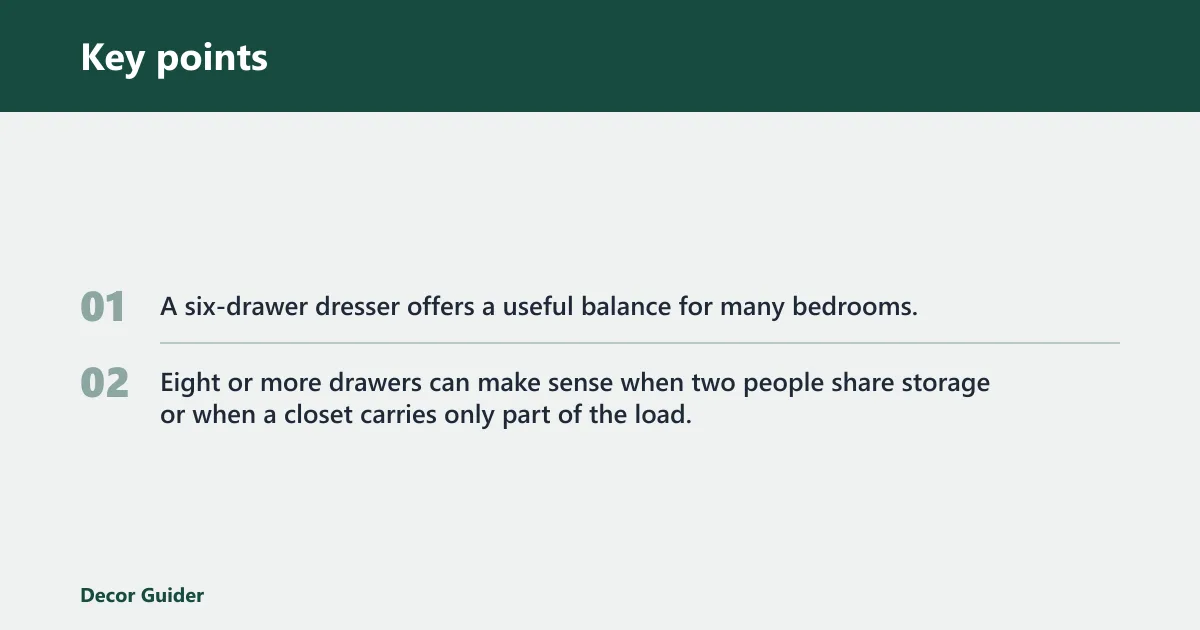
A six-drawer dresser offers a useful balance for many bedrooms. It usually gives enough sorting space for shirts, pants, and sleepwear without taking over the room. Eight or more drawers can make sense when two people share storage or when a closet carries only part of the load.
How many drawers do you need?
Drawer count should match how much folded clothing you need to store, how much the closet already handles, and whether the dresser is for one person or two. Four- and five-drawer dressers fit lighter storage needs, six-drawer pieces suit many households, and 8+ drawer units work for larger wardrobes or shared use.
Drawer count is not only about capacity. It also changes how you sort clothing. More drawers make it easier to separate socks, T-shirts, knitwear, and accessories without stacking everything in one deep compartment.
4 to 5 drawers
These are a good fit for guest rooms, kids’ rooms, or renters who keep most clothing in a closet. They save space and still provide enough storage for folded items, spare linens, or seasonal pieces.
6 drawers
A six-drawer dresser is often the middle ground. It works well when you want one piece to cover everyday clothing without oversizing the room.
8 or more drawers
Large drawer counts make sense when a dresser has to do more than hold basics. Couples sharing storage, bedrooms without much closet space, and primary rooms with heavier folded-clothing needs often benefit from the extra segmentation.
How to measure your bedroom for a dresser
Measure the wall first, then map the floor path around it. Width is the first number to write down because it has the biggest impact on wall space, but depth and clearance matter just as much once the dresser is in the room. Check nearby doors, closet swings, and the bed before you decide.
Use the open floor as part of the measurement, not just the empty wall. A dresser that fits between two corners can still fail if its drawers block a nightstand, touch the bed, or collide with a closet door.
-
Measure the usable wall.
Record the linear inches between fixed obstacles such as baseboards, windows, closet trim, and doors. Subtract any space needed for door swings or trim that would block the dresser face.
-
Mark the drawer clearance.
Leave 24 to 36 inches in front of the dresser so you can stand and open drawers comfortably. If the dresser sits across from the bed, that same open band should stay clear of the bed edge when possible.
-
Check side conflicts.
Look for nightstands, heating vents, closet doors, and the bedroom entry. A dresser that fits the wall but sits too close to a swing path can be hard to use every day.
-
Compare height to the wall.
If you plan to hang a mirror or art above the dresser, make sure the top height leaves room for it without crowding the ceiling line or window trim. Tall pieces need more vertical breathing room.
A common first-timer mistake is measuring only the open wall and ignoring the closet door. A 60-inch dresser may fit the wall, but if the closet needs 24 inches of swing space, the real usable span may be much smaller.
Which dresser size works best for your room?
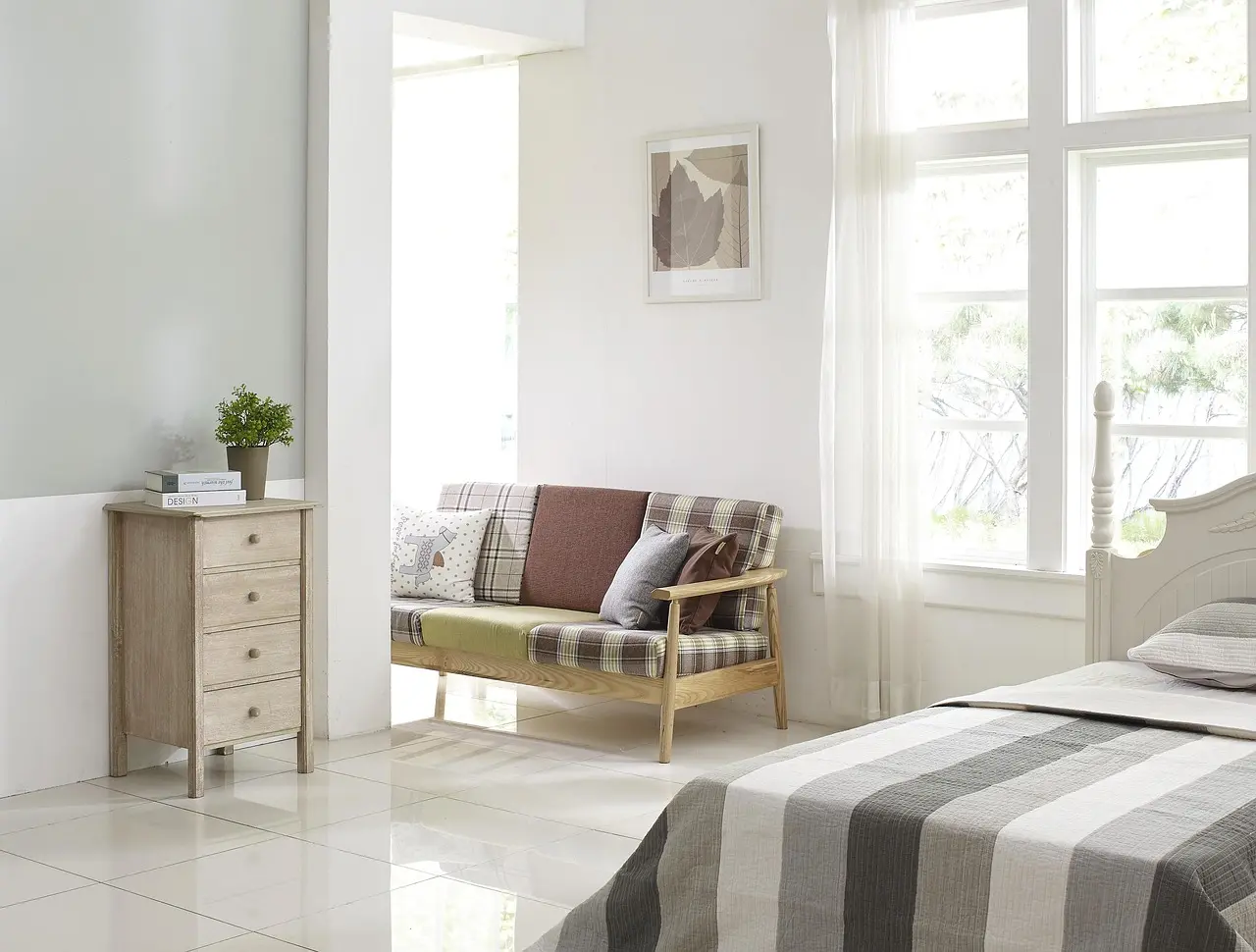
The best dresser size depends on room scale, storage load, and how many people use the clothes storage. Small bedrooms usually do better with a tall chest or a compact standard dresser. Primary bedrooms and couples can often justify a wider dresser with more drawers. Guest rooms and kids’ rooms usually need less storage and less wall coverage.
Match the dresser to the room’s job. If the closet already does most of the work, the dresser can stay smaller. If the dresser has to replace some closet storage, pick a wider or taller piece with more drawer count.
Small bedrooms and apartments
Small bedrooms usually benefit from a tall dresser because it uses vertical space when floor space is limited. A shallow depth is especially useful here, because it keeps the room easier to walk through and helps protect the bed path.
Primary bedrooms and couples
A larger dresser can make sense for couples sharing storage. A wide dresser or combo dresser usually gives enough surface and drawer count for two wardrobes without forcing smaller pieces into a long wall.
Guest rooms and kids’ rooms
Guest rooms often need a modest dresser rather than a large one. Kids’ rooms usually work well with fewer drawers and a smaller footprint, especially when the room also needs play space or a desk.
Say your bedroom is a compact apartment room with a 42-inch wall beside the door and a queen bed on the opposite side. A tall chest around 36 inches wide may fit better than a 60-inch dresser, because the smaller footprint protects the walking path and avoids door conflict.
Suppose a primary bedroom has a 72-inch empty wall and two adults sharing storage. A 66-inch double dresser with 6 to 8 drawers can fit the wall well and reduce pressure on the closet, while still leaving enough room in front for comfortable use.
Frequently asked questions
How wide is a dresser?
There is no single width that fits every room, but most common bedroom dressers fall between 30 and 72 inches wide. If you need a small footprint, look at tall chests. If you have a long empty wall and more storage to hold, a wider dresser is usually the better match.
What size dresser works in a small bedroom?
Small bedrooms usually do best with a tall chest or a compact standard dresser, because both use less floor space than a wide piece. A shallower depth also helps. If the room already feels tight, avoid a dresser that pushes far into the walkway or blocks a door swing.
How many drawers do I need in a bedroom dresser?
Use 4 to 5 drawers for light storage, guest rooms, or kids’ rooms. A six-drawer dresser is a strong middle ground for many bedrooms. Choose 8 or more drawers if two people share storage or if the dresser needs to carry a larger share of folded clothes.
What dresser depth is best for a tight room?
For a tight room, a dresser around 16 to 17 inches deep is often easier to live with than a deeper unit. The smaller depth leaves more walkway room and lowers the chance that drawers will interfere with the bed, closet, or door path when open.
Products related to this article
Sponsored / affiliate links. As an Amazon Associate I earn from qualifying purchases. I may earn additional commission from eligible campaigns.