Nightstand Height Chart: Match It to Your Bed Height
For most beds, a common guideline is to choose a nightstand whose top lines up with the mattress top or sits within about 2 inches of it; taller beds and side sleepers can go about 2 to 4 inches higher. A poor match makes the top harder to reach and can put the lamp, phone, and water out of easy reach. This guide gives a nightstand height chart, a quick measuring method, and a reach test plus lamp-height check to confirm the fit.
Why nightstand height matters
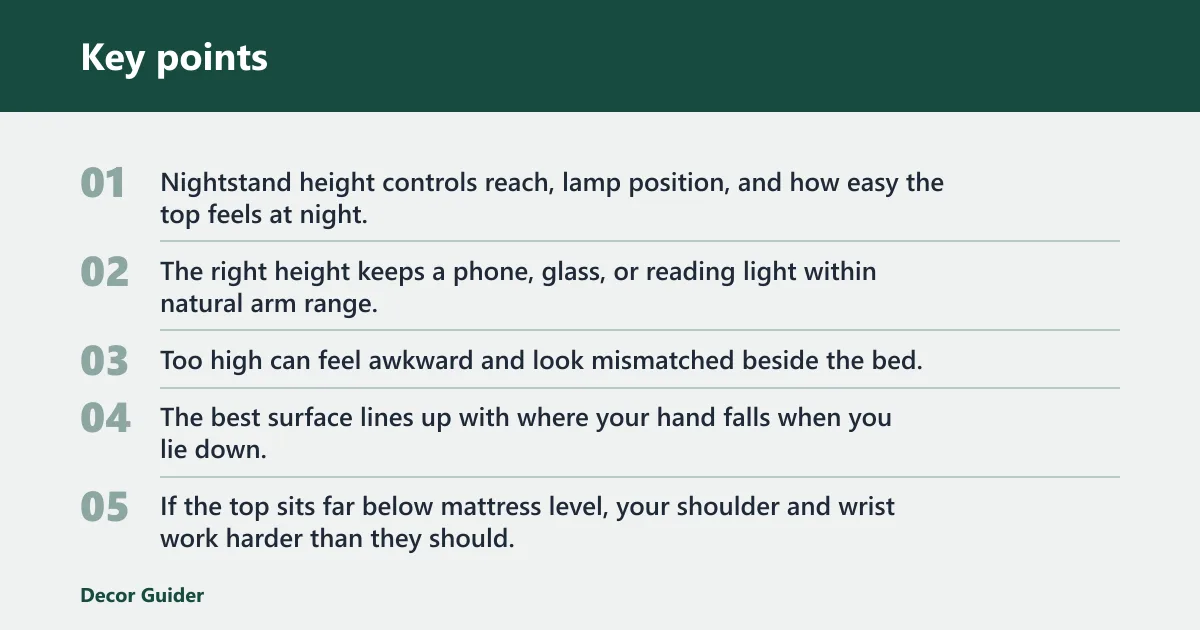


Nightstand height controls reach, lamp position, and how easy the top feels at night. The right height keeps a phone, glass, or reading light within natural arm range. Too low means you reach down. Too high can feel awkward and look mismatched beside the bed.
Comfort while reaching from bed
The best surface lines up with where your hand falls when you lie down. That is why the measurement starts with the mattress top, not the frame. If the top sits far below mattress level, your shoulder and wrist work harder than they should.
Why the wrong height throws off the setup
A nightstand that is too low can drop the lamp shade, which sends light into your eyes from the wrong angle. A nightstand that is too high can crowd the bed and make the top harder to use for a water glass or charger.
Measure the mattress top first
Measure from the floor to the top of the mattress, including the topper and protector, because that number sets the target. The bed frame alone does not tell you the right height. A low platform bed may put the sleeping surface around 18 inches from the floor, while a traditional frame with a box spring and pillow top can reach 30 inches or more.
Add frame height to get sleeping-surface height
-
Measure the floor-to-mattress top height. Start at the floor and measure to the highest point of the sleeping surface, not the top of the frame. Include any topper and protector, since both change the final target.
-
Note the bed build. A platform bed usually creates a lower sleeping surface, while a frame with a box spring raises it. That difference can move you out of the common 24 to 28 inch nightstand range.
-
Set the height target. Use mattress-top height as the anchor, then choose a nightstand surface that is level with the mattress or up to 2 inches above it. That keeps daily use easy without forcing you to reach down.
Suppose the mattress top measures 19 inches from the floor after a topper is added. A 20-inch nightstand fits better than a 27-inch one, even though both are sold as standard sizes.
What height should a nightstand be?
The best answer is usually the mattress-top height, or slightly above it. For side sleepers, a top that sits level with the mattress or up to 2 inches higher is often the most comfortable. For back sleepers, a surface that lands level with the mattress or up to 2 inches below it can still work if the reach is easy.
Target height for side sleepers
Side sleepers often do best with a surface even with the mattress or 2 to 4 inches higher in taller-bed setups, because the hand reaches outward from a raised shoulder position. That keeps a phone, lamp switch, or water bottle close without bending down.
Target height for back sleepers
Back sleepers usually do well with a top that is level with the mattress or slightly above it. If the surface sits a little lower, the reach can still feel natural as long as the gap stays small. Once the top drops too far below mattress level, the setup starts to feel low and awkward.
When a slightly taller or shorter top still works
A difference of about 2 inches in either direction is often acceptable. Beyond that, the nightstand can miss the hand position you use in bed, and the lamp may no longer sit at a useful height. The common 24 to 28 inch nightstand range is generally most suitable when the bed height is average.
Nightstand fit chart
This chart uses mattress-top height first, then converts that into a practical nightstand target. It is a decision guide, not a style rule. Check the last column before buying.
| Bed-height scenario | Recommended nightstand height range | Ideal lamp-shade bottom height | Minimum walkway clearance | Fit check |
|---|---|---|---|---|
| Mattress top at 18 to 20 inches | 18 to 22 inches | About 20 to 24 inches above the mattress surface | At least 24 inches | Yes, if the top is near mattress level and the walkway stays open |
| Mattress top at 22 to 24 inches | 22 to 26 inches | About 20 to 24 inches above the mattress surface | At least 24 inches | Yes, for most average-height beds |
| Mattress top at 25 to 27 inches | 25 to 29 inches | About 20 to 24 inches above the mattress surface | At least 24 inches; about 30 inches if you make the bed from that side | Yes, but lamp height and reach need a careful check |
| Mattress top at 28 to 32 inches | 28 to 32 inches | About 20 to 24 inches above the mattress surface | At least 24 inches; about 30 inches if you make the bed from that side | Yes, if the room clears the wider footprint and reach feels natural |
This chart also shows why the usual retail range is only a starting point. A 26-inch nightstand may suit one bed perfectly and sit too low beside another. The mattress top decides the final answer.
How do lamp and charging cables fit?
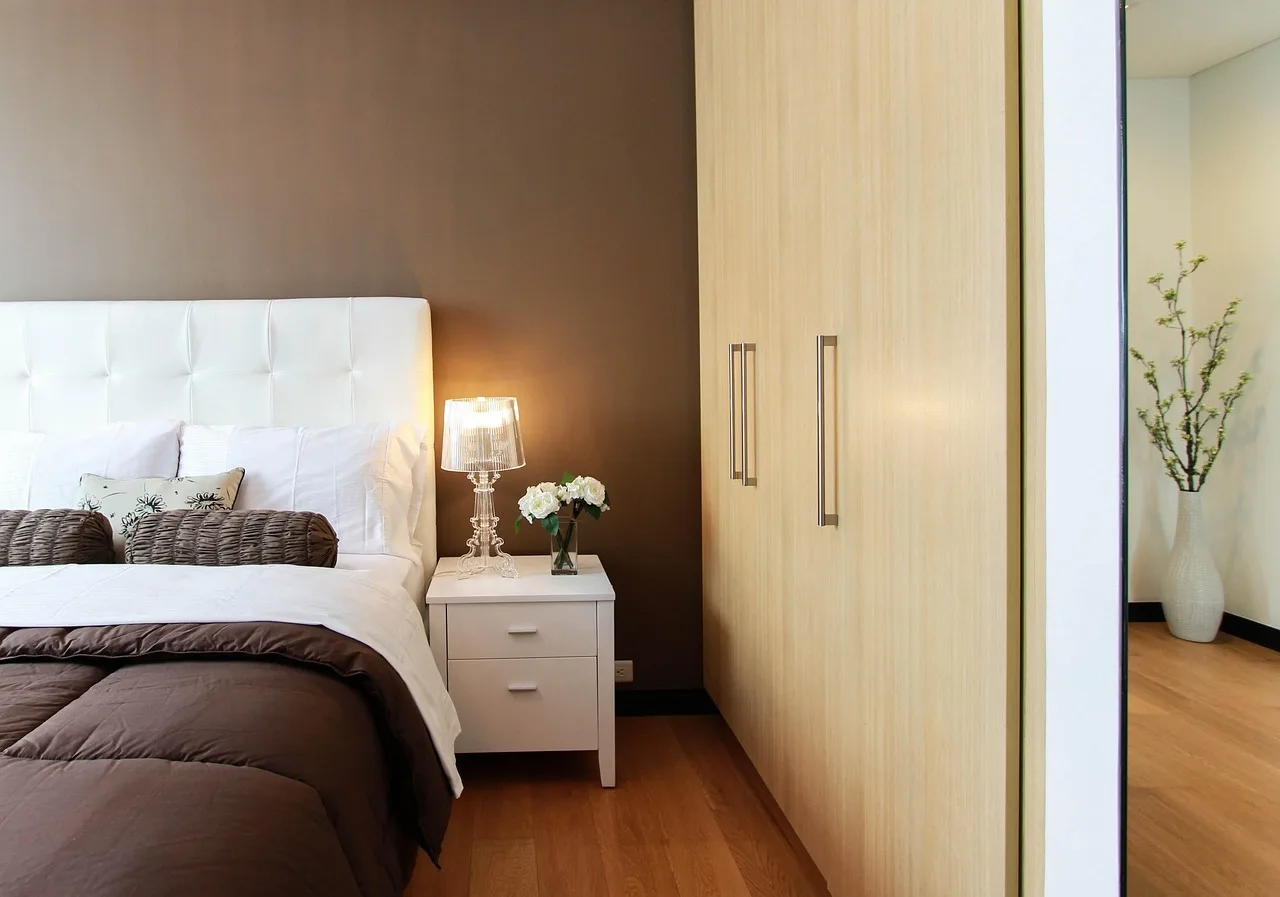
Check lamp height and cable access at the same time as the nightstand. The recommended lamp-shade bottom height is around 20 to 24 inches above the mattress surface, or about at seated eye level. Leave about 2 inches behind the nightstand for plugs and cords so the lamp and charger can reach the wall without strain.
Lamp-shade bottom height by bed height
Use the mattress top as the reference point, then measure upward from there. If the mattress is taller, the lamp base and shade need to rise too. That is why a nightstand that looks correct on paper can still fail if the lamp shade lands too low or too high in real use.
Say your mattress top is 24 inches high and you choose a 25-inch nightstand. If the lamp adds a base and shade that place the shade bottom roughly 20 to 24 inches above the mattress, the reading light usually feels balanced. If the shade sits much lower, your eye line can catch glare.
Leave space for plugs and cords
-
Measure wall clearance. Leave about 2 inches behind the nightstand for charging cables and outlet access. That small gap helps cords bend without pinching.
-
Check cord path. Make sure the lamp cord and any charger can pass behind the piece without being trapped by the wall or baseboard. If the cord sticks out, the nightstand may need to sit slightly forward.
-
Confirm switch reach. If the lamp switch is on the socket or cord, verify that you can reach it without moving the lamp. A clean cord path keeps the top usable and avoids clutter.
Width, depth, and walkway clearance
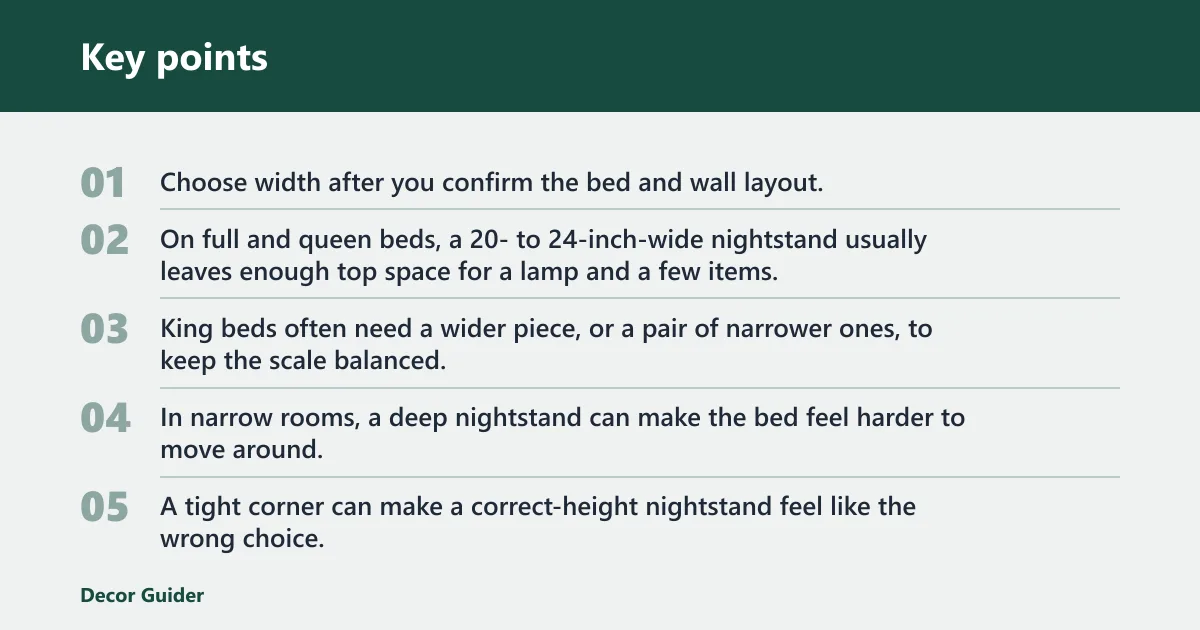
Height is only one part of the fit. Width, depth, and open space around the bed can matter just as much in a small room. For a full or queen bed, a nightstand width of roughly 20 to 24 inches is suggested. For a king bed, the suggested width range is 20 to 40 inches.
Width ranges for full, queen, and king beds
Choose width after you confirm the bed and wall layout. On full and queen beds, a 20- to 24-inch-wide nightstand usually leaves enough top space for a lamp and a few items. King beds often need a wider piece, or a pair of narrower ones, to keep the scale balanced.
Depth limits for tight rooms
Keep nightstand depth at 24 inches or less. The depth should also stay within the mattress plus headboard depth, so the piece does not jut forward and crowd the path. In narrow rooms, a deep nightstand can make the bed feel harder to move around.
How much space to leave beside the bed
Walkway clearance around the bed is commonly at least about 24 inches for comfortable passage, and about 30 inches if you need to make the bed from that side. That extra space matters more than a decorative oversized top. A tight corner can make a correct-height nightstand feel like the wrong choice.
A common first-timer mistake is choosing a wide nightstand because the height looks right, then discovering the drawer opens into the walking path. If the room needs 30 inches for bedding chores, the top of the table should not steal that space.
What if your bed is extra tall or adjustable?
Extra-tall beds and adjustable bases need a more careful check than the average setup. Very thick mattresses and toppers can push the sleeping surface into the 28 to 32 inch range, and the nightstand should rise with it. Adjustable beds can change the mattress angle and make a fixed top feel different from one position to another.
Very thick mattresses and toppers
If a topper adds enough height to change the mattress-top measurement, use the final number, not the mattress spec alone. A thick protector can matter too. That is why the mattress-top measurement should always be taken after the bedding is fully installed.
Platform beds versus box spring setups
Platform beds usually need shorter nightstands because the sleeping surface often sits lower. Box spring setups usually need taller ones because the sleeping surface rises. The bed frame height and mattress height combine to create the sleeping-surface height, so you should never shop from frame height alone.
Narrow bedrooms and tight corners
In a narrow bedroom, a slightly smaller top can be better than a larger one that blocks the walkway. Check the floor plan before buying online. If the room cannot keep at least 24 inches of clearance, the nightstand may fit the bed but fail the room.
How to confirm the fit before you buy
A reach test while lying in bed is the quickest way to confirm the right height. Use it after you have the mattress-top number, the lamp plan, and the room clearance. This final check catches errors that a product listing cannot show.
-
Measure the mattress top. Record the floor-to-top height, including topper and protector. This number sets the target for the nightstand surface.
-
Pick a height range. Use the chart to find the matching nightstand range for your mattress-top height. Keep the target within about 2 inches below to 2 inches above the mattress surface when possible.
-
Check lamp height. Add the lamp so the shade bottom lands around 20 to 24 inches above the mattress surface. This keeps the light where you can use it without glare.
-
Verify reach and clearance. Picture the top being used from bed, then confirm that the walkway keeps at least 24 inches open, or about 30 inches if you make the bed from that side. If any part fails, change the size before ordering.
Frequently asked questions
How tall is a standard nightstand?
Average nightstands are often listed at 24 to 28 inches tall. That range works best when the bed height is average, but it is not a fixed rule. If your mattress top sits much lower or higher than average, the standard range may miss the right fit.
How high should a nightstand be?
How high a nightstand should be depends on the mattress top, not the frame alone. A practical target is level with the mattress or up to 2 inches above it. For taller beds, the right nightstand may need to be taller than the common retail range.
Nightstand height vs bed height
Bed height sets the target, because the sleeping-surface height determines where your hand naturally reaches. A low platform bed often needs a shorter nightstand, while a bed with a box spring and pillow top may need a much taller one. Always compare the top of the mattress to the top of the stand.
How tall are nightstands?
Most nightstands are sold in a common band from 24 to 28 inches tall. That figure is useful only as a starting point. The better question is whether the top matches your mattress surface closely enough for easy reach, lamp placement, and clear walking space.
How high should nightstand be?
For most setups, the nightstand should be at mattress level or slightly above it. If the top sits too low, you reach down for everyday items. If it sits too high, the proportions can feel off and the top may be less comfortable to use from bed.
Products related to this article
Sponsored / affiliate links. As an Amazon Associate I earn from qualifying purchases. I may earn additional commission from eligible campaigns.