How to Waterproof a Sofa Safely
A common approach to waterproofing a sofa is to use a fabric-specific, water-based protector on a fully cleaned, fully dried cover after testing one hidden spot first; for leather, use a conditioner made for that finish rather than a spray. Done badly, waterproofing can stain upholstery, weaken seams, leave sticky residue, or trap moisture that leads to odors and mold. This guide explains the safest method by sofa material, the products to choose, and the steps that reduce damage risk.
Waterproof sofa cover decision table


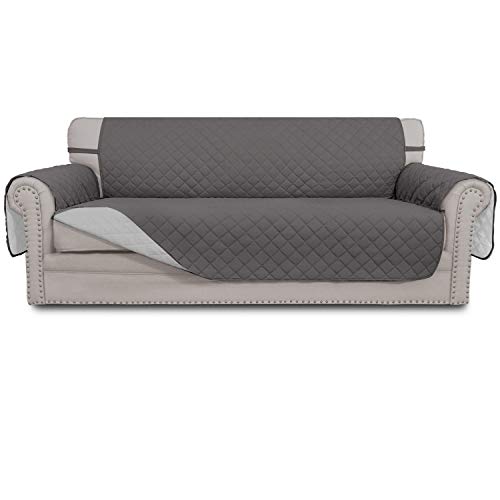
This table helps you match the safest protection method to the sofa you own, the mess you expect, and the fabric in front of you. The best answer is usually a removable waterproof sofa cover, not a spray, when you need full spill blocking, pet accident protection, or easier cleanup.
| Sofa type and fabric | Mess level | Safest method | Risk | Maintenance burden | Red-flag mistakes to avoid |
|---|---|---|---|---|---|
| Polyester, microfiber, or cotton-blend sofa | Light spills | Water-resistant spray on a hidden spot first, then a removable waterproof sofa cover if spills are frequent | Medium if sprayed unevenly; low with a fitted cover | Low to medium | Skipping a patch test; spraying seams; assuming water-resistant equals waterproof |
| Fabric sofa with kids, dogs, or meals on the couch | Frequent spills or accidents | Waterproof sofa cover with TPU or PUL backing and strap anchoring | Low if fit is correct; medium if the cover traps heat or slides | Medium | Buying by style only; ignoring seat width, depth, arm height, and sectional shape; machine-drying a coated cover |
| Leather sofa | Pet use or spill risk | Non-slip waterproof cover sized for the sofa, plus leather-safe conditioner on the leather itself | Medium if the cover rubs or traps moisture | Medium | Using a spray on leather; covering damp leather; choosing a slick cover without grip features |
| Mixed-material sofa | Routine spills | Sectional or full-coverage removable waterproof cover matched to the largest exposed area | Medium if one section is left exposed | Medium to high | Using one-piece sizing on an L-shaped layout; leaving arms or chaise sections uncovered |
| Delicate or vintage upholstery | Any moisture risk | Do not spray without manufacturer approval; use a loose, breathable protective throw only if it does not strain seams | High | Low to medium | Sealing old fabric in place; using heat, steam, or aggressive cleaning |
| Fixed-cushion or tightly tailored sofa | Accidents or puppy training | Custom-fit removable waterproof cover with non-slip backing and straps | Medium | Medium | Choosing a loose throw that shifts and leaves cushions exposed |
Suppose a 92-inch fabric sofa gets the occasional drink spill. A water-resistant spray may buy time for cleanup, but it will not block liquid from reaching the cushions. A fitted waterproof cover is the safer answer if the goal is to stop soak-through rather than slow it down.
What does waterproof mean for a sofa?

Waterproof means liquid is blocked from reaching the cushion or foam beneath the cover. Water-resistant only slows moisture long enough for cleanup. For puppy training, incontinence, or repeated pet accidents, that difference matters because a slow-absorbing cover still leaves the foam at risk.
Waterproof vs. water-resistant protection
Waterproof sofa covers use a barrier layer or membrane that keeps liquid out of the upholstery below. Water-resistant materials can bead water for a short time, but they do not fully seal the sofa. A modern waterproof throw may use multi-layer membranes that are 100% leakproof, while many waterproof throws are also machine washable and quick-drying.
For homes with pets, kids, or frequent spills, the safer choice is full waterproof coverage with a backing layer or membrane. A TPU or PUL backing with strap anchoring is the better match when you need protection that blocks liquid rather than delays it.
When a removable cover is safer than a spray
A removable cover is usually safer than a spray when the sofa has delicate fabric, visible seams, or a finish that could spot, darken, or stiffen. Spray-on treatments can also leave residue, and that residue may alter the hand feel of the fabric. For many homes, the least damaging route is a washable cover instead of a coating.
A common first-timer mistake is spraying a couch because it seems quicker, then finding sticky patches on the arm or a dark ring near the seam line. A cover avoids direct chemical contact with the upholstery and makes maintenance more predictable.
- Check the care label first. If the tag warns against wet cleaning, heat, or solvents, skip sprays on that fabric. Choose a removable cover or a safer material-specific method instead.
- Test one hidden spot. Apply the product where it will not show, then wait for the label-recommended drying time. If the fabric darkens, stiffens, or changes sheen, stop there.
- Let it cure fully. Do not use the sofa until the finish is fully dry. Moisture trapped under a coating can lead to odor, tackiness, or mildew in warm rooms.
Which sofa material can you protect safely?
The safest method changes with the upholstery. Fabric and microfiber can often take a removable waterproof cover or a fabric-safe protector. Leather needs a different approach. Delicate or vintage upholstery may be a poor candidate for in-place waterproofing at all.
Fabric and microfiber sofas
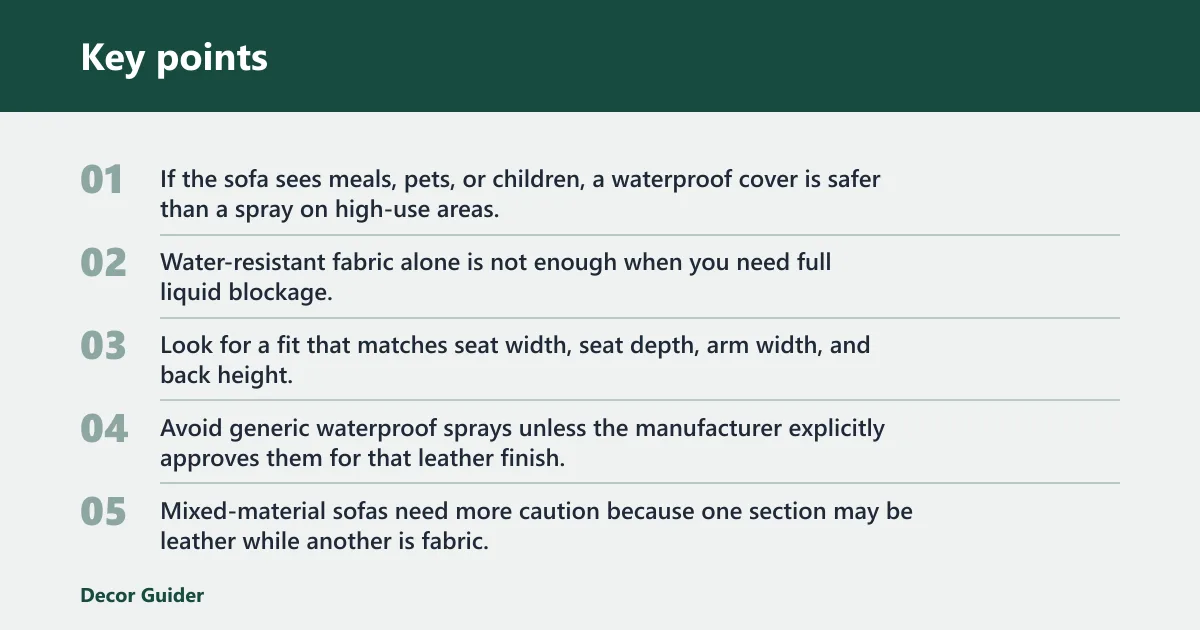
Fabric and microfiber sofas are the best candidates for removable waterproof covers because the cover can block spills without being bonded to the upholstery. If the sofa sees meals, pets, or children, a waterproof cover is safer than a spray on high-use areas. Water-resistant fabric alone is not enough when you need full liquid blockage.
Look for a fit that matches seat width, seat depth, arm width, and back height. On sectionals, also note the layout shape. A one-piece cover may not fit an L-shaped sofa well, and oversized sofas often need sectional-specific styles or larger coverage.
Leather and mixed-material sofas
Leather should not be treated like fabric. Avoid generic waterproof sprays unless the manufacturer explicitly approves them for that leather finish. The safer path is a non-slip cover sized to the sofa, plus a leather conditioner made for the finish if conditioning is needed.
Mixed-material sofas need more caution because one section may be leather while another is fabric. In that case, a full cover that fits the exposed area is safer than treating each surface with the same product. Strap anchoring matters here, because a shifting cover can rub against the leather and leave marks.
Delicate or vintage upholstery
Delicate or vintage upholstery is the place to slow down. Old textiles, fragile seams, and historic finishes can react badly to sprays, heavy covers, or repeated washing. If the fabric is already fragile, waterproofing in place may not be advisable at all.
If spill protection is still needed, use the lightest removable option that does not pull on the seams. Avoid heat, steam, and aggressive scrubbing. Those methods can do more harm than a single spill.
Choose the right waterproof cover construction
Construction matters as much as fit. TPU-backed covers, PUL-backed covers, and quilted polyester covers all protect differently. The safest choice is the one that matches your need for spill blocking, comfort, breathability, and wash care.
TPU-backed covers
TPU backing is a waterproof barrier layer used in dual-layer waterproof covers. It blocks liquid underneath, and it is generally quieter and more breathable than vinyl. That makes it a good fit for family sofas and pet protection when you want less crinkle and less heat buildup.
TPU-backed covers should be cold-washed and hang-dried. Heat can damage the coating or shorten the life of the elastic. If the label says the cover is waterproof, do not assume a hot cycle is safe just because it looks sturdy.
PUL-backed covers
PUL backing is another waterproof barrier layer commonly used in pet and accident protection. It is commonly described as breathable in pet-cover guidance, which helps when a sofa is covered for long periods. For puppy training or incontinence, that combination of waterproofing and breathability is useful.
Choose a PUL-backed cover with straps or anchors if the sofa is active or the household has dogs. The backing does the blocking. The attachment system keeps the blocking surface where it belongs.
Quilted polyester covers
Quilted polyester covers add a soft top layer that can make a waterproof or water-resistant protector feel more like normal upholstery. They are common when the goal is to balance comfort and spill protection. The outer layer can soften the look and feel of a coated cover.
Check whether the quilted version is truly waterproof or only water-resistant. Some quilted styles slow spills but do not block them. For repeated messes, choose the one with a true backing layer, not a decorative top layer alone.
How do you measure for a secure fit?
Measure before you buy. The safest waterproof cover is the one that fits the sofa closely enough to stay put without stressing the seams. Seat width, seat depth, arm width, back height, and sectional shape are the main numbers that matter.
Seat width, depth, and back height
Seat width tells you how much horizontal coverage you need. Seat depth tells you how far the cover must reach from front edge to back cushion line. Back height matters because a short cover can slip while a tall one can bunch and trap heat.
- Measure the seating span. Measure the usable seat width from outer edge to outer edge, not just cushion width. Then measure seat depth from the front of the seat to the back cushion line.
- Measure the back and arms. Record back height from the seat to the top edge and arm width across the broadest section. These dimensions help the cover wrap without pulling at the seams.
- Match the layout shape. Note whether the sofa is standard, L-shaped, or corner-based. Sectional-specific covers are often better for layouts a one-piece throw cannot hold.
Arm width and sectional layout
Wide arms often need separate coverage or stronger anchoring because they create more sliding surface. Sectional sofas need special attention because one side can shift while the other stays in place. A one-piece cover may not fit the whole shape evenly.
If your sofa has a chaise, measure that section separately. Oversized sofas need larger coverage, but bigger is not always better. Extra fabric can bunch and slide unless the cover includes non-slip backing and straps.
Sizing for oversized or corner sofas
Oversized and corner sofas are where fit mistakes show up first. A cover that is too small leaves foam exposed. A cover that is too large may trap folds, collect crumbs, and slide when someone sits down.
For these layouts, sectional-specific styles are usually the safer purchase. They are designed to handle the geometry instead of forcing a standard throw to do a custom job.
Keep the cover from slipping
Slip control is part of waterproofing. A cover that slides can expose the seat, concentrate wear at the seams, and let liquid run under the edge. Elastic straps, adjustable buckles, foam anchors, and non-slip backing are the main systems to look for.
Elastic straps and buckles
Elastic straps help hold the cover to the frame, while buckles let you adjust tension. Together, they can help reduce shifting during normal sitting and standing. That matters on active sofas, where the fabric needs to stay aligned after repeated use.
Look for straps at the back or underneath the seat. If the product has only a smooth top with no securing system, it may be fine for occasional use but weak for pets or high traffic.
Foam anchors and non-slip backing
Foam anchors tuck into the seams of the sofa to keep the cover seated. Non-slip backing adds grip against the upholstery surface. The combination is especially useful on leather, where slick surfaces make simple draping unreliable.
The best pet waterproof cover should combine a TPU or PUL backing with strap anchoring. That pairing blocks liquid and helps the cover stay in place when dogs jump, scratch, or shift around.
Why leather needs extra grip
Leather is slippery by nature, so a cover without grip often migrates within a day or two of normal use. That movement creates wrinkles and leaves exposed areas. For leather, choose non-slip backing and a more structured securing system than you would on woven fabric.
Do not install a damp cover on leather. Moisture trapped between materials can encourage odor and surface issues, especially if the room is warm.
How should you wash and dry it?
Most waterproof throws are machine washable, and many are quick-drying. A commonly recommended routine is cold washing with a mild detergent and hang drying. That care preserves coating, elastic, and fit. Heat is the main thing to avoid unless the care label says otherwise.
Cold wash and mild detergent
Wash waterproof covers in cold water with a mild detergent. Use the gentlest cycle that will still clean the surface. A heavy detergent load can leave residue on the barrier layer and may affect the cover’s hand feel.
- Remove debris first. Shake off crumbs, hair, and loose dirt before washing. That keeps the machine from grinding grit into the top layer.
- Use a cold cycle. Wash on cold with mild detergent unless the label gives another setting. Cold water helps protect coatings and elastic.
- Skip fabric softener. Do not add softener to waterproof covers. It can leave a film on the barrier layer and reduce performance.
Hang-dry care for waterproof coatings
Hang drying is the safest choice for waterproof models because it helps preserve coating and elasticity. Some covers are quick-drying, which makes this easier. If the label allows machine drying, use the lowest setting only when clearly permitted.
The Dubai upholstery guide advises removing and washing sofa covers every 3–6 months. If pets or spills are frequent, the practical interval may be shorter, but the safest baseline is a regular wash schedule rather than waiting for buildup.
Mistakes that damage backing or elasticity
High heat, aggressive washing, and repeated rough drying can damage the backing, stretch elastic, and distort fit. Avoid bleach unless the label explicitly allows it. Also avoid wringing, which can stress seams and twist the waterproof layer.
If the cover starts to feel stiff, crackly, or less flexible, the wash routine may be too harsh. That is often the earliest sign that heat or detergent choice needs to change.
Frequently asked questions
How to waterproof furniture
The safest way to waterproof furniture is usually a removable cover for soft upholstery and a material-specific protector for hard surfaces. For sofas, choose a waterproof cover with a true backing layer if you need spill blocking. For delicate materials, skip generic sprays unless the label says they are safe.
How to waterproof fabric
For upholstery fabric, start with a hidden spot test, then use a fabric-safe, water-based protector only if the care label allows it. If the sofa gets frequent spills, a washable waterproof cover is safer than a spray because it blocks liquid instead of only slowing absorption.
How to waterproof a sofa without ruining it
Use the least aggressive method that matches the fabric: a fitted waterproof cover for most sofas, a leather-safe conditioner for leather, and no spray on delicate or vintage upholstery without approval. Avoid heat, heavy scrubbing, and products that leave residue on seams or cushions.
How do you waterproof a sofa for dogs?
Choose a waterproof sofa cover with TPU or PUL backing, non-slip backing, and straps or anchors. Dogs add movement, hair, and accident risk, so the cover should block liquid and stay in place. Fit matters because a loose cover can slide and expose cushions.
How do you keep a waterproof sofa cover from slipping?
Look for elastic straps, adjustable buckles, foam anchors, and a non-slip backing. On leather, extra grip matters even more because the surface is slick. Measure the sofa carefully so the cover is snug without being overstretched, which can reduce grip and seam life.
Is a waterproof sofa cover machine washable?
Many waterproof covers are machine washable, and many are quick-drying. The safer routine is cold water with mild detergent and hang drying, especially for TPU-backed or PUL-backed covers. Avoid heat unless the care label clearly allows it, because heat can damage the coating and elasticity.
Products related to this article
Sponsored / affiliate links. As an Amazon Associate I earn from qualifying purchases. I may earn additional commission from eligible campaigns.