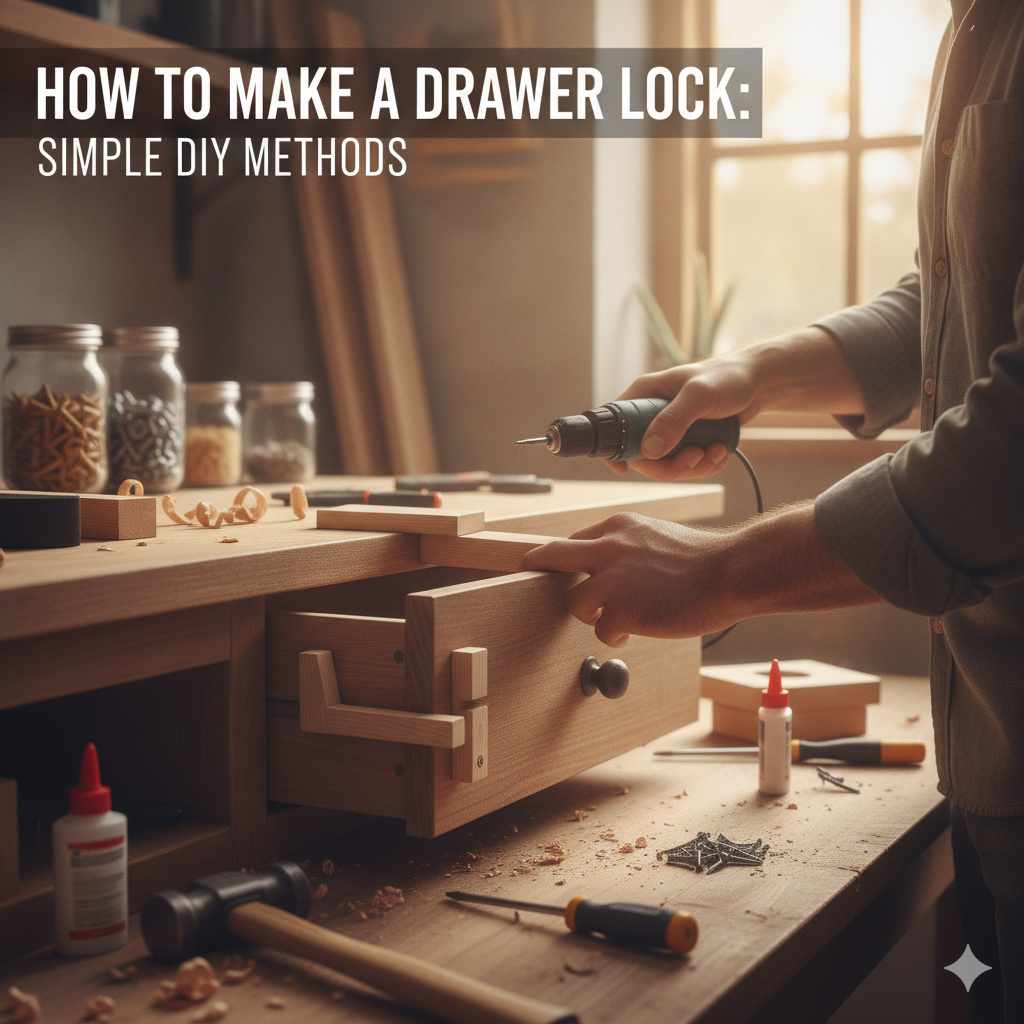
How To Make A Drawer Lock: Simple Diy Methods
You can make a drawer lock using simple household items. This involves creating a basic latch or securing mechanism. Common methods include using a small padlock with a drilled hole, a simple wooden dowel, or even sturdy string.
These DIY solutions offer easy, low-cost ways to add security to drawers.
Understanding Drawer Security
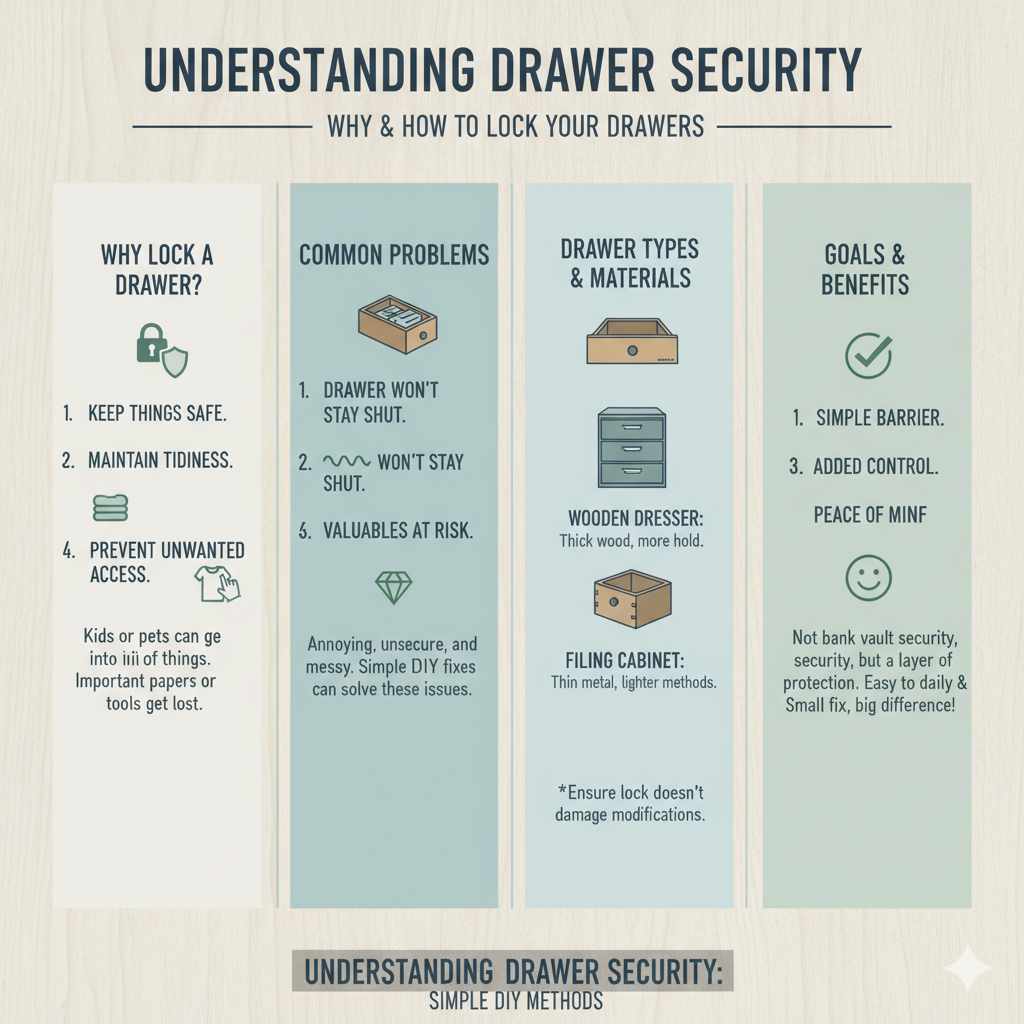
Why do we want to lock a drawer? It’s about keeping things safe. It’s also about keeping things tidy.
Sometimes, a drawer just doesn’t stay shut. This can be annoying. Other times, you have important papers.
Or maybe you have small tools. You don’t want them to get lost. Kids or pets might also be a reason.
They can get into places you don’t want them to. Making a drawer lock yourself is a great way to solve these small problems.
Think about the kinds of drawers you have. Are they in a filing cabinet? Or a wooden dresser?
Maybe a small craft box? Each type might need a slightly different approach. The material of the drawer matters.
A thick wood drawer can hold more. A thin metal drawer might need lighter methods. We want to make sure any lock we add doesn’t damage the drawer.
It should also be easy to use daily. And it needs to actually work to keep the drawer shut.
The goal here isn’t high security like a bank vault. It’s about creating a simple barrier. It’s about adding a layer of control.
You want to feel that your things are a little more protected. Or just that the drawer will stay closed when you want it to. Many times, a small, simple fix makes a big difference.
We’ll explore a few ways to achieve this.
My Own Drawer Lock Story
I remember one time I was setting up a new home office. I had this lovely old wooden desk. It had two small drawers on the side.
They were perfect for pens and little notebooks. But the problem was, they wouldn’t stay closed. If I bumped the desk even slightly, they’d pop open a bit.
It looked messy. It felt unprofessional when clients visited virtually.
I looked online for small drawer locks. Everything seemed too complicated. Or it was too expensive for just two little drawers.
I felt a bit stuck. I didn’t want to drill huge holes. I wanted something simple and cheap.
So, one evening, I was looking around my garage. I found a small, inexpensive padlock. I also saw a small metal eye screw.
Suddenly, an idea sparked.
I grabbed my drill. With a tiny bit, I carefully drilled a small hole on the edge of the drawer. I did the same on the corresponding part of the desk frame.
It was just big enough for the padlock’s shackle. Then, I screwed the eye screw into the drawer’s edge, right next to the hole. When the drawer was closed, the eye screw lined up with the hole in the desk.
I could then put the padlock through the eye screw and the desk hole. It wasn’t Fort Knox, but it kept the drawer perfectly shut. No more popping open!
It felt like a real win, using things I already had.
DIY Drawer Lock Method 1: The Padlock and Eye Screw
This is the method I just shared. It’s great for wooden drawers. It offers a visible deterrent.
It’s also very effective at keeping a drawer closed. You’ll need a few simple things for this.
What You Need:
- A small padlock (key or combination)
- One or two small eye screws (choose a size that fits your padlock’s shackle)
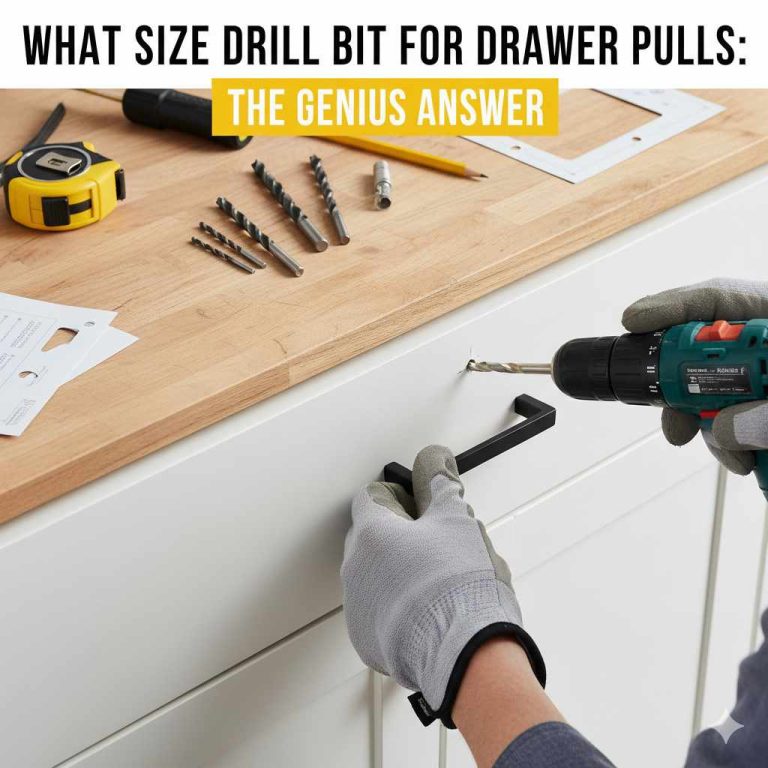
- A drill with a drill bit slightly smaller than your eye screw’s threads
- A drill bit for the second hole, just large enough for the padlock shackle
- A pencil
- Measuring tape (optional)
First, find the exact spot where the drawer closes. Open the drawer. Then, close it just enough so the front edge is aligned.
Use your pencil to mark the spot on the drawer’s front edge. You want to mark where the lock will go. Then, mark the corresponding spot on the desk frame.
This spot should be directly in line with the drawer’s mark when the drawer is shut.
Now, drill the first hole. Take the drill bit that matches your eye screw. Carefully drill into the marked spot on the drawer’s front edge.
Don’t drill too deep. Just deep enough for the screw to catch well. You want the eye screw to stick out a bit when it’s in.
Screw the eye screw into this hole. Make sure it’s snug.
Next, drill the second hole. This hole goes into the desk frame. It needs to be aligned with the eye screw.
Drill a hole that’s just big enough for the padlock’s shackle to pass through. Be careful not to make it too big. You want a snug fit for the lock.
Test it out. Close the drawer. The eye screw should be visible.
Now, open the padlock. Put the shackle through the eye screw and then through the hole in the desk frame. Close the padlock.
The drawer should now be securely shut. To open it, just unlock and remove the padlock.
This method works best on solid wood. If your drawer is metal or has a thin front, you might need to add a small wood block first. You can glue or screw a small piece of wood onto the drawer front.
Then you can attach the eye screw to that. This gives the eye screw something solid to hold onto.
DIY Drawer Lock Method 2: The Wooden Dowel or Stick
This method is even simpler. It’s good for drawers that don’t need super strong security. It’s perfect for keeping drawers from accidentally opening.
Or for keeping small items out of reach from very young children. It uses very basic materials.
What You Need:
- A wooden dowel or a sturdy stick (like a chopstick, a wooden skewer, or a piece of a broom handle)
- A drill with a drill bit slightly smaller than your dowel
- A pencil
- A small saw or strong cutters (if you need to shorten the dowel)
Open the drawer. Look at the inside edge of the drawer frame. You’ll want to drill a hole here.
This hole will go into the side of the drawer itself. So, when the drawer is pulled out, the dowel will stick out. When the drawer is pushed in, the dowel will go into a hole in the desk frame.
Close the drawer. Make sure it’s pushed in all the way. Find a spot on the inside of the drawer side.
It should be near the front edge. Mark this spot with your pencil. Now, drill a hole at this mark.
The hole should be deep enough to hold the dowel securely. The drill bit should be slightly smaller than your dowel. This makes for a tight fit.
Now, you need a place for the dowel to go into when the drawer is closed. Close the drawer. Find the spot on the desk frame that lines up with your drilled hole.
Mark this spot. Drill a second hole here. This hole should be the same size as the first one.
It needs to be deep enough for the dowel to go in about an inch or so.
Cut your dowel. It needs to be long enough to stick out of the drawer’s hole when pulled out. But not so long that it’s in the way.
A good length is usually about 2-3 inches longer than the depth of the desk hole. So, if your desk hole is 1 inch deep, maybe cut the dowel to 3-4 inches long.
Test it. Pull the drawer open a little. The dowel should stick out from the side.
Push the drawer closed. The dowel should slide into the hole in the desk frame. This holds the drawer shut.
To open it, just pull the drawer out. The dowel will slide out of the desk frame. It’s a simple mechanical lock.
You can make this look nicer by painting the dowel to match your furniture. Or you can sand it smooth. This method is good because it doesn’t involve any metal parts.
It’s very quiet. It’s also super easy to make. Just remember to pull the dowel out before you try to open the drawer!
DIY Drawer Lock Method 3: The String or Zip Tie Method
This is a very temporary or emergency method. It’s also good if you can’t drill holes. Maybe you live in a dorm.
Or you’re renting and can’t make permanent changes. A strong string or a zip tie can do the job.
What You Need:
- Strong string, cord, or a zip tie
- Scissors (if using string or a zip tie you need to cut)
- A place to tie or loop the string/zip tie
This method works by looping something around the drawer handle (if it has one) or the drawer front itself. Then you loop it around a fixed part of the desk or cabinet. The goal is to pull the drawer shut.
And then secure it.
For a drawer with a handle: Loop the string or zip tie through the drawer handle. Then, loop it around the desk leg, or a drawer pull on another drawer. Tie it securely.
Or, for a zip tie, loop it around the drawer handle and then around a fixed point. Cinch it tight.
For a drawer without a handle: This is trickier. You might need to get creative. You could try looping the string under the drawer itself.
Then bring it up and tie it to a desk leg. This might not be very secure. A better approach is to find a way to secure the string to the drawer front.
You could tie it to an existing screw head, if there is one. Or, you might need to drill a tiny hole to thread the string through.
Let’s assume you can get the string around the drawer front or a handle. You want to pull the drawer shut as much as possible. Then, tie the string very tightly.
If using a zip tie, you’ll cinch it as tight as you can. The key is to make it difficult to open without untying or cutting it.
This method is not for high security. It’s easy to cut a string or zip tie. But it’s very effective at preventing accidental openings.
It’s also quick and requires no tools if you use a tie that doesn’t need cutting. For example, a shoelace could work in a pinch. Just tie a strong knot.
This is a great temporary fix.
DIY Drawer Lock Method 4: The Friction Fit Block
This is another way to stop a drawer from opening. It uses a small piece of wood. It’s designed to wedge itself in place.
It’s a bit like a simple wooden bolt, but without the moving parts.
What You Need:
- A small block of wood
- A saw
- Sandpaper (optional)
- Measuring tape (optional)
First, you need to create a wedge. You want a small piece of wood. It needs to fit snugly.
Take your block of wood. You’ll cut it at an angle. Imagine you’re making a ramp.
One side will be longer than the other. This creates the wedge shape.
Open the drawer. Look at the gap between the drawer front and the desk frame. You want to make a block that fits into this gap.
When the drawer is closed, you’ll push this block into the gap. The angled shape will make it wedge itself in. This stops the drawer from sliding out.
Measure the gap. You want your block to be slightly wider than this gap. When you cut the angle, one edge of the block should be slightly longer than the other.
Let’s say the gap is half an inch. You might make a block that’s one inch wide at its widest point. And then taper it down.
Cut the wood block. Use your saw to make an angled cut. The angle should create a good wedge shape.
You want it to be tight enough to hold. But not so tight that you can’t remove it. Sand down any rough edges.
This makes it easier to handle.
To use it: Push the drawer closed. Then, take your wooden wedge. Slide it into the gap between the drawer front and the desk.
Push it in as far as it will go. The angled sides will grip the wood. This stops the drawer from opening.
To open the drawer, you’ll need to pull the wedge out. You might need a small tool, like a flathead screwdriver, to help pry it out.
This is a good method for drawers that don’t need to be opened often. It’s very discreet. It doesn’t require any drilling.
You can make these wedges out of scrap wood. It’s a very simple, low-tech solution. Just make sure the wedge is not too big.
You don’t want to damage the drawer front.
Real-World Contexts and Scenarios
Where do you actually see these kinds of DIY drawer locks being useful? Think about your home. Your office.
Even shared spaces.
Home Use:
- Childproofing: In homes with toddlers or young children, childproofing drawers is common. While commercial locks exist, a simple padlock on a cabinet drawer holding cleaning supplies can be an effective DIY solution. Or a dowel lock on a dresser drawer holding toys.
- Securing Valuables: If you keep small, important items in a desk drawer (like spare keys, important documents, or medication), a simple lock provides peace of mind. It’s not for bank-level security, but it stops casual snooping or accidental access.
- Pet Proofing: Some pets, especially cats, can be very curious. They might nudge drawers open. A simple zip tie or string could keep them out of drawers containing pet food or other items you want to keep hidden.
- Preventing Accidental Opening: In RVs or boats, things move. Drawers can slide open during travel. A basic friction fit block or a dowel lock can prevent this. It keeps things tidy and safe while on the go.
Office Use:
- Shared Workspaces: In a shared office, you might have a personal drawer in a shared cabinet. A padlock can secure it. This is common for company-provided desks where you want to keep your personal items safe.
- Filing Cabinets: For non-sensitive but important documents, a simple DIY lock might suffice. It prevents casual browsing by colleagues. It adds a layer of privacy.
- Small Business Storage: A small business might have drawers with office supplies, petty cash, or small tools. A simple lock can prevent theft or misplacement.
Specific Drawer Types:
- Wooden Dresser Drawers: These are ideal for the padlock and eye screw method. The wood is usually thick enough. The desk drawer frame also offers a solid anchor point.
- Filing Cabinet Drawers: These are often metal. Drilling into metal can be harder. The string or zip tie method might be easier here. You can loop it around the drawer pull.
- Craft Boxes or Storage Bins: Many of these have simple closures. A zip tie or a small dowel lock can upgrade their security.
The key is to match the method to the drawer material and the level of security needed. For anything truly valuable or dangerous, professional locks are always best. But for everyday convenience and minor security, these DIY methods are fantastic.
What This Means for You
So, what’s the takeaway from all this? It means you have options! You don’t always need to buy expensive hardware.
You can solve common drawer problems with things you likely already have.
When It’s Normal:
- A drawer that pops open a little bit when bumped.
- Needing to keep small, non-critical items out of reach.
- Wanting to prevent accidental openings during travel.
- Adding a simple deterrent against very young children or pets.
When to Worry:
- If you are storing high-value items (jewelry, large amounts of cash, sensitive data).
- If you need to prevent determined theft or unauthorized access.
- If the drawer contains dangerous items (medications, sharp objects) and children are present, and your DIY solution is not robust enough.
- If the drawer’s contents could cause harm if accessed (e.g., chemicals).
Simple Checks:
- Test your lock: After installing any DIY lock, try to open the drawer. Give it a good pull. See how secure it feels.
- Check for wear: If you use a string or zip tie, check it regularly. It can fray or weaken over time.
- Consider drawer material: Make sure your chosen method is compatible with the drawer’s material (wood, metal, plastic).
- Look for alternatives: If a DIY method doesn’t feel secure enough, it’s okay to look for a commercial lock.
Adding a simple lock can make a big difference. It can stop that annoying drawer from sliding open. It can give you a little more peace of mind.
It’s empowering to be able to fix these small issues yourself.
Quick Fixes and Tips
Here are some extra tips to make your DIY drawer locks work even better:
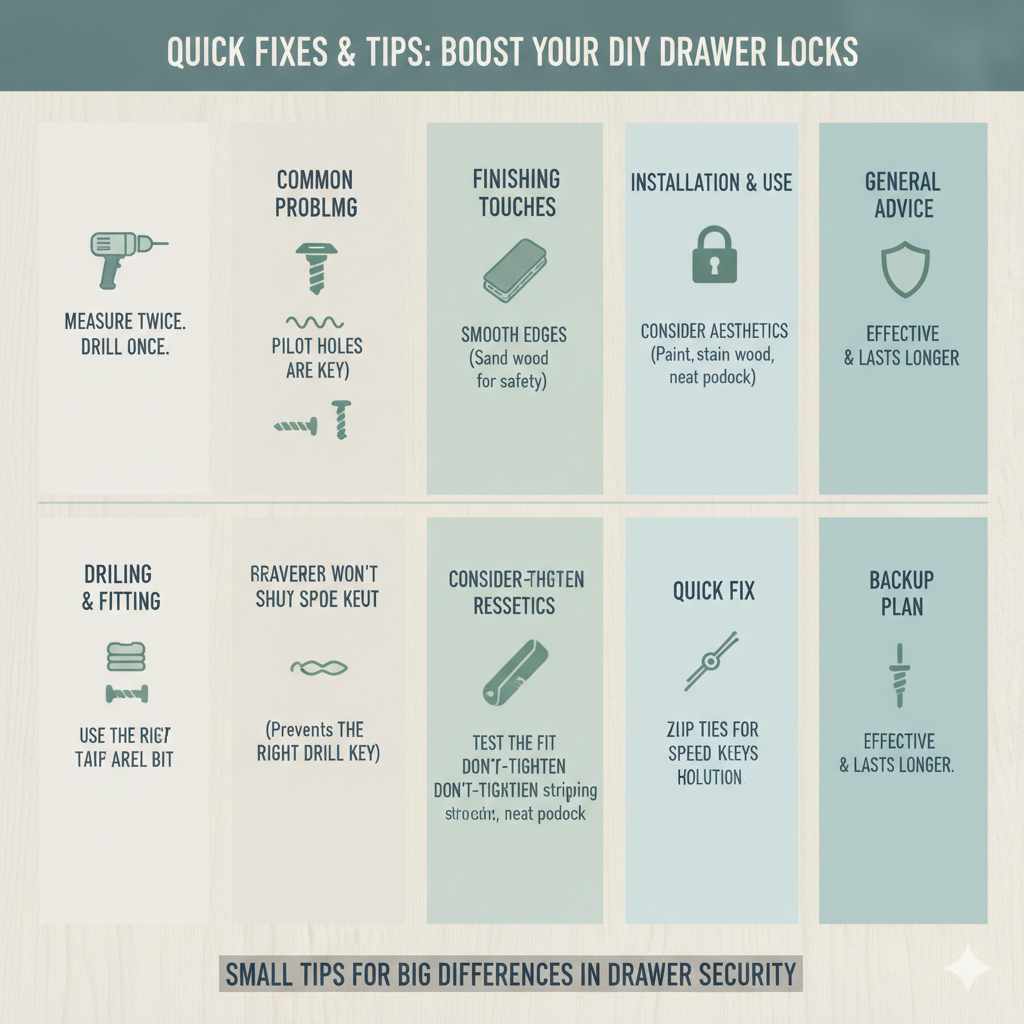
- Measure Twice, Drill Once: This old saying is very true for drilling. Make sure your marks are accurate before you drill.
- Use the Right Drill Bit: For eye screws, use a bit that’s slightly smaller than the screw threads. For dowels, use a bit that’s the same size or slightly smaller than the dowel for a snug fit.
- Pilot Holes are Key: Always drill pilot holes for screws. This prevents wood from splitting.
- Test the Fit: Before you permanently attach anything, test the fit of your parts. Make sure the padlock shackle goes through easily. Make sure the dowel slides in smoothly.
- Smooth Edges: Sand down any sharp edges on wood blocks or dowels. This makes them safer to handle and less likely to snag.
- Consider Aesthetics: If the lock will be visible, think about how it looks. You can paint or stain wood parts. Choose a padlock that looks neat.
- Don’t Over-Tighten: When screwing in eye screws, don’t over-tighten them. You could strip the wood.
- Backup Plan: For critical items, always have a backup plan. A DIY lock is great for convenience, but it’s not foolproof.
- Keep Keys Handy: If you use a key padlock, keep the key in a safe, easy-to-remember place.
- Zip Ties for Speed: Zip ties are incredibly fast. If you need a quick fix and can cut them off later, they are a great option.
These small tips can help ensure your DIY drawer lock is effective and lasts longer.
Frequent Questions
Can I lock a filing cabinet drawer without drilling?
Yes, you can. A strong zip tie or a sturdy cord can be looped through the drawer handle and then around a leg or another fixed part of the cabinet. This prevents the drawer from being opened easily.
What is the easiest DIY drawer lock to make?
The wooden dowel method or the string/zip tie method are generally the easiest. They require minimal tools and materials. The dowel method is a bit more involved but offers a cleaner look.
How do I secure a drawer that has no handle?
For drawers without handles, the padlock and eye screw method is often best, as you can attach the eye screw to the drawer front. If drilling isn’t an option, you might need to get creative. Some people use strong adhesive hooks, but this is less secure.
Will these DIY locks damage my furniture?
If done carefully, most methods should not cause significant damage. Drilling small holes for eye screws or dowels is common. The friction fit block doesn’t require any holes.
Always test a method in an inconspicuous area if you are worried about damage.
How secure are these DIY locks?
These DIY locks are generally for light security. They are great for preventing accidental openings or casual snooping. They are not designed to stop a determined thief.
For serious security needs, commercial locks are recommended.
Can I use a combination lock instead of a keyed padlock?
Yes, absolutely! A combination lock works just as well with the eye screw method. This is convenient because you don’t have to worry about losing a key.
Just remember your combination!
Conclusion
Adding a bit of security to your drawers doesn’t have to be hard. You’ve seen several simple ways to make a drawer lock yourself. These methods use common items.
They offer practical solutions for everyday needs. Whether it’s for childproofing, keeping things tidy, or just adding a little extra privacy, these DIY locks are a great choice. They are easy, affordable, and effective.
Products related to this article
Sponsored / affiliate links. As an Amazon Associate I earn from qualifying purchases. I may earn additional commission from eligible campaigns.