Does The Drawer Under The Oven Get Hot? Explained
It’s a common kitchen mystery. That little drawer tucked neatly under your oven. Does it get hot?
And what exactly is it for? Many of us have wondered about this. We see it there, often unused.
Then, during baking or roasting, we feel warmth. This sparks questions and maybe even a little worry. You want to know if it’s safe.
You want to understand its purpose. This guide will break it all down. We’ll cover why it heats up.
We’ll explain its real job. And we’ll help you know when to take action. Let’s clear up the oven drawer confusion.
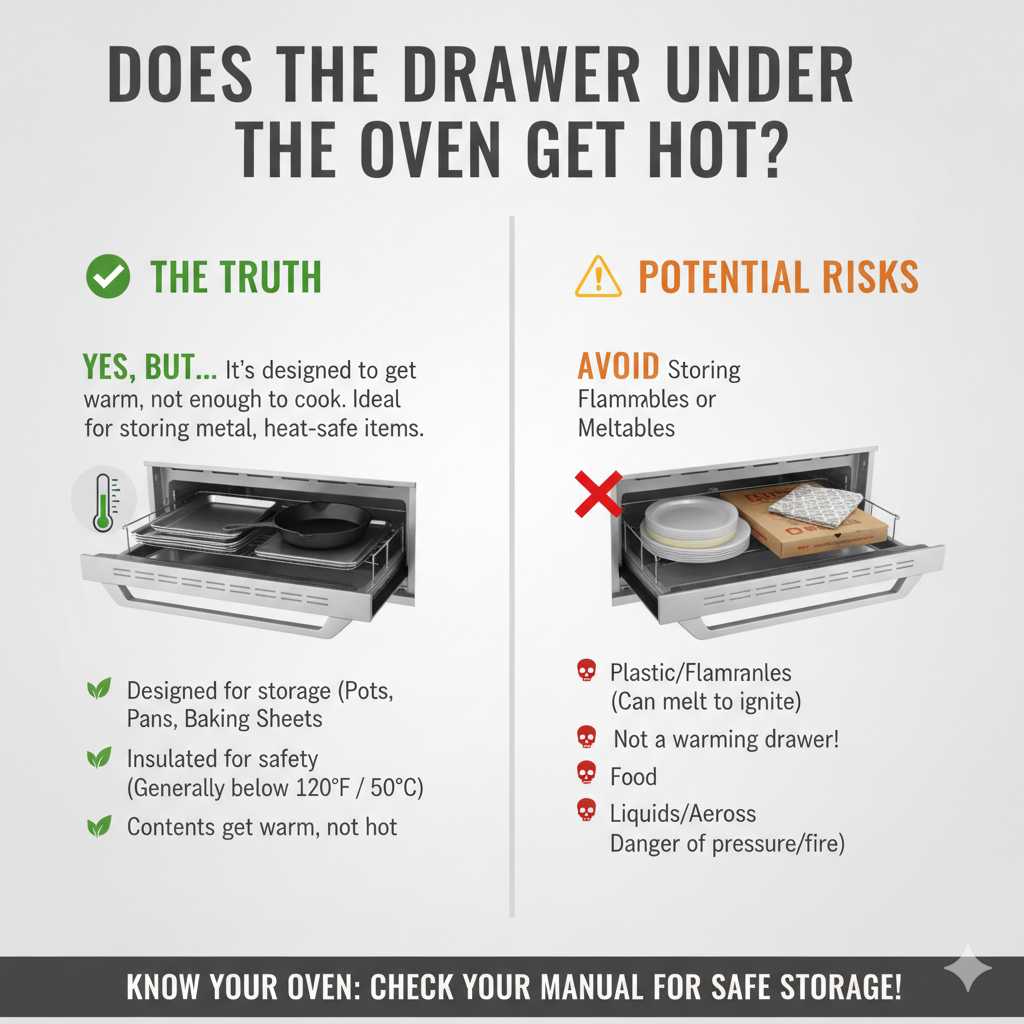
The drawer under most ovens is designed to warm food or store cookware. It can get warm or hot during cooking cycles. This is normal for most models, especially self-cleaning ovens. However, extremely high temperatures or unexpected heating can indicate an issue.
Why Your Oven Drawer Gets Warm
So, why does that space beneath your oven seem to soak up heat? It’s not magic. It’s mostly about physics and design.
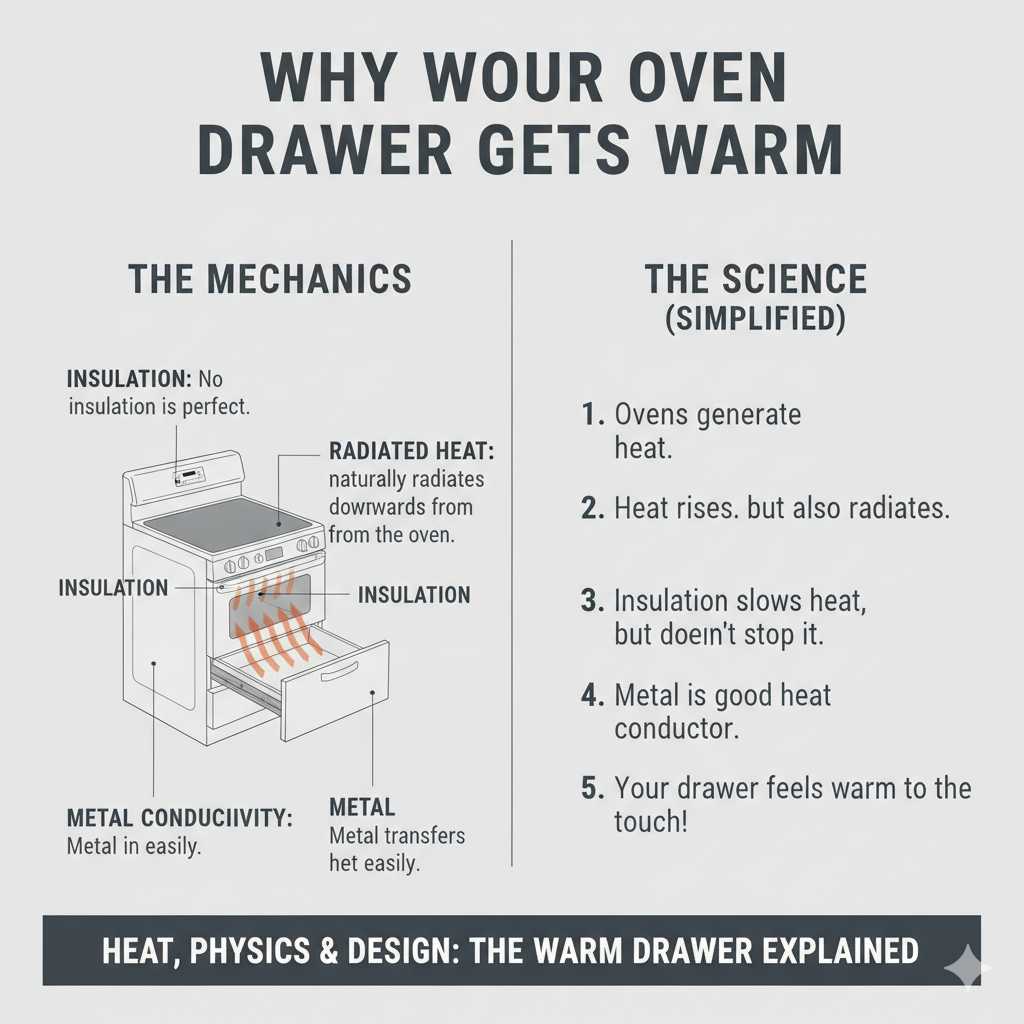
Ovens generate a lot of heat. This heat needs to go somewhere. Some of it naturally radiates outward and downward.
Think of it like a warm body. It gives off heat to its surroundings.
Modern ovens have insulation. This keeps heat inside the cooking cavity. But no insulation is perfect.
This prevents food from getting cold while you finish other tasks.
Also, consider the materials. The drawer and the oven itself are usually made of metal. Metal is a good conductor of heat.
This means it can easily transfer heat from one place to another. The metal parts of the oven absorb heat. Then they pass that heat along to the drawer.
This makes the drawer feel warm to the touch.
The Role of the Warming Drawer
Some ovens come with what’s called a “warming drawer.” This is different from a standard storage drawer. A warming drawer has its own heating element. It’s designed to keep food at a specific temperature.
This is perfect for entertaining. You can prepare multiple dishes. You can keep the first ones warm while you cook the rest.
It’s like a mini oven dedicated to warmth.
These dedicated warming drawers can get quite hot. They are meant to reach temperatures that keep food safe to eat. This means holding food above the “danger zone” for bacteria growth.
That zone is typically between 40°F and 140°F. A warming drawer might sit at 140°F or higher. So, if you have one of these, expect it to be hot.
The controls for a warming drawer are usually separate. You might see a dial or buttons specifically for it. They often have different temperature settings.
This lets you choose how warm you want your food to be. It’s a feature that adds a lot of flexibility to your cooking. It shows that the drawer can be an active part of the cooking process, not just a passive space.
Self-Cleaning Ovens and Heat
Here’s something important to note. If you have a self-cleaning oven, the drawer under it might get hotter than usual. This is especially true during the self-cleaning cycle.
That cycle uses extremely high temperatures. We’re talking around 800°F to 1000°F. The goal is to burn off food residue.
During this intense cleaning, a lot of heat builds up. The oven’s insulation works hard to keep that heat contained. But some heat will still radiate.
It can make the entire exterior of the oven, including the drawer, very hot. Manufacturers often build these ovens with extra shielding. They want to protect surrounding cabinets.
But still, caution is key.
Even when not in self-cleaning mode, ovens with self-cleaning features might run hotter. This is because their components are built to withstand higher temperatures. This robust design can lead to more ambient heat transfer.
So, if your oven has a self-cleaning option, a warm drawer is even more expected. It’s a sign the oven is working as intended.
The Intended Purpose of the Oven Drawer
Let’s talk about what that drawer is actually supposed to do. Many people think it’s just a space for storing baking sheets. And yes, it can be used for that.
But its primary design purpose is often more specific. It’s usually a warming drawer or a broiler drawer in older models.
In many modern ranges, the bottom drawer is indeed a warming drawer. It’s designed to keep food warm. This is incredibly useful for family meals.
Imagine serving a big Sunday dinner. You can keep the potatoes and gravy warm. The roast can stay at the perfect temperature.
This takes the pressure off timing everything perfectly.
Some older ovens had a broiler located in that bottom drawer. This was before the broiler was typically moved to the top of the oven cavity. If you have a very old appliance, it might have had this feature.
It allowed for broiling from below. This would definitely make the drawer get hot during use.
Think about the convenience. Instead of using multiple pots on the stove to keep things warm, you have one dedicated space. It uses the oven’s heat efficiently.
It helps create a smoother cooking experience. Knowing its purpose helps you use your appliance better. It also helps you understand why it behaves the way it does.
Storage vs. Warming: What’s Yours?
How can you tell if your drawer is for storage or warming? Look at your oven’s manual. That’s the best place to start.
The manual will tell you exactly what each part is for. It will explain any special features your oven has.
If your oven has controls for a warming drawer, it’s a warming drawer. These controls might be on the main oven panel. They could be separate knobs or touch buttons.
They often have temperature settings like “Warm,” “Low,” “Medium,” or “High.” Some might even show specific temperatures.
If there are no specific controls, it’s likely a storage drawer. Or, it’s a drawer that simply utilizes residual heat. These drawers might get warm but won’t have their own heating element.
They are designed to maintain a moderate temperature. This is enough to keep things like bread or rolls warm for a short time.
You can also test it yourself. After using the oven for a while, carefully feel the drawer. If it’s just a bit warm, it’s likely a standard storage drawer.
If it’s quite hot, and especially if it has controls, it’s a warming drawer. This distinction is important for safety and understanding.
Drawer Functionality Quick Check
Type: Standard Storage Drawer
Heat Level: Slightly warm to warm.
Primary Use: Storing cookware, baking sheets, oven mitts.
Controls: None dedicated to the drawer.
Type: Warming Drawer
Heat Level: Warm to hot, adjustable.
Primary Use: Keeping food at serving temperature.
Controls: Dedicated temperature settings on oven panel.
When Does the Drawer Get Hot Enough to Worry?
Most of the time, a warm drawer is normal. It means your oven is working correctly. But there are times when you should pay closer attention.
Excessive heat is a warning sign. It could mean something isn’t quite right.
First, consider the length of time the oven has been on. If you’ve been baking or roasting for a few hours, the drawer will naturally be warmer. This is expected.
But if the drawer gets extremely hot very quickly, or after only a short cooking time, that’s different.
What feels “extremely hot”? It’s when the drawer becomes too hot to touch even briefly. Or, if you notice a burning smell coming from the drawer area.
This smell is a definite red flag. It could indicate melting plastic, insulation issues, or electrical problems.
Another sign is if the heat seems to be escaping in unusual places. Maybe the exterior of the oven is hotter than it should be. Or, the heat is directed into your kitchen cabinets.
This suggests the oven’s insulation might be damaged or failing. This can be a safety hazard.
If your oven has a warming drawer, and it’s getting hotter than its set temperature, that’s also a concern. For instance, if you set it to “Warm” (around 140°F) and it feels like it’s approaching baking temperatures, something is wrong.
Identifying Potential Issues
So, what could be causing this excessive heat? A common culprit is a faulty thermostat or temperature sensor. These components tell the oven how hot it is.
If they’re not working right, the oven might overheat. This excess heat then transfers to the drawer.
Damaged insulation is another possibility. The insulation keeps the heat inside the oven cavity. If it’s torn, compressed, or missing in places, heat will escape.
This escaping heat can superheat the drawer and surrounding areas. This can happen from wear and tear over time, or from accidental damage.
In warming drawers, the heating element itself could be faulty. It might be stuck “on,” or running at a higher power level than it should. This would lead to overheating.
The control board for the warming drawer might also have issues. It’s the “brain” that manages the drawer’s temperature.
If you smell burning plastic or see smoke, stop using the oven immediately. Unplug it or turn off the circuit breaker. This is a serious safety concern.
It might be an electrical short or melting components. Do not try to fix this yourself unless you have significant electrical experience. Call a qualified appliance repair technician.
Signs Your Drawer Heat Is NOT Normal
Smell: Burning plastic, acrid smoke.
Touch: Drawer too hot to touch for even a second.
Speed: Drawer becomes extremely hot very quickly (minutes).
Location: Heat radiating intensely into cabinets.
Functionality: Warming drawer is much hotter than its set temperature.
Real-World Scenarios and What They Mean
Let’s look at some common situations. Imagine you’re making a big roast. It needs to cook for three hours.
During that time, you notice the drawer below is quite warm. You can feel the heat when you walk by. You can even place a small, heat-safe item on it, and it gets warm.
In this scenario, that’s perfectly normal. The oven is working hard to cook the roast. Heat is radiating downwards.
The drawer is acting as a passive heat collector. It’s not a problem. It’s just how ovens behave when they’re working hard.
Now, picture this. You just turned on your oven to preheat for 15 minutes. Before it even reaches temperature, you open the oven door slightly to check.
You touch the drawer, and it’s already too hot to hold. You might even smell a faint plastic smell. This is not normal.
This could indicate a problem with the insulation or the heating element controls.
Another example: you used the self-clean cycle last night. This morning, the oven is cool. But the drawer is still noticeably warm.
This is unusual. After the cycle finishes and the oven cools, the drawer should return to room temperature. Lingering heat could mean the cooling fans aren’t working properly, or there’s an issue with heat dissipation.
Or, consider a warming drawer set to 140°F. You put in a plate of mashed potatoes. An hour later, the potatoes are dry and a bit crispy.
The drawer feels much hotter than 140°F. This suggests the thermostat for the warming drawer is off. It’s heating too much.
Habits that Affect Drawer Heat
Some daily habits can influence how hot your oven drawer gets. Leaving the oven door ajar, even slightly, can let heat escape. This can make the exterior, including the drawer, warmer.
It also makes the oven work harder to maintain its temperature.
Frequent opening of the oven door during cooking also releases heat. Each time you open the door, you’re letting out precious warmth. The oven then needs to ramp up its heating element to compensate.
This increased heating activity can lead to more radiant heat affecting the drawer.
What you store in the drawer matters too. If you store oven mitts or plastic items in a drawer that gets warm, they can warp or melt. It’s best to store only metal items like baking sheets or cooling racks in a standard oven drawer.
If it’s a warming drawer, it’s not ideal for storing anything long-term. Its purpose is for food.
Also, think about the kitchen environment. If your kitchen is already very hot, like on a summer day with no air conditioning, the oven might seem to heat up its surroundings more. The ambient temperature plays a role.
But this usually doesn’t cause excessive, dangerous heat levels in the drawer itself.
What This Means for Your Kitchen Safety
Understanding drawer heat is key for kitchen safety. A normal warm drawer is not a fire hazard. But an excessively hot drawer could be.
It depends on what’s stored inside and its proximity to flammable materials.
If your drawer gets extremely hot, and you store things like paper towels, cleaning supplies, or plastic containers nearby, that’s a risk. High heat can cause these items to melt, warp, or even ignite. Always keep flammable items away from the oven’s exterior.
If you have children or pets, be mindful of the drawer’s temperature. Even a normally warm drawer can be hot enough to cause a burn. Make sure they know not to touch it.
Use oven mitts when reaching into or near the oven area.
For warming drawers, the risk is usually related to food safety or appliance malfunction. Overheating can dry out food excessively, making it unappetizing. But a faulty heating element could, in extreme cases, pose an electrical risk if not addressed.
Simple Checks You Can Do
You don’t need to be an expert to do a few basic checks. First, consult your oven’s user manual. It will tell you the intended use of the drawer.
It will also have troubleshooting tips for common issues.
Next, observe the heat. When the oven is on, notice how warm the drawer gets. Does it feel consistent with normal cooking?
Or does it seem unusually hot? Try to gauge the temperature with your hand (briefly and carefully!) after the oven has been on for a while.
Listen for strange noises. While the oven is running, are there any unusual humming, buzzing, or clicking sounds coming from the drawer area? These could signal a problem with a fan or motor, if present.
Check for visible damage. Look at the drawer and the area around it. Is the insulation visible and intact?
Are there any scorch marks on the drawer or surrounding cabinetry that weren’t there before?
If you have a warming drawer, test its settings. Put a food item in and set it to a specific temperature. Check if it maintains that temperature.
Or, use an oven thermometer inside the drawer to verify its actual temperature. This can help diagnose a faulty thermostat.
Your Kitchen Safety Checklist
Flammables: Keep all flammable items away from the oven exterior.
Children/Pets: Supervise and teach about hot surfaces.
Manual: Always refer to your oven’s manual.
Observe: Note any unusual smells, sounds, or excessive heat.
Warming Drawer Test: Use an oven thermometer to check temperatures.
Tips for Using Your Oven Drawer Wisely
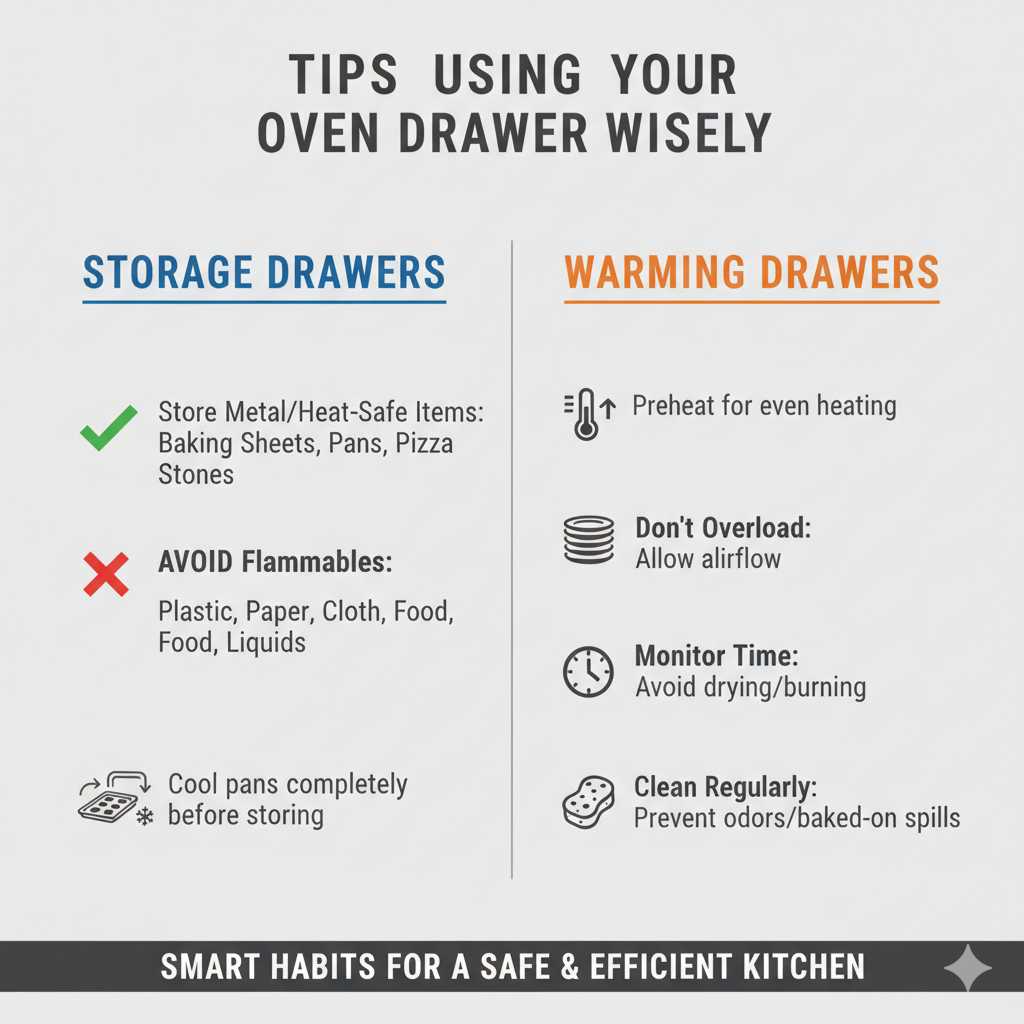
Whether your drawer is for storage or warming, using it correctly ensures safety and efficiency. For standard storage drawers, the main tip is to avoid storing flammable items. Baking sheets, cooling racks, and pizza stones are fine.
But keep plastics, paper, and cleaning cloths away.
If you use your storage drawer for baking sheets, make sure they are completely cool before storing. Hot metal can radiate heat. While not usually enough to cause a problem, it’s good practice.
For warming drawers, preheating is key. Just like the main oven, a warming drawer works best when it’s already at temperature. Allow it to preheat for the recommended time before adding food.
Don’t overload a warming drawer. This can block airflow. It can also prevent the food from heating evenly.
Place dishes in a single layer if possible. Leave space between them.
Be mindful of cooking times. Foods that are meant to be crisp might become too dry or burn if left in a warming drawer for too long. Foods like bread or rolls might get too hard.
Use your judgment and check the food periodically.
Finally, always clean your warming drawer regularly. Spills can bake on at warming temperatures. This can create odors and affect performance.
Wipe it down after use. Perform a deeper clean as needed.
Frequently Asked Questions About Oven Drawers
Is it normal for the drawer under my oven to feel warm?
Yes, it is very normal for the drawer under your oven to feel warm. This is because heat from the oven cavity naturally radiates downwards. If your oven has a warming drawer, it is designed to get hot.
What is the purpose of the drawer under the oven?
The purpose varies by model. Many modern ovens have a warming drawer designed to keep food warm. Older models might have had a broiler drawer.
Many are also simply storage drawers for cookware like baking sheets.
Can the drawer under my oven get too hot?
Yes, it can get too hot if there is a malfunction. Excessive heat, accompanied by burning smells or extreme temperatures, indicates a problem. This might require professional repair.
Should I store things in my oven’s warming drawer?
It’s generally not recommended to store items long-term in a warming drawer. Its purpose is to hold food at a safe serving temperature. Storing other items could be a fire hazard or damage the items.
My oven drawer smells like plastic when it’s hot. What should I do?
A plastic smell when hot is a serious concern. It could mean something is melting or overheating. Stop using the oven, unplug it, and call a qualified appliance repair technician immediately.
How hot does a warming drawer get?
Warming drawers typically reach temperatures between 140°F and 250°F (60°C to 120°C). The exact temperature depends on the setting you choose and the specific model.
Is the drawer under a self-cleaning oven hotter?
Yes, during the self-cleaning cycle, the entire oven, including the drawer, will get extremely hot. This is normal for the self-cleaning function. Otherwise, self-cleaning ovens might run a bit warmer in general due to their robust components.
Conclusion
That drawer under your oven holds more than just baking sheets for many. It’s a functional part of your appliance. It can keep your meals warm.
It can also be a simple storage space. Understanding why it gets warm is key. A little warmth is normal.
Excessive heat or strange smells are not. Always consult your manual. And if you have concerns, call a pro.
Enjoy your cooking, safely!
Products related to this article
Sponsored / affiliate links. As an Amazon Associate I earn from qualifying purchases. I may earn additional commission from eligible campaigns.