What Are Canning Tomatoes? A Complete Guide
Canning tomatoes are a special variety of tomatoes specifically cultivated for their excellent qualities when preserved through canning. These tomatoes are prized for their thick flesh, low water content, and ideal acidity, which contribute to a superior texture and flavor in your canned goods. This guide will walk you through everything you need to know about selecting, preparing, and canning these versatile fruits, ensuring your pantry is stocked with delicious homemade tomato products.

The Hungry Artisan
Hungry Artisan 3-Disc Food Mill for Applesauce,…
- MAKE APPLESAUCE THE SIMPLE WAY: Load quartered apples in, turn the crank, and the mill separates smooth sauce from skins, seeds, a…
- 3 DISCS FOR 3 TEXTURES: Swap between coarse, medium, and fine stainless steel discs to match the texture to the recipe, from chunk…
- NO OUTLET NEEDED: The ergonomic rotary hand crank sets up anywhere, so canning day is not limited to a spot near a plug.
As an Amazon Associate I earn from qualifying purchases.
Simply put, canning tomatoes are tomato varieties optimized for preserving, offering dense flesh, low moisture, and balanced acidity to ensure high-quality canned products. They are distinct from slicing or cherry tomatoes due to these specific preservation-friendly traits, making them the top choice for home canners aiming for the best flavor and texture.
Key Takeaways
- Canning tomatoes possess dense, meaty flesh with minimal seeds and juice, ideal for preserving.
- Key varieties like Roma and San Marzano are popular choices for their superior canning qualities.
- Proper preparation, including blanching and peeling, is crucial for successful canning.
- Achieving the correct acidity is vital for safe and shelf-stable canned tomatoes.
- Home canning requires specific equipment and adherence to tested recipes for safety.
What Are Canning Tomatoes?
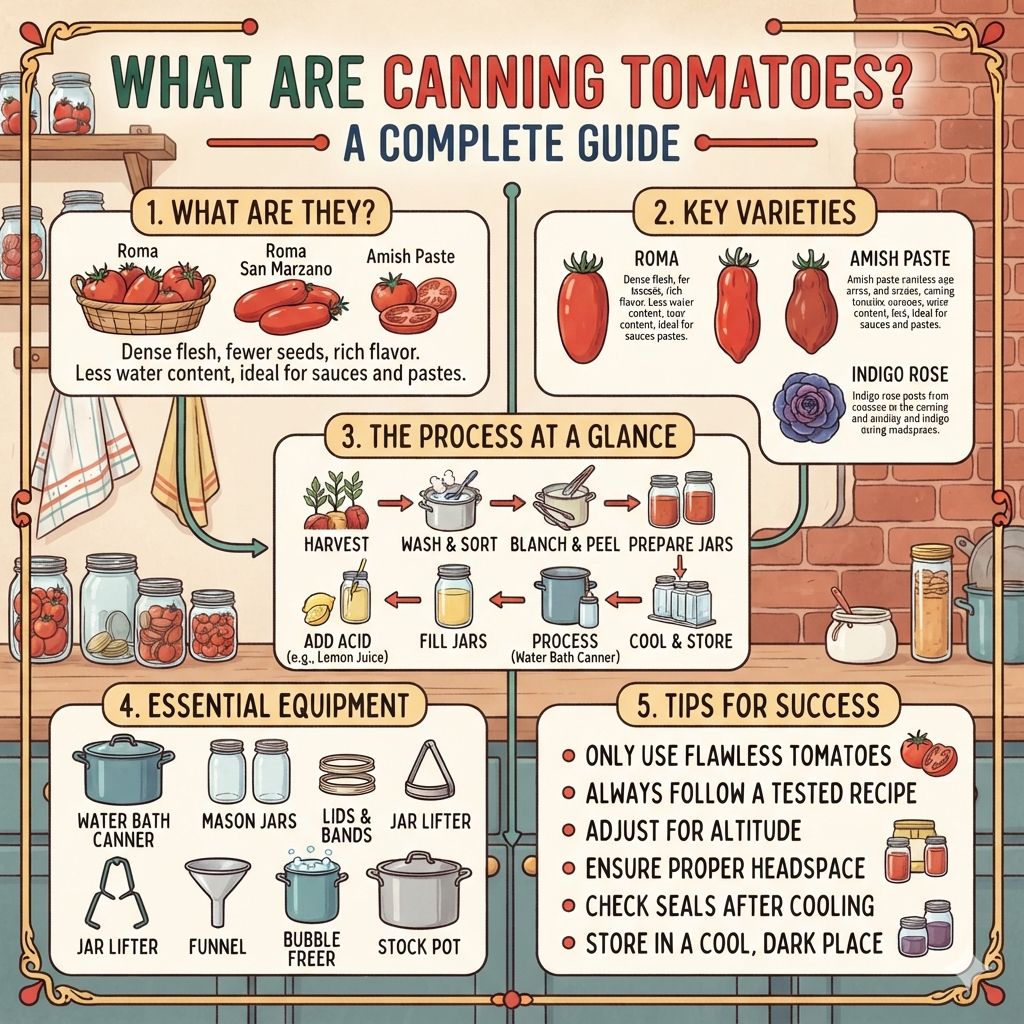
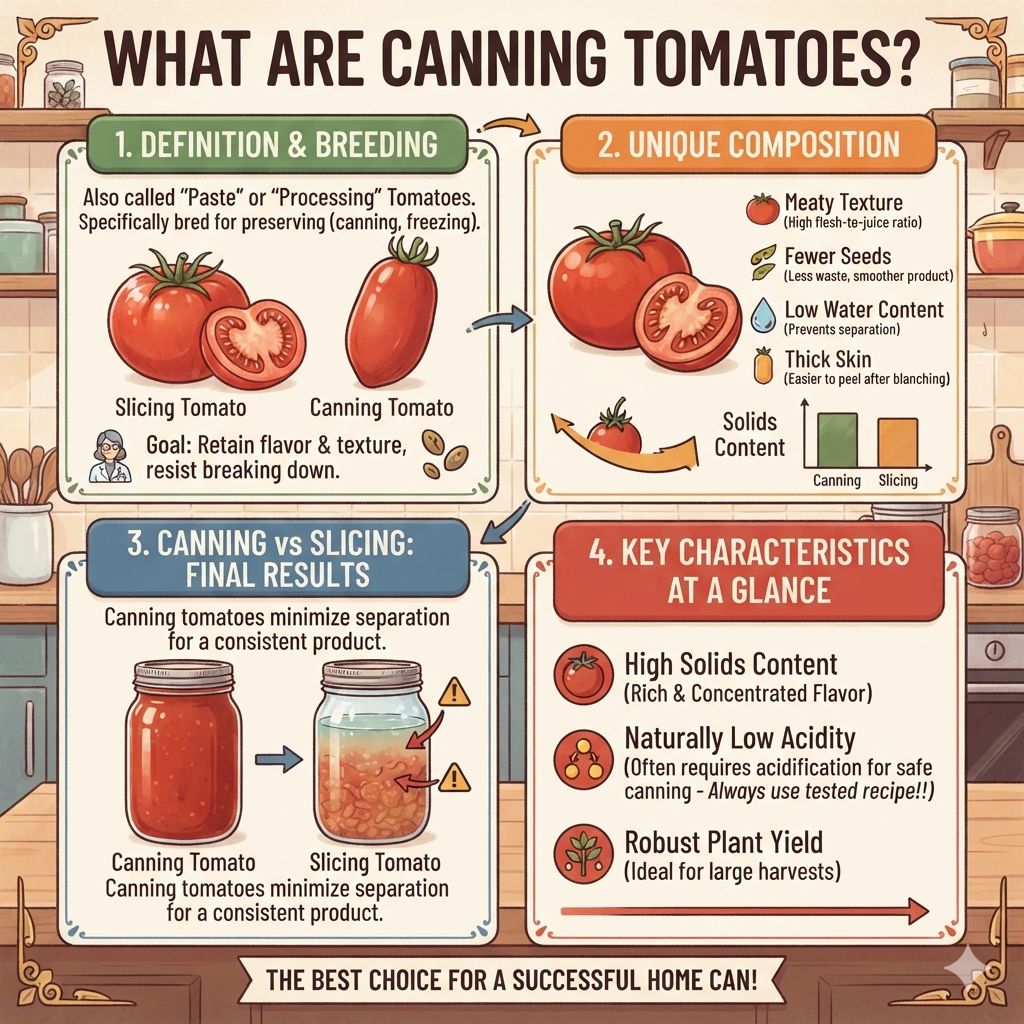
Canning tomatoes, often referred to as paste tomatoes or processing tomatoes, are specifically bred for their suitability in preserving methods like canning and freezing. Unlike their juicy slicing counterparts, these varieties are characterized by their meaty, dense flesh, fewer seeds, and lower water content. This unique composition makes them less likely to break down into a watery mess during the long cooking and sealing process of canning.
The goal when selecting tomatoes for canning is to achieve a product that retains as much flavor and texture as possible after processing. This is why varieties with higher solids content are preferred. They create a richer, more concentrated tomato product, whether you’re making crushed tomatoes, diced tomatoes, or a smooth tomato sauce.
The distinct difference in texture and consistency directly impacts the final outcome. If you attempt to can a very juicy, watery tomato, you’ll likely end up with a product that has separated significantly, with most of the liquid at the bottom and a mushy solids layer on top. Canning tomatoes are engineered to minimize this separation, providing a more uniform and appealing final product for your recipes.
- Meaty Texture: High flesh-to-juice ratio.
- Low Acidity (Naturally): Often requires acidification for safe canning.
- Fewer Seeds: Less waste and smoother texture.
- Thick Skin: Easier to peel after blanching.
- Concentrated Flavor: Rich and robust tomato taste.
Popular Canning Tomato Varieties
When embarking on your canning journey, choosing the right tomato variety is paramount. Certain types consistently outperform others due to their inherent characteristics that lend themselves perfectly to the canning process. These are the workhorses of the tomato canning world, beloved by home preservers for their reliability and quality.
The most iconic and widely recommended for canning is the Roma tomato. Romas are elongated, plum-shaped tomatoes known for their firm, dense flesh and dry interior. They have fewer seeds and are consequently lower in juice content, making them the quintessential canning tomato.
Their robust flavor profile also makes them excellent for sauces and pastes.
Roma Tomatoes
Roma tomatoes are the gold standard for a reason. Their firm, meaty texture means they hold their shape well during the canning process, resulting in identifiable pieces of tomato rather than a homogenous mush. This density also contributes to a richer, more concentrated flavor in the final product.
- Shape: Elongated, plum-like.
- Flesh: Dense, meaty, few seeds.
- Water Content: Low.
- Best Uses: Sauces, pastes, crushed tomatoes, diced tomatoes.
San Marzano Tomatoes
Often considered the crème de la crème of paste tomatoes, San Marzano tomatoes originated in the Sarno valley near Mount Vesuvius in Italy. They are slightly sweeter and less acidic than Romas, with a more delicate flavor. Their elongated shape and thick walls make them perfect for canning, producing a smooth, rich sauce.
While Romas are widely available, true San Marzanos (especially those with DOP certification) can be more expensive and harder to find. However, their superior flavor and texture often make them worth the investment for those who prioritize the absolute best in their homemade sauces.
- Origin: Italy (Sarno Valley).
- Flavor: Sweeter, less acidic than Romas.
- Texture: Smooth, firm, few seeds.
- Best Uses: Premium sauces, passata.
Other Suitable Varieties
Beyond Romas and San Marzanos, several other varieties exhibit traits suitable for canning. These might include heirloom paste tomatoes or certain beefsteak varieties that have been selectively bred for processing. When in doubt, look for tomatoes described as “paste,” “processing,” or “meaty.”
Some gardeners also find success with varieties like Amish Paste, Creole, or Costoluto Genovese for canning, depending on their specific growing conditions and taste preferences. The key is to evaluate their flesh density, seed count, and juice volume.
| Tomato Type | Key Characteristics for Canning | Best For |
|---|---|---|
| Roma | Meaty, dense flesh, few seeds, low juice. Holds shape well. | Sauces, pastes, crushed, diced. |
| San Marzano | Smooth, firm flesh, fewer seeds, slightly sweeter. Excellent for fine sauces. | Premium sauces, passata. |
| Amish Paste | Large, meaty, good flavor, fewer seeds. | Sauces, general canning. |
| Others (e.g., Rutgers, Improved Roma) | Varying degrees of meatiness and seed content; generally good for general canning if chosen carefully. | General canning, diced tomatoes. |
Choosing the right variety significantly impacts the quality of your canned tomatoes. While any tomato can technically be canned, using varieties specifically suited for the process yields far superior results in terms of texture, flavor, and shelf-stability.
Preparing Tomatoes for Canning
Proper preparation is the foundation of successful and safe tomato canning. This involves several key steps, from washing and inspecting the tomatoes to the crucial stages of peeling and coring. Skipping or rushing these steps can compromise the quality and safety of your final product.
The first step is always to thoroughly wash your tomatoes under cool running water. This removes any dirt, debris, or potential contaminants from the skins. Inspect each tomato carefully, discarding any that are bruised, moldy, or show signs of spoilage.
Only perfect, firm specimens should make it into your canning jars.
The most common method for preparing tomatoes for canning is blanching. This process involves briefly immersing the tomatoes in boiling water, followed by an ice-water bath. Blanching loosens the skins, making them incredibly easy to peel off.
The Blanching and Peeling Process
Blanching is a quick and essential step for most canning recipes. It makes removing the skins far easier and more efficient than trying to peel them raw.
- Score the Tomatoes: Gently score an “X” on the bottom of each tomato with a paring knife. This helps the skin split evenly during blanching.
- Boil Briefly: Prepare a large pot of boiling water. Carefully add tomatoes in batches, ensuring not to overcrowd the pot. Boil for about 30-60 seconds, or until the skins begin to split.
- Ice Bath: Immediately transfer the blanched tomatoes to a large bowl filled with ice water. Let them cool for a minute or two.
- Peel: The skins should now slip off easily. Start at the scored “X” and pull the skin away.
- Core: After peeling, use a paring knife to remove the tough core at the stem end.
Some recipes might call for leaving the skins on, particularly for certain types of crushed tomatoes where the skin is expected to break down significantly. However, for diced or whole tomatoes, peeling is highly recommended for a smoother texture and a more appealing final product.
Coring and Seeding
Once peeled, tomatoes need to be cored. The core is the tough, fibrous part where the stem attaches. It’s usually best to cut this out with a small, sharp knife.
Some recipes also call for seeding the tomatoes, which involves cutting them in half and scooping out the seeds and jelly-like pulp.
While seeding removes some of the water content, it also removes flavor and nutrients. For most canning purposes, particularly for sauces or crushed tomatoes, seeding isn’t strictly necessary and can be time-consuming. However, if you prefer a less seedy product, or if your tomatoes are particularly watery, you might choose to do it.
The National Center for Home Food Preservation (NCHFP) recommends specific procedures for preparing tomatoes. For whole or diced tomatoes, they typically suggest coring and quartering or dicing. For sauces and pastes, they often recommend cooking down and then pureeing, which naturally removes most seeds and skins.
Acidity Adjustment
Tomatoes are naturally acidic, but their acidity levels can vary based on variety, ripeness, and growing conditions. For safe home canning, it is crucial that tomatoes maintain a pH of 4.6 or lower. This acidity prevents the growth of Clostridium botulinum, the bacteria that causes botulism.
According to the USDA’s Complete Guide to Home Canning, if tomatoes are not naturally acidic enough, or if you’re canning them with low-acid ingredients like onions or peppers, you must add acid. This is typically done by adding either bottled lemon juice or citric acid to each jar before processing.
| Preparation Step | Why It’s Important | Tips for Success |
|---|---|---|
| Washing | Removes dirt, pesticides, and bacteria. | Use cool running water, scrub gently if needed. |
| Inspecting | Ensures only quality fruit is used, preventing spoilage in the jar. | Discard any bruised or damaged tomatoes. |
| Blanching & Peeling | Easily removes skins for a better texture and appearance. | Don’t over-blanch; skins should slip easily. Use an ice bath immediately. |
| Coring | Removes tough, fibrous stem attachment. | Use a sharp paring knife for precise removal. |
| Acidity Adjustment | Ensures safe canning by preventing botulism. pH must be 4.6 or lower. | Use bottled lemon juice or citric acid as per tested recipes. Never use reconstituted lemon juice. |
Adjusting acidity is a non-negotiable step for safety. Always follow tested recipes from reliable sources like the NCHFP or University Extension offices for precise amounts.
Canning Methods for Tomatoes
Once your tomatoes are prepped, it’s time to decide on the canning method. The two primary methods for home canning are water bath canning and pressure canning. For acidic foods like tomatoes, water bath canning is generally sufficient and the most common choice.
Water bath canning involves submerging filled and sealed jars in boiling water for a specified amount of time. The high heat kills spoilage microorganisms and creates a vacuum seal as the jars cool. This method is ideal for high-acid foods like fruits, pickles, jams, jellies, and most tomato products.
Water Bath Canning
Water bath canning is the preferred method for most home-canned tomato recipes. It’s straightforward and requires relatively basic equipment. The key is to ensure that your tomatoes (or the overall mixture you’re canning) are sufficiently acidic.
When canning plain tomatoes, whether whole, diced, or crushed, they are considered a high-acid food. However, if you are adding low-acid ingredients such as onions, peppers, or mushrooms to your tomato mixture, the entire product must be processed in a pressure canner to ensure safety. Always refer to tested recipes for guidance.
Raw Pack vs. Hot Pack
Within water bath canning, there are two common packing methods: raw pack and hot pack. Each has its own advantages and can affect the final product.
Important: For canning tomatoes, a hot pack generally yields a better quality product. Hot packing involves heating the tomatoes before filling jars, which helps to remove air, release juice, and shrink the tomatoes. This results in a fuller jar, less liquid separation, and a brighter color in the final product.
- Raw Pack: Fill jars with raw, unheated tomatoes. This is simpler but can result in more liquid separation and a less full jar.
- Hot Pack: Cook tomatoes briefly before packing into jars. This method is recommended by most canning authorities for better quality.
Pressure Canning
Pressure canning is reserved for low-acid foods. While plain tomatoes are high-acid, many tomato recipes that include vegetables like onions, garlic, peppers, or mushrooms will lower the overall acidity of the mixture. In these cases, pressure canning is mandatory for safety.
A pressure canner works by creating a steam environment under pressure, reaching temperatures higher than boiling point (typically 240°F or 116°C). This higher temperature is necessary to destroy any potential spores of Clostridium botulinum that might survive in low-acid environments. It’s a more complex process than water bath canning but essential when safety dictates.
When pressure canning, it’s crucial to follow a tested recipe and adhere to the recommended processing times and pressures precisely. Using a dial gauge pressure canner requires regular testing of the gauge to ensure accuracy. Some prefer the older weighted-gauge canners for their simplicity and reliability.
Equipment Needed for Canning Tomatoes
Successful tomato canning relies on having the right tools. Investing in proper equipment not only makes the process more efficient but also ensures safety and quality.
The core pieces of equipment are jars, lids, and rings, along with a canner. But there are several other helpful items that streamline the process, especially when dealing with the volume of tomatoes needed for canning.
- Canning Jars: Use only canning jars specifically designed for home canning (e.g., Mason jars). They are made to withstand the heat and pressure of the canning process.
- Lids and Rings: New lids are essential for a proper seal. Rings can be reused if they are not rusted or bent, but lids should be discarded after each use.
- Canner: Either a large water bath canner with a rack or a pressure canner, depending on your recipe.
- Jar Lifter: A tool designed to safely lift hot jars from the canner.
- Canning Funnel: A wide-mouthed funnel that fits into the jar opening, making it easier to fill jars without spilling.
- Ladle: For transferring hot liquids or tomatoes into jars.
- Bubble Remover/Headspace Tool: A plastic tool to remove air bubbles and measure headspace.
- Clean Towels: Plenty of clean towels for wiping jar rims and for general cleanup.
- Pots and Bowls: For blanching, cooking tomatoes, and preparing ice baths.
Warning: Never reuse canning lids. They are designed for single use to ensure a reliable seal. While the metal rings can be reused, the rubber sealing compound on the lid can be compromised after one canning cycle.
The choice between a water bath canner and a pressure canner depends entirely on the recipes you intend to make. For plain tomatoes and most tomato sauces, a large water bath canner is sufficient. If your recipes include low-acid vegetables, you will need a pressure canner.
Tested Recipes and Safety Guidelines
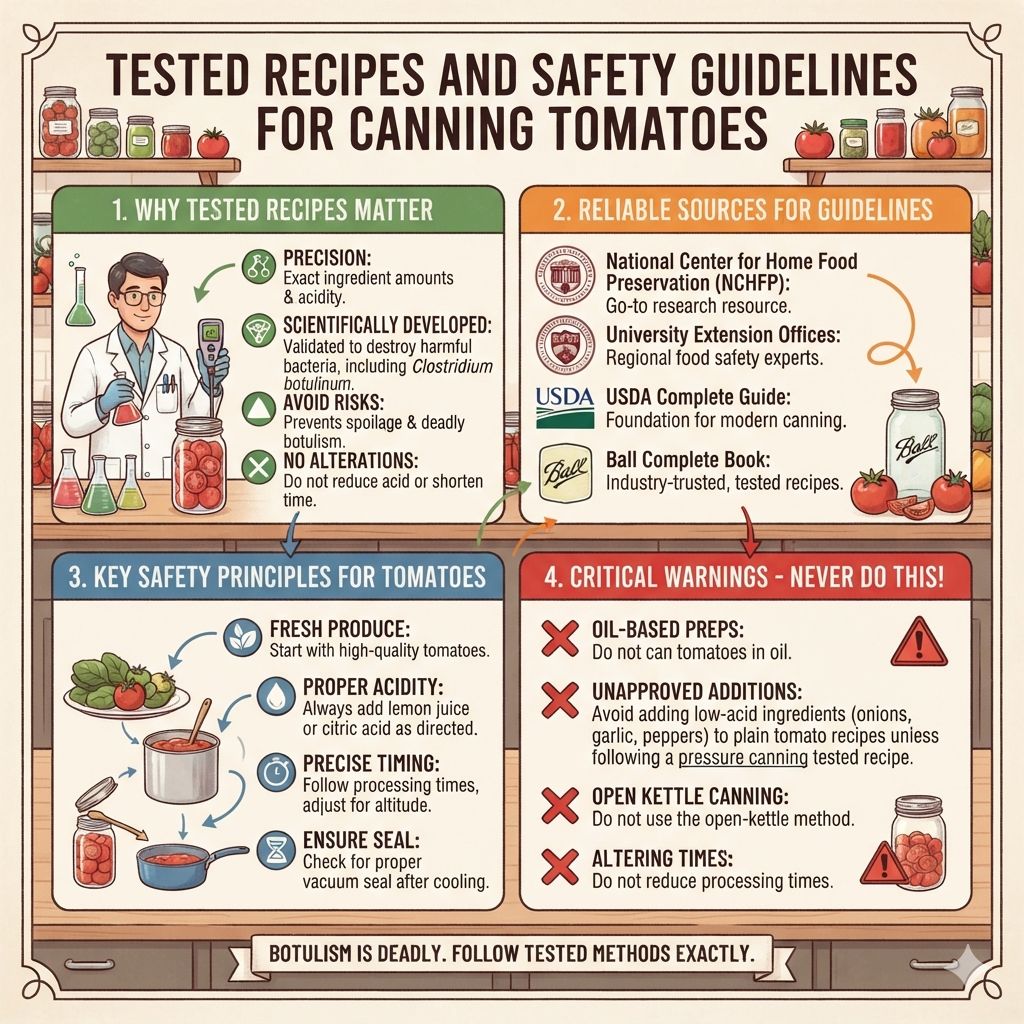
Safety is the absolute top priority when canning. Botulism is a rare but potentially fatal illness caused by toxins produced by Clostridium botulinum bacteria. These bacteria thrive in low-acid, oxygen-free environments – precisely what a sealed canning jar can become.
This is why using tested recipes from reliable sources is non-negotiable. These recipes have been scientifically developed and tested to ensure that the correct acidity levels are maintained and that the processing times and methods are sufficient to destroy harmful bacteria.
Why Tested Recipes Matter
Tested recipes provide precise instructions for ingredient amounts, preparation methods, jar packing, processing times, and crucial details like acidity adjustments. They take into account the factors that influence safety, such as the type of food, its pH, and the processing method.
Using a recipe that isn’t tested, or altering a tested recipe significantly, can unknowingly create an unsafe product. For example, reducing the amount of lemon juice or vinegar, or shortening the processing time, could leave the food vulnerable to spoilage or, worse, botulism.
Reliable Sources for Canning Information
Always rely on information from reputable, research-based organizations. These sources provide the most up-to-date and scientifically sound canning practices.
- National Center for Home Food Preservation (NCHFP): This is the go-to resource for all things home food preservation in the United States. Their website offers a wealth of tested recipes and guidelines.
- University Extension Offices: Many universities have extension programs that provide free, reliable information on canning and food safety, often specific to regional concerns.
- USDA Complete Guide to Home Canning: This comprehensive guide is the foundation for many modern canning recommendations and is available through the NCHFP.
- Ball Complete Book of Home Preserving: While a commercial publication, Ball Corporation works closely with food preservation experts and their recipes are generally considered safe and tested.
Key Safety Principles
Beyond following tested recipes, several general safety principles apply to canning tomatoes:
- Use Fresh, High-Quality Produce: Start with the best ingredients.
- Maintain Proper Acidity: Add acid (lemon juice or citric acid) as directed in tested recipes.
- Follow Processing Times Precisely: Adjust for altitude if necessary.
- Ensure a Good Seal: Jars should seal properly. If a jar doesn’t seal, refrigerate the contents immediately and consume within a few days or reprocess using a tested method.
- Inspect Before Eating: Always check canned goods for spoilage before consuming. Look for bulging lids, spurting liquid, unusual odors, or mold. When in doubt, throw it out.
Warning: Never can tomatoes in an oil-based preparation or with ingredients that are not specified in a tested recipe that has been approved for water bath canning. Adding low-acid ingredients like onions, garlic, or peppers to plain tomatoes makes them a low-acid food and requires pressure canning.
Frequently Asked Questions
What is the difference between canning tomatoes and regular tomatoes?
Canning tomatoes, like Romas or San Marzanos, are specifically bred to have dense, meaty flesh with fewer seeds and less water. This makes them ideal for preserving, as they retain their texture and flavor better than juicier slicing varieties which can become watery and mushy when canned.
Can I use any tomato for canning?
While you can technically can any tomato, using varieties suited for canning will yield significantly better results. Paste or processing tomatoes are recommended for their thick flesh and low juice content, leading to a richer, more stable canned product. Slicing tomatoes can be used, but expect more liquid separation and a softer texture.
How much acid do I need to add to canned tomatoes?
The amount of acid to add depends on the specific recipe and whether you are using plain tomatoes or a mixture with low-acid ingredients. Tested recipes typically call for 2 tablespoons of bottled lemon juice or 1/4 teaspoon of citric acid per quart jar (or 1 tablespoon lemon juice per pint jar) for plain tomatoes. Always follow a tested recipe.
What happens if my jars don’t seal?
If a jar fails to seal within 12-24 hours after processing, it means the vacuum seal has not formed. The contents are not safe for shelf storage. You should refrigerate the unsealed jar immediately and consume the contents within a few days, or reprocess the food within 24 hours using a tested recipe, ensuring the jar rim is clean and the lid is properly placed.
How long can I safely store home-canned tomatoes?
When canned properly using tested methods and stored in a cool, dark, dry place, home-canned tomatoes can maintain their quality for at least 12 months. While they may remain safe to eat beyond a year, their texture, color, and flavor may degrade over time. It’s best to consume them within one to two years for optimal quality.
Final Thoughts
Mastering the art of canning tomatoes opens up a world of homemade flavor and convenience. By selecting the right varieties, preparing them meticulously, and adhering strictly to tested recipes and safety guidelines, you can create delicious, shelf-stable tomato products to enjoy year-round. Embrace the process, and savor the fruits of your labor.
Related pick: Check today's price on Amazon
Products related to this article
Sponsored / affiliate links. As an Amazon Associate I earn from qualifying purchases. I may earn additional commission from eligible campaigns.