How to Fix a Door Lock That Is Hard to Turn
Start by checking whether the lock binds with the door open, closed, or both. Clean and lubricate the latch and spindle, then replace parts only if the knob still binds after those steps. Ignoring the cause can strip the spindle, damage the latch, or send you toward a replacement that only needed adjustment. This guide shows you how to pinpoint the failing part, test it in order, and fix the cheapest likely problem first.
What you’ll need


- Phillips and flathead screwdriver for hinge, latch, and strike plate screws
- Graphite or lock-safe dry lubricant
- Flashlight for latch contact, frame rubbing, and paint buildup checks
- Optional thin card or shim for hinge and strike checks
Door lock troubleshooting matrix
| Symptom | Likely cause | Fastest check | Best fix |
|---|---|---|---|
| Door-open binding | Thumbturn, spindle, or cylinder friction | Turn the thumbturn or key with the door open; if it still drags, the problem is inside the lockset | Clean debris, apply graphite or dry lubricant, then replace the cylinder or lockset if the drag remains |
| Door-closed binding | Strike plate misalignment, door sag, or frame rubbing | Close the door slowly and watch whether the latch bolt scrapes, catches, or stops short | Tighten hinge and strike screws, realign the strike plate, then shim, file, or enlarge the opening if needed |
| Key or thumbturn stiffness | Internal friction, wear, debris, or corrosion | Compare the feel with the door open and closed; if the resistance does not change, the lock internals are suspect | Clean and lubricate once, then replace the cylinder or lockset if the stiffness keeps returning |
| Latch-return failure | Binding latch bolt, weak retraction, or side pressure from a sagging door | Press the latch bolt by hand and release it; it should move fully in and out without sticking | Correct alignment, tighten loose hardware, and replace the latch if it will not return smoothly |
| Replace vs. repair threshold | Repeated sticking, stripped screws, worn spindle, or corroded cylinder | If cleaning, alignment, and hinge correction do not change the feel, the part is likely worn out | Replace the lockset, matching backset, bore size, privacy function, and left-hand or right-hand door compatibility |
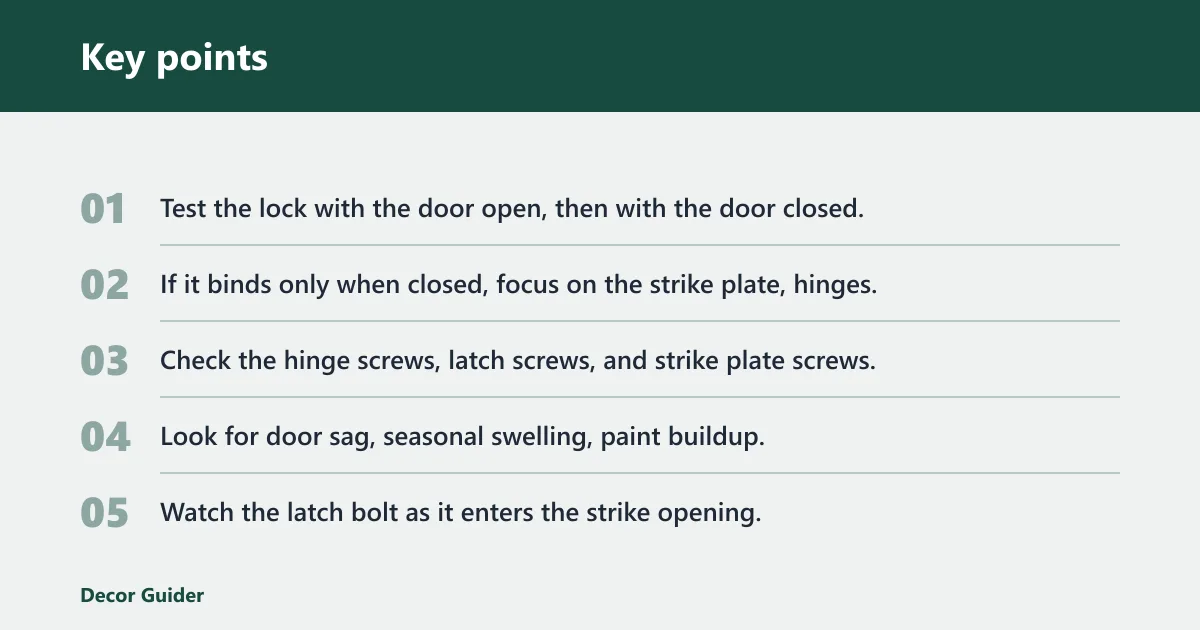
- Test the lock with the door open, then with the door closed.
- If it binds only when closed, focus on the strike plate, hinges, and frame before you touch the cylinder.
- Check the hinge screws, latch screws, and strike plate screws, and tighten any that are loose.
- Look for door sag, seasonal swelling, paint buildup, or rubbing where the latch meets the frame.
- Watch the latch bolt as it enters the strike opening; it should travel straight and fully without scraping.
- Clean the latch face, strike opening, and visible spindle area, then apply 1 short burst or 2 drops of dry lubricant.
- Retest after each change. Add only one adjustment at a time so you can see which fix changed the feel.
- If the lock still drags with the door open, treat the cylinder or spindle as the next likely failure and replace worn parts.
Why is my door lock hard to turn all of a sudden?
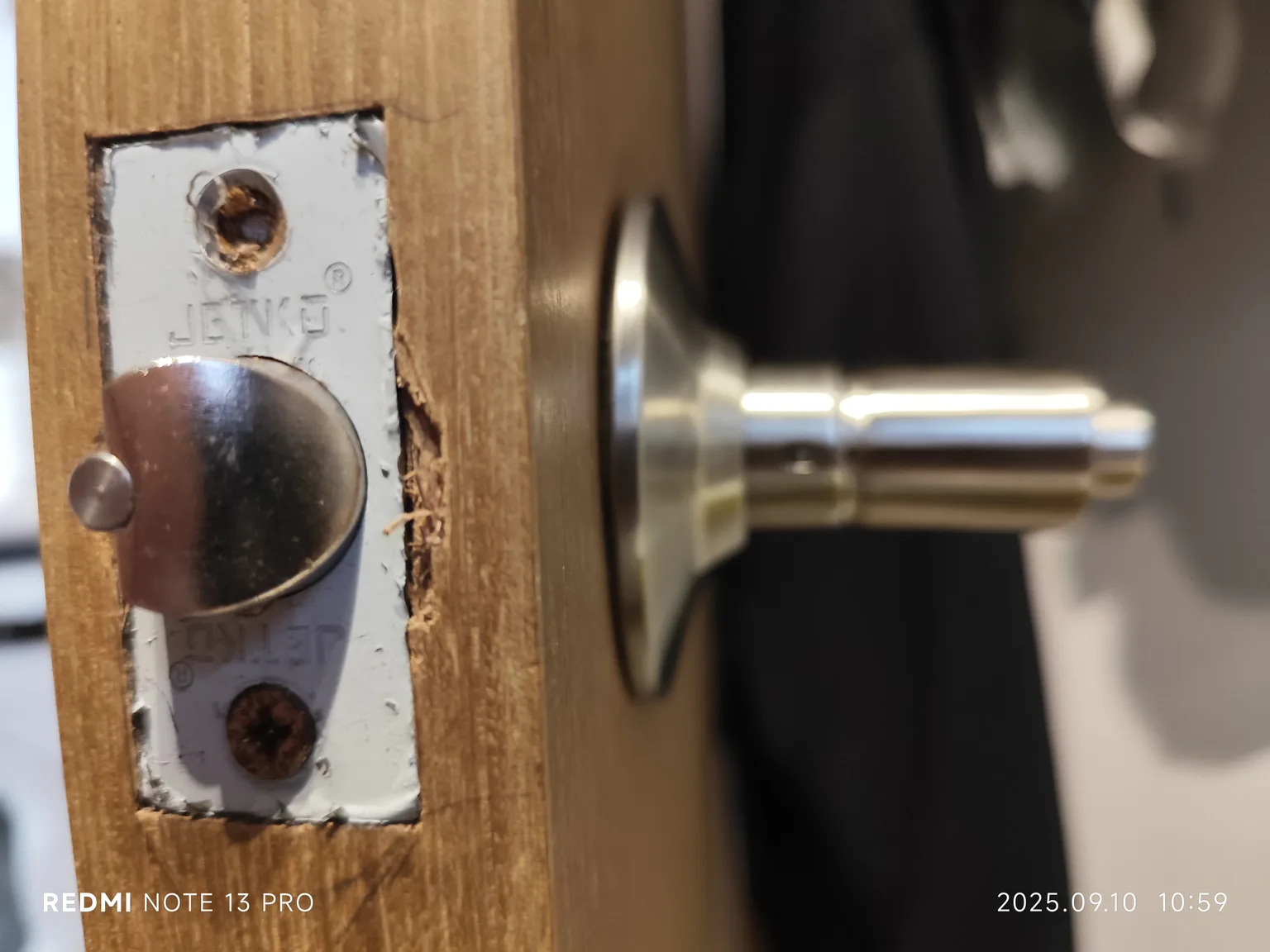
A sudden change usually points to a physical cause, not a mystery inside the lock. Start with loose screws, a shifted strike plate, hinge movement, seasonal swelling, or fresh paint near the hardware. If the key or thumbturn still feels stiff with the door open, the cylinder or spindle may have debris, corrosion, or wear.
Say your bedroom privacy lock turns normally in the morning, then starts dragging after the door has been shut all day. That pattern fits frame pressure or hinge sag more than internal failure, especially if the knob feels smooth when the door is open.
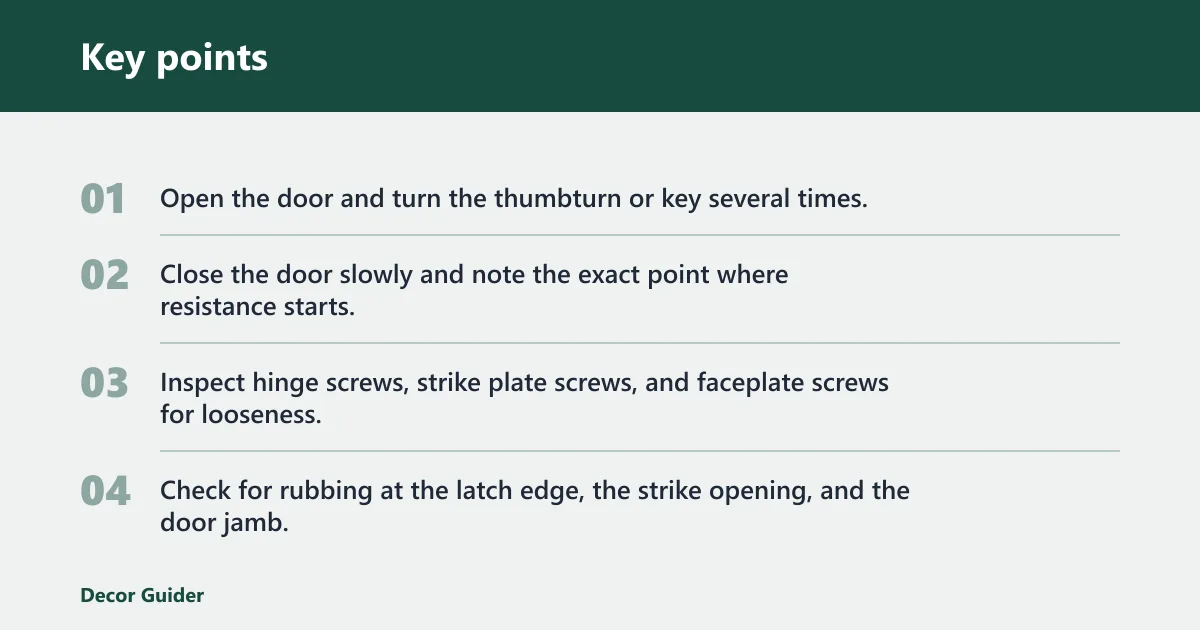
- Open the door and turn the thumbturn or key several times.
- Close the door slowly and note the exact point where resistance starts.
- Inspect hinge screws, strike plate screws, and faceplate screws for looseness.
- Check for rubbing at the latch edge, the strike opening, and the door jamb.
How do you fix a stiff lock?
A stiff interior privacy lock usually needs fastening, cleaning, and dry lubrication in that order. Tighten the hardware first, because a shifted latch or loose hinge can mimic internal wear. Then clean away grit. Only after that should you add graphite or a lock-safe dry lubricant.
- Tighten the hinge screws, strike plate screws, and lockset faceplate screws.
- Check whether the latch bolt moves freely in and out by hand.
- Remove visible dust or debris from the cylinder opening, thumbturn area, and strike.
- Apply a light dose of graphite or dry lubricant, then work the key or thumbturn about 5 to 10 times.
- If the motion improves and then degrades again soon after, stop using more lubricant and inspect for wear or corrosion.
How do you fix a lock that binds when closed?

When the lock only binds with the door shut, the fault is usually the latch, strike plate, or door alignment. The latch bolt may be hitting the edge of the strike opening, or the door may be sagging enough to push the bolt sideways. Fix the fit before you blame the lockset.
- Open the door and mark where the latch bolt hits the strike plate.
- Tighten the upper hinge screws first if the door sags toward the latch side.
- Shift the strike plate slightly so the latch enters without scraping.
- If the latch barely misses, shim the strike plate behind it, or file or enlarge the opening only enough for clear entry.
- Retest the door closed after each change.
Suppose a bathroom privacy lock needs extra force only when the door is shut, and the latch leaves a shiny rub mark on the strike edge. A small strike shift often fixes that better than replacing the entire knob set.
What should I check first if the key or thumbturn feels stuck?
Check whether the resistance changes when the door is open. If it does, the problem is likely alignment or frame pressure. If it does not, look at the cylinder, spindle, or internal mechanism. Interior privacy locks often show thumbturn friction before a full failure because the spindle and latch work under constant side pressure.
- Turn the key or thumbturn with the door open.
- Compare that feel to the closed-door feel.
- Inspect for debris, rust, or old lubricant buildup around the spindle and cylinder.
- Use dry lubricant once, then recheck after about 5 to 10 turns.
- If stiffness remains the same, replace the cylinder or the full lockset rather than repeating lubricant.
Common mistakes
Using oily spray is the most common bad move. It can trap grit and make a stiff lock worse over time. Skipping hinge checks is another. A sagging door can push the latch sideways and make a good lock seem bad. Forcing the key or thumbturn can also strip the spindle or damage the latch.
- Do not force a stuck key or thumbturn.
- Do not spray oil into a gritty cylinder unless the manufacturer specifies it.
- Do not replace the lock before checking hinge and strike alignment.
- Do not ignore stripped screw holes; use longer screws or repair the mounting before reassembly.
When should you lubricate or replace it?
Lubricate when the problem looks like light friction or dust, especially if the lock improves after cleaning and then drifts back only a little. Replace the lockset when the cylinder, spindle, or internal mechanism keeps sticking after alignment and cleaning, or when screws no longer hold securely enough to keep the hardware set in place.
- Use graphite or lock-safe dry lubricant for minor stiffness.
- Retest after 5 to 10 turns of the key or thumbturn.
- Replace the lockset if sticking returns quickly, the spindle feels rough, or the cylinder shows corrosion.
- When replacing a privacy lock, match backset, bore size, privacy function, and lever or knob style, and confirm left-hand or right-hand compatibility.
Can misaligned hinges make a lock hard to turn?
Yes. Loose or sagging hinges can drop the latch side of the door just enough to make the latch bolt rub the strike plate or frame. That side pressure often shows up as a hard turn only when the door is shut. Tightening the hinge screws is one of the cheapest fixes, and it often changes the latch feel immediately.
- Check the top hinge first for loose screws.
- Replace stripped short screws with longer ones that bite solid framing, if needed.
- Use a shim behind the hinge if the door still sags after tightening.
- Retest the latch with the door closed and watch for smoother entry into the strike.
Why does the lock only bind when the door is closed?
That pattern usually means the lock mechanism itself is not the main problem. Closed-door binding points to contact between the latch bolt and strike plate, or to frame movement that changes the door’s position under load. If the lock feels fine open but stiff shut, focus on alignment before lubrication or replacement.
- Close the door and note whether the latch hits high, low, or to one side.
- Adjust the strike plate so the bolt enters centered.
- File or enlarge the opening only after you have confirmed the door is hanging square.
- Recheck the door after each adjustment.
Frequently asked questions
How to fix a door lock that won’t turn
Start with the door open, then test the lock closed. If the resistance changes, correct hinge or strike alignment first. If the resistance stays the same, clean the cylinder or thumbturn area and apply graphite or a dry lubricant. Replace the lockset if the stiffness persists after one cleaning cycle.
Why won’t my door lock turn
A lock that will not turn usually has either side pressure from misalignment or internal friction from debris, corrosion, or wear. Check loose hinge screws, strike plate position, and latch movement before replacing parts. If the problem is present with the door open, the cylinder or spindle is the more likely fault.
How to fix a door knob that is hard to turn
Check whether the knob binds only when the door is shut, because that often points to latch or strike contact. If the knob feels rough in both positions, inspect the spindle and cylinder for wear or corrosion. Match the replacement to the same backset, bore size, and privacy function.
When should I lubricate versus replace a door lock?
Lubricate when the issue looks like dust, dryness, or light friction and the lock improves after a single treatment. Replace when the sticking stays after cleaning, the spindle feels rough, or the lock needs repeated lubricant to keep working. Repeated failure is a wear sign, not a cleaning problem.
Products related to this article
Sponsored / affiliate links. As an Amazon Associate I earn from qualifying purchases. I may earn additional commission from eligible campaigns.