
You can build bifold doors from 1/2 to 3/4 inch pine, poplar, or MDF panels hung on a standard J-track and pivot kit. Panel width is where most DIY builds fail: each panel must be half the opening plus about 1 inch of center overlap, or the doors bind when they fold. This guide covers tools, seven steps from measuring to hanging, hardware kits, and fixes for sticking doors.
Why Choose Bifold Doors for Your Home?
Bifold doors, also known as folding doors or accordian doors, offer a smart way to maximize space and introduce flexibility into your home design. Unlike traditional hinged doors that swing outward or inward, bifold doors cleverly fold in half, neatly tucking away to the side. This makes them ideal for tight spaces where a standard door just wouldn’t fit, or where you want to maintain an open feel.
Beyond their practicality, bifold doors add a touch of modern elegance. They can be designed to complement any decor style, from sleek and minimalist to warm and traditional. Imagine creating a seamless transition between rooms or concealing a less-than-perfect storage area with beautiful, custom-made doors. It’s a rewarding project that significantly elevates your home’s functionality and aesthetic.

Getting Started: What You’ll Need
Before we dive into the building process, let’s gather the essentials. Having everything on hand will make your DIY journey smoother and more enjoyable. Don’t worry if you’re new to DIY; these are common tools that are quite user-friendly.
Tools You’ll Need:
- Tape Measure
- Pencil
- Safety Glasses
- Gloves
- Saws (Circular saw or Miter saw for cutting wood if needed, Jigsaw for any detailed cuts)
- Drill/Driver with various drill bits and driver bits
- Level
- Screwdriver set
- Clamps (optional, but very helpful)
- Sanding block or electric sander
- Paintbrush or roller (for finishing)
Materials You’ll Need:
- Wood for your bifold door panels (e.g., pine, poplar, or MDF. The thickness will depend on your design, usually 1/2″ to 3/4″)
- Plywood or hardboard (for panel inserts if you’re doing a paneled design)
- Wood glue
- Wood screws (appropriate length for your wood thickness)
- Hinges (typically 1.5″ or 2″ folding door hinges)
- Top and bottom pivot hardware (these are specific bifold door hardware kits)
- J-track or C-channel (this guides the top pivot, usually comes with hardware kits)
- Primer and Paint or Stain (and sealant)
- Wood filler (for any imperfections)
- Sandpaper (various grits: 80, 120, 220)
- Clean cloths or rags
Best Bifold Door Hardware Pick
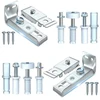
Bifold Door Hardware Repair Kit – $6.99
Supplies the J-track pins and top and bottom pivots this guide calls for in Step 5, so a shop-built panel hangs on standard closet hardware.
- Best for: Step 5 of this guide, where the panels get their top pivots and bottom floor pivots fitted
- Why we picked it: Replaces the exact pivot and roller parts that wear out first on the J-track system described here
- Main drawback: Repair-kit parts only, so you still need the J-track or C-channel itself if the opening has none
Compare more bifold door hardware and build tools
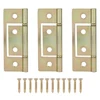 Option 1 Lashow Non-Mortise Bifold Door Hinges (6-Pack) – $15.99
|  Option 2 Prime-Line Bi-Fold Door Knob with Wide Base – $7.96
| 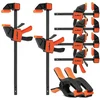 Option 3 HORUSDY Bar Clamps for Woodworking (8-Pack) – $33.99
|
As an Amazon Associate we earn from qualifying purchases.
Step-by-Step Guide to Building Your Bifold Doors
Let’s get building! We’ll break this down into manageable steps so you can feel confident at each stage. The key is accuracy and taking your time. Remember, a little patience goes a long way in DIY projects.
Step 1: Measure Your Opening Accurately
This is arguably the most crucial step. If your measurements are off, your doors won’t fit or function correctly. Measure the width and height of the opening where your bifold doors will be installed. Measure at the top, middle, and bottom of the opening for width, and at the left, middle, and right for height. Use the smallest measurement for width and height to ensure your doors will fit. Subtract about 1/2 inch from the final width measurement (1/4 inch on each side) and 1/2 to 3/4 inch from the height measurement, to allow for clearance and hardware.
Example: If your opening is 36 inches wide and 80 inches high, you’ll aim for two door panels that, when combined, are about 35.5 inches wide and 79.5 inches high. Each panel would then be approximately 17.75 inches wide.
Step 2: Design and Cut Your Door Panels
Decide on the style of your bifold doors. Will they be simple flat panels, or will they have a more traditional raised or sunken panel look? For beginners, simple flat panels are the easiest to construct.
If a flat-panel build feels too plain, the same frame-and-panel method scales up to novelty projects like a hidden bookshelf door, and down to smaller folding builds such as foldable table legs.
- Determine Panel Size: For a pair of bifold doors, you’ll typically need two panels. Each panel should be half the total width you calculated in Step 1, plus an overlap of about 1 inch for the center where they meet. The height of each panel should be your final calculated height.
- Cut Your Wood: Based on your measurements, carefully cut your chosen wood to size. Ensure your cuts are straight and square. If using MDF or plywood, you might want to get them cut at the hardware store to ensure precision.
- Sand the Edges: Once cut, lightly sand all edges to remove any splinters and create a smooth finish.
If you’re aiming for a paneled look, first create a frame for each panel and then cut a thinner piece of plywood or hardboard to fit into the frame. This adds a bit more complexity but can create a stunning result.
Step 3: Assemble and Prepare the Panels
Once your panels are cut to the correct size, it’s time to prepare them for assembly and finishing.
- Join Center Panels (if applicable): If your design involves joining two narrower pieces to make one wider panel, use wood glue and screws to join them securely. You can also use pocket holes for a cleaner look.
- Sand Smooth: Thoroughly sand all surfaces of each panel. Start with a coarser grit (like 80 or 120) to smooth out any imperfections and then move to a finer grit (220) for a silky finish. Wipe away all dust with a clean cloth.
- Fill and Repair: Use wood filler to fill any nail holes, small gaps, or imperfections. Let it dry completely, then sand it smooth.
Step 4: Finish the Panels
Finishing your panels before final assembly is much easier than trying to paint or stain delicate, already-hinged doors.
- Prime: Apply a coat of good quality primer to all surfaces of your door panels. This will help your paint or stain adhere better and provide a more even finish. Let it dry completely according to the manufacturer’s instructions.
- Sand Lightly: After priming, give the panels a very light sanding with your finest grit sandpaper (220). This helps to knock down any raised grain or imperfections from the primer. Wipe away dust.
- Paint or Stain: Apply your chosen paint or stain. For paint, you might need two or three thin coats for full coverage. For stain, follow the application instructions for your specific product. Ensure each coat is dry before applying the next.
- Seal (Optional): If you’re using stain or want extra protection for painted doors, apply a clear coat of polyurethane or varnish. This will add durability.
Step 5: Install the Hardware
This is where your doors start to come together! Bifold door hardware usually consists of a top track and pivots, and bottom pivots. Most hardware kits come with detailed instructions, which are invaluable.
The hinges joining the two leaves matter as much as the track. Non-mortise bifold hinges screw straight to the panel face with no chiselling, while mortised types sit flush but need a recess cut, a trade-off our guide to cabinet hinge types breaks down in detail.
- Attach J-Track or C-Channel: Mount the J-track (or C-channel) to the top of your door opening, aligning it with the center of the opening. Ensure it’s level. The provided instructions will show you where to place it according to your door width. You can typically find detailed installation guides from hardware manufacturers online. For example, Rockler Bifold Door Hardware systems often include clear installation diagrams.
- Install Top Pivots: The top pivots will attach to the top edge of your door panels. Typically, one panel will have a pivot that sits inside the track, and the other will have a pivot that connects to the track. Follow your hardware kit’s guide for exact placement – it usually involves drilling a small hole and screwing in the pivot.
- Install Bottom Pivots: Similarly, install the bottom pivots into the bottom edge of your door panels. These will align with holes you’ll drill into the floor or door frame’s bottom plate at the corresponding locations.
Step 6: Hang Your Bifold Doors
Now for the exciting part – hanging your newly built bifold doors!
- Attach Doors to Track: Most hardware kits allow you to hang the doors by first inserting the top pivots into the track. The bottom pivots will hang loosely until you position them.
- Position and Secure Bottom Pivots: Carefully lift the doors into position. The top pivots should engage with the track. Then, align the bottom pivots with their designated spots on the floor and secure them. This might involve drilling pilot holes and screwing them in place, or using a provided bracket.
- Adjust and Align: Use a level to ensure the doors are hanging straight. Most bifold hardware allows for minor adjustments to align the doors perfectly. Make sure they fold smoothly and meet in the middle without rubbing.
Step 7: Add Final Touches
Your bifold doors are almost ready! One last step to ensure they look and function their best.
- Install Handles or Knobs: Decide if you want handles or knobs. If so, measure and drill pilot holes for them on the outside face of each door panel (usually on the edge that will face outward when folded). Install your chosen hardware.
- Test Operation: Open and close the doors several times to ensure they operate smoothly. Check that they fold correctly and lie flat against the adjacent wall or door when fully open.
- Final Inspection: Look for any areas that might need a touch-up of paint or stain. Ensure all screws are tightened.

Understanding Bifold Door Hardware Kits
The hardware is the unsung hero of bifold doors. It allows them to pivot and fold seamlessly. Most DIY-friendly kits include:
A common type of hardware is the J-track system. The J-track is a metal channel that mounts above the door opening. Metal pins on the top of the doors fit into this track. The bottom of the doors have corresponding floor pivots.
| Component | Purpose | Typical Material |
|---|---|---|
| J-Track / C-Channel | Guides the top of the doors. | Aluminum or Steel |
| Top Pivots | Connect the top of the door to the track and allow pivoting. | Metal with nylon or metal tips |
| Bottom Pivots | Connect the bottom of the door to the floor or frame. | Metal |
| Hinges | Connect the two panels of each bifold door together. | Steel or Brass |
| Screws & Fasteners | To attach all hardware components. | Various metals |
When purchasing a kit, ensure it’s rated for the weight of your doors. You can find these kits at most home improvement stores or online retailers. For example, Build.com offers a wide selection of bifold door hardware from various brands.
Pros and Cons of Building Your Own Bifold Doors
Like any DIY project, building your own bifold doors has its advantages and disadvantages. Weighing these can help you decide if it’s the right path for you.
| Pros | Cons |
|---|---|
| Cost Savings: Significantly cheaper than buying pre-made or professionally installed bifold doors. | Time Investment: Requires a dedicated amount of your time for planning, cutting, assembly, and finishing. |
| Customization: You can select the exact style, size, and finish to perfectly match your home’s decor. | Learning Curve: May require learning new skills or techniques, especially if unfamiliar with woodworking or tools. |
| Satisfaction: The immense reward and sense of accomplishment from completing a project with your own hands. | Potential for Errors: Mistakes in measurement or cutting can lead to wasted materials or doors that don’t function perfectly. |
| Space Efficiency: Bifold doors are inherently space-saving, ideal for closets, laundry rooms, or pantries. | Requires Basic Tools: You need access to and knowledge of basic woodworking tools. |
| Improved Home Value: Well-executed DIY projects can add functional beauty and potentially increase your home’s appeal. | Durability Concerns: If not built with quality materials and proper technique, they might not last as long as professionally made doors. |
Frequently Asked Questions (FAQ)
Q1: How much do bifold doors typically cost to build yourself compared to buying them?
Building your own bifold doors can save you anywhere from 30% to 70% compared to purchasing pre-made doors, especially if you’re using affordable materials like pine or MDF. The biggest costs for pre-made doors are labor and brand markup. Your main expenses will be for hardware, wood, and finishing supplies.
Q2: What kind of wood is best for DIY bifold doors?
For beginners aiming for a balance of cost and ease of use, pine, poplar, or even a good quality MDF or plywood are excellent choices. Pine is lightweight and easy to cut. Poplar is a bit harder and takes paint very well. MDF and plywood offer stability but can be heavier.
Q3: Can I use bifold doors for exterior applications?
Generally, bifold doors built with typical interior-grade wood and hardware are not recommended for exterior use. Exterior doors need to withstand weather elements and require specialized, durable materials and weatherproofing. Consider professionally manufactured exterior bifold doors for such applications.
Q4: How do I prevent my bifold doors from sticking or binding?
Ensure your opening measurements are accurate and you’ve allowed for adequate clearance (usually 1/4 inch) on all sides. Make sure the J-track is installed perfectly level. Also, confirm that your bottom pivots are aligned correctly with their floor guides. Regular lubrication of the hardware can also help.
Q5: What if my doors don’t hang perfectly straight?
Most bifold door hardware kits include adjustment screws or mechanisms. You can usually adjust these slightly to lift or lower specific corners of the door panels. Refer to your specific hardware kit’s instructions for adjustment procedures. Patience is key here!
Q6: Can I convert an existing closet door opening to use bifold doors?
Yes, absolutely! You’ll need to ensure the opening is of a suitable size and that you have enough clearance on the sides and top for the track and folding mechanism. If the opening is too wide for a standard pair of bifold doors, you might need to build a custom track system or consider a different door solution.
Conclusion
See? Building your own bifold doors is a completely achievable DIY project that can truly transform your living space. By carefully measuring, cutting, assembling, and finishing, you’ve not only created beautiful, functional doors but also gained valuable skills and a wonderful sense of accomplishment. These doors will add character and improve the flow of your home, all while being a testament to your own hands-on effort. Enjoy the style, comfort, and practicality that your new DIY bifold doors bring into your home!