How to Build a Holiday Cookware Set on a Budget
Build a holiday cookware set on a budget by buying these 5 essentials first: one heavy saucepan, one skillet, one Dutch oven or stockpot, one baking dish, and one sheet pan. Skip those, and you risk scorched gravy, crowded sides, and paying more for last-minute replacements. This guide shows which pieces to buy first, what to skip, and how to stretch your budget for holiday cooking.
Holiday cooking jobs first


Holiday meals strain weak cookware in a few predictable ways: gravy scorches in thin pans, side dishes crowd shallow skillets, and big batches need more room than a small saucepan can give. Start with pieces that handle sauces, reheating, casseroles, and stock before you spend on specialty items.
For most home cooks, that means a small saucepan for gravy, a 10-inch skillet for sautéing and reheating, and either a stockpot or a covered higher-sided pan for larger sides. If your menu leans toward casseroles or braises, a Dutch oven or sauté pan can earn its place quickly.
Gravy and sauce pans
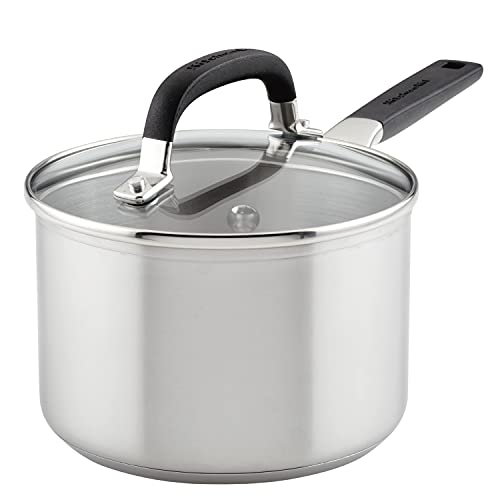
Gravy needs a pan with enough depth to whisk without splashing and enough surface area to reduce quickly. A 1.5- to 3-quart saucepan is a practical starter size, and a lid helps when sauce needs to be held warm before serving.
Sides, casseroles, and reheating
Green beans, stuffing, mashed potatoes, and reheated vegetables all behave better in a wider pan with higher sides than in a basic fry pan. A sauté pan is often the better buy here because the straight walls give you more usable volume and a lid for finishing.
Soup, stock, and batch cooking
Holiday cooking usually includes one pot that can handle soup, stock, pasta water, or a big make-ahead batch. An 8-quart stockpot is a common useful size, and it is often large enough for crowd-size cooking without becoming overly awkward to store.
What minimum cookware do you need in a starter set?
A basic starter set for holiday cooking can include a saucepan, a skillet, a stockpot, and one covered higher-sided pan. That covers sauces, searing, boiling, reheating, and the large-batch jobs that show up most often in holiday menus. If you can only buy a few pieces, buy for those tasks first.
Saucepan
A saucepan is the holiday workhorse for gravy, cranberry sauce, reheated vegetables, and simmering small amounts of stock. Look for a 1.5- to 3-quart size, with a lid if possible. Wirecutter’s suggested build includes a 1½- or 2-quart saucepan and also a 3-quart saucepan, which shows how useful this range is.
Skillet or frying pan
An 8-inch or 10-inch skillet can handle sautéing, browning aromatics, and reheating sides. A 10-inch pan is the more flexible choice for holiday cooking because it gives you more room without crowding, and oven-safe versions can move from stovetop to oven when a recipe needs finishing heat.
Stockpot
A stockpot is the piece that keeps holiday batch cooking from turning into a mess. The common 8-quart size works for soup, stock, and pasta, and a lid can help speed boiling and hold heat. MyKitchenHints calls a 6-to-8-quart stockpot a versatile size, which matches how many holiday cooks use it.
Sauté pan
A sauté pan has a wide cooking surface, higher sides, and usually a lid. It is better than a standard skillet for holiday sides, one-pan meals, and dishes that start on the stove and finish covered. If you cook stuffing, braised greens, or pan sauces often, this may be a smarter buy than a second fry pan.
Stainless steel, nonstick, or cast iron?

For budget cookware, stainless steel is usually the best all-around buy, nonstick is best for easy release at lower heat, and cast iron is best for high heat and heat retention. None is perfect for every job. The right choice depends on quick cleanup, searing power, or broad holiday use.
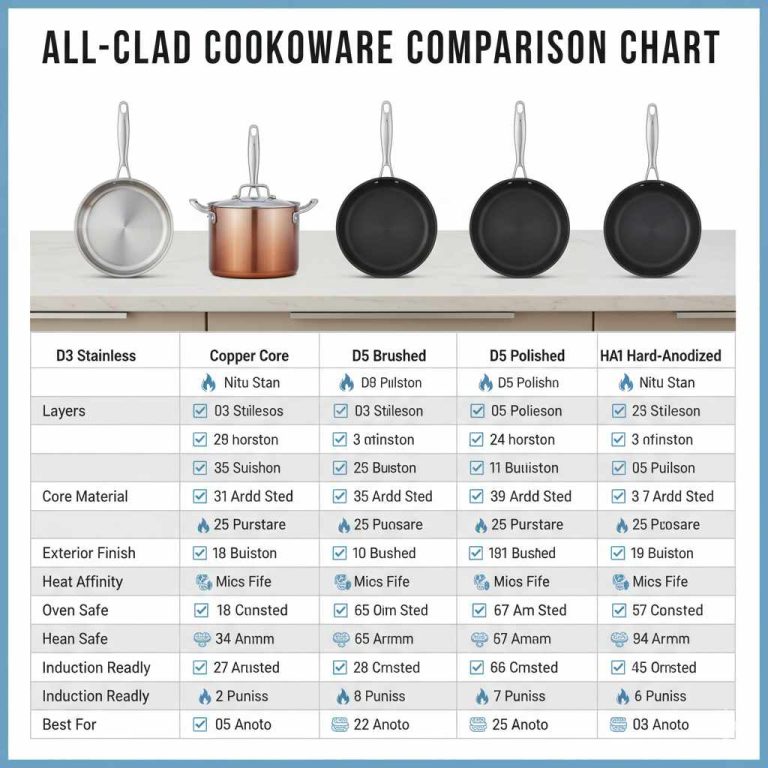
Tri-ply clad stainless steel
Tri-ply clad stainless steel sandwiches an aluminum core between stainless layers. That construction matters because it helps with even heating, induction compatibility, and warping resistance. It is a strong choice for gravy, pan sauces, searing, and anything that may see the oven.
Wirecutter says the Tramontina set is a budget pick and fully clad tri-ply, and it recommends an 8-piece tri-ply clad set as its budget pick. That is the kind of build to look for if you want one set to handle most holiday tasks without paying for a premium name on every piece.
Nonstick cookware
Nonstick cookware gives easy food release and is useful for eggs, delicate fish, and low-stick reheating. It is less suited to high-heat searing and usually has a shorter lifespan than stainless steel. The coating also needs gentler care: avoid metal utensils, very high heat, and rough scrubbing.
Feed Myself notes a T-fal set with a ceramic non-stick interior and a Thermo-Spot indicator, which shows how nonstick sets often focus on convenience. That convenience is useful, but nonstick should not be your only holiday pan if you cook gravy, deglaze, or use high heat often.
Cast iron cookware
Cast iron holds heat very well and tolerates very high temperatures, which makes it useful for searing, oven finishing, and cornbread or skillet sides. It is also budget-friendly in single-piece or bundle form. CNET lists a Lodge seasoned 7-piece bundle as a cast-iron option and says cast iron is budget friendly.
Cast iron does have tradeoffs. It is heavy, and it needs seasoning or regular maintenance to stay nonstick enough for day-to-day use. For a budget holiday set, cast iron often makes sense as one strong skillet or Dutch oven, not as your entire cookware plan.
Is a full set or open-stock better?
Open-stock buying is often better than a full bundle when you only need a few specific holiday pieces. A low-quality 10- or 20-piece set can leave you with duplicate pans and one weak saucepan that scorches the exact job you bought it for. Buy the pieces that match your menu first.
When a bundle makes sense
A bundle makes sense when it is truly the right construction and includes the sizes you need. The same source lists the All-Clad D3 7-piece set as best overall cookware set, and its budget cookware set is the Tramontina Tri-Ply 8-piece set. Those are useful reference points because they center on practical pieces instead of filler.
When to buy pieces one by one
Piece-by-piece buying works well if you already own a decent skillet or if your holiday menu is narrow. It also helps when you want one strong saucepan and one strong stockpot but do not need a second or third fry pan. This route is often smarter for small kitchens.
How small kitchens should shop
Small kitchens need stackable pieces with clear jobs. Start with one saucepan, one skillet, one stockpot or Dutch oven, and one sauté pan only if your menu needs it. Avoid buying duplicate fry pans before you have a lid-covered pan for sauces and sides.
-
List your holiday menu.
Write down the dishes that need stovetop space, oven space, or both. If gravy, sides, and reheating dominate the menu, prioritize saucepan, skillet, and stockpot sizes before anything decorative or redundant.
-
Match each task to a pan.
Assign one piece to each main job: sauce, sear, stock, and covered sides. This keeps you from buying two pans that do the same work while leaving a key size missing.
-
Buy lids with purpose.
Choose pieces with lids when they will simmer, steam, or hold food warm. A lid matters more on a saucepan, stockpot, and sauté pan than on a basic skillet.
-
Skip weak duplicates.
Do not pay for an extra small pan unless it solves a real menu problem. If money is tight, buy one better 10-inch skillet instead of two thin pans that warp or heat unevenly.
Holiday cookware buying table
This table turns holiday jobs into buying priorities. Use it to decide what to buy first, what material fits the task, and what to skip if the budget runs short.
| Essential piece | Must-have use case | Minimum acceptable size | Best budget material | What to skip if money is tight | Spend priority |
|---|---|---|---|---|---|
| Saucepan | Gravy, sauces, reheating, simmering stock | 1.5- to 3-quart | Tri-ply clad stainless steel | Extra small saucepans without lids | High |
| Skillet / frying pan | Sautéing, browning, eggs, quick reheating | 10-inch | Tri-ply clad stainless steel or nonstick for eggs | Second fry pan unless you cook for a crowd often | High |
| Stockpot | Soup, stock, pasta, batch cooking | 8-quart | Stainless steel | Oversized stockpots that are hard to store | High |
| Sauté pan | Holiday sides, one-pan meals, covered finishing | Wide pan with lid | Tri-ply clad stainless steel | A duplicate skillet if you need more depth instead | Medium |
| Cast iron skillet | High-heat searing, oven finishing, cornbread | 10-inch | Seasoned cast iron | Multiple cast iron pieces before you have a saucepan | Medium |
| Nonstick skillet | Eggs and delicate foods | 8- to 10-inch | Nonstick coating over aluminum or steel base | High-heat searing, broiler-heavy use | Low |
What should you spend first?
Spend first on the pieces that solve the most holiday pain points: saucepan, skillet, stockpot, and a covered higher-sided pan if your menu needs one. That order gives you usable capacity before specialty features. If the budget is tight, a smaller set of strong pieces beats a large set with weak construction.
High-priority buys
Start with tri-ply clad stainless steel if you can. It gives even heating, better durability, and better odds of working on induction. In starter sets, look for the saucepan, 10-inch skillet, and 8-quart stockpot before anything else.
Medium-priority buys
A sauté pan and one cast-iron piece are strong second-round buys. They are especially useful if you cook one-pan sides, braises, or oven-finished dishes. CNET’s cast-iron bundle recommendation shows that a bundle can make sense when cast iron is one of your main cooking styles.
Low-priority extras
Extra small pans, specialty gadgets, and duplicate nonstick pieces are the easiest things to skip. Nonstick is convenient, but it is not the longest-lasting option, and it is not the right choice for high heat. Buy it only if you regularly cook eggs or other delicate foods.
What works on induction?
Induction cookware needs a magnetic base, so not every pan will work. This matters a lot when you shop on a budget, because some cheap sets look complete but cannot be used on induction at all. If you have induction now, or may move to it later, check compatibility before price or piece count.
Magnetic base check
Look for induction-compatible labeling or use a magnet on the base. If the magnet sticks, the pan will usually work. Tri-ply clad stainless steel is a strong bet here because the construction often supports induction use better than lightweight nonmagnetic pans.
All-cooktop versatility
Induction-compatible cookware is also a safer choice if you want flexibility across cooktops. A budget set that works on gas, electric, and induction reduces replacement risk later. That is one reason tri-ply clad stainless steel is often a better long-term buy than a cheap, thin set.
Common buying mistakes
A common first-timer mistake is picking a flashy holiday cookware bundle before confirming it fits an induction or glass-top stove. Another is assuming every stainless pan works on induction. If the base is not magnetic, the pan will not heat on an induction burner, no matter how good the rest of the set looks.
-
Check your cooktop first.
Confirm whether you need induction compatibility before you shop. That single filter narrows the field fast and prevents buying a set that cannot heat on your stove.
-
Test for magnetism.
If the product page is unclear, use a magnet on the base or look for an explicit induction label. This matters most on budget pans, where construction can vary widely.
-
Prefer clad construction.
For induction and even heating, tri-ply clad stainless steel is usually the safer choice than thin stamped metal. The aluminum core helps spread heat and resist warping.
Frequently asked questions
What are the minimum pots and pans I need in a starter set?
A useful starter set usually includes a saucepan, a skillet, a stockpot, and one covered higher-sided pan. For holiday cooking, that covers gravy, sautéing, boiling, and reheating. If you can add only one more piece later, make it a sauté pan or a Dutch oven, depending on your menu.
Is stainless steel or nonstick better for budget cookware?
Stainless steel is usually the better budget choice for overall durability, high-heat cooking, and holiday tasks like sauces and searing. Nonstick is better for eggs and delicate foods, but it needs gentler care and does not last as long. If you can only buy one set, stainless steel is the safer default.
What cookware pieces are most useful for holiday cooking?
The most useful pieces are a saucepan, a 10-inch skillet, an 8-quart stockpot, and a sauté pan or covered skillet. Those cover gravy, sides, stock, pasta, and reheating. A Dutch oven can substitute for some of that work if your menu leans toward braises or casseroles.
How much should a beginner spend on a cookware set?
There is no fixed number that fits every kitchen, but a beginner should spend first on fewer useful pieces rather than a huge bundle. Prioritize a solid saucepan and skillet, then add a stockpot. If a set includes pieces you will not use, that money is usually better spent on one better pan.
Should I buy one full set or piece together cookware open stock?
Open stock is often the better move if you have a small kitchen, a narrow holiday menu, or a cooktop that needs induction-compatible pieces. A full set can make sense if it is tri-ply clad and the included sizes match your needs. Otherwise, buy the exact pieces you need.
Which budget cookware materials last the longest?
Tri-ply clad stainless steel usually lasts longer than nonstick, and cast iron can last for decades with proper seasoning and care. Nonstick has the shortest useful lifespan because the coating wears. For a budget holiday set, stainless steel is often the best mix of lifespan, heat control, and versatility.
Products related to this article
Sponsored / affiliate links. As an Amazon Associate I earn from qualifying purchases. I may earn additional commission from eligible campaigns.