What Cookware Do You Need for a Christmas Morning Brunch?
For a Christmas morning brunch, many hosts need about 5 to 7 pieces: a sheet pan, skillet, baking dish, saucepan, roasting or warming pan, and a serving platter. Skip one, and you can end up with cramped oven space, cold dishes, or rushed stovetop juggling. This guide matches cookware to common brunch menus, cook times, and holding needs so you buy only what you will use.
Christmas brunch cookware basics


Start with the pans that handle the main brunch jobs first: a skillet, a saucepan, a baking sheet, and a casserole dish. That base covers eggs, bacon, potatoes, syrup, gravy, and egg bakes for most holiday menus. Add specialty pieces only when the menu calls for them.
Retail cookware categories also separate pieces in ways that help you shop with a plan. Costco groups bakeware into categories including baking sheets and bakeware sets, separates Dutch ovens from stock pots, lists skillets apart from frying and sauté pans, and includes grill and griddle pans as a cookware category. Those category splits mirror how brunch cooking actually works.
What most kitchens already have
A standard home kitchen often already includes at least one skillet, one saucepan, and some form of baking pan. For Christmas brunch, the key question is not whether you own cookware, but whether you own the right size and finish for cooking several portions at once.
What to add for holiday hosting
If your menu includes a large egg dish, pancakes, bacon, or a baked casserole, the first additions are usually a 12-inch skillet, a half-sheet pan, a 2- to 3-quart casserole dish, and a larger saucepan or stock pot. Larger pans reduce crowding, which matters because overcrowded food browns poorly and takes longer to finish.
What cookware do you need for a Christmas morning brunch?
You need cookware that matches the menu, not every category on the shelf. For a typical Christmas brunch, the essentials often include a skillet for eggs and bacon, a baking sheet for bacon or potatoes, a casserole dish for strata or baked French toast, and a saucepan for syrup, gravy, or drinks. A griddle or Dutch oven becomes useful when the menu grows.
The minimum list for a small brunch can be four pieces. The ideal list for a crowd is closer to six or seven because you need both cooking and holding space. That difference is what keeps hot food hot while the next batch finishes.
Minimum versus ideal pieces
For 4 to 6 guests, a skillet, baking sheet, saucepan, and casserole dish can cover most menus. For 8 to 12 guests, add a griddle or second skillet and a stock pot if you are making mulled cider, soup, or large-batch hot drinks. A separate warming dish or platter also helps when the oven turns over to the next tray.
-
Match each dish to one pan.
Assign eggs to the skillet, pancakes to the griddle, and casseroles to the baking dish before cooking starts. This reduces switches between pans, which is where timing problems usually begin. -
Reserve one holding vessel.
Keep a platter, covered casserole, or low oven-safe dish free for finished food. That keeps one batch warm while the next batch cooks. -
Size up for guests.
Choose the larger version when you are unsure. A 12-inch skillet or half-sheet pan gives you room to spread food out, which helps browning and shortens total cook time.
Skillet, griddle, and baking sheet choices
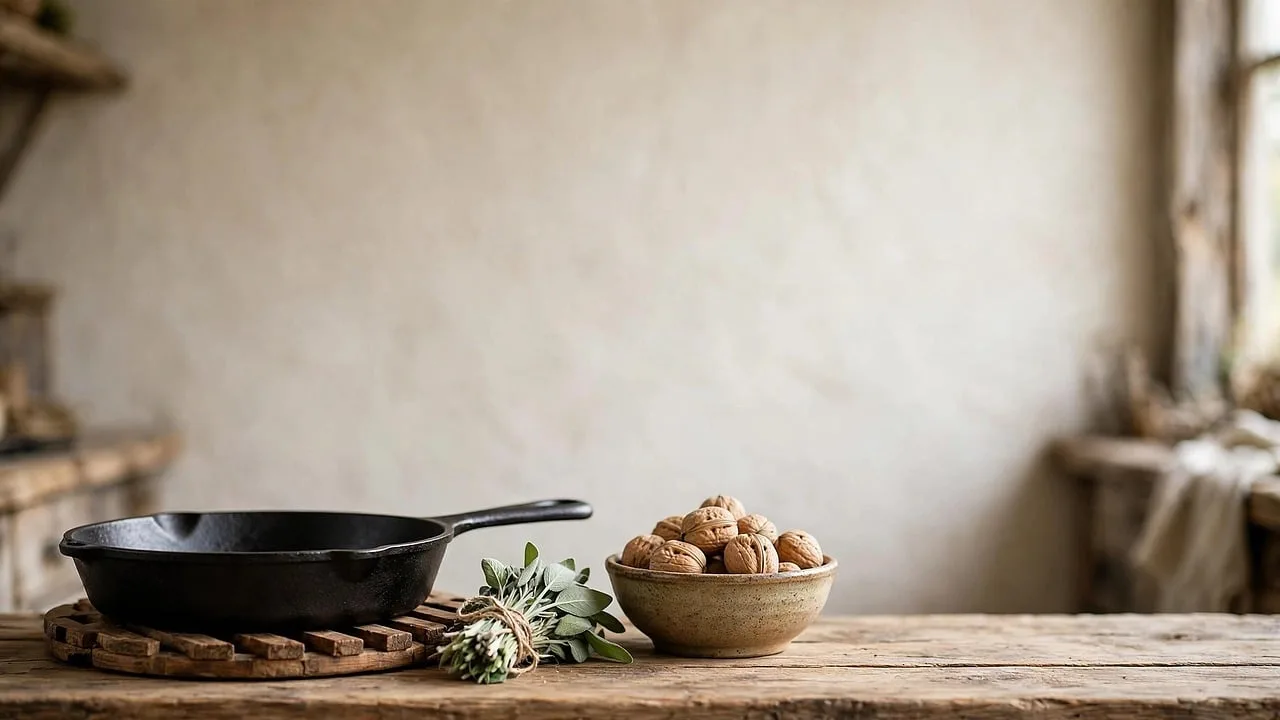
The skillet is the most useful single pan for Christmas brunch. It is best for eggs, bacon, sausage, and hash, and a 12-inch size is the practical crowd-cooking choice. Nonstick works well for delicate eggs and cleanup, while cast iron holds heat well for finishing frittatas or skillet bakes. If the dish moves from stovetop to oven, choose an oven-safe skillet.
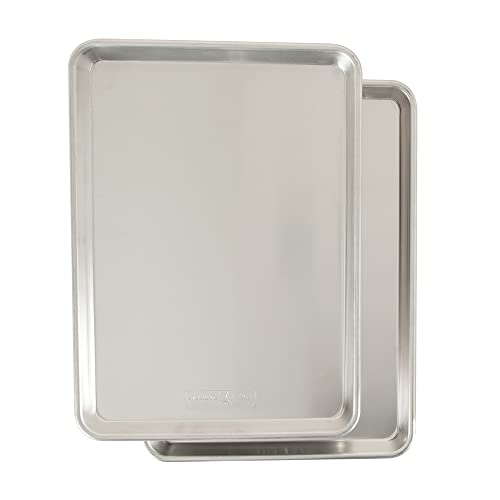
The griddle and baking sheet handle batch foods that need surface area. A flat griddle is best for pancakes and French toast. A rimmed half-sheet pan is best for bacon, pastries, roasted potatoes, and sheet-pan brunch because the rim catches fat and loose pieces.
Best pans for eggs, bacon, and hash
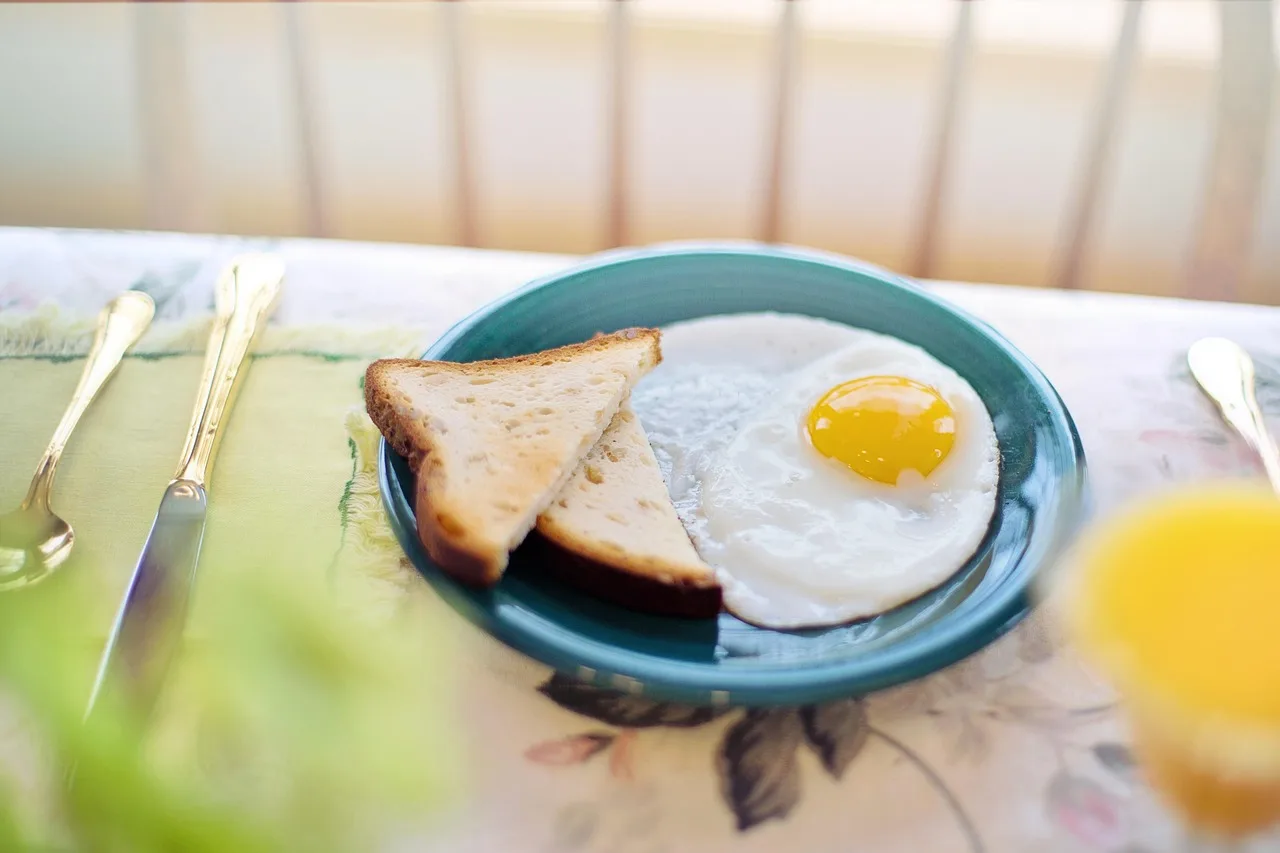
Eggs are where poor cookware shows up fast. Sticking, uneven heat, and thin spots all lead to broken whites or scorched edges. A nonstick skillet helps with low-fat cooking and cleanup, while cast iron gives stronger heat retention for browning sausage or crisping hash. If you are making a frittata, make sure the skillet is oven-safe.
A common first-timer mistake is crowding bacon in a small pan. The slices steam in their own moisture, so they stay limp instead of crisp. A half-sheet pan or a wide skillet gives the fat room to render and the bacon room to brown.
Best pans for pancakes, French toast, and roasted potatoes
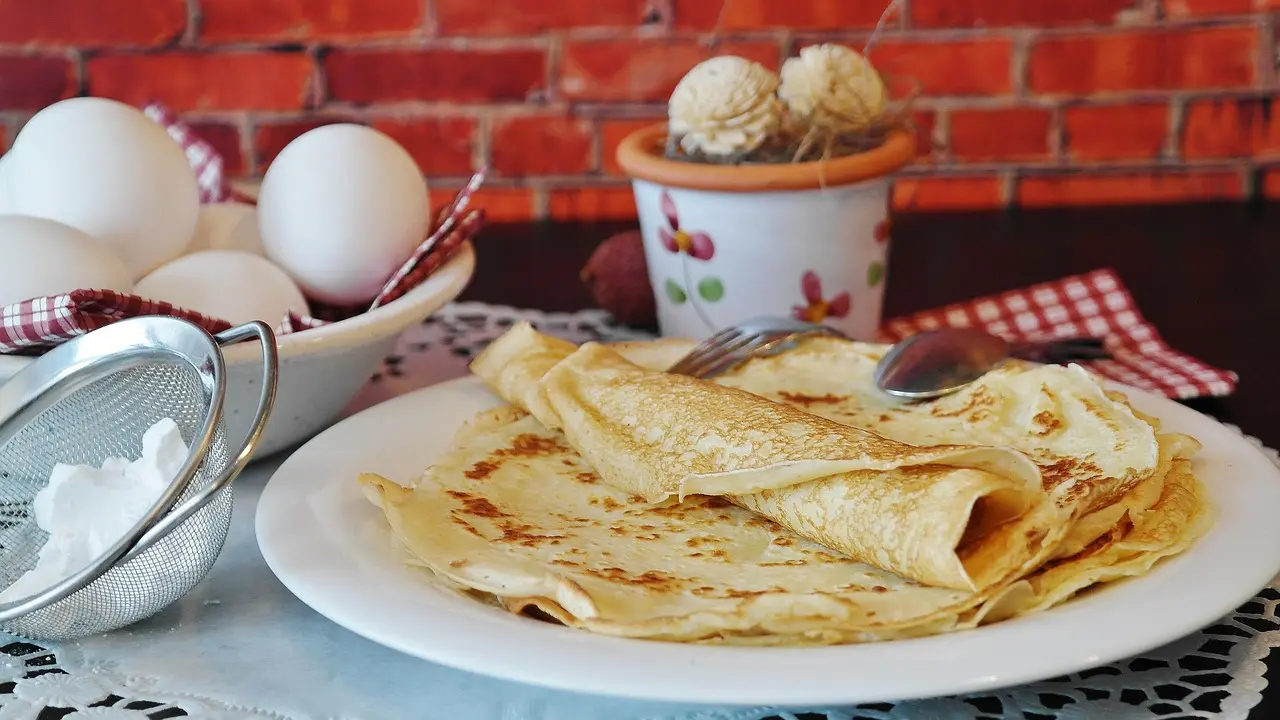
For pancakes and French toast, the goal is even surface heat and enough room to batch-cook without stacking. A griddle, stovetop or electric, is the cleanest choice. A baking sheet is the better answer for roasted potatoes because the wide surface lets the potatoes brown instead of steam.
Say your pancake batter is ready but the first batch stays pale in the center. That usually means the pan is too small or too crowded, not that the batter is wrong. Move to a larger griddle or split the batter across two pans so the surface stays hot.
Do you need a Dutch oven for holiday brunch?
You do not need a Dutch oven for every Christmas brunch, but it earns its place when the menu includes baked eggs, casseroles, or pulled-meat brunch dishes. Its heavy lid and oven-safe construction help it hold steady heat. If you already own a casserole dish and your menu is lighter, the Dutch oven is optional.
Common materials include cast iron and enamel-coated cast iron. Both retain heat well, and the enamel finish removes the need for seasoning. The tradeoff is weight, so a Dutch oven makes the most sense when you want one vessel to cook and hold food.
When a Dutch oven earns its place
A Dutch oven is useful for brunch dishes that start on the stove and finish in the oven, especially when you want steady heat and a lid. That includes some egg bakes, breakfast casseroles, and shredded meat fillings. For crowded tables, it can also hold food warm longer than a thin pan.
When a casserole dish is enough
A casserole dish is enough when the dish is baked all the way through and then moved straight to the table. Common casserole dish sizes of about 2 to 3 quarts are often suitable for strata, baked French toast, and egg bakes. Glass, ceramic, and stoneware all fit this use, and the oven-to-table transfer is simpler than with heavier cookware.
Oven-safe cookware and heat limits
Oven-safe cookware matters any time a dish starts on the stovetop and finishes in the oven, or when you want the same pan to move from cooking to serving. Check the handle and lid temperature limits, not just the body of the pan. That matters for brunch casseroles, frittatas, and skillet bakes.
The practical benefit is fewer dish changes. Fewer changes mean less mess, less chance of breaking the food, and less time spent juggling pans while guests are arriving.
Handles and lids to check
Look for metal handles, oven-rated lids, and clear temperature limits from the manufacturer. A handle that stays cool on the stovetop may still have a lower oven limit than the pan itself. Glass lids often have lower limits than the base, so the lid can be the weak point.
Stovetop to oven dishes
Use oven-safe cookware for dishes that brown on top after an initial stovetop start. That includes frittatas, some breakfast skillets, and braised brunch fillings. Stainless steel, cast iron, hard-anodized aluminum, ceramic, and enamel-coated cast iron can all be useful here when the specific piece is rated for oven use.
Costco’s cookware materials list includes stainless steel, cast iron, hard-anodized aluminum, ceramic, and carbon steel, and it highlights induction-compatible bases, oven-safe designs that move from stovetop to oven, ergonomic handles, and easy-release nonstick coatings. Those features map directly to holiday brunch cooking jobs.
Brunch cookware matrix
The table below links 10 common Christmas morning dishes to the right pan type, size, heat source, and warm-holding ability. Use it to buy only the pieces that solve actual menu problems.
| Dish | Best pan type | Recommended size | Heat source | Holds warm 15-30 minutes? |
|---|---|---|---|---|
| Scrambled eggs | Skillet, nonstick | 10- to 12-inch | Stovetop | Yes, with low heat or covered rest |
| Bacon | Rimmed baking sheet | Standard half-sheet | Oven | Yes, on a rack or paper-lined pan |
| Sausage | Skillet or sheet pan | 12-inch skillet or half-sheet | Stovetop or oven | Yes, especially cast iron or a covered tray |
| Hash | Skillet, cast iron | 12-inch | Stovetop | Yes, cast iron holds heat well |
| Pancakes | Griddle | Large flat surface for multiple portions | Stovetop or electric | Yes, on a warm oven-safe tray |
| French toast | Griddle | Large flat surface for batch cooking | Stovetop or electric | Yes, briefly on a sheet pan in a low oven |
| Strata | Casserole dish | 2- to 3-quart | Oven | Yes, the dish can stay covered at the table |
| Baked eggs | Oven-safe skillet or casserole dish | 10- to 12-inch skillet or 2-quart dish | Oven | Yes, if the vessel holds heat well |
| Roasted potatoes | Rimmed baking sheet | Standard half-sheet | Oven | Yes, briefly on the pan |
| Mulled cider or hot gravy | Saucepan or stock pot | 1.5- to 3-quart saucepan or larger stock pot | Stovetop | Yes, especially with a lid |
What cookware works best for holding and serving?
For holding and serving, choose cookware that retains heat and moves well from oven to table. Cast iron, Dutch ovens, covered casserole dishes, and saucepans with lids can often hold warmth for about 15 to 30 minutes. That matters when the first tray is ready before everyone reaches the table.
The best serving pieces are usually the same ones that cook the food. Oven-safe cookware reduces dish switching, and oven-to-table vessels keep food in the same container until serving. That is especially helpful for strata, baked eggs, and hot gravy.
Pieces that hold heat for 15 to 30 minutes
Cast iron holds heat well for finishing and serving, so it is a strong choice for bacon, frittatas, and skillet bakes. Dutch ovens also retain heat because of their heavy walls and lids. A covered saucepan is useful for syrup or gravy when you need it to stay warm between pours.
Glass and ceramic casserole dishes can also hold food warm at the table, but they do not retain heat as aggressively as cast iron. That makes them best for dishes that are meant to be served soon after baking, such as strata or baked French toast.
Which dishes can go from oven to table
Casseroles, baked eggs, and some skillet bakes can move straight from oven to table if the cookware is rated for that temperature and has safe handles. A platter works for bacon and pastries. Saucepans and stock pots can stay on a trivet or warming surface for cider, soup, or gravy service.
Suppose your strata finishes 15 minutes before guests sit down. A covered ceramic or glass dish can keep it in serving shape, while a skillet of eggs may cool too quickly unless it is cast iron. The pan choice changes how forgiving the timing becomes.
What cookware should I use for eggs, casseroles, and bacon?
Use a nonstick or cast-iron skillet for eggs, a casserole dish for layered bakes, and a rimmed baking sheet for bacon. Those three pieces cover the dishes that most often cause timing problems. Eggs stick, casseroles need even baking, and bacon needs enough surface area to render properly.
For eggs, nonstick lowers the risk of sticking and reduces cleanup. For casseroles, oven-safe glass, ceramic, or stoneware works well. For bacon, a half-sheet pan gives the slices room so they do not steam.
Material choices that fit the job
Stainless steel is useful for saucepans and some skillets when you want stovetop simmering and oven safety. Cast iron is best when heat retention matters most. Hard-anodized aluminum and carbon steel are useful middle-ground materials, while ceramic and stoneware are most at home in bakeware.
Easy-release nonstick coatings are practical for eggs and delicate brunch foods. Just keep the heat within the manufacturer’s limit, because high heat can shorten the life of the coating. For a one-day holiday event, the goal is simple cleanup and reliable release, not maximum searing.
How many pans do I need to host brunch for a crowd?
For a crowd, plan on at least 5 pieces and often 6 or 7 if you are making multiple hot dishes at once. The minimum set is enough for a small group. The ideal set adds a second surface for batch foods and a separate vessel for drinks or gravy so the stovetop does not bottleneck.
That count changes with guest number. A 4-person brunch can work with one skillet, one sheet pan, one casserole dish, and one saucepan. An 8- to 12-person brunch usually needs one more large pan or a stock pot for make-ahead service.
-
Count the hot dishes.
Tally the eggs, starches, meat, and beverages that need heat at the same time. If two dishes need the oven at once, you need separate cookware or separate timing. -
Assign one pan per bottleneck.
Use the skillet for eggs, the sheet pan for bacon or potatoes, and the saucepan for gravy or cider. This keeps one dish from crowding another off the heat. -
Add one holding piece.
Keep a platter, covered dish, or Dutch oven ready for finished food. That buffer matters when guests are not yet seated.
What cookware set is enough for holiday hosting?
A cookware set can be enough if it includes the right mix of skillet, saucepan, and bakeware, but a set is only useful when it fits your menu. For holiday hosting, value comes from coverage, not piece count. A set with a skillet, saucepan, and matching lids may help, but it still may not include a half-sheet pan or casserole dish.
Cookware sets are worth considering when you need several matching pieces and want a single purchase to cover multiple jobs. They are less useful if you only need one specialty item, such as a griddle or Dutch oven, for a single brunch.
When a set makes sense
A set makes sense if you are replacing old cookware and also want pieces for holiday cooking. Look for core pieces that support brunch: a 12-inch skillet, a saucepan in the 1.5- to 3-quart range, and a bakeware piece sized for casserole or sheet-pan cooking. If the set includes oven-safe pieces, it is more useful for mixed stovetop and oven dishes.
When to buy pieces instead
Buy pieces instead of a full set when the menu needs only one or two additions. A half-sheet pan, a griddle, or a Dutch oven may solve the real problem faster than a bundled set. That approach is better for a one-event upgrade and still useful later for future holiday hosting.
What is the best material for Christmas brunch cookware?
The best material depends on the job. Cast iron is the strongest choice for heat retention and finishing. Nonstick is best for eggs and cleanup. Stainless steel works well for saucepans and versatile stovetop use. Glass, ceramic, and stoneware fit casserole-style baking and oven-to-table serving.
Choose the material that solves the food problem in front of you. If the issue is sticking, use nonstick. If the issue is keeping food hot, use cast iron or a Dutch oven. If the issue is a baked casserole on the table, use a covered glass or ceramic dish.
Frequently asked questions
What pans do I need for Christmas brunch?
A 12-inch skillet, a half-sheet pan, and a 2- to 3-quart casserole dish cover most holiday menus. A saucepan handles syrup, gravy, or hot drinks. If you want one more piece, a griddle is the next most useful for batch breakfast foods.
What is the best cookware for brunch dishes?
The best cookware is the one matched to the dish. Skillets suit eggs and hash, griddles suit pancakes and French toast, baking sheets suit bacon and potatoes, and casserole dishes suit strata and baked French toast. For serving, cast iron and Dutch ovens hold heat best.
Products related to this article
Sponsored / affiliate links. As an Amazon Associate I earn from qualifying purchases. I may earn additional commission from eligible campaigns.