What Size Dutch Oven Is Best for Holiday Hosting?
For holiday cooking, a 7-quart Dutch oven is often a versatile choice; a 5.5- to 6-quart pot is commonly a better fit for smaller meals and side dishes, and 8 quarts or larger is usually more useful only when making soup, stock, or other big batches regularly. A pot that is too small crowds food, invites spills, and leaves too little room for stirring or browning. This guide matches Dutch oven capacity to holiday soups, braises, sides, bread, and make-ahead dishes.
Why 7 quarts works for most holiday menus
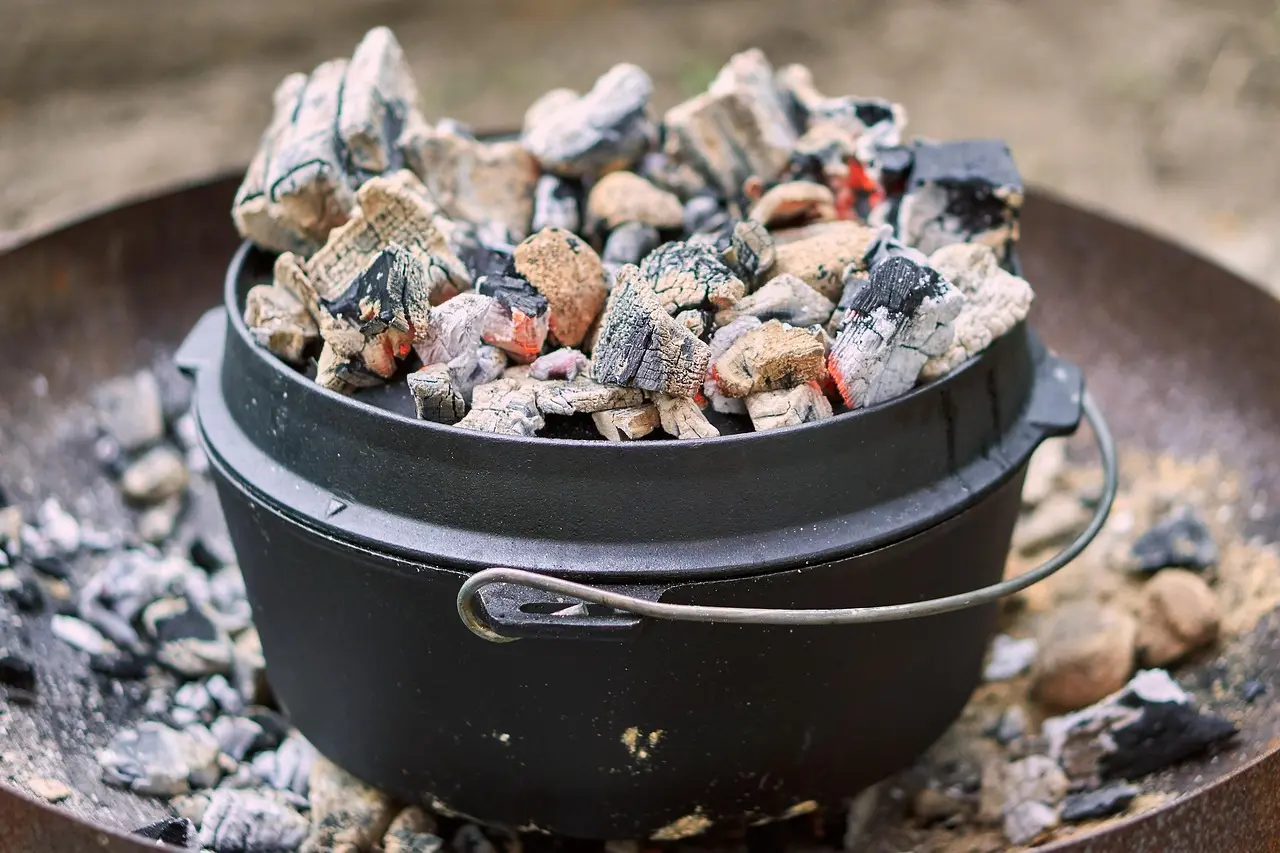


A 7-quart Dutch oven is the best all-around pick for holiday hosting because it leaves enough room for soup, chili, braises, and large side dishes without forcing you into a second batch. For smaller holiday menus, a 5.5- to 6-quart pot is easier to handle and often suits about two to four people well. Larger pots only make sense when the menu truly needs the extra volume.
Top size pick for most hosts
Choose 7 quarts if you want one pot for gravy base, stuffing, mulled cider, and a braise without feeling cramped. Wirecutter recommends 7-, 9-, or 13-quart versions for feeding a crowd, and Everyday Health lists a 7-quart Dutch oven as its most versatile choice. That puts 7 quarts in the practical middle for holiday cooking.
Best budget and premium alternatives
For a lower-cost option, the Lodge 6-Quart Enameled Cast Iron Dutch Oven is often a balanced middle-ground choice in this size range. It has roomy handles and a wide cooking area, which helps when you are stirring thick soups or browning aromatics. For a premium upgrade, the Le Creuset Signature Enameled Cast-Iron 5½-Quart Round French Oven gives you a lighter feel than many heavy enameled pots and a light-colored interior that makes browning easier to judge.
When to size up instead
Move up to 9 quarts or 13 quarts only if you truly cook for a crowd, make stock, or batch-cook holiday sides in large volumes. Bigger pots are harder to move when full, and an oversized pot can leave a shallow layer of food that dries out faster in the oven or reduces simmering depth on the stove.
Quick picks by holiday need
- Small family dinner: 5.5 or 6 quarts for soup, braised chicken, and side casseroles.
- Most versatile single pot: 7 quarts for stew, chili, stuffing, and larger braises.
- Big crowd cooking: 9 or 13 quarts for stock, mulled cider, and large-batch soup.
- Long cuts or bread loaves: Oval Dutch oven when the shape matters more than the standard round form.
Holiday size matrix
The smallest useful Dutch oven is often the right choice. Aim for enough headroom to stir without sloshing, enough depth to keep a sauce or soup from evaporating too fast, and enough surface area to brown food in a single layer when the recipe needs it.
| Quart size | Holiday tasks | Guest count | Fill-depth guidance | Handling notes |
|---|---|---|---|---|
| 4 | Small side dish, cranberry sauce, sauce reheating, a compact gratin | 1 to 2 | Best when food sits around one-third full; avoid packing it near the rim | Easy to move, but too small for most holiday mains |
| 5.5 | Stuffing, small braises, gravy base, cider warming, side casseroles | 2 to 4 | Keep to about half full for simmering and up to two-thirds for oven use | Good balance of capacity and liftability |
| 6 | Soup, chili, mashed potatoes, braised short ribs, make-ahead sides | 2 to 4 | Works well around half to two-thirds full; leaves room for stirring and bubbling | Common middle ground; handles holiday batches without feeling oversized |
| 7 | Large soup, crowd chili, turkey-day side dish, bigger braises, stock | 4 to 6 | Best around half full; good headroom for simmering and reducing | Heavier when full, but still manageable for many cooks |
| 9 | Stock, large soup, big holiday batch cooking, multiple side portions | 6 to 8 | Use when you need deep liquid volume without filling near the rim | Bulky; check oven rack clearance and sink fit before buying |
| 13 | Very large stock, crowd feeding, bulk braises, party portions | 8+ | Keep the working level well below the rim so stirring remains safe | Best for volume, not convenience; lifting and storage matter a lot |
-
Match the dish depth.
Choose the smallest pot that still lets food sit comfortably below the rim. Thick soups, stuffing, and braises need room for bubbling and stirring; a pot that is too large leaves a shallow layer and can dry out the food faster. -
Check your heaviest use.
Decide whether the pot must handle soup, a roast, bread, or sides. If your holiday menu leans to liquids and make-ahead dishes, 6 or 7 quarts is a better fit than a huge vessel you will rarely fill. -
Think about lifting.
A larger Dutch oven weighs more once food is inside. Wirecutter notes that bigger Dutch ovens are heavier and harder to move when full, so factor in your sink size, oven rack height, and safe transfer from stovetop to oven.
Is a 5.5 quart Dutch oven enough?
Yes, for many holiday meals a 5.5-quart Dutch oven is enough, especially if you cook for two to four people and want a pot that is easier to store and lift. It is a strong size for stuffing, small braises, sauce work, and side dishes, but it starts to feel tight for large soup batches or crowd-sized chili.
Le Creuset Signature 5½-quart round French oven
This is the premium 5.5-quart pick, and Wirecutter lists it as an upgrade choice. Le Creuset also lists other sizes, including 2, 4.5, 7.25, 9, and 13.75 quarts, which shows how this line scales across uses. Its light-colored interior helps you see fond and browning better, and Business Insider notes a 500-degree Fahrenheit oven-safe temperature.
Lodge 5.5 qt enameled cast iron Dutch oven
The Lodge 5.5 qt enameled cast iron Dutch oven is the mass-market version of the same capacity, and Walmart lists it as a best seller. That matters if you want the smaller footprint of a 5.5-quart pot without paying for a premium label. It has the utility holiday cooks need: oven-safe use, loop handles, and enough capacity for two to four people.
Picture a stuffing recipe that fills a 5.5-quart pot halfway before it goes into the oven. That gives the bread cubes room to puff and brown. Put the same recipe into a much larger pot, and the layer spreads thin enough to lose moisture more quickly.
Should you buy a 6 quart or 7 quart?
Buy 6 quarts if your holiday cooking stays focused on small family dinners, sides, and medium braises. Buy 7 quarts if you want more room for soup, chili, stock, and larger holiday portions. The extra quart matters when the recipe needs depth and simmering space; it adds only weight when you do not need the extra capacity.
Lodge 6-quart enameled cast iron Dutch oven
The Lodge 6-Quart Enameled Cast Iron Dutch Oven is the best value-focused middle choice. Wirecutter’s recommended Lodge Dutch oven is 6 quarts, and Business Insider lists 6 quarts as its budget pick. That puts this size in a useful middle ground for holiday hosts who want a roomy pot without jumping to a heavier crowd-size vessel.
When the extra quart matters
Choose 7 quarts when you regularly make soups, stock, or one-pot holiday mains with enough liquid to bubble and reduce. Everyday Health lists a 7-quart Staub Cocotte Dutch Oven as its most versatile option, which fits how often this size handles both stove work and oven finishing. A 7-quart pot also gives more buffer against boil-overs during holiday simmering.
Suppose you are making chili for six guests. In a 6-quart pot, you may have to stir carefully to avoid sloshing near the rim. In a 7-quart pot, the same batch sits lower, which gives you safer stirring and less spill risk.
When do larger Dutch ovens make sense?
Seven quarts is the point where many hosts stop thinking about family dinner and start thinking about crowd cooking. At 9 and 13 quarts, the goal is volume, not everyday convenience. Those sizes help with large gatherings, but they need more storage space, more oven room, and more strength when you lift them.
7-quart crowd cooking
A 7-quart Dutch oven is often the largest size that still feels practical for regular holiday use. It can handle a larger batch of soup, a crowd-sized side dish, or a braise that needs more liquid depth than a 5.5- or 6-quart pot provides. It is also the point where the pot can start to feel noticeably heavier when full.
9-quart and 13-quart bulk use
The same source suggests 9- and 13-quart versions for feeding a crowd, and those sizes make sense for stock, party chili, and large holiday prep. They are less attractive if you mostly cook for a small household, because the extra capacity rarely gets used and the pot becomes harder to move, wash, and store.
Handling and storage tradeoffs
Before buying a large Dutch oven, check three things: whether it fits in your oven with enough rack clearance, whether it fits in your sink for cleanup, and whether you can lift it safely when full. A very large enameled pot can be difficult to tip, drain, or transfer if you are holding a heavy lid at the same time.
What size works for soup, braise, and bread?
Soup and chili usually need the most liquid depth, braises need a balance of surface area and height, and bread needs a pot that traps steam without crowding the loaf. For holiday cooking, 6 or 7 quarts covers the widest range. Go oval only when the food shape calls for it.
Soup and chili
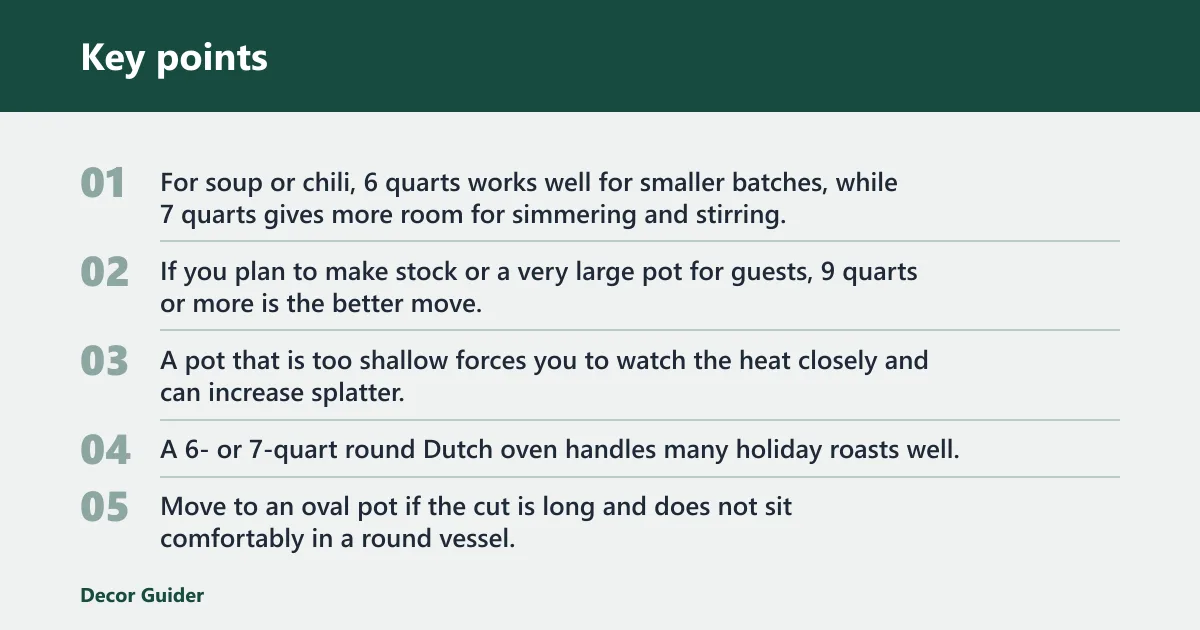
For soup or chili, 6 quarts works well for smaller batches, while 7 quarts gives more room for simmering and stirring. If you plan to make stock or a very large pot for guests, 9 quarts or more is the better move. A pot that is too shallow forces you to watch the heat closely and can increase splatter.
Roasts and braises
For braising a roast, choose a pot with enough room to fit the meat in a single layer and leave space for liquid around it. A 6- or 7-quart round Dutch oven handles many holiday roasts well. Move to an oval pot if the cut is long and does not sit comfortably in a round vessel.
Bread and side dishes
For bread, the goal is enough enclosed space for oven spring without the dough spreading too thin. For side dishes like stuffing, potatoes, or baked beans, a 5.5- to 7-quart pot usually gives the best balance of depth and browning area. Too much extra volume can flatten the result.
Round versus oval Dutch ovens
Round Dutch ovens are the better all-purpose choice because they heat evenly on the stovetop and suit most soups, sauces, and side dishes. Oval Dutch ovens are better for large cuts of meat or bread-shaped use cases, but they can heat less evenly on the stovetop. Choose the shape around the recipe, not the other way around.
How to choose the right size
Start with the smallest size that fits your most common holiday recipe without crowding. Then check whether the pot still leaves headroom for bubbling, stirring, and lifting. If two sizes seem close, pick the one that keeps the food level lower rather than the one that only adds empty volume.
-
List your holiday dishes.
Write down the pot jobs you actually need: soup, chili, braise, stuffing, gravy base, or mulled cider. The best size is the one that handles the most common job well, not the one with the biggest number. -
Pick the smallest fit.
Use 5.5 to 6 quarts for two to four people, 7 quarts for crowd-leaning holiday cooking, and 9 to 13 quarts only for true bulk use. That keeps the food deep enough to cook well without forcing you into a pot that is cumbersome. -
Check handling details.
Look for roomy handles, a secure lid, and a size that fits your oven and sink. Enameled cast iron is a smart holiday material because it moves from stovetop to oven, holds heat well, and cleans up more easily than raw cast iron.
For most hosts, buy the size that fits the holiday menu you cook most often, not the largest pot you can store. A 7-quart Dutch oven is the strongest all-around pick for many kitchens, but a 5.5- or 6-quart model is often the better buy if your meals stay smaller and you want easier handling.
Frequently asked questions
What size Dutch oven is best for holiday hosting?
A 7-quart Dutch oven is the best single size for most holiday hosts because it balances capacity, stirring room, and versatility. It can handle soup, chili, braises, and larger side dishes without feeling cramped. If you cook mainly for two to four people, a 5.5- or 6-quart pot may be the better fit.
Is a 5 quart Dutch oven big enough for a family dinner?
Often yes, but it is on the small side for holiday cooking. A 5.5- to 6.5-quart Dutch oven should serve two to four people, which makes it reasonable for a family dinner with sides. If the menu includes soup, stew, or a braise for guests, a 6- or 7-quart pot is safer.
Should I buy a 6 quart or 7 quart Dutch oven?
Choose 6 quarts if you want a more compact pot for smaller holiday meals, especially if you care about easier lifting and storage. Choose 7 quarts if you expect to make larger batches, soup, stock, or crowd-size side dishes. The extra quart matters most when you need headroom, not brand prestige.
What Dutch oven size do I need for soup or chili?
For soup or chili, 6 quarts works well for moderate batches, while 7 quarts gives more simmering space and reduces spill risk. If you regularly cook for a group, 9 quarts is better for stock and very large batches. The right size is the smallest one that still leaves safe headroom.
What Dutch oven size works best for braising a roast?
A 6- or 7-quart Dutch oven is the best fit for most braised roasts because it gives the meat room plus enough liquid depth for even cooking. If the roast is long or awkwardly shaped, an oval Dutch oven can fit it better. Round models remain the better all-purpose option.
How big should a Dutch oven be for bread and side dishes?
For bread and side dishes, 5.5 to 7 quarts is usually the sweet spot. That range gives enough room for dough rise or a generous casserole without spreading the food too thin. Bigger pots are not automatically better; too much empty space can dry out smaller recipes faster.
Is a larger Dutch oven too heavy to handle?
It can be. The same source notes that bigger Dutch ovens are heavier and harder to move when full, and that becomes more important when you are transferring hot liquid from oven to counter or sink. Before buying a 9- or 13-quart pot, make sure the weight, rack clearance, and sink fit are workable for you.
What size Dutch oven is most versatile for most recipes?
A 7-quart Dutch oven is the most versatile for most holiday recipes because it handles both smaller braises and larger batches of soup, chili, and side dishes. If your cooking is usually for two to four people, a 5.5- or 6-quart pot may be more practical. Versatility still depends on the recipes you cook most.
Products related to this article
Sponsored / affiliate links. As an Amazon Associate I earn from qualifying purchases. I may earn additional commission from eligible campaigns.