How to Adjust a Sliding Shower Door That Rubs
Clean the track first, then check level and roller adjustment. If the door still rubs after that, inspect rollers, guides, and stops before you replace any parts. Skip the cause, and you can scar the track, break glass seals, and turn a quick fix into a bigger repair. This guide shows how to diagnose cleaning, alignment, and hardware problems on a sliding shower door before you touch the rollers.
What is causing the rub?


A rubbing door usually points to one of three areas: debris in the track, worn or damaged rollers, or a door system that is out of line. Start with the visible contact point. A door that scrapes high, low, or only at one end gives you a clue about whether cleaning, adjustment, or replacement comes first.
Track dirt, soap scale, or hair buildup
The shower door track can collect dirt, hair, and soap residue, especially in the upper or lower channel where water dries into scale. A sticky door is usually a dirty track before it is a broken roller. Clean first, then adjust, because grime changes how the rollers sit and can hide the real contact point.
Roller wear, damage, or poor bearing action
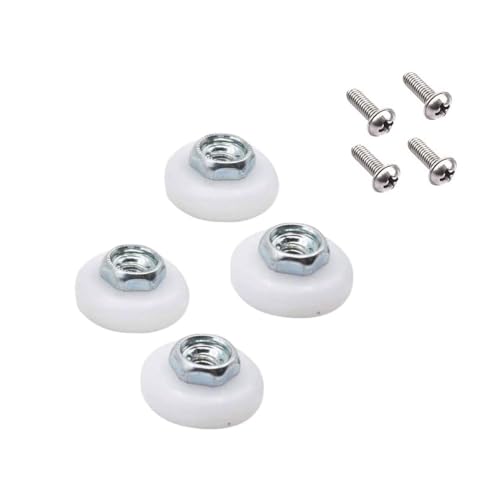
Sliding shower door rollers bear the door weight on the track. If they are worn, cracked, or damaged, the door may jump, drag, or feel uneven. Rollers with sealed bearings, in solid brass or stainless steel, run more smoothly and hold up best. If the wheel is flat-spotted or gritty, adjustment will only buy time.
Out-of-line track, guide, or opening
When the track is straight but the door still binds, check the bottom guide, wall mounting, and opening shape. Modern sliders often use a small bottom guide instead of a deep lower track, so a misaligned guide can push the panel off course. A bent track or out-of-square opening can defeat repeated roller adjustments.
Say your bypass door drags only near the latch side after cleaning. That pattern often points to roller height on one side, not a full track replacement. If the same door still rubs at both ends after a small adjustment, suspect a bent track or a panel that no longer sits square in the opening.
Sliding shower door troubleshooting table
This table helps you match the symptom to the likely cause, the first test, and the point where you should stop adjusting and move to parts replacement or pro help. Use it before turning any roller screw.
| Symptom | Likely cause | Quick test | Likely fix | Stop-point |
|---|---|---|---|---|
| Top rub | Upper roller set too low, dirty upper track, or top rail out of line | Lift the panel slightly by hand and slide it slowly | Clean the upper track, then raise the rollers a small amount | Stop if the rail is bent or loose at the wall |
| Bottom rub | Bottom guide misaligned, lower track debris, or panel sitting too low | Watch whether the panel drags only at the guide | Clean the guide, clear debris, then raise the door slightly | Stop if the guide is cracked or the opening is out of square |
| Center bind | Panel bow, uneven roller height, or warped alignment path | Slide the door halfway and note where resistance starts | Re-level the rollers in small turns and retest | Stop if the glass appears warped or the track is not straight |
| Jumpy roller | Worn wheel, damaged bearing, or dirty track | Look for skipping, grinding, or flat spots on the wheel | Clean the track and bearing area; replace the roller if noise remains | Stop if the wheel wobbles or the bearing feels rough by hand |
| Dragging at one end | Door out of level, rail sag, or wall mounting shift | Compare the door gap at both ends | Adjust the roller height to re-level the panel | Stop if the rail flexes or the mounting screws will not hold |
| Door won’t stay shut | Roller position off, stop missing, or seal interference | See whether the panel rolls back open after closing | Adjust the closing position and check stops and seals | Stop if the stop hardware is missing or the wall is out of plumb |
| Water leak after adjustment | Seal or sweep strip bent, gap changed, or panel moved off its intended line | Check for new gaps at the strike edge and bottom edge | Reset the rollers, then inspect and replace worn seals | Stop if the leak comes from a misfit opening, not the seal |
| Door off-track | Lifted too high, roller failure, or guide failure | Look for a wheel out of the channel | Set the panel back on the track and correct the roller height | Stop if the track is bent or the glass edge has chipped |
What tools do you need?
You do not need a large kit for most adjustments. Start with basic hand tools, cleaning supplies, and any replacement parts that match the door before you open hardware covers. The most useful tools are a screwdriver or hex key for adjustment screws, a soft brush, microfiber cloths, a non-abrasive cleaner, and a flashlight.
Basic hand tools for adjustment and removal
Most sliding door roller covers use screws or small fasteners. Keep the correct driver on hand so you do not strip the heads. If the door uses a stop block or guide bracket, a second screwdriver may be needed to hold one part while you loosen another.
Cleaning supplies for track and roller surfaces
Use a soft brush to remove loose grit, then wipe the track with a damp cloth and mild cleaner. Hair and hardened soap residue can sit in the corners where the roller never reaches. A vacuum with a narrow nozzle helps pull out debris before you wipe.
Replacement parts to have ready
Check the roller style, wheel material, finish, and glass thickness before you buy parts. Common slider glass thickness is 3/8 inch, or 10 mm, and some systems use 1/2 inch, or 12 mm, glass. Sealed-bearing rollers in solid brass or stainless steel are the better match when the original parts are worn out. Door seals and sweep strips are consumable wear parts, so inspect them before reassembly.
Suppose the door uses 1/2 inch glass and the replacement roller is listed for 3/8 inch glass only. It may clamp poorly or sit at the wrong height. Compatibility matters as much as the wheel diameter, especially on frameless and semi-frameless systems.
How do I clean the track first?
Clean the track before any adjustment. Dirt, hair, and soap residue can make a good roller seem bad, and hard-water scale can create the same drag as a misaligned panel. If the track is dirty, adjustment alone can push the door out of line and create a leak.
Upper or lower track cleaning steps
- Open the door until you can reach the full track length.
- Remove loose debris with a vacuum or dry brush.
- Wipe the channel with a damp cloth and a mild cleaner.
- Use a cotton swab for corners, screw recesses, and guide slots.
- Dry the track fully before sliding the door again.
If scale is baked on, repeat the wipe rather than scraping metal against the track. A straight track matters. If the rail is clean but visibly bowed, cleaning will not fix the rub.
Bottom guide cleaning and debris removal
Modern sliders often use a small bottom guide instead of a deep track, which reduces water- and debris-trapping channels. Clean that guide slot carefully, because grit there can push the panel sideways and make the rollers work harder. Remove sand, soap flakes, and hair from both sides of the guide.
When to use silicone-based lubricant
Use silicone-based lubricant on the track and roller bearings only after the surfaces are clean and dry. Do not use oil or grease that attracts dirt. Lubricant helps a clean, sound roller move more smoothly, but it does not correct a bent rail, worn wheel, or damaged bearing.
How do I adjust the rollers?
Adjust the rollers only after cleaning, inspection, and a quick check for loose hardware. The goal is to raise or lower the door in small turns until it runs evenly and clears the track, guide, and seals. Most roller adjustment positions respond in seconds, so make one change at a time and test after each turn.
Find the adjustment screws and set the roller position
Look along the top edge or roller cover for the adjustment screw. On many doors, the screw moves the roller up or down relative to the track. Mark the starting point so you can return to it if the door gets worse.
Raise or lower the door in small turns
Turn the screw a small amount, then slide the door from end to end. If the top edge rubs, raise the panel slightly. If the bottom edge drags, lower the pressure point or re-level the opposite side depending on the hardware layout. Keep both sides balanced on bypass and single-slider setups.
Test the door after each change
Slide the door through the full travel after every adjustment. Listen for grinding, jumping, or a change in drag near the midpoint. Check that the door closes to the intended stop without forcing the seal or sweep strip into the glass.
When should I replace parts?
Replace parts when cleaning and adjustment no longer solve the problem, or when the hardware shows visible wear. If the rollers are cracked, the bearing feels rough, the seal has hardened, or the track is bent, more adjustment is not the right answer. Repeated adjustment can mask a failing system for a while, but it will not restore damaged parts.
Signs the rollers are worn or cracked
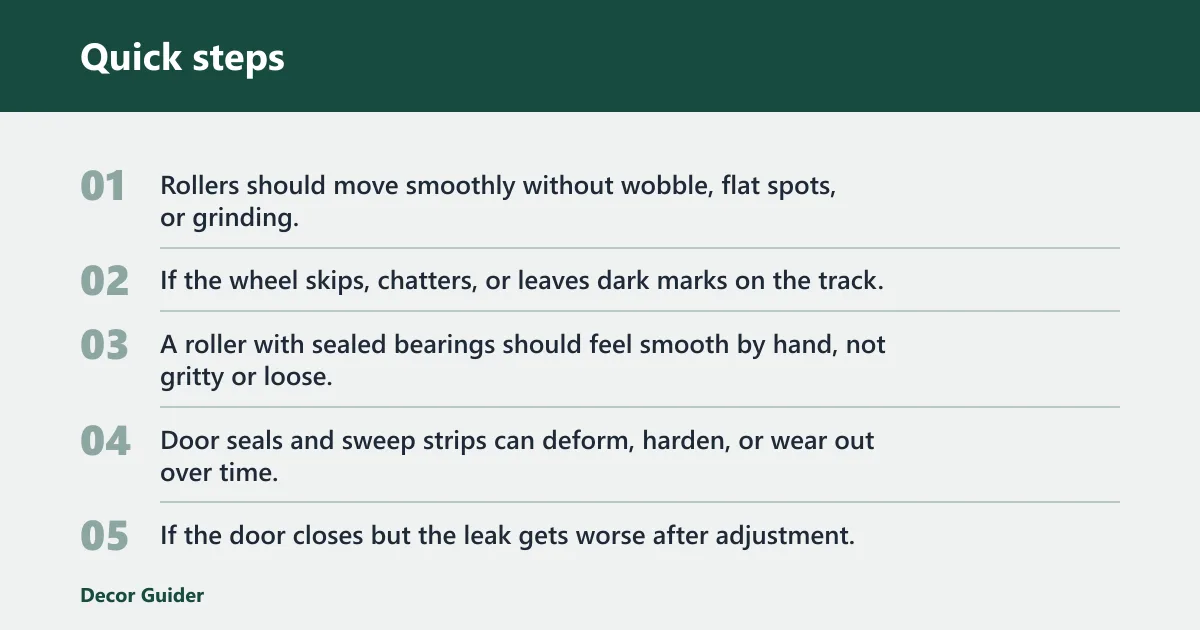
Rollers should move smoothly without wobble, flat spots, or grinding. If the wheel skips, chatters, or leaves dark marks on the track, replacement is likely the better fix. A roller with sealed bearings should feel smooth by hand, not gritty or loose.
When seals or sweep strips no longer work
Door seals and sweep strips can deform, harden, or wear out over time. If the door closes but the leak gets worse after adjustment, the seal may no longer sit against the glass or threshold correctly. Replace the worn strip instead of forcing the door tighter against it.
When the track, panel, or opening is the real problem
If the track is bent, the panel is warped, or the opening is out of square, roller adjustment will not hold. That is also true when mounting hardware keeps loosening or the wall is not even enough to keep the rail aligned. In those cases, repair may mean track replacement, new hardware, or a pro visit.
A common first-timer mistake is tightening the rollers until the door stops rubbing, then discovering the shower now leaks at the latch side. That usually means the panel was lifted too far for the seals and stops to do their job. The better fix is to return the rollers closer to level and replace the worn seal if needed.
How to adjust a sliding shower door
First clean the track, guide, and roller area. Then inspect the rollers, check that the track is straight and secure, and make small roller adjustments until the door travels evenly. If the door still rubs after that, replace worn rollers or seals before you keep turning the screws.
Frequently asked questions
How do I fix a sliding shower door that rubs?
Start by cleaning the track and the bottom guide, because dirt and soap residue are common causes of rubbing. Next inspect the rollers for cracks, flat spots, or rough bearings. If the door still drags, make small roller adjustments and stop if the track appears bent or the opening seems out of square.
Why is my sliding shower door hard to close?
A door that is hard to close often has dirty track surfaces, worn rollers, or a guide that may be pushing the panel off line. Check whether the drag happens all the way across or only near one end. If the door closes with force, the seals may also be too compressed or damaged.
How do you adjust sliding glass shower doors?
Find the roller adjustment screws, then turn them in small increments to raise or lower the panel. Test the door after each change so you do not over-correct. Sliding glass doors use the same basic method, but glass thickness and roller style must match the hardware before adjustment will hold.
How do I clean shower door tracks before adjusting them?
Remove loose debris first, then wipe the full track with a damp cloth and mild cleaner. Use a soft brush or cotton swab for corners and guide slots. Dry the track completely before sliding the door, and use silicone-based lubricant only after the surfaces are clean and dry.
When should I replace shower door rollers?
Replace the rollers when they are cracked, wobble, grind, or no longer hold alignment after adjustment. If the bearing feels rough or the wheel has flat spots, cleaning will not bring it back. Replacement is also the better move when the roller style no longer matches the glass thickness or finish.
Can a shower door be adjusted if the wall isn’t even?
Sometimes, yes, but only within a limited range. Roller adjustment can usually compensate for minor unevenness, but it cannot correct a wall that leaves the track significantly out of line. If the rail will not stay secure, or the opening is far from square, part replacement or pro help is the safer path.
Do I need to replace the whole sliding shower door?
Usually not. Most sliding-door problems are repairable in one visit, and typical service calls land between $150 and $400. Replace rollers, seals, or guides first when those parts are clearly worn. Replace the whole door only when the opening, track, and panel are all wrong for the space.
What causes a shower door to get stuck?
Common causes include dirty tracks, worn rollers, loose mounting hardware, bent track sections, and damaged seals. A stuck door may also be riding too low on the guide or too high on the rollers. The fastest way to narrow it down is to clean first, then test the door travel before touching the adjustment screws.
Products related to this article
Sponsored / affiliate links. As an Amazon Associate I earn from qualifying purchases. I may earn additional commission from eligible campaigns.