
How Much Weight Can a Dresser Drawer Slide Hold?
A dresser drawer slide can hold roughly 20 to 100+ pounds, but the safe limit is the lowest rating among the slides, drawer box, fasteners, and cabinet mounting. Ignore the drawer, not just the hardware, and the slide can sag, bind, or pull loose under normal use. Manufacturer spec sheets from brands such as Accuride, Blum, and KV commonly publish ratings per pair under defined test conditions, so the printed number is only a starting point. This guide shows how to judge real-world capacity from drawer construction, mounting quality, and the contents you plan to store.
What drawer slide weight ratings mean

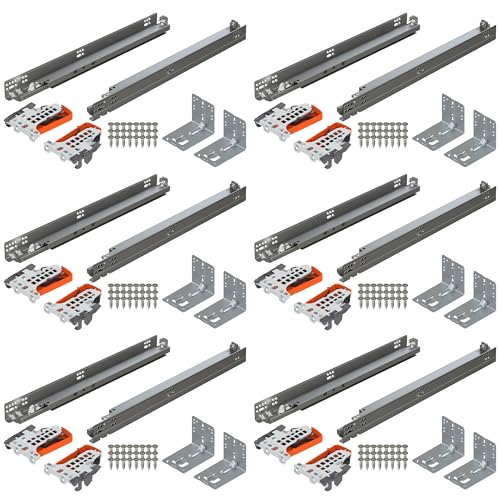
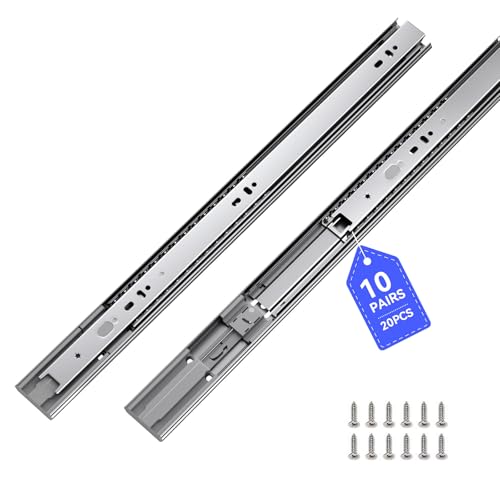
Most drawer slide ratings are listed per pair, not per single rail. That means a 100 lb rating usually means the two slides together are intended to support 100 lb under the manufacturer’s test setup. Common residential ratings are 75 lb, 100 lb, 150 lb, and 200 lb, but the same number does not always mean the same test method across brands. Catalog ratings can also reflect different extension lengths, mounting positions, and cycle-test assumptions, so a 100 lb side-mount slide from one brand is not automatically equivalent to another brand’s 100 lb slide.
Rated load versus real safe load
The printed rating is a catalog number, not the full answer. Capacity changes with slide type, slide length, drawer width, and how well the slides are mounted. A slide rated for 100 lb can still perform poorly if the screws are short, the cabinet sides are weak, or the drawer is front-heavy. Accuride, Blum, and KV product sheets typically specify that ratings apply to a pair of slides under a specific installation and test setup, which is why cabinet construction matters as much as the hardware.
Dynamic load is the load a slide sees while it is moving, not just while it is sitting still. Static load is the resting weight in a closed drawer. Opening, slamming, over-travel, and repeated cycles increase dynamic load and reduce practical capacity because they add impact, racking force, and wear that do not appear in the static number alone. That is also why manufacturers often publish cycle-life notes or load test methods: repeated use can lower the safe working limit long before the metal parts actually bend.
Which slide type can carry more?
Ball-bearing slides usually carry more weight than basic roller slides, but the mounting style and build quality still matter. Side-mount slides are common in dressers and desk drawers because they are simple to install and available in light-, medium-, and heavy-duty versions. Undermount slides hide under the drawer, but they require compatible drawer dimensions and rear brackets. In practical terms, common residential categories often fall into these broad ranges: light-duty roller or epoxy-coated slides around 20 to 75 lb, standard ball-bearing side-mount slides around 75 to 100 lb, heavy-duty side-mount slides around 100 to 150 lb, and reinforced or industrial ball-bearing models at 150 lb to 200 lb or more, depending on length and extension.
Ball-bearing slides
Ball-bearing slides are often steel and are commonly found in the roughly 75 lb to 200 lb range for residential ratings. Full-extension versions let you access the full drawer depth, and over-travel versions extend even farther. That extra travel can be useful, but it also creates more stress at the end of the stroke if the drawer is heavily loaded. Repeated cycle testing in manufacturer literature is important here because a slide that passes an initial static load test may still show higher wear or more play after thousands of open-close cycles.
Side-mount slides
Side-mount slides attach to the drawer box sides and the cabinet sides. They need side clearance, so you cannot swap them into every old dresser without measuring first. They fit many everyday furniture drawers well, but their real capacity depends on the drawer box stiffness and the quality of the screw bite. On older furniture, side-mount slides are often the easiest to retrofit, especially when the cabinet side is solid wood or plywood and can hold screws securely.
Undermount slides
Undermount slides mount under the drawer box, which keeps the hardware hidden. Their load capacity depends heavily on the brand and on drawer construction, because the drawer box must match the slide’s geometry. They often need rear brackets, so the cabinet depth and rear support layout matter more than many buyers expect. Blum’s undermount systems, for example, are designed around specific drawer dimensions and typically call for precise rear support and front boring locations to achieve the published performance rating.
How much load is really in the drawer?
The drawer load includes the contents plus the drawer box itself. That matters because a thick plywood or solid-wood drawer can weigh enough to change the math, especially in larger dressers. A drawer that is near the limit on paper may be over the limit once the box weight and daily pull force are included.
Front-heavy loading is harder on slides than evenly spread weight. A stack of files at the front edge, a heap of tools in the front third, or a dense item that shifts forward when the drawer opens adds stress to the slides and fasteners. Deep drawers create more stress because the load sits farther from the cabinet face. Long drawers also magnify leverage at the front, which is why a slide’s published rating should be reduced in practice when the drawer is unusually deep, frequently opened, or likely to be slammed shut.
How installation changes capacity
Mounting quality can cut or raise effective capacity by a wide margin. A slide rated for about 100 lb is only useful if the screws stay tight, the cabinet side does not crush, and the slides stay aligned. Small installation errors can create binding, which then adds drag and wear on every cycle. Accuride, Blum, and KV installation instructions all emphasize level mounting, square alignment, and the correct screw type because these details affect whether the slide can actually carry its rated load.
Fasteners and mounting substrate
Screw length and thread type affect holding power. Hardwood usually gives better screw bite than soft particleboard, while stripped holes reduce holding power fast. If the fastener is too short, or if the screw threads are wrong for the substrate, the slide can loosen even when the rating looks generous on paper. For hardwood or plywood, manufacturer instructions commonly accept wood screws that can bite cleanly without splitting the edge. For particleboard and MDF, coarse-thread screws, pilot holes, and sometimes confirmat screws or thread-inserts provide better holding power. In old particleboard dressers, the most common failures are stripped slide screws, crumbled side panels around the screw holes, and the drawer front sagging as the cabinet side compresses.
Clearance, brackets, and alignment
Side clearance has to match side-mount hardware, and undermount slides need the right drawer dimensions plus rear brackets. If the slide is slightly out of square, the drawer may rack when pulled, which shifts load to one rail. That uneven loading can make a 150 lb slide act like a much weaker system. Over-travel models can also create more end-of-stroke force, so alignment matters even more when the drawer is heavy or frequently slammed.
How to calculate total safe drawer load
Start with the slide pair rating, subtract the drawer-box weight, then apply a 20-30% safety margin. After that, reduce the result further if the drawer is long, front-heavy, or used frequently. In simple form:
Total safe drawer load = (slide pair rating – drawer box weight) × 0.70 to 0.80
If the drawer is especially deep, carries dense items near the front, or is opened many times a day, stay closer to the 30% margin. If the cabinet is particleboard, the screws are already worn, or the slides are over-travel or full-extension models used hard, be conservative. Example: a 100 lb pair rating with a 10 lb drawer box leaves 90 lb gross; a 20% margin brings that to 72 lb, and a 30% margin brings it to 63 lb before any added reduction for front-heavy loading or frequent use.
Drawer slide load decision table
Use this table as a practical starting point, not a guarantee. The recommended rating assumes a typical pair of residential slides, normal drawer use, and a drawer box that is sound, straight, and well fastened.
| Common drawer use | Typical load pattern | Recommended slide rating | Safety margin | Risk flags for weak drawer boxes |
|---|---|---|---|---|
| Socks | Light, mostly even weight | 75 lb | Keep actual load below 50 lb | Thin bottom panel, loose front joints, stripped side screws |
| Shirts | Light to moderate, usually spread out | 75 lb to 100 lb | Keep actual load below 60 lb | Particleboard sides, sagging bottom, poor alignment |
| Linens | Moderate, often bulky and compressible | 100 lb | Keep actual load below 70 lb | Front-heavy stacking, weak rear support, loose mounting screws |
| Files | Dense, often front-loaded and repetitive use | 150 lb | Keep actual load below 100 lb | Overextended slides, narrow drawer box, soft particleboard cabinet sides |
| Tools | Dense, shifting, and impact-prone | 150 lb to 200 lb | Keep actual load below 120 lb unless construction is reinforced | Drawer bottom sag, cracked joints, screw holes that have widened |
A common first-timer mistake is to choose the rating from the heaviest item alone. A drawer full of tools may weigh 90 lb, but if the box is made from thin particleboard with loose screws, the safe answer may be to reduce the load or upgrade the drawer construction before replacing the slides. Another common mistake is to ignore the drawer box weight itself, which can consume a meaningful part of the usable capacity on small dressers.
Can you keep an old dresser drawer safe?
Yes, but only if the slide, the drawer box, and the cabinet are all still sound. If the drawer binds, dips at the front, or pulls away from the cabinet side, the problem may be overload or wear. In many older dressers, the drawer box fails before the slide rating is reached.
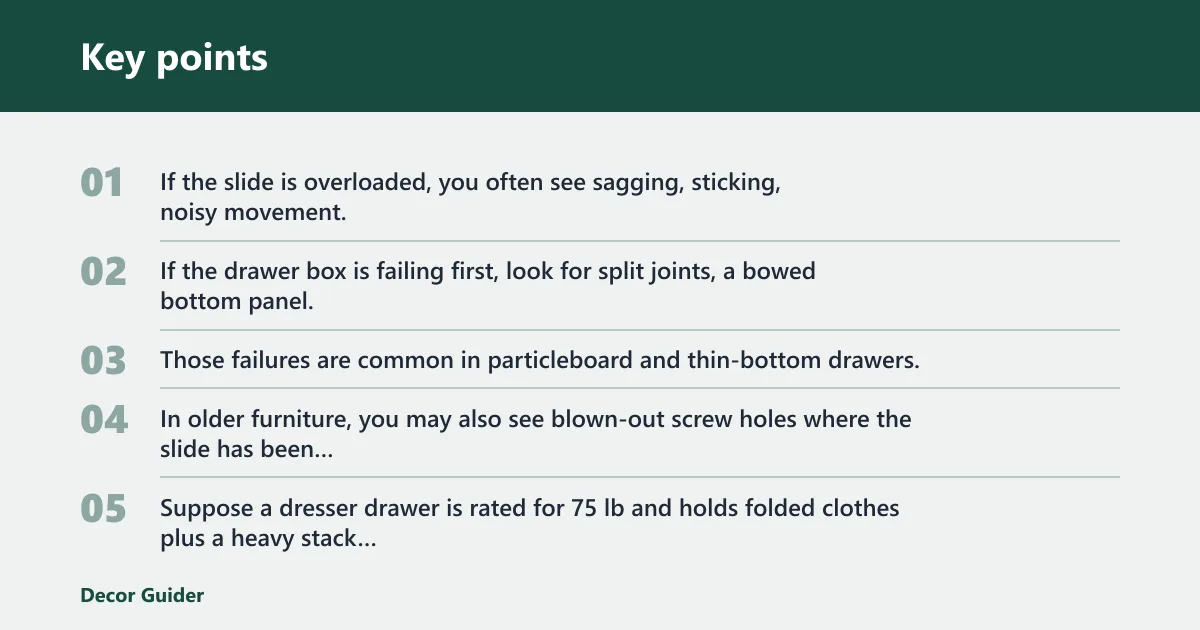
If the slide is overloaded, you often see sagging, sticking, noisy movement, or screws backing out. If the drawer box is failing first, look for split joints, a bowed bottom panel, cracked corners, or a front rail that is separating from the side. Those failures are common in particleboard and thin-bottom drawers. In older furniture, you may also see blown-out screw holes where the slide has been reinstalled several times, which lowers practical capacity even if the metal slide itself is still intact.
Suppose a dresser drawer is rated for 75 lb and holds folded clothes plus a heavy stack of books near the front. If the drawer starts scraping only when open halfway, the load is not being carried evenly. Reducing the front weight may help, but worn mounting holes may still require repair or replacement.
When to reduce load versus replace hardware
Reduce the load if the slides are intact, the screws are tight, and the drawer box is otherwise solid. Replace the hardware if the rating is clearly too low for the contents, or if the slides have lost smooth travel. Upgrade the drawer box if the bottom sags, the joints split, or the mounting points keep stripping out. If the dresser is particleboard and the drawer front keeps dropping under load, reinforcing the box and re-screwing into sound material is usually more effective than simply choosing a heavier slide.
What to check before you upgrade slides
Before buying heavier hardware, measure the drawer depth and the side clearance. Match the mounting style to the cabinet, then confirm that the new slide length fits the available depth. A longer slide may need more cabinet room and better mounting support than the old one. If you are unsure about fit, measure slide length and identify your drawer slide type before buying replacement hardware.
Choose a rating with margin, not just a higher number. Heavier slides do not fix weak wood or stripped fasteners. They also do not compensate for repeated slamming, which can reduce service life even when the static load looks acceptable.
- Measure drawer depth, width, and side clearance.
- Check whether the existing hardware is side-mount or undermount.
- Inspect the drawer box for split joints, sagging bottoms, and loose corners.
- Look at the cabinet sides for particleboard damage or stripped screw holes.
- Estimate the loaded drawer weight, including the drawer box itself.
- Choose a slide rating that leaves a cushion for repeated use and impact.
Frequently asked questions
How much weight can a dresser drawer slide hold?
Most residential dresser drawer slides are commonly rated in the roughly 75 lb to 200 lb per pair range, though lighter or heavier models can also be found. The safe limit is usually lower than the label once you account for drawer box weight, mounting quality, dynamic load, and how the drawer is used. Front-heavy drawers need extra caution.
How do I know the weight rating of my drawer slides?
Look for the manufacturer name, part number, or stamp on the slide itself, then check the product sheet. If the marking is missing, measure the slide length and identify the type, but do not assume all 22-inch or 18-inch slides share the same rating. Brand specs can differ.
Do ball-bearing slides hold more weight than side-mount slides?
Ball-bearing slides often carry more weight than basic roller designs, but side-mount is a mounting style, not a strength category by itself. A side-mount ball-bearing slide may be stronger than an undermount model, or weaker, depending on the brand, length, extension type, and cabinet installation. Look to the specific manufacturer’s pair rating and installation instructions rather than the style name alone.
Can I use heavier slides on an old dresser drawer?
Sometimes, but only if the drawer box, cabinet sides, and clearance can support the new hardware. Heavier slides do not solve cracked joints, sagging bottoms, or stripped holes. If the old dresser is particleboard or has weak corners, reinforce the structure before upgrading the slides. Common fixes include re-gluing loose joints, adding a new drawer bottom, using longer or better-matched screws, and repairing stripped holes with plugs or inserts where appropriate.
What happens if I overload a drawer slide?
An overloaded slide may sag, bind, or pull screws out of the cabinet. Repeated overloading also speeds up wear on the ball bearings or rollers and can bend the rails. In a weak drawer, the box itself may fail first, especially at the bottom panel or front joints. Dynamic loading from slamming or repeated cycles can make the failure show up sooner than the static weight would suggest.
Do soft-close drawer slides reduce weight capacity?
Not by default. Soft-close is a motion feature, not a weight rule. The capacity depends on the slide’s design, length, extension, and installation quality. Some soft-close slides are rated just as high as non-soft-close versions, but you still need the same clearance and drawer support checks. Follow the manufacturer’s load and cycle guidance, especially on long drawers and front-heavy contents.
Products related to this article
Sponsored / affiliate links. As an Amazon Associate I earn from qualifying purchases. I may earn additional commission from eligible campaigns.