Best Chafing Dishes for Keeping Holiday Buffets Warm
Choose about a full-size 8-quart chafing dish for roasts, casseroles, and large sides; use half-size pans for sauces, vegetables, or two smaller dishes; electric warmers are often used when steady heat is needed without an open flame. The wrong setup dries food out, cools it too fast, or takes over the table. This guide compares chafing dishes for holiday buffets by menu type, size, fuel or power, and the space each setup needs. For many indoor holiday spreads, a divided electric server is often a strong starting point because it offers controlled heat, separate pans, and a cleaner self-serve flow.
Quick picks for holiday buffets


Start with the menu, then match the warmer to the food on the table. For indoor side dishes and sauces, a divided electric unit gives you the most flexibility. For longer service away from an outlet, fuel-based sets still make sense. For one-time cleanup, disposable kits are hard to beat.
- Best for indoor sides: Electric divided-pan server with adjustable temperature control and separate wells for mashed potatoes, gravy, or vegetables.
- Best for long service: Fuel-based full-size chafer with water pan, lid, and frame for steady holding during an all-evening buffet.
- Best for sauces and accompaniments: Divided-pan warmer with 2-pan or 3-pan layout to keep flavors separate.
- Best for cleanup speed: Disposable chafing dish kit for a short guest list or one-time holiday event.
Best electric model for indoor side dishes
An electric buffet server is the top fit when you want controlled heat inside a home. One divided-pan model uses 1 full-size pan and 2 half-size pans, runs at 400W, and has a 9-quart capacity, which makes it a practical match for mashed potatoes, stuffing, and vegetables that need different holding zones.
Best fuel-based pick for longer service
A fuel-based chafer works well when service must continue without an outlet nearby. Look for the traditional setup with a water pan, food pan, lid, and frame, because that format is built for longer holding and reusable buffet service. It does require monitoring fuel level so the heat does not taper off mid-service.
Best divided-pan warmer for sauces and sides
For gravy, cranberry sauce, or a pair of side dishes that should not mix, a divided-pan buffet warmer is the cleaner solution. Models commonly come as 2-pan or 3-pan layouts, and the smaller wells reduce flavor transfer while keeping self-serve traffic organized.
Best disposable kit for one-time cleanup
If the goal is fast teardown after a party, a disposable chafing dish kit is the easiest route. These sets are often sold in half-size or full-size formats and may include pans, racks, utensils, and fuel cans. They are convenient, but they are less forgiving if you need precise temperature control for a long meal.
Holiday buffet matcher table
This table maps food to warmer format, not the other way around. Use it to match holiday dishes to the pan shape, capacity, lid style, and common failure mode before you buy.
| Dish type | Recommended warmer type | Ideal tray size/quart range | Do divided pans help? | One failure mode to avoid |
|---|---|---|---|---|
| Mashed potatoes | Electric divided-pan server or full-size chafer with lid | 5 qt to 8 qt | Yes, if you also serve gravy or a second side | Dry edges from leaving the lid open too long |
| Stuffing | Full-size chafing pan setup | 8 qt to 12 qt | No, unless you want two stuffing variations | Overcooking the top layer until it firms up |
| Gravy | Divided-pan buffet warmer | 2.5 qt to 5 qt | Yes | Condensation dripping back and thinning the texture |
| Cranberry sauce | Divided-pan warmer or small electric server | 2.5 qt to 5 qt | Yes | Heat set too high, which can scorch the edges |
| Casseroles | Full-size stainless steel chafer | 6 qt to 9 qt | No | Center stays hot while corners dry out |
| Roasts or sliced mains | Full-size chafing dish | 8 qt to 12 qt | No | Lid left off, which speeds cooling and surface drying |
| Two side dishes at once | Electric divided-pan server | Two 2.5 qt pans or 1 full-size plus 2 half-size pans | Yes | Uneven fill levels that make one side overheat first |
Which chafing dish fits your menu?
Match the warmer to the food first. Dense casseroles need broader pans and steadier heat, while sauces and condiments need smaller wells that hold temperature without much exposed surface area. The right layout keeps holiday food warm without turning it leathery or watery.
Mashed potatoes, stuffing, and casseroles
For these foods, choose a full-size pan or a 9-quart electric divided server if you are splitting the menu. A full-size rectangular buffet format fits large portions and works well for traditional holiday sides that need a broad surface and a shallow depth. Stainless steel is the usual material because it is reusable and easy to clean.
Gravy, sauces, and other small-volume foods
Smaller foods do better in divided pans or compact buffet servers. Elite Gourmet’s buffet server uses three 2.5-quart trays and runs at 300W, which is a useful size pattern for gravy, cranberry sauce, or two sauces plus one vegetable. Smaller pans reduce waste and help you replenish only what runs low.
Main dishes and large side portions
For sliced turkey, ham, or a big tray of roasted vegetables, use a larger full-size setup. A traditional catering chafer set with 8-quart trays suits bigger holiday portions, while a 12-quart capacity gives more room if guests serve themselves over a long window. The wider the tray, the more carefully you need to manage moisture and lid use.
Electric vs fuel-based chafing dishes
Electric chafing dishes are usually the better home choice when you have outlet access and want tighter temperature control. Fuel-based chafers still matter for longer service, outdoor areas, or spaces where cords would create a mess. Each option can work well, but each fails in a different way.
When electric makes more sense at home
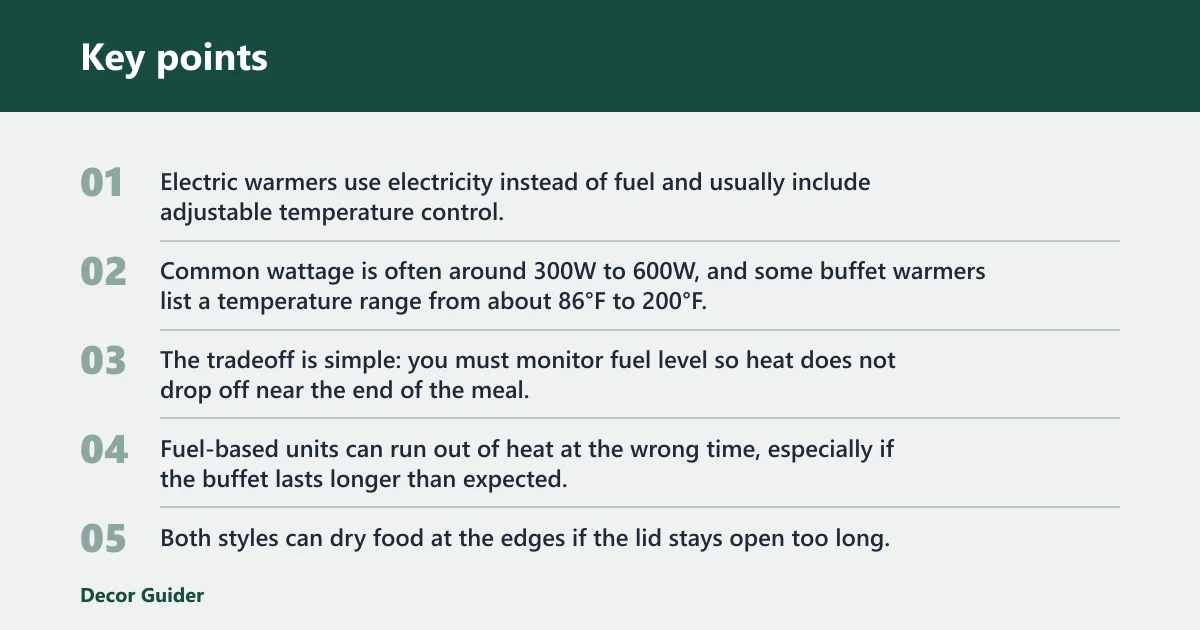
Electric warmers use electricity instead of fuel and usually include adjustable temperature control. That makes them a better fit for indoor holiday buffets where steady heat matters more than open-flame portability. Common wattage is often around 300W to 600W, and some buffet warmers list a temperature range from about 86°F to 200°F.
When fuel is the better fit
Fuel-based chafing dishes are a good match when you need reusable buffet service away from outlets or want a simpler setup line. They often include a water pan, food pan, lid, and frame, and they work well for longer service periods. The tradeoff is simple: you must monitor fuel level so heat does not drop off near the end of the meal.
Where each option can fail
Electric units can fail if the outlet load is already crowded or if the cord forces the warmer into an awkward spot on the table. Fuel-based units can run out of heat at the wrong time, especially if the buffet lasts longer than expected. Both styles can dry food at the edges if the lid stays open too long.
Picture a 10-person holiday buffet with mashed potatoes in one pan and gravy in another. A divided electric server keeps both at serving temperature, but a single full-size fuel chafer would force you to spread the sauce across a broader surface, which raises the risk of skinning and over-thickening.
Top chafing dish types to consider
The material and pan layout matter as much as the heat source. Stainless steel remains the standard because it resists rust and cleans easily. Disposable kits are useful for speed, but they trade away durability and control.
Stainless steel chafing dish
A stainless steel chafing dish is the most reusable option for holiday hosts who entertain more than once a year. It comes in polished, mirror, or decorative finishes, and it is common in both electric and fuel-based styles. If cleanup and long-term use matter, this is usually the safest buy.
Full-size chafing pan setup
A full-size chafing pan is the right format for larger-volume side dishes or mains. It gives you a rectangular buffet layout that fits traditional serving lines and makes refills easier. One gold stainless-steel buffet chafer set is listed as four large-capacity chafing dishes, while another traditional catering set uses 8-quart trays.
Divided-pan buffet warmer
A divided-pan buffet warmer keeps flavors separated, which is useful for holiday accompaniments. One electric divided-pan server uses 1 full-size pan and 2 half-size pans, while another compact buffet server uses three 2.5-quart pans. That layout is ideal when you want multiple foods on one cord and one footprint.
Disposable chafing dish kit
A disposable chafing dish kit is worth considering when the event is short and cleanup speed matters most. One disposable buffet set may include three full-size buffet stations, and another option is described as a 33-piece party buffet set. These kits are convenient, but they are not the first choice for long, slow holiday service.
What size chafing dish do I need for a holiday buffet?
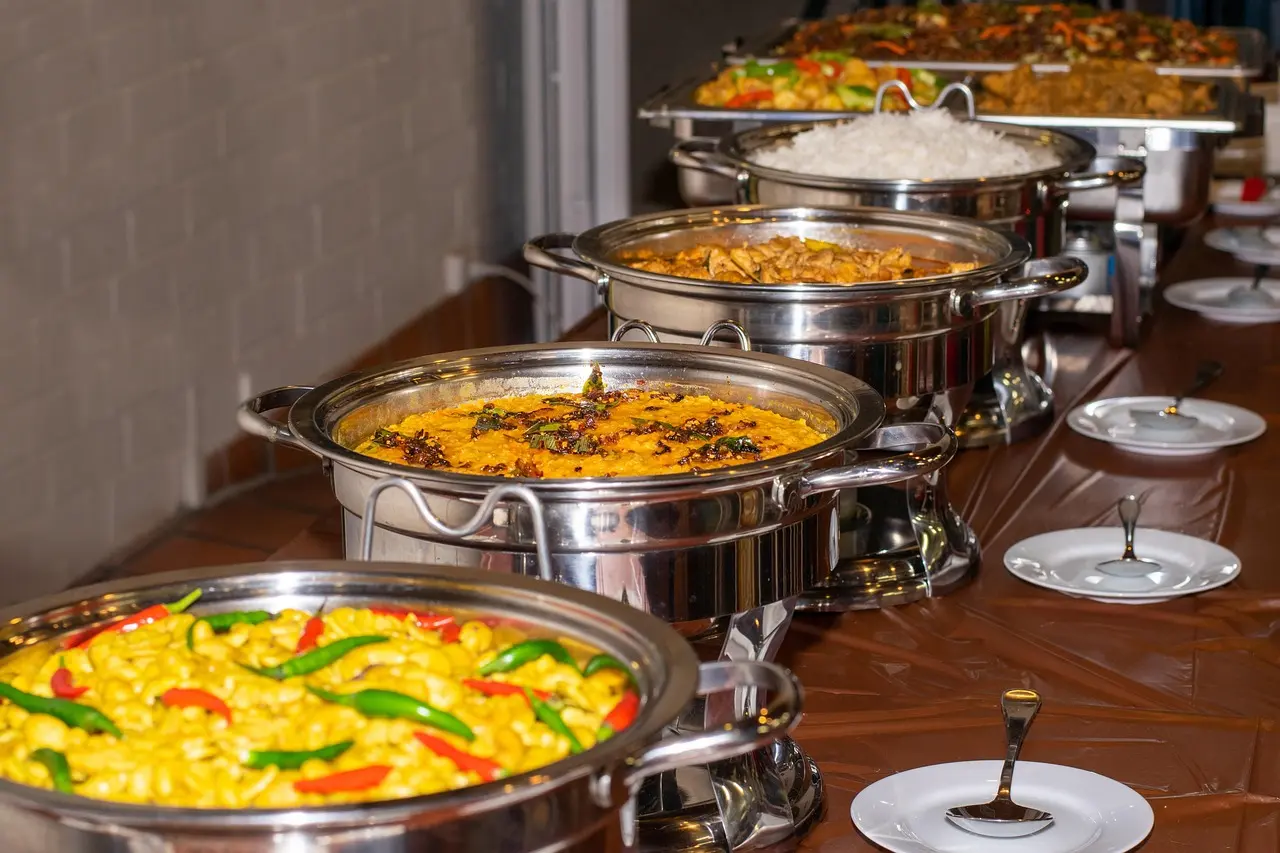
Start with the food you plan to hold, then match the pan depth and total capacity. Small sauces usually fit 2.5-quart trays, while family-size sides often land in the 5-quart to 8-quart range. Large casseroles, roasts, and main dishes are better served in 8-quart to 12-quart formats.
Capacity in quarts and serving fit
Quart ratings are the quickest sizing signal, but they only work if you think about shape and menu style too. A 6-quart chafer can handle a medium side dish, while a 9-quart mirror-finish option gives more room for foods that need gentle stirring. A 12-quart pan is better when guests serve themselves over time and the food level drops steadily.
Lid style, water pan, and heat retention
Lids matter because they hold moisture and slow heat loss. Clear, glass, and stainless steel lids each have tradeoffs, and some versions use vented lids or roll-top access for easier self-serve use. A water pan is equally important because it softens the heat transfer and helps prevent scorching below the food layer.
Table space, outlet load, and serving-line layout
Holiday homes rarely have endless counter space. Check the warmer footprint before you buy, especially if you are lining up several dishes. One large warming tray listed at 40×14 inches needs enough room for safe placement, room for serving utensils, and a line that keeps traffic moving without crowding the table edge.
- Measure the table first. Leave room for plates, tongs, and a safe gap from the edge. If the warmer crowds the table, guests will bump lids and spill food more often.
- Check your outlet plan. Electric servers need a real plug location, not an extension cord tangle behind the drink station. Keep the cord route short so the warmer sits where guests can reach it cleanly.
- Match pan count to menu. One full-size pan suits one main side, while a divided unit suits separate foods that share similar heat needs. This keeps refills organized and prevents one dish from taking over the setup.
How do you keep multiple holiday side dishes separate in one warmer?
Use a divided-pan buffet warmer when you want flavors kept apart inside one unit. A 2-pan or 3-pan layout works well for gravy, vegetables, and cranberry sauce, especially if each food has a different refill rhythm. It also shortens the serving line because guests need one station instead of three.
A common first-timer mistake is filling one compartment far lower than the others. That smaller portion overheats at the edges first, while the fuller pan stays stable longer. Keep the fill levels as even as possible, or use only one section for a hotter-running item like gravy.
How to keep food warm without drying it out
Hold food with gentle heat, not maximum heat. Water under the food pan, a closed lid between serving turns, and moderate temperature control are the main tools. Most dry-out problems come from too much exposed surface, too much heat, or too much lid lifting.
Water pan setup and moisture control
Fill the water pan before the food goes in, then monitor it during service. The water acts as the buffer that keeps heat even under the pan. If the pan goes dry, the food above it is more likely to hot-spot, scorch, or form dry edges.
Lid habits during self-serve service
Keep the lid closed whenever the dish is not actively being served. A dome cover helps trap moisture, while roll-top access can speed service without leaving the pan open for long. If guests are serving themselves for an hour or more, a lid that opens easily matters almost as much as the heat source.
Common setup mistakes to avoid
Do not overfill a pan, because the center can stay hot while the edges dry out. Do not underfill a fuel chafer and expect even heat, because the food level may sit too low above the warm water. And do not forget fuel timing on a fuel-based unit; runout usually shows up only when the buffet is already busy.
Suppose you are serving stuffing in a full-size pan and gravy in a 2.5-quart insert. Keep the stuffing covered and the gravy closer to the lid opening, then stir the gravy more often. That simple change reduces skinning on the sauce without forcing the stuffing to sit under constant heat.
Frequently asked questions
Are electric chafing dishes better than fuel chafers for home use?
Usually, yes, if you have outlet access and want steadier heat. Electric chafers use adjustable temperature control and work well for indoor holiday buffets. Fuel chafers still make sense when you need portability or longer off-grid service, but they require more monitoring during the meal.
How long can a chafing dish keep food warm safely?
The safe holding window depends on the food, heat source, and how often the lid opens, so there is no single universal time to trust. For holiday service, keep hot food hot, keep it covered, and monitor temperature rather than guessing by appearance. If food is cooling off, transfer it out instead of stretching the holding period.
Do chafing dishes come with pans and lids included?
Many do, but not all. Fuel-based sets often include a water pan, food pan, lid, and frame, while some electric servers use fixed trays or divided inserts. Check the listing carefully before buying so you do not end up short a lid, insert, or fuel holder on party day.
What is the best chafing dish for small holiday gatherings?
A compact electric unit with three 2.5-quart pans is a strong choice for small gatherings because it handles several side dishes in one footprint. If you only need one main dish, a single 5-quart to 6-quart pan may be enough. For a fast teardown, a disposable kit can also fit a smaller guest list.
Are disposable chafing dishes worth it for one-time holiday events?
Yes, if cleanup time matters more than long-term durability. A disposable chafing dish kit is useful for short events, especially when you need a full-size setup without washing racks and pans afterward. It is less useful if you need tight temperature control or repeated refills over a long buffet.
Products related to this article
Sponsored / affiliate links. As an Amazon Associate I earn from qualifying purchases. I may earn additional commission from eligible campaigns.