Best Holiday Bakeware for Cookie Exchanges (2026): We Compared
For cookie exchanges and dessert tables, start with about two rimmed half-sheet pans per batch, two cooling racks, and stackable containers sized to the finished cookie count plus about 10% extra for breakage or samples. Without the right bakeware, batches bake unevenly, cooling slows, and transport turns fragile cookies into crumbs. This guide covers the pans, racks, liners, storage boxes, and travel containers that fit common holiday batch sizes and handoffs.
Quick comparison
| Product | Badge | Best for | Price | ||
|---|---|---|---|---|---|
 |
Commercial Quality Baking Sheet Pan SetUmite Chef | Our pick | 18 x 13 in · 2-pack · natural aluminum | $21.99
Price as of 27 Nov 2026
|
View |
 |
CURTA 6 Pack Aluminum Sheet PanCURTA | Upgrade pick | 18 x 26 in · 6-pack · full-size aluminum | $99.99
Price as of 27 Nov 2026
|
View |
 |
PowerKing 3 Tier Cooling RackPowerKing | Also great | 15.7 x 10 in · 3-tier · foldable black | $14.44
Price as of 27 Nov 2026
|
View |
 |
Plastic Storage Containers with LidsSIGNORA WARE | Pair with it | 3L · 2-pack · airtight lids | $23.99
Price as of 27 Nov 2026
|
View |
 |
Cupcake Carrier 24 CountHYLCWTH | Pair with it | 24-count · 2-layer · insulated bag | $34.99
Price as of 27 Nov 2026
|
View |
For most cookie exchanges, the best first buy is a pair of rimmed half-sheet pans because they control spread, move cleanly from oven to rack, and survive transport better than flat trays. If the menu includes brownies, bars, and cookies together, cooling space becomes the pressure point first, then storage.
How we chose
The picks below come from manufacturer specifications, listing details, and published buyer feedback. The focus stayed on rimmed pans, cooling capacity, stackable storage, and transport features that matter for batch baking and gifting.
The list favors bakeware that fits common holiday cookie planning, including decorated cookies, sturdier drop cookies, and more delicate sandwich styles. If a model leaves out a useful spec, check the manufacturer’s listing for your model.
Umite Chef half-sheet pans: best for cookie exchanges
- Bare aluminum for even heat conduction
- Heavy-duty build helps resist warping
- Encapsulated rim adds strength
These 18 x 13 inch aluminum pans suit cookie exchanges because they give you a familiar half-sheet format, a reinforced rim, and a two-pack count that matches the “two pans per batch” planning rule. They fit large holiday bakes where you need repeatable tray space and a clean transfer from oven to rack.
The standout feature is the bare aluminum build, which the listing says helps with even heat conduction. The encapsulated rim adds strength, so the pan is less likely to flex while loaded with dough or while you move it across a counter.
The drawback is simple: two pans are enough for one active batch plan, but not for very large exchanges or mixed dessert tables that need faster turnover. If you are baking for 50 to 100 guests, you may still need to rotate batches and cool cookies in waves.
PowerKing 3-tier cooling rack: best for fast turnaround
- Three tiers provide extra cooling space
- Foldable design stores compactly
- Stainless steel with non-stick surface
This foldable three-tier rack is the strongest fit when cooling space is the bottleneck. It helps when you bake multiple rounds of standard cookies, or when the menu includes brownies and bars that need airflow before boxing.
The key advantage is vertical capacity. Three tiers let you cool more baked goods without covering the whole counter, and the foldable frame stores more easily than a fixed rack setup.
The tradeoff is size. The listed surface is 15.7 x 10 inches, so it works better for batches being managed in stages than for very large trays that need wide, uninterrupted cooling space. Check the manufacturer’s listing if you need to confirm fit for your tray size.
SIGNORA WARE storage containers: best for transport and gifting
- Airtight lids help keep baked goods fresh
- BPA-free food-grade plastic
- Stackable design saves storage space
These 3L airtight containers are the most useful pick for decorated cookies that need to leave the kitchen intact. They suit hosts who want stackable storage, a tighter seal, and a straightforward way to split cookies into gift bags or take-home boxes.
The strongest point is the airtight lid paired with the stackable design. That combination helps with freshness and keeps boxes from sliding around in the fridge, car, or pantry.
The drawback is capacity planning. Two containers can be enough for smaller exchanges, but cookie-only events for 25 guests or more can outgrow a simple two-pack unless you package in layers or use several containers. For fragile icing, shallow single-layer packing is the safer move.
CURTA full-size sheet pans: best for large batches
- Six pans suit large-batch baking
- Reinforced wire rims help resist bending
- Heavy-gauge aluminum supports even heat distribution
These 26 x 18 inch full-size pans fit hosts who are running a high-volume bake and have an oven that accepts full-size trays. The six-pan pack is the biggest capacity option in this group, so it makes sense for large holiday prep or multi-pan batch work.
The appeal here is throughput. Six pans give you more room to stage dough, cool trays, or rotate batches when the event count climbs.
The drawback is compatibility. Full-size pans do not fit every home oven, so this is only a smart buy if your oven and storage space are built for them. Check the manufacturer’s listing for your model before you buy.
HYLCWTH cupcake carrier: best for fragile decorated cookies
- Holds 24 cupcakes in two trays
- Insulated bag helps keep items chilled
- Includes piping set and cupcake liners
This two-layer carrier is the best fit when the priority is keeping decorated cookies separated during transport. The trays and handles are useful for events where royal icing, piped borders, or stacked cookies need a more controlled trip than a loose storage box can provide.
The insulated bag gives it an edge for transport, especially when the cookies are going to a party venue or a longer handoff. The included trays also help organize pieces by size.
The drawback is that it is shaped around cupcake transport, so cookie shapes that are flat and broad may not use the space as efficiently. It works better for cookies with height, such as sandwich cookies or thicker decorated rounds, than for thin, fragile wafers.
Cookie bakeware planning table
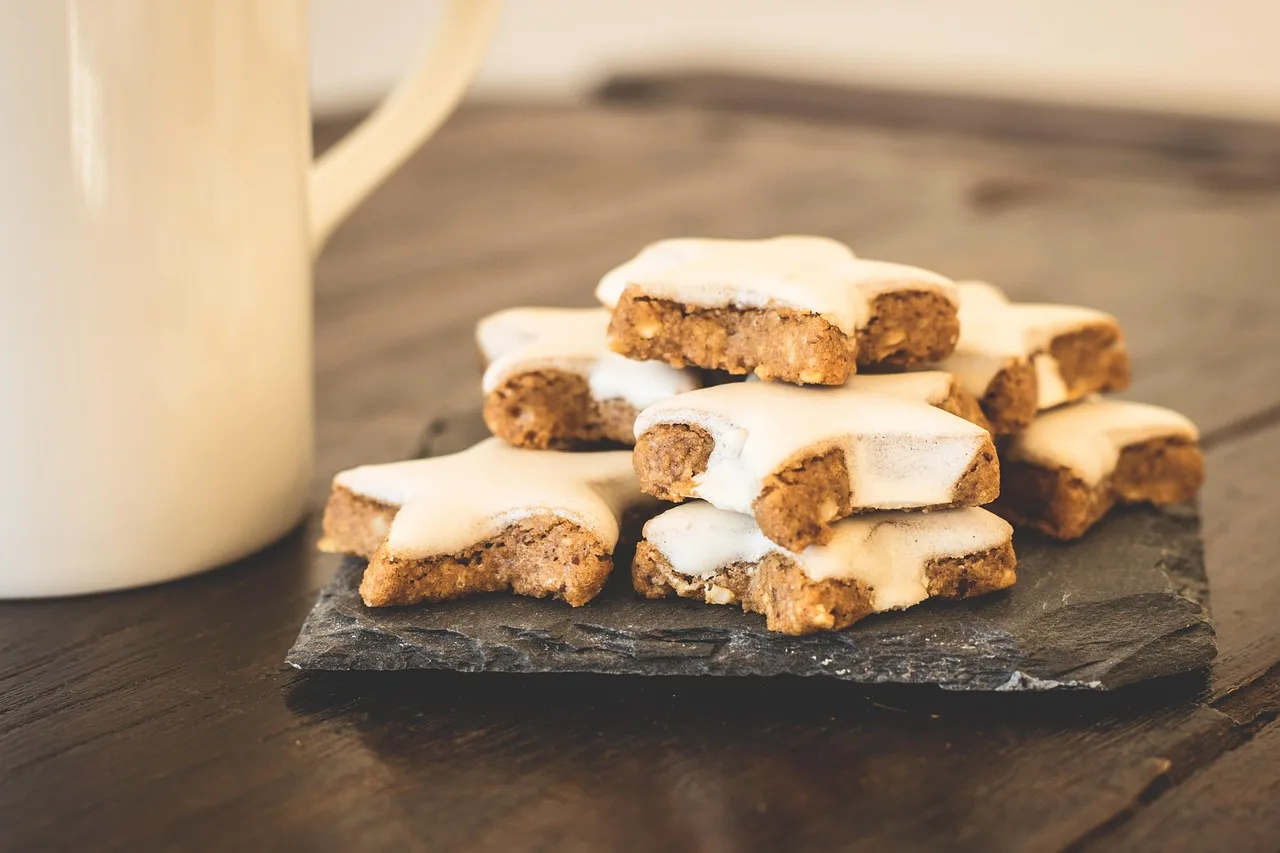
This table turns guest count into bake planning. It uses the standard sugar-cookie reference yield of about 24 cookies at 2.5 inches from a recipe with 3 cups flour and 1 cup butter, then adds the recommended 10% safety buffer for breakage, imperfect edges, and packing losses.
| Guests | Planning type | Cookies needed with 10% buffer | Standard batches needed | Sheet pans needed | Estimated oven rounds | Cooling space to plan | Container or storage need |
|---|---|---|---|---|---|---|---|
| 10 | Cookie exchange or cookie-focused event | 55 to 66 | 3 batches of standard cookies | 6 half-sheet pans total | 3 rounds | Room for 2 pans at a time, then 1 round of overflow cooling | 2 shallow containers or bags for single-layer packing |
| 25 | Holiday dessert table, cookie-led | 83 cookies | 4 batches of standard cookies | 8 half-sheet pans total | 4 rounds | Room for 2 pans at a time, plus a second cooling stage | 4 shallow containers or several take-home bags |
| 50 | Cookie exchange or large dessert table | 165 to 330 | 7 to 14 batches, depending on whether you plan 4 or 6 cookies per person | 14 to 28 half-sheet pans total | 7 to 14 rounds | At least 2 racks, with one full cooling wave per batch | 8 or more containers, or a mix of boxes and take-home bags |
| 100 | Cookie exchange with take-home bags | 440 to 660 | 19 to 28 batches, depending on the serving target | 38 to 56 half-sheet pans total | 19 to 28 rounds | Several rack tiers or repeated rack cycles across the day | Multiple containers, with single-layer packing for decorated cookies |
For the 25-guest line, the guide’s 75-cookie target sits between a cookie-only event and a mixed spread. That number is a useful midpoint when cookies are the main sweet, but brownies, bars, or a dessert board are also present.
Cookie size changes the math fast. Mini cookies yield 36 per batch, standard cookies yield 24, large cookies yield 14, and giant cookies yield 8, so the same guest count can jump from a few trays to a very long baking day if you choose a bigger format.
Rimmed half-sheet pans: best overall for cookie exchanges
Rimmed pans matter because they hold dough in place, keep hot trays easier to carry, and make it simpler to move cookies from oven to rack without edge spill. For exchange baking, that rim is more useful than a flat tray because you are handling multiple batches, not a single decorative tray.
- Match pans to batches. Use two half-sheet pans for each batch so one tray can bake while the other is lined and loaded. That keeps the rhythm steady when you are working through 3, 4, or more rounds.
- Use parchment or a liner. Line each pan before loading dough so cookies release cleanly and browned bottoms are less likely. It also reduces cleanup when you are baking several rounds.
- Keep the edge clear. Leave a little room from the rim so dough or spread does not glue itself to the side. That matters more with soft or spread-prone doughs.
Say your menu includes 25 guests, brownies, and bars. The cookie count can stay near 75, but cooling space becomes the issue faster than pan count because brownies need time before slicing and cookies need open air before stacking.
Cooling racks: best for fast turnaround
Cooling racks matter most when the next batch cannot wait. If the kitchen can fit only a few hot pans at once, cooling capacity becomes the limiter even when the oven can handle more dough.
- Set rack space first. Reserve enough open surface for one batch to cool without crowding. For standard cookies, that means planning for a full batch of 24 cookies or whatever your recipe yields.
- Stage the next pans. Keep a second rack area ready before the first batch leaves the oven. This shortens the time between rounds and helps decorated cookies keep their shape.
- Separate soft and crisp cookies. Use the racks for cookies that need airflow, then move sturdy cookies into storage once they are fully set. Fragile icing should not be boxed warm.
A common first-timer mistake is to forget to choose sturdy sheet pans and cooling racks that can handle repeated batches of holiday cookies for a cookie exchange. The oven may handle two pans, but if there is no rack room, the cookies keep steaming on the counter and the schedule slips.
Storage containers: best for transport and gifting
Storage containers matter most once the cookies leave the kitchen. For decorated cookies, the safer choice is shallow, stackable storage with a lid that closes firmly and enough height for frosting details.
- Choose the packing style. Use single-layer packing for decorated or fragile cookies. Stacking works better for sturdy drop cookies or plain sugar cookies with little surface decoration.
- Match the container to the finish. Flat iced cookies need a low, stable box; thicker sandwich cookies need more vertical clearance. If the lid presses on icing, choose a deeper box.
- Plan for extra pieces. Add the 10% buffer to the storage count so broken edges and sample pieces do not crowd the main boxes. That buffer also helps if a few cookies crack during loading.
Which one should you buy?
For cookie exchanges, start with the Umite Chef half-sheet pans. They match the batch-based math best, and the two-pan set fits the most common holiday workflow without overcommitting to full-size commercial gear.
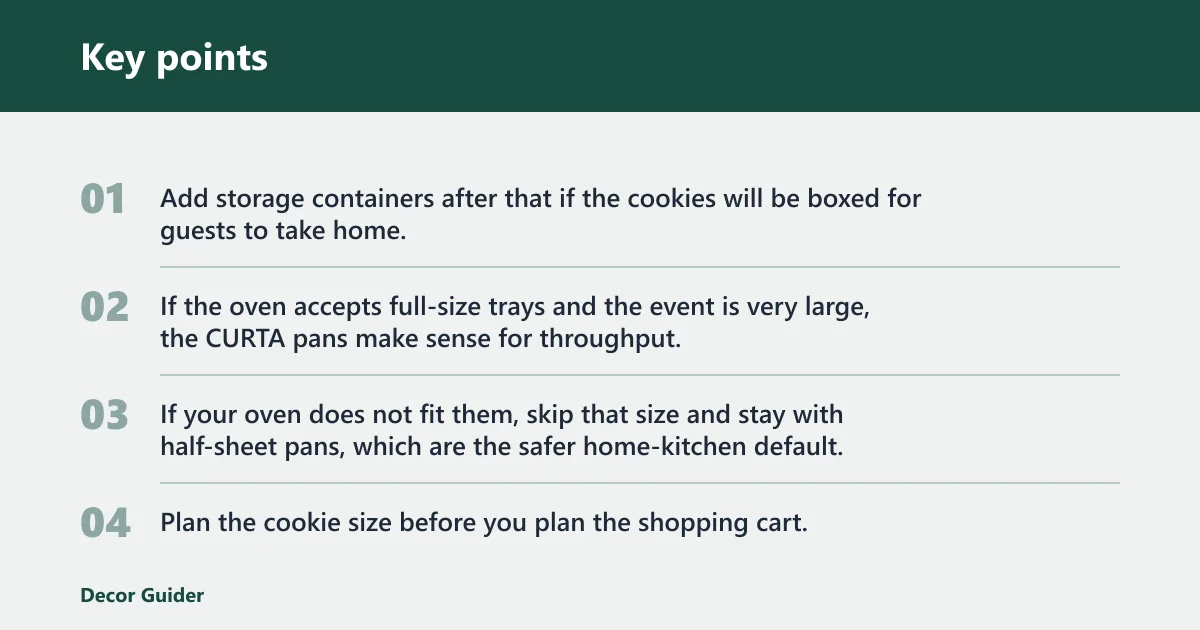
For dessert tables with brownies and bars, the PowerKing cooling rack moves to the top of the list because cooling space becomes the squeeze point faster than pan count. Add storage containers after that if the cookies will be boxed for guests to take home.
For fragile decorated cookies, the SIGNORA WARE containers are the safer buy because they give you airtight, stackable storage. If the cookies need a more controlled ride, the HYLCWTH carrier is the better transport choice, especially for thicker sandwich cookies or iced pieces that should stay separated.
If the oven accepts full-size trays and the event is very large, the CURTA pans make sense for throughput. If your oven does not fit them, skip that size and stay with half-sheet pans, which are the safer home-kitchen default.
Plan the cookie size before you plan the shopping cart. Mini cookies stretch further, standard cookies match the most common recipe yield, and giant cookies turn the same guest count into a much larger batch count.
Frequently asked questions
How many cookies do I need for a cookie exchange?
Cookie exchanges call for 4–6 sugar cookies per person, with extra pieces for take-home bags and a small safety cushion. If the event also includes other desserts, the count can be lower, but exchange tables usually need more than a standard party spread.
How many sugar cookies per person for a holiday dessert table
Plan 2–3 sugar cookies per person for most parties. If cookies are only one part of the dessert table, 2 per person is the common estimate; if cookies are the main sweet, 3 per person is the better starting point.
How many cookies should I make for 25 guests?
For 25 guests at a holiday dessert table, the guide suggests 75 cookies. That lines up with a standard party estimate and equals about 3 batches of a standard sugar cookie recipe, though a cookie exchange would usually call for more.
How many batches of dough do I need for a cookie party?
Start with the guest count, multiply by the per-person target, then divide by the recipe yield. A standard sugar cookie recipe makes about 24 cookies at 2.5 inches, so 75 cookies works out to about 3 batches, before the 10% buffer is added.
Do I need to bake extra cookies for a cookie exchange?
Yes. The guide recommends a 10% safety buffer for breakage, imperfect edges, and packing losses. That extra amount also helps when some cookies crack after frosting sets or when a few pieces are too rough for the display tray.
What size cookies are best for a cookie exchange?
Standard cookies are the easiest planning choice because they align with the common recipe yield of about 24 per batch. Mini cookies work well when you need a larger count, while giant cookies are better only when the exchange format favors fewer, more substantial pieces.
Products related to this article
Sponsored / affiliate links. As an Amazon Associate I earn from qualifying purchases. I may earn additional commission from eligible campaigns.