Can You Roast Vegetables and Turkey at the Same Time?
Yes. Roast vegetables and turkey at the same time by staging them to the oven clock: put the turkey in first, then add fast-cooking vegetables during about the last 30 to 45 minutes. If the timing is off, the bird dries out or the vegetables go limp and cool. This guide gives a one-oven timing plan, which vegetables belong in later, and how to keep both pans hot for serving.
Timing and placement for turkey and vegetables
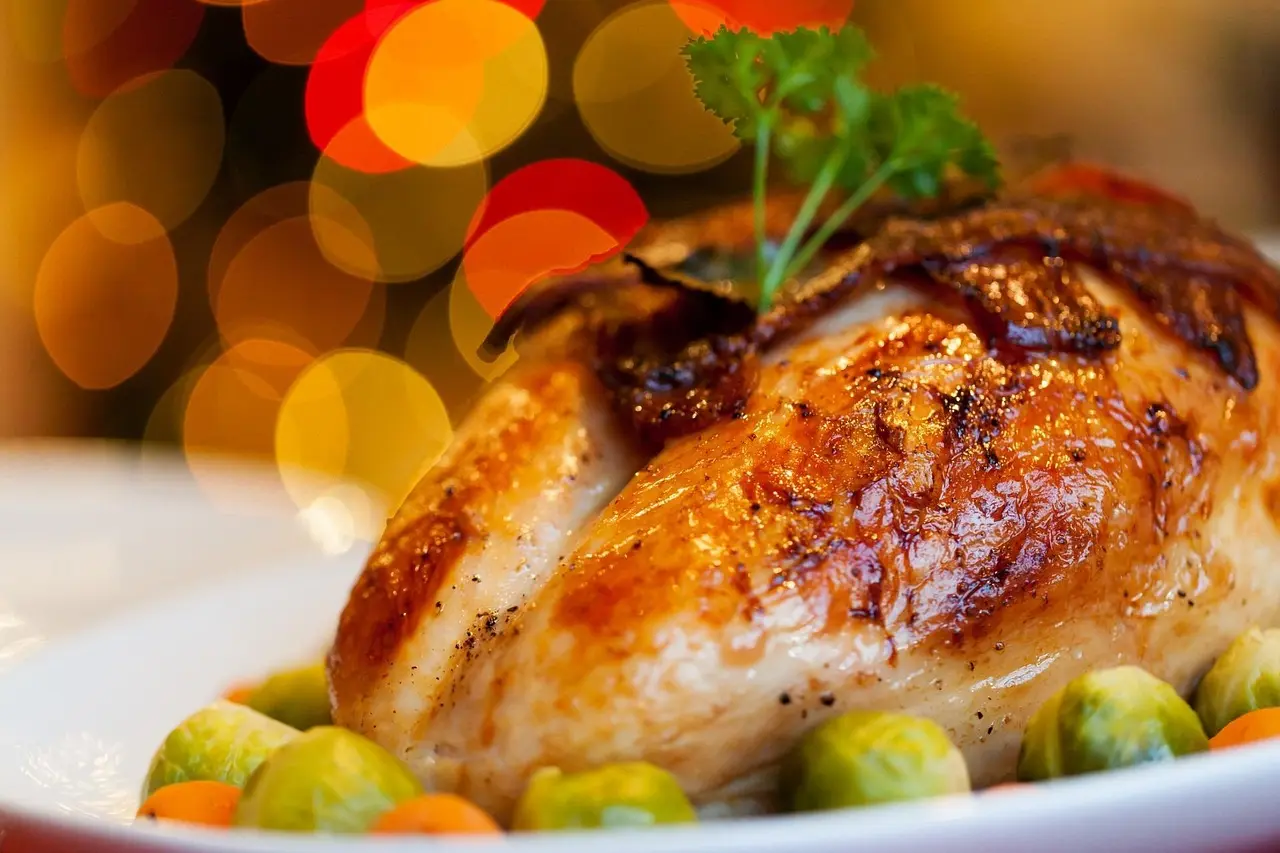


Yes, one oven can handle both if the turkey format, oven temperature, pan placement, and vegetable cut all match the same finish window. Roasting relies on hot, dry oven air, so both foods need enough exposure for browning without crowding, steam, or drippings that soften the vegetables.
What has to line up for timing?
Three things control the schedule: how fast the turkey cooks, how fast the vegetables brown, and how much room each pan gets in the oven. A whole bird needs a longer lead time than parts or a spatchcocked bird, so vegetables usually go in later. Vegetables also need dry heat above 300°F at the surface for browning, while moisture keeps the surface below that point.
| Holiday scenario | Turkey start | Vegetable add-in window | Pan placement | Hold time before serving |
|---|---|---|---|---|
| Whole turkey | Start first at 375F to 425F, then lower if the skin browns too fast | Add dense vegetables in the last 60 to 75 minutes; add quick vegetables in the last 30 to 45 minutes | Turkey on a rack in a roasting pan; vegetables on a separate rimmed sheet pan on a lower rack | Rest turkey 20 to 30 minutes; hold vegetables loosely covered for 10 to 15 minutes |
| Turkey parts | Start first at 400F to 425F | Add medium vegetables in the last 25 to 40 minutes; add quick vegetables in the last 15 to 20 minutes | Parts on a rack or directly on a sheet pan; vegetables on a second sheet pan | Rest parts 10 to 15 minutes; hold vegetables 10 minutes |
| Spatchcock turkey | Start first at 425F | Add dense vegetables after the bird has a head start of about 20 to 30 minutes; add quick vegetables later, if space allows | Bird on a rimmed sheet pan or shallow roasting pan; vegetables on a separate sheet pan, usually a lower rack | Rest 15 to 20 minutes; hold vegetables 10 to 15 minutes |
Which turkey format sets the schedule?
The turkey format sets the clock. A whole bird uses the oven the longest, turkey parts free up more space and cook faster, and a spatchcocked turkey shortens the schedule even more. That matters because vegetables should join when their finish time lands close to the bird’s rest window, not hours before.
Whole turkey
A whole bird usually calls for the most cautious plan because the cavity and thick breast take longer to heat through. Roast it in the 375F to 425F range, then lower the heat if the skin is browning before the center is close to done. The commonly recommended safe internal temperature for turkey is 165°F in the thickest part of the breast and thigh, and the bird should rest after leaving the oven because carryover cooking can raise the temperature by about 5°F to 15°F.
Turkey parts
Parts cook faster and more evenly than a whole bird, so they give you more flexibility for side dishes. Use this format if the oven schedule is tight or if you want to roast vegetables on a separate tray without waiting for a full-size bird to finish. Bone-in pieces still need enough space between them for dry heat to reach the skin.
Spatchcock turkey
A spatchcocked turkey cooks faster because the bird lies flatter and exposes more surface to the oven. That speeds up browning and shortens the window for vegetables that need to share the oven. It also makes rack placement simpler, since the bird can sit on a shallow pan and leave the lower rack open for a vegetable tray.
What vegetables can roast with turkey?
Vegetables that can roast with turkey are the ones whose density and cut size match the remaining oven time. Dense roots usually go in earlier, while quick-cooking vegetables wait until later. If you mix them on one tray, the fast pieces will overcook before the dense pieces soften.
Fast-cooking vegetables
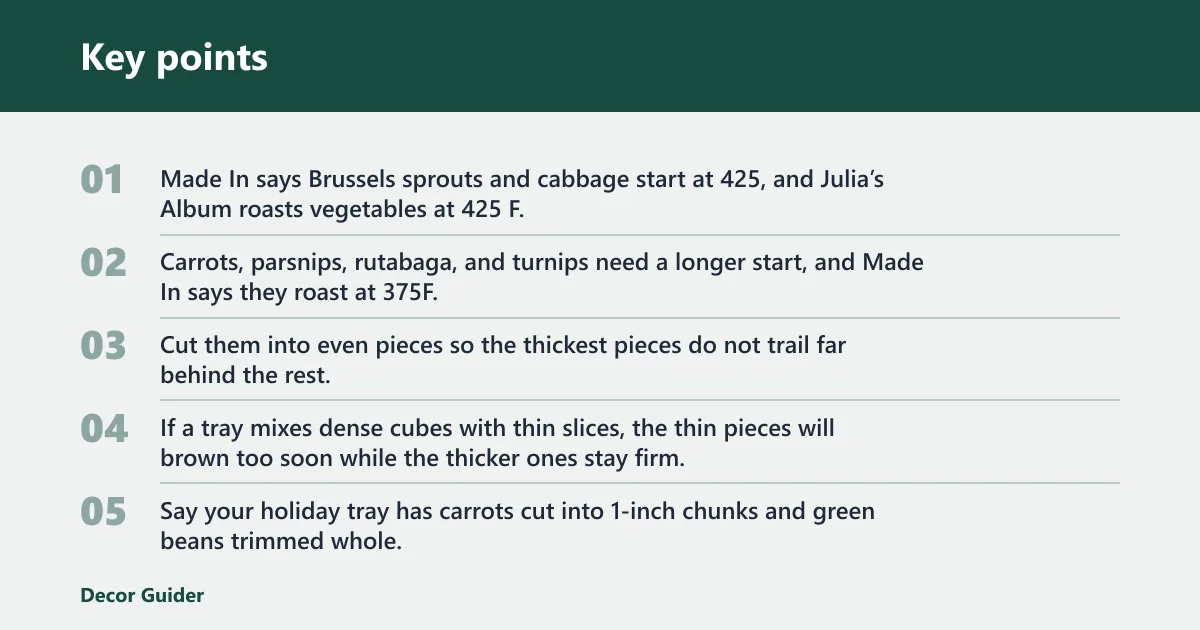
Brussels sprouts, cabbage wedges, green beans, and similar vegetables can go in later because they brown and soften more quickly. Made In says Brussels sprouts and cabbage start at 425, and Julia’s Album roasts vegetables at 425 F. Green beans are a good late addition because they finish before sturdier vegetables such as butternut squash; Julia’s Album removes green beans earlier than butternut squash.
Dense vegetables
Carrots, parsnips, rutabaga, and turnips need a longer start, and Made In says they roast at 375F. Cut them into even pieces so the thickest pieces do not trail far behind the rest. If a tray mixes dense cubes with thin slices, the thin pieces will brown too soon while the thicker ones stay firm.
Vegetables to batch separately
Separate trays make sense when the vegetables have different roast speeds or when the turkey drippings would make them soft. Potatoes, carrots, and onions can share one tray if they are cut to similar size, but green beans, cabbage, and Brussels sprouts usually deserve their own pan. That keeps each group on its own timeline.
Say your holiday tray has carrots cut into 1-inch chunks and green beans trimmed whole. The carrots need an earlier start, while the green beans should go in later and near the end of roasting. If both go on the same pan from the beginning, the green beans are likely to turn soft before the carrots are done.
How do you keep vegetables from burning?
Keep vegetables from burning by matching oven heat to the vegetable type, using the right rack position, and loading the pan in a single layer. Browning happens best on a dry surface above 300°F, but too much oil, overcrowding, and a hot top rack can push the edges past the line before the centers are done.
Oven temperature and rack placement
Use 375F to 425F as the main roasting range. Start at the higher end for vegetables that need color fast, then lower the oven if the turkey skin is moving ahead of the center. A lower or middle rack usually gives more even browning for vegetables, while the turkey can sit higher or in the center depending on the pan size and how much air space the oven has.
Pan loading and rotation
Spread vegetables in a single layer with space between pieces. Overcrowding traps steam and slows browning, so a second tray is better than a packed one. If your oven has hot spots, rotate the vegetable pan once during roasting and swap rack positions only if the bird still has enough heat and time to spare.
When to add oil and seasoning
Toss vegetables with oil and seasoning just before they go into the oven. Oil helps seasoning cling and supports browning, but too much oil can pool on the pan and encourage scorching at the edges. Salt early enough to season the surface, then roast uncovered so moisture can leave the pan.
A common first-timer mistake is putting every vegetable on one crowded tray under the turkey pan. The drippings fall onto the vegetables, the top layer steams, and the lower pieces stay pale. Keep the turkey elevated on a rack and move the vegetables to their own sheet pan when you want browning, not moisture.
Do you need a roasting pan or a sheet pan?
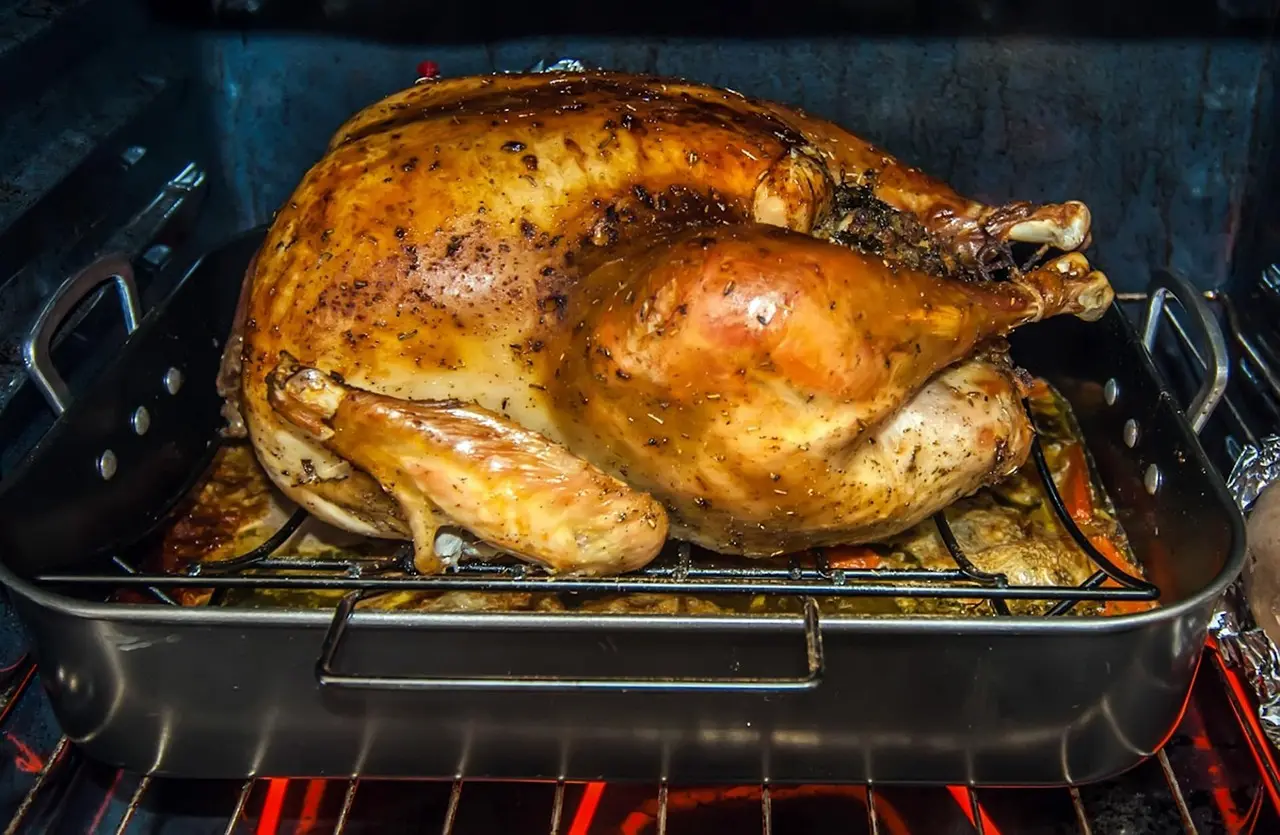
Use a roasting pan for the turkey and a sheet pan for the vegetables. The roasting pan needs high walls, enough size for the bird, rack compatibility, and oven-safe material. The vegetable pan should have rimmed edges so oil and juices stay put, but it should still be shallow enough for dry heat and quick browning.
Roasting pan for turkey
A roasting pan works best when it fits the bird without crowding and accepts a rack that lifts the meat above the juices. That airflow helps the underside brown instead of steaming in drippings. If the pan is too small, the bird sits too close to the sides and the heat circulation suffers.
Sheet pan for vegetables
A rimmed sheet pan is the better tool for most vegetables because it gives a wide surface for single-layer roasting and fits under the broiler if a fast finish is needed. IKEA’s KONCIS pan is 16×13 inches and oven-safe, which is the kind of size that can hold a holiday batch without stacking the vegetables on top of each other.
Rack options and substitutes
A roasting rack elevates meat, allows drippings below, and keeps air moving under the bird. If a rack is unavailable, sturdy vegetables or chopped onions can act as a temporary bed, but that is not ideal for turkey because the meat sits in more moisture. For the cleanest browning, use the rack when the pan supports one.
-
Preheat the oven.
Set the oven to 425F if you are roasting a spatchcock bird or quick vegetables, or start at 400F and adjust for a whole turkey if the skin is coloring too fast. Hot dry air drives browning. -
Prep the turkey first.
Pat the skin dry, set the bird on a rack, and position it in a roasting pan with enough room around the sides. Dry surface heat above 300°F supports browning, while a wet skin surface slows it down. -
Cut vegetables evenly.
Keep each vegetable group the same size so dense and thin pieces finish together. Make dense roots larger only if you plan to start them earlier. -
Stage the vegetable pans.
Put dense vegetables on one rimmed sheet pan and quicker vegetables on another if needed. Separate pans prevent one group from overcooking while the other catches up. -
Add vegetables on schedule.
Slide in the first vegetable pan during the turkey’s last hour if the vegetables are dense, or during the last 30 to 45 minutes if they are quicker-cooking. Use the matrix above as the timing map. -
Check browning and rotate.
Turn the vegetable pan once if your oven runs hot on one side. If the turkey skin darkens too quickly, lower the oven temperature rather than letting the surface scorch. -
Rest before carving.
Pull the turkey when it reaches 165°F in the thickest part, then let it rest so carryover cooking can add 5°F to 15°F. Move the vegetables to a warm spot and keep them loosely covered only long enough to avoid drying out.
How to stage the oven for a holiday meal
Stage the oven so the turkey finishes first and the vegetables finish during the rest period or just before it. That way, both are hot at the table. If the meal includes multiple side dishes, choose one sheet pan for the long-cooking vegetables and another for the quick ones, then hold the first batch while the turkey rests.
Start time order
Put the turkey in first. Add dense vegetables later, then quicker vegetables after that if the oven has room. If you must fit everything into one oven, prioritize the foods that need the longest roast time and treat the final 30 to 45 minutes as the window for finish work.
Hold times before serving
Hold the turkey only long enough for the juices to settle and the carryover heat to finish the job. Vegetables can sit for a short time in a warm place, but long holds soften the edges and dull the browning. If a side finishes early, cover it loosely rather than sealing in steam.
Final carve and transfer timing
Carve the turkey after the rest, not the moment it comes out of the oven. Move the vegetables to serving dishes at the same time the bird is carved so both land hot. If the vegetables need a brief return to the oven, use a short finish at high heat rather than a long hold.
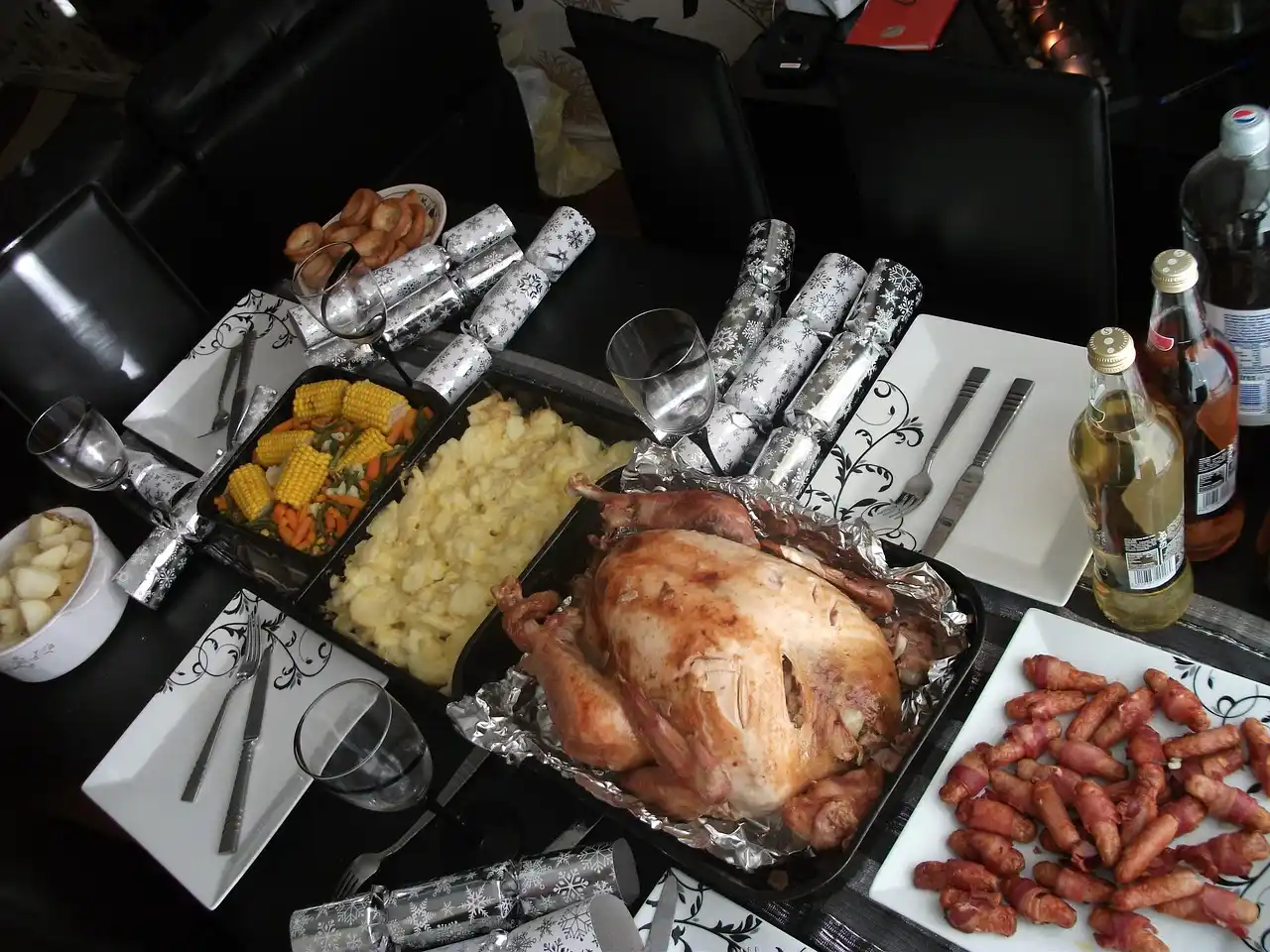
Picture a whole turkey at 400F with carrots and parsnips on a lower sheet pan. The bird needs the longest lead time, the roots need an earlier add-in than green beans, and the vegetables should come out just as the turkey enters its rest. That sequence keeps the meal hot without leaving the vegetables waiting.
Frequently asked questions
Can you roast vegetables and turkey at the same time?
Yes, as long as you match the turkey format, cut the vegetables evenly, and add them at different times. A whole turkey usually needs the longest head start, while turkey parts and spatchcock turkey leave more room for vegetables to join later. The key is timing, not forcing both foods into the oven together from the start.
What temperature should you roast vegetables with turkey?
Use 375F to 425F, depending on the vegetable and the turkey format. Dense roots often do well at 375F, while Brussels sprouts, cabbage, and many quicker vegetables do better at 425F. If the turkey browns too fast, lower the oven instead of pulling the vegetables too early.
How do you keep vegetables from burning while the turkey cooks?
Keep them on a separate rimmed sheet pan, spread in a single layer, and place the pan on a rack that gets even heat. Rotate once if your oven has hot spots. Add oil just before roasting, and do not crowd the tray, because overcrowding slows browning and creates uneven color.
Should the vegetables go in the same pan as the turkey?
Usually no. Turkey drippings can make vegetables soft and soggy, especially if the vegetables are meant to brown. A separate sheet pan gives you more control over timing, more even browning, and less risk that the vegetables will pick up too much moisture from the bird.
What vegetables can roast with a turkey in the oven?
Carrots, parsnips, rutabaga, and turnips are good early-roast vegetables. Brussels sprouts, cabbage, and green beans can join later because they cook faster. If the vegetables have very different densities, batch them separately so the quick ones do not overcook while the dense ones finish.
Do you need a rack when roasting turkey with vegetables?
A rack is strongly useful for the turkey because it keeps the meat above the drippings and lets air move under it. That helps the skin brown instead of stewing. Vegetables do not need a rack; they usually roast better on a rimmed sheet pan where the surface stays open to the oven air.
Can you use sheet pans instead of a roasting pan for vegetables?
Yes. A rimmed sheet pan is often better for vegetables than a deep roasting pan because it gives more exposed surface area and better browning. Keep the vegetables in a single layer, and use a second pan if the first one would need crowding. Sheet pans are also easier to slide in and out during a busy holiday cook.
Products related to this article
Sponsored / affiliate links. As an Amazon Associate I earn from qualifying purchases. I may earn additional commission from eligible campaigns.