Do You Need a Turkey Roaster Oven or a Roasting Pan?
Choose a turkey roaster oven when your main oven is already spoken for, or when you need that oven for potatoes, pies, and rolls. Choose a roasting pan when you want stronger browning and crisp skin. Pick the wrong vessel and you may crowd the oven, soften the skin, or throw off the timing of side dishes. This guide compares size limits, heat flow, skin results, and kitchen planning so you can choose the right one.
In practical terms, the choice usually comes down to oven space versus browning. If you want a broader comparison of the vessels themselves, start with roaster oven vs roasting pan and keep the rest of the meal plan in view as you decide.
How each vessel works and when to pick one


What each vessel is built to do
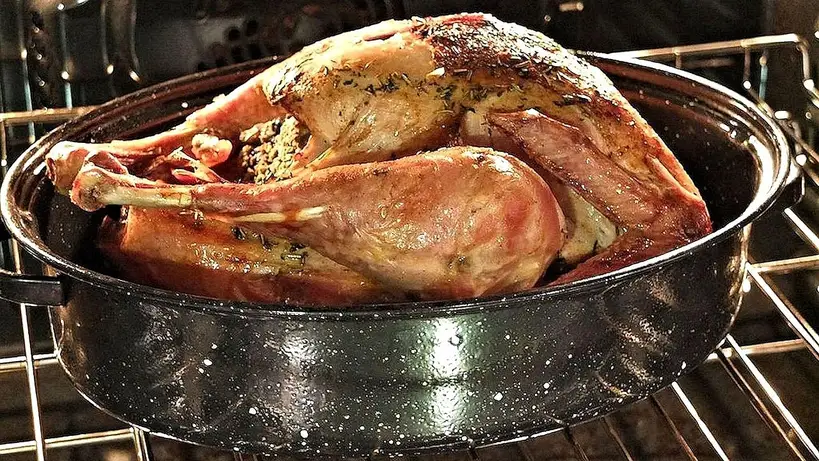
A turkey roaster oven is a countertop electric oven made to roast a bird in its own heated cavity. Roaster ovens commonly range from 16 to 22 quarts, and many list a wire or lift-out rack plus a domed, self-basting lid that recirculates moisture. A roasting pan is an open pan that relies on your main oven for heat, with common 14-inch, 16-inch, and 18-inch sizes and a removable rack on many models.
The main trade-off shows up on Thanksgiving. A turkey roaster oven can free the main oven for potatoes, pies, and rolls, but it takes counter space and storage. A roasting pan uses no extra appliance and usually gives more direct top heat, which helps browning and skin crisping.
Quick decision checklist
- How many ovens do you have available?
- What is the turkey weight range you actually buy?
- Do you care more about crisp skin or freeing oven space?
- How many side dishes need heat at the same time?
- How much cleanup do you tolerate after the meal?
- Do you have storage room for a once-a-year appliance?
If you need the main oven for sides and can store another appliance, choose the roaster oven. If crisp skin, simple cleanup, and low storage burden matter most, choose the roasting pan.
How the holiday choice breaks down
| Criterion | Turkey roaster oven | Roasting pan |
|---|---|---|
| Main oven space | Free the main oven for sides | Uses the main oven |
| Skin browning | Often weaker than a conventional oven | Usually stronger browning potential |
| Moisture control | Domed lid and self-basting lid help hold moisture | Open top gives more evaporation |
| Turkey size | Model-dependent fit limits | Depends on pan length and oven cavity |
| Cleanup | Removable inner pan helps, but another appliance to wash and store | Simple vessel, though drips can spill if the pan is shallow |
| Storage | Storage cost is high for a once-a-year item | Stores like other bakeware |
What size turkey fits?
Fit depends on both the bird and the vessel. Roaster ovens commonly come in 16 to 22 quarts, with an 18-quart roaster fitting an 18- to 22-pound turkey and a 22-quart roaster fitting up to a 26-pound bird. A roasting pan can hold many turkey sizes, but the pan must still fit your oven with room for heat to move around it.
Roaster oven capacity and model limits
For roaster ovens, check the manufacturer’s listing for the exact fit range, because rack shape and lid clearance vary by model. A lift-out rack or wire rack raises the bird for air circulation and drippings, while a domed lid helps cover the top without pressing on the skin. Some models also claim adjustable heat up to 450 degrees, and one listed 22-quart model roasts birds up to 28 pounds.
That does not mean every 22-quart unit fits the same bird shape. A broad, tall turkey needs more headroom than a compact one, and the rack can change the usable interior height. If the lid sits too close to the breast, the skin steams instead of browning.
Roasting pan footprints and oven clearance
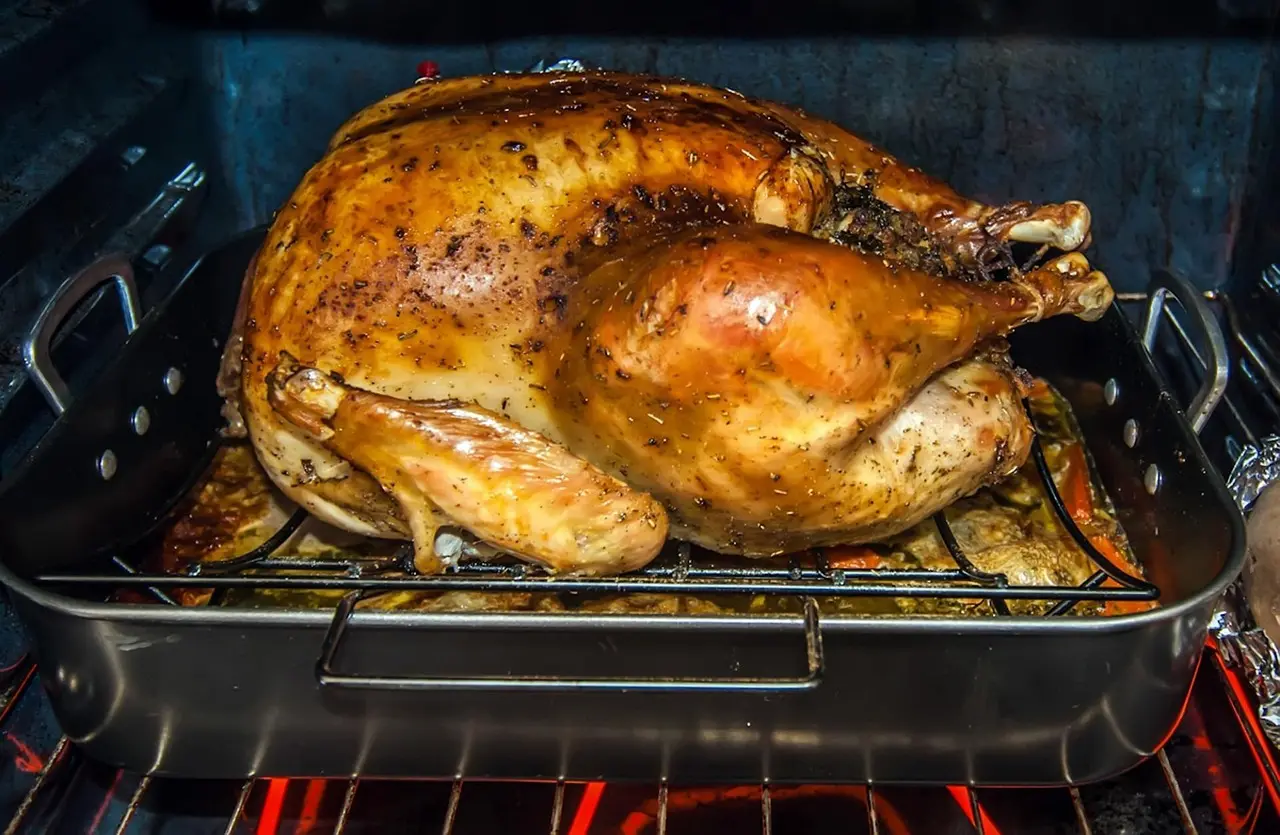
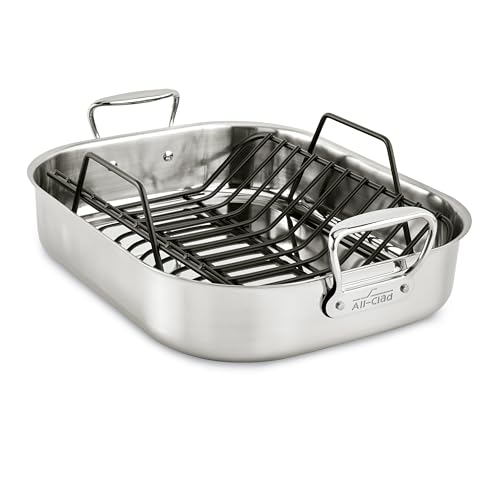
Roasting pans usually come in 14-inch, 16-inch, and 18-inch sizes. A common 18-by-10-inch pan provides a broad base for drippings and a removable rack, and it still needs clearance on all sides of the oven cavity so hot air can move. If the pan crowds the walls, browning and rack stability both suffer.
If you are comparing pan sizing to your oven opening, the safest route is to think in terms of usable space rather than just label size. A pan that fits on paper may still block airflow if the sides sit too close to the oven walls or the rack rises too high.
-
Measure the cavity first.
Check the usable width, depth, and height of your main oven or countertop roaster before you choose a vessel. Leave room for the rack, the lid if there is one, and safe airflow around the pan. -
Match the bird to the vessel.
Use the manufacturer’s fit range for the exact model. For Thanksgiving birds in the roughly 18- to 22-pound range, an 18-quart roaster can be a practical reference point; for larger birds, check whether a 22-quart model is listed for birds up to about 26 pounds or more. -
Check the rack height.
A V-rack, curved steel rack, or wire rack should keep the bird above the bottom so drippings collect below. That separation matters for air circulation, skin color, and gravy making.
Can a roaster free oven space?
Yes, a turkey roaster oven can free the main oven for sides, and that is its strongest holiday advantage. It helps most when potatoes, pies, and rolls all need heat at the same time. It helps least when you already have a second oven or when storage space is so tight that the appliance becomes a year-round burden.
When one oven is enough
If you are cooking a small turkey and only one or two side dishes, the main oven may be enough. A roasting pan keeps the workflow simple, and you do not need counter space for another appliance. That usually makes more sense for infrequent turkey cooks who do not want to store a bulky unit for eleven months of the year.
Suppose you are roasting a 12-pound bird and baking only rolls and one casserole. A single oven can handle that menu if you stage the items in batches. The pan wins because it avoids another cleanup task and does not force you to make room for a countertop unit.
Can I keep side dishes warm in a roaster oven?
Sometimes, yes. A roaster oven can hold or warm side dishes if it has a genuinely low setting or a keep-warm function. Some models only go down to 200 or more, which can be too hot for holding delicate sides safely. Check the control range before you count on it for warming.
When a second vessel saves the menu
A roaster oven earns its keep when the turkey is the bottleneck and the oven is already spoken for. Picture a large bird with potatoes, stuffing, and two pies queued behind it. The roaster frees a cavity for side-dish batching, which can matter more than the slight browning edge of a roasting pan.
Skin, moisture, and drippings
Roaster ovens often hold moisture better, while roasting pans usually give you stronger browning and crisper skin. That difference comes from enclosure and heat exposure. A domed or self-basting lid circulates moisture, which can keep the meat juicy, but it can also soften the skin. An open roasting pan exposes the top surface to hotter, drier oven air.
Why roaster ovens can brown less evenly
Many roaster ovens brown less effectively than a conventional oven because the lid traps steam and limits direct top heat. That matters if you want crackly skin on the breast and legs. You may get good roast flavor and moist meat, but the color can stay pale unless the model, lid, and finish temperature allow enough exposure.
A roaster can still work if you finish the bird uncovered near the end, but that depends on the unit and the bird size. A model that tops out at 450 degrees gives you more finish heat than a lower-output appliance, yet the browning still depends on whether the lid comes off and how crowded the cavity is.
How racks change the result
Elevation matters. A lift-out rack, wire rack, V-rack, or curved steel rack keeps the bird above the bottom so hot air can reach more of the surface and juices can collect below. That helps with even roasting and makes drippings available for gravy without submerging the skin.
Roasting pans also use racks for the same reason. A removable rack keeps the turkey off the pan floor and reduces the chance that the underside steams in its own juices. On some pans, stovetop-to-oven use and broiler compatibility add more finishing options, especially if you want to brown the top after roasting.
Holiday decision table
| Scenario | Recommendation | Why this wins | Fit risk | Cleanup burden | Storage cost |
|---|---|---|---|---|---|
| Small apartment oven | Turkey roaster oven | It frees the main oven for sides and avoids crowding the single cavity. | Confirm the bird fits the listed quart capacity and lid clearance. | Moderate; removable parts help, but it is another item to wash. | High if you cook turkey only once a year. |
| Large turkey with many sides | Turkey roaster oven | The side dishes can batch in the main oven while the bird cooks elsewhere. | Use the manufacturer’s fit range; a larger bird may need a 22-quart model. | Moderate to high, depending on liner use and dishwasher-safe parts. | High, but justified if the menu routinely overloads one oven. |
| Small turkey with one oven | Roasting pan | You keep the setup simple and avoid storing a second appliance. | Low if the pan fits the oven and leaves airflow on all sides. | Moderate; pan and rack are straightforward to wash. | Low. |
| Crisp-skin priority | Roasting pan | Open heat and stronger browning are the better match for crisp skin. | Low if the rack and pan fit without touching the oven walls. | Moderate; drippings may splatter more than in a lidded roaster. | Low. |
| Gravy-first priority | Roasting pan | Open drippings and easier browning can build a stronger base for gravy. | Low to moderate; a deep enough pan is needed to catch juices. | Moderate; more drips to collect, but the pan is simple. | Low. |
| Infrequent turkey cooking | Roasting pan | It handles turkey, roasts, and baked mains without adding storage clutter. | Depends on pan length and oven cavity, but the listing is easy to verify. | Lower overall, because there is one less appliance to maintain. | Low. |
Choose a turkey roaster oven or a roasting pan
Choose a turkey roaster oven if your oven is crowded, your holiday menu needs one more heat source, or you want a place to hold side dishes while the main oven works. It fits best when the turkey size lines up with the model’s listed capacity and you can accept some trade-off in browning.
Choose a roasting pan if crisp skin, broiling, and multiuse cooking matter more than freeing oven space. It is the better pick for cooks who want one tool for turkey, roast chicken, prime rib, or vegetables, and who do not want to store a separate appliance for one holiday meal.
Frequently asked questions
Do I need a turkey roaster oven or a roasting pan for Thanksgiving?
If your main oven is busy with potatoes, pies, and rolls, a turkey roaster oven can simplify the schedule. If you want the best browning and a tool that also handles other roasts, a roasting pan is the safer default. The right pick depends on oven space, not tradition.
What is the difference between a turkey roaster oven and a roasting pan?
A turkey roaster oven is a countertop electric appliance with a heated cavity, usually a lift-out rack, and often a self-basting lid. A roasting pan is an open pan that goes inside your main oven. The first saves oven space; the second usually gives better skin color.
Can a roaster oven free up space in my main oven for sides?
Yes. That is the clearest reason to buy one. If you need the main oven for casseroles, rolls, pies, or potatoes, the roaster oven can move the turkey to another heat source and keep the timing of the whole meal more workable.
What size turkey fits in a roaster oven?
It varies by model, so check the manufacturer’s listing. Roaster ovens commonly range from 16 to 22 quarts; an 18-quart roaster can fit an 18- to 22-pound turkey, and a 22-quart roaster can fit up to a 26-pound bird. Some specific models list even higher turkey limits.
Can I use a roasting pan for more than turkey?
Yes. A roasting pan is useful for prime rib, whole chickens, pork roasts, root vegetables, and baked dishes that need a sturdy base. Some models also work on the stovetop before going into the oven, and some are broiler-safe, which adds finishing options.
Which is easier to clean: a roaster oven or a roasting pan?
A roasting pan is usually simpler to wash because it is one pan and one rack. A roaster oven can still be manageable if it has a removable inner pan and dishwasher-friendly parts, but it adds another appliance to clean, dry, and store after the holiday.
Products related to this article
Sponsored / affiliate links. As an Amazon Associate I earn from qualifying purchases. I may earn additional commission from eligible campaigns.