Why Is My Bedroom Lighting Too Dim? Fixes That Work
Your bedroom lighting feels too dim when the fixture output is too low, the bulb color is too warm or weak, the light is placed badly, or the room relies on one layer of light; a practical target is 10 to 20 lumens per square foot for general lighting, then add task light where you read or dress. Dim light strains your eyes, makes colors look muddy, and leaves corners unsafe or unusable. This guide helps you identify the failure mode and choose the right fix.
Why does my bedroom lighting feel too dim?




A bedroom can feel dim for three different reasons: the room truly needs more light, the light is spread poorly, or the light quality makes everything seem weaker than it is. A single ceiling fixture often leaves the bed, closet, and corners underlit, especially if the shade is oversized or the bulb output is too low.
Check output, spread, and color separately
If the room looks murky from bed but brighter near the switch, the issue is usually placement or layering. If the whole room feels weak, start with lumens. If the room has enough light but still feels dull or sleepy in the daytime, the color temperature may be too warm for the task or the fixture may be creating heavy shadow.
Say your 120 square foot bedroom has one ceiling fixture with a soft fabric shade and a low-output bulb. The room may feel dim even though the bulb is on, because the shade can cut output and the light may land in one pool instead of spreading across the space.
How many lumens does a bedroom need?
A common retail guide is about 10 to 20 lumens per square foot for general lighting, and a 120 square foot bedroom is often planned around 1,200 to 2,400 lumens in total. Room size, ceiling height, wall color, windowing, and fixture count can move that target up or down.
Use the square-foot rule first
To estimate the room’s base need, multiply the room’s square footage by the general-lighting range. That gives you a practical target for the whole room, not one fixture alone. Then decide how much of that total comes from ceiling light, bedside light, and any accent source.
Why the target changes
Dark walls absorb more light, so a room with deep paint often needs more lumens than a white room of the same size. Higher ceilings push light farther away from the floor, while mirrored wardrobes and glossy finishes can create glare in one zone and leave another zone feeling dim. A windowless room usually depends more on artificial layers, since daylight gaps matter less there.
| Bedroom size | General light target | Practical note |
|---|---|---|
| 80 sq ft | 800 to 1,600 lumens | Often enough with one ceiling light plus a lamp |
| 120 sq ft | 1,200 to 2,400 lumens | Common target for a standard bedroom |
| 160 sq ft | 1,600 to 3,200 lumens | Often needs at least two sources |
Bedroom lighting diagnosis table

Use this table to match the symptom to the fix instead of swapping bulbs at random. The fastest wins usually come from output, shade, dimmer, and placement problems.
| Symptom | Likely cause | Quick test | Fix | Estimated cost band | When to call an electrician |
|---|---|---|---|---|---|
| Room feels dim everywhere | Low-lumen bulb | Check the bulb package or fixture label for lumens | Move to a higher-lumen bulb that still fits the fixture rating | Low | If the fixture requires a wattage above the label or overheats |
| Light feels weak only from bed | Single fixture overload | Turn on a bedside lamp and compare the change | Add a bedside lamp or wall lamp for reading and dressing | Low to medium | If you need a new hardwired point |
| Light seems dim after dimming | Wrong dimmer | Raise the dimmer and watch for flicker, buzz, or dropouts | Use a dimmer rated for the LED bulb and fixture type | Medium | If the circuit needs rewiring or the dimmer overheats |
| Light looks muddy or weak through shade | Oversized shade | Remove the shade, if safe, and compare output | Choose a smaller, lighter shade or a more open fixture | Low to medium | If the fixture wiring or socket is damaged |
| Light feels uneven under the ceiling fixture | Poor placement | Stand at the closet and at the bed to see where shadows fall | Move light sources to cover both circulation and task zones | Medium | If moving the fixture needs ceiling work |
| Decorative ceiling light glows but still looks harsh | No diffuser | Look for bare bulb glare or reflection on the bed | Add a diffuser, opal glass, or a shade that softens the source | Low to medium | If the fixture design does not allow safe modification |
| LED seems to fade over time | LED aging or driver issue | Compare current output to a newer bulb of the same type | Replace the bulb or fixture driver if compatible parts are failing | Low to medium | If multiple fixtures dim together or the circuit is unstable |
| One room corner stays dark | Dark wall finishes | Turn on all lights and check whether the corner still disappears | Add a lamp or accent light near the dark zone | Low | If you suspect wiring faults behind a wall switch |
| Light dips when other appliances run | Voltage drop or wiring issue | See whether the dimming matches appliance startup | Have the circuit inspected for loose connections or load problems | Medium to high | Yes, especially if the dimming is repeatable |
What makes lights dim in a house?

House-wide dimming usually comes from one of four issues: bulbs that are weaker than expected, a dimmer that does not match the LED load, dirty shades or diffusers that block output, or electrical problems that reduce voltage at the fixture. The cause matters, because each one needs a different fix.
Low-lumen or aging LED bulbs
LED bulbs do go dim over time, and they can also seem dim if the driver inside the bulb or fixture is failing. A bulb that once felt bright may lose output gradually, so compare it with a known-good replacement before changing the whole room layout.
Wrong dimmer or incompatible LED control
Some LEDs will flicker, buzz, or sit at a lower output than expected on the wrong dimmer. If the light is dim only on one control and brighter on another circuit, the dimmer is a likely suspect. Compatibility between bulb, fixture, and dimmer is part of the fix, not an optional detail.
Dirty shade, diffuser, or lens
Dust and film on a shade or diffuser can trim usable light enough to matter in a small bedroom. A quick wipe can restore a surprising amount of output, especially on frosted glass, fabric shades, and plastic lenses above a bed or dressing table.
Voltage drop and wiring issues
If several lights dim together, or the light fades when a large appliance starts, the issue may be in the circuit rather than the bulb. Loose connections and wiring faults can create a house-wide dimming effect and need professional attention.
Should bedroom lights be warm white or cool white?
Bedrooms are commonly planned with 2,700K to 3,000K light, and warm white is often the best fit for a bedroom. Cooler light can look sharper and more task-like, which can be useful for dressing or cleaning, but it is usually a poor default for a room meant for rest.
How color temperature changes brightness
Color temperature changes how bright a room feels, even when lumen output stays the same. Warmer light can feel softer and more relaxed, while cooler light can make edges and surfaces look sharper. That is why a bedroom may be bright enough on paper but still feel dull, sleepy, or harsh depending on the tone.
When cooler light helps
Cooler light can help in a windowless closet zone, a grooming area, or a cleaning mode where color accuracy matters more than evening comfort. Kitchens and baths are often planned at 3,000K to 4,000K, but bedrooms usually work better in the warmer range unless the room has a specific task that needs a brighter, cooler setting.
Picture a bedroom with a 3,000K ceiling light and a bedside lamp at the same color temperature. If the room still feels dim, the issue is likely output or placement, not warmth. Changing to a cooler bulb would not fix a missing lumen problem.
Can one ceiling light be enough?
A ceiling light can be enough for general ambient light in a small bedroom, but it is often only one part of the room’s lighting. A chandelier can be too dim on its own in a bedroom, and a single ceiling fixture often leaves the room flat unless you add bedside or accent sources.
When a ceiling light can carry the room
A flush mounted ceiling light works well in low-ceiling rooms, and a pendant or chandelier can suit higher ceilings if the output is strong enough. Even then, the ceiling fixture usually covers the ambient layer, while reading, dressing, and mood lighting still need separate sources.
Why layered lighting feels better
Layered lighting combines ceiling, bedside, and accent sources so the room does not rely on one point of light. The bedroom often needs three lighting layers: central, mood, and functional. That setup reduces deep shadows and gives you a brighter mode for dressing or cleaning plus a softer mode for evening.
Bedside lamp and wall lamp options
A bedside lamp gives directional light for reading and is easy to add in a rental. A wall-mounted lamp saves table space and can keep the light close to the pillow or reading chair. In small bedrooms, this extra layer often does more than changing the ceiling bulb alone.
How do you make bedroom lighting brighter without glare?
To brighten a bedroom without making it harsh, raise the usable lumens, spread the light across more than one source, and soften the parts that point at the eye. Dimmable lighting helps because it lets you switch between a brighter cleaning or dressing mode and a softer evening mode.
-
Check the bulb lumen rating.
Start with the fixture’s listed maximum and the bulb’s lumen output, not just wattage.
-
Replace the wrong shade.
An oversized shade can block too much light and make a bulb look weak. Choose a shade or glass style that lets the source spread light into the room while still hiding direct glare.
-
Add task light where needed.
Put light where the room actually works: beside the bed for reading and near the wardrobe for dressing. This is often more effective than pushing one ceiling light harder.
-
Use a compatible dimmer.
Choose a dimmer that matches the bulb type and fixture load. That keeps the room flexible for daytime use and evening use without flicker, buzzing, or unexpected dimming.
-
Soften glare above the bed.
If the light is above a bed or dressing area, use a diffuser to avoid glare and reflection. A frosted lens or opal glass can keep the source bright while making it easier on the eyes.
Fixture placement and room features that make a bedroom feel dim
Even a properly rated bulb can feel weak if the fixture is in the wrong place or the room surface absorbs too much light. Low ceilings, dark finishes, mirrored wardrobes, and windowless layouts all change how bright the room feels to the eye.
Low ceilings and flush mounts
Low ceilings usually work best with a flush mounted ceiling light because it keeps the fixture out of the way and spreads light evenly. If the shade hangs too low in a small room, it can create a narrow pool of light and make the rest of the room feel dim.
Higher ceilings and hanging fixtures
Higher ceilings can take a pendant or chandelier, but the fixture still needs enough output to light the floor and furniture below. A decorative hanging light may need support from table or wall lighting to avoid a dark ring around the room.
Dark wall finishes and mirrored wardrobes
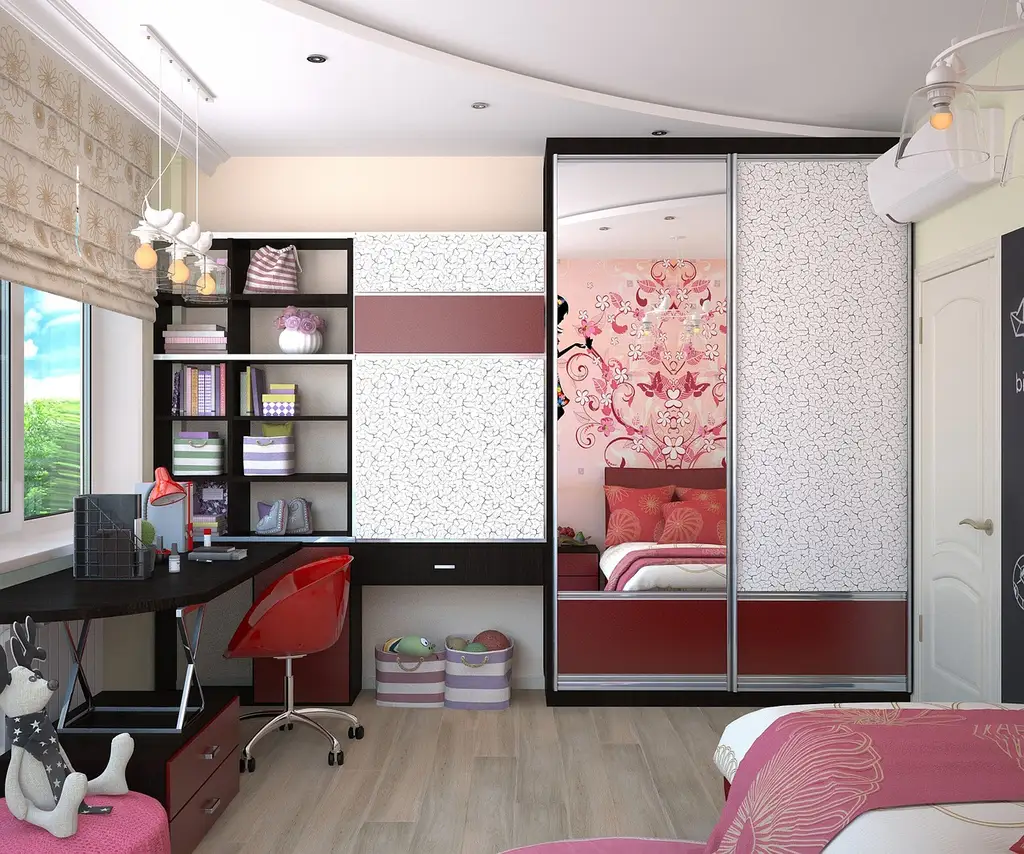
Dark paint absorbs light and can make the room feel smaller and darker than the lumen count suggests. Mirrored wardrobes can bounce light into one direction and leave another zone shadowed, so aim a lamp or accent light toward the areas that still feel flat.
Windowless rooms and daylight gaps
Windowless bedrooms depend on artificial light for most of the day, so the room needs a more careful mix of base, task, and accent lighting. If there is little or no daylight, a single fixture is rarely enough to make the room feel fully usable.
Frequently asked questions
Why is my bedroom lighting too dim?
Your bedroom lighting is usually too dim because the room does not have enough lumens, the light is too concentrated in one area, or the bulb color and shade make the room feel weaker than it is. Start by checking output, then add bedside or accent light if the ceiling fixture is only doing part of the job.
Why are my lights dim?
Lights can seem dim because the bulb is low output, the dimmer is incompatible, the shade or diffuser is blocking too much light, or the fixture is aging. If multiple lights dim at once, look beyond the bulb and check for voltage or wiring issues.
Do LED bulbs go dim over time?
Yes. LED bulbs can lose output over time, and some appear dim sooner if the driver is failing or the bulb is not matched to the dimmer. If the light has faded noticeably, compare it with a new bulb of the same type before changing the fixture.
Can one ceiling light be enough for a bedroom?
One ceiling light can handle ambient light in a small room, but it often leaves the space flat and incomplete. Most bedrooms work better with a ceiling light plus bedside or wall lighting, so you have a base layer and a task layer.
Products related to this article
Sponsored / affiliate links. As an Amazon Associate I earn from qualifying purchases. I may earn additional commission from eligible campaigns.