Can You Put a Cold Casserole Dish Straight Into the Oven?
A cold-to-hot change is generally acceptable only if the dish is marked oven-safe and the temperature change stays within the maker’s limit; otherwise, let it warm gradually or keep it out of the oven. Skip that rule, and cold-to-hot shock can crack the dish, warp it, or ruin dinner. This guide breaks down glass, ceramic, metal, stoneware, and cast iron so you know what can go straight in, what needs warming, and what should never be used.
Know your dish type, temperature, and limits



What you’ll need
- The dish itself, with its lid or insert if it has one.
- The instruction sheet, box, or manufacturer listing for that exact model.
- A towel or trivet for safe staging on the counter.
- Oven mitts or dry pot holders.
- A flashlight or your phone light to inspect chips, cracks, and scratches.
Casserole dish decision table
| Material | Fridge-cold | Freezer-cold | Room temp | Risk level | Do this instead |
|---|---|---|---|---|---|
| Glass | Rest at room temperature first | Do not bake | Go straight in if marked oven-safe | High with sudden temperature change | Check for tempered glass, chips, and the exact oven limit on the marking or manual. |
| Ceramic | Rest at room temperature first | Do not bake | Go straight in if marked oven-safe | Moderate to high | Inspect the glaze, rim, and base for cracks before heating. |
| Stoneware | Rest at room temperature first | Do not bake | Go straight in if marked oven-safe | Moderate | Use only if the label allows oven use and the finish is not damaged. |
| Metal | Go straight in if oven-safe | Go straight in if oven-safe | Go straight in if oven-safe | Low for thermal shock, higher for handles and coatings | Check for nonstick limits and any plastic parts before baking. |
| Enamel cast iron | Go straight in if the model allows it | Do not bake unless the manual says frozen use is allowed | Go straight in if oven-safe | Moderate | Confirm the enamel, lid knob, and maximum temperature in the manual. |
Check the dish before baking
- Find the oven-safe marking. Look on the bottom, handle, lid, or packaging for an oven icon, a temperature limit, or a written instruction. If the manual is missing, check the manufacturer’s listing for your model before baking.
- Inspect for damage. Do not bake with chips, cracks, deep scratches, a loose handle, or a damaged lid or insert. Any visible damage raises breakage risk, especially in glass and ceramic.
- Match the start condition. A room-temperature dish is usually safer than a fridge-cold one, and freezer-cold is the riskiest. If the dish is very cold, give it 20 to 30 minutes at room temperature before it goes into an oven-safe bake.
- Preheat only when allowed. Put the dish into a preheated oven if the maker allows cold-to-hot use. Some brands instead want the dish to start in a cold oven and warm with the oven, so follow the manual if it conflicts with general advice.
- Use the stated limit. Stay at or below the maximum oven temperature on the label or in the manual. Do not use a dish under the broiler unless the maker specifically says it is broiler-safe.
Do you need to let it sit at room temperature first?
Sometimes. If the dish is glass, ceramic, or stoneware and it has come straight from the fridge, a 20 to 30 minute rest on the counter lowers thermal shock risk. If it is freezer-cold, do not move it directly to a hot oven; thaw or rest it first, then check the manual.
Room-temperature timing that works
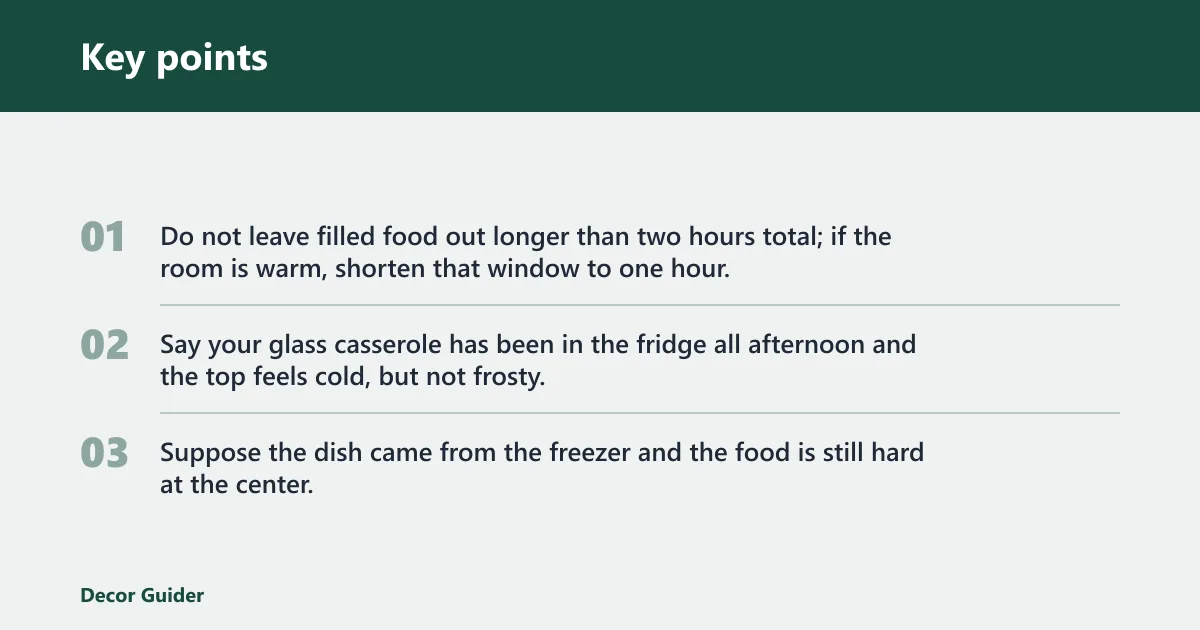
Use the counter, not a hot stovetop or sink. Keep the dish on a dry towel or trivet, uncovered or loosely covered, and move it to the oven once the chill is gone from the outer surface. Do not leave filled food out longer than two hours total; if the room is warm, shorten that window to one hour.
Say your glass casserole has been in the fridge all afternoon and the top feels cold, but not frosty. A 25-minute rest on the counter, then a move into a preheated oven that stays within the listed limit, is safer than putting it straight from fridge to hot oven.
Suppose the dish came from the freezer and the food is still hard at the center. That is not a warm-up problem you can fix with a few extra minutes on the counter. Thaw enough that the dish is no longer freezer-cold, or switch to a room-temperature-safe metal pan if the recipe allows it.
How each material handles the oven
Glass casserole dishes
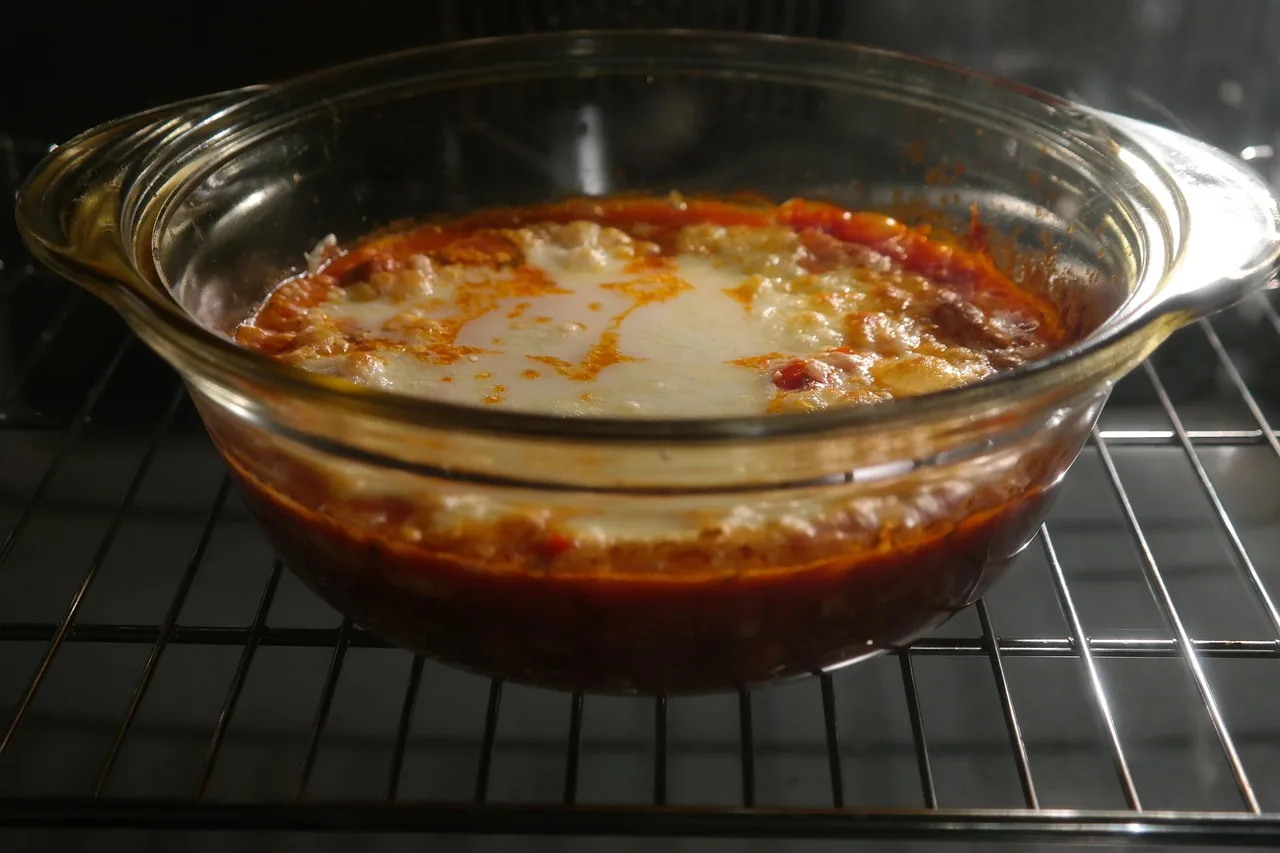
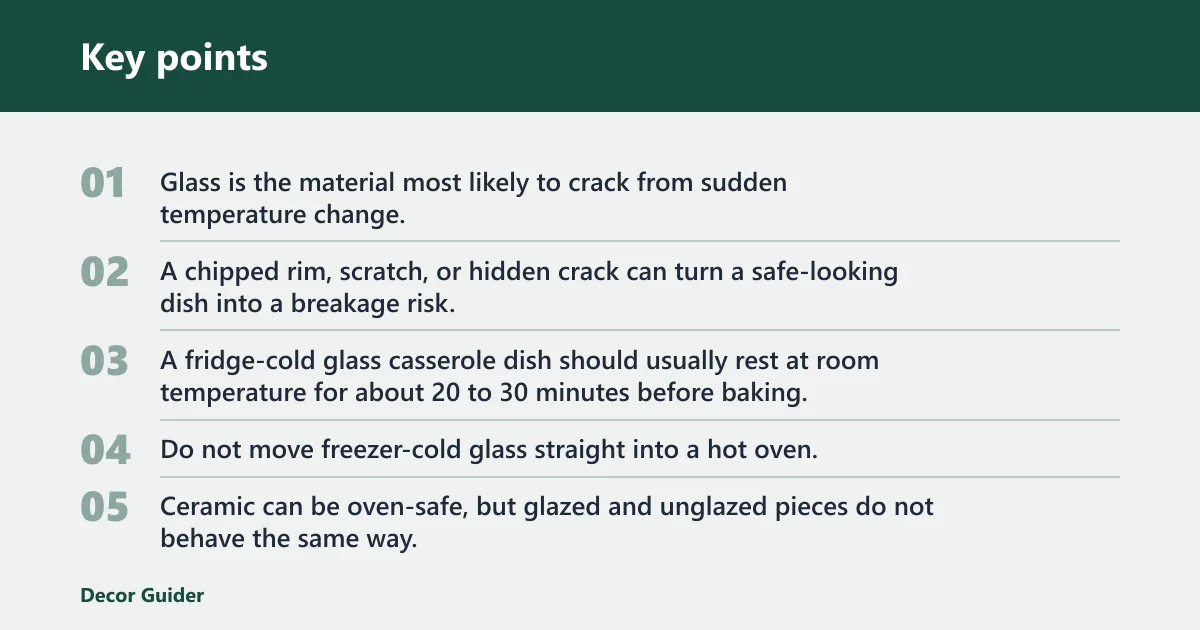
Glass is the material most likely to crack from sudden temperature change. Tempered glass is tougher than ordinary glass, but it still has limits, and the maker’s marking matters more than the brand name alone. A chipped rim, scratch, or hidden crack can turn a safe-looking dish into a breakage risk.
A fridge-cold glass casserole dish should usually rest at room temperature for about 20 to 30 minutes before baking. If the manual allows fridge-to-oven use, keep the dish within the stated temperature range and avoid setting it on a wet or cold surface after baking, since hot-to-cold shock can also crack it.
Ceramic casserole dishes
Ceramic can be oven-safe, but glazed and unglazed pieces do not behave the same way. Glazed dishes usually resist moisture better; unglazed pieces may be more absorbent and more sensitive to sudden shifts. Check the base, rim, and underside for chips or hairline cracks before heating.
Many ceramic dishes handle a preheated oven well when they are at room temperature first. If the maker says to start in a cold oven, follow that instead. Heat retention is good, which helps serving, but it also means the dish stays hot longer after baking.
Metal casserole dishes
Metal pans tolerate temperature change better than glass or ceramic, so a cold metal casserole dish can often go straight into an oven if it is marked oven-safe. The main limits are usually coatings, handles, and attached parts, not thermal shock. Check whether the pan includes plastic knobs or a nonstick finish with a lower heat ceiling.
Metal is also the most practical choice when holiday timing is tight. If a recipe calls for a casserole dish and the pan is metal, you can usually assemble, chill, and bake with less waiting, as long as the model’s listing allows oven use at the recipe temperature.
Cast iron and enamel cast iron
A cast iron casserole or Dutch oven is a thick-walled cooking pot with a tight-fitting lid, and it handles oven heat well when the model is rated for it. Bare cast iron is generally tolerant of cold-to-hot transfer. Enamel cast iron is different: the enamel coating and lid materials set the real limit.
Check the maximum oven temperature, the lid knob material, and whether the lid is metal, glass, or a heat-sensitive composite. Some Dutch ovens can go from cold to a preheated oven safely; others should start in a cold oven or have a lower ceiling for the lid than for the pot.
What temperature change is safe for a casserole dish?
There is no single safe temperature change for every dish. A room-temperature dish has far less risk than a freezer-cold one, and glass has less tolerance than metal. As a practical rule, avoid moving a very cold dish into a much hotter oven unless the manufacturer says that specific model can handle that change.
Why thermal shock cracks bakeware
Thermal shock can happen when part of the dish heats or cools faster than the rest. The uneven expansion or contraction creates stress, and that stress can split glass or ceramic, especially near chips, rims, and corners. Hot-to-cold shock can be just as damaging as cold-to-hot shock.
A common first-timer mistake is taking a chilled glass dish from the fridge, filling it, and setting it directly on a preheated rack. If the dish survives one or two uses, that does not make the routine safe; the break can happen on a later bake when a tiny crack has already started.
How do you tell if a casserole dish is oven-safe?
Look for a written oven-safe note, a temperature number, or a symbol on the bottom, handle, lid, or packaging. If those markings are missing, check the instruction manual or the manufacturer’s model page. Brand-specific limits matter more than general advice, especially for lids, decorative finishes, and inserts.
Do not assume that every piece in a set has the same rating. A glass body may be oven-safe while a lid is not. A ceramic dish may be safe, but its metal rack insert, wooden handle, or decorative decal may not be. If the manual says replace if damaged, retire the dish after cracks, chips, or a loose fit show up.
Common mistakes
- Using a chipped dish. Small chips can start a crack under heat. If the edge, base, or handle is damaged, do not bake in it.
- Skipping the manual. Manufacturer instructions can override general rules, especially for glass, enamel cast iron, and specialty lids.
- Moving freezer-cold bakeware to a hot oven. This is the highest-risk move for thermal shock. Thaw or warm the dish first, or choose a metal pan.
- Ignoring lid or insert limits. A dish may be oven-safe while its lid, knob, or insert is not. Check every removable part.
- Using the broiler without permission. Broiler heat is intense and direct. Only use it if the label or manual says broiler-safe.
- Letting food sit too long. If you rest a filled casserole at room temperature, keep it within a two-hour total window, or one hour in a warm room.
Frequently asked questions
Can you put a cold casserole dish straight into the oven?
Only if the dish is oven-safe for cold-to-hot use and the manufacturer allows that starting condition. Metal and some cast iron can often go straight in; glass, ceramic, and stoneware usually need a room-temperature rest unless the manual says otherwise. Freezer-cold dishes are often considered the riskiest for thermal shock.
How do you keep a glass casserole dish from cracking in the oven?
Use tempered glass only when it is marked oven-safe, keep it within the listed temperature limit, and let a fridge-cold dish sit 20 to 30 minutes before baking. Avoid chips, cracks, and wet counters, and never move hot glass onto a cold or damp surface.
Do you need to let a casserole dish come to room temperature before baking?
For glass, ceramic, and stoneware, yes if the dish is very cold and the manual does not allow direct cold-to-hot use. A 20 to 30 minute rest is a practical target. Metal and some cast iron can usually skip that wait if their model is rated for oven use.
Are ceramic casserole dishes oven-safe from cold?
Some are, but not all. Check the glaze, base, and manual for an oven-safe rating and a maximum temperature. If the dish is fridge-cold, a 20 to 30 minute rest is a safer default unless the maker says it can enter a preheated oven directly.
Can a Pyrex casserole dish go straight from fridge to oven?
Only if that exact Pyrex model is marked for that use. Check the bottom or packaging for the oven-safe label and the temperature limit. If the dish is chipped, scratched, or missing its marking, do not assume fridge-to-oven use is safe.
Products related to this article
Sponsored / affiliate links. As an Amazon Associate I earn from qualifying purchases. I may earn additional commission from eligible campaigns.