Can You Prep Holiday Casseroles in Disposable Aluminum Pans?
Yes, you can prep holiday casseroles in disposable aluminum pans for make-ahead baking, freezing, and transport, but pick a heavier-gauge pan for wet fillings and put a rigid sheet pan underneath. Thin pans bend, leak, and cool unevenly, which can waste food and spill during transit. This guide explains when aluminum pans are safe, when to upgrade, and how to handle chilling, freezing, baking, and moving casseroles without trouble.
Choosing between disposable pans and sturdy dishes
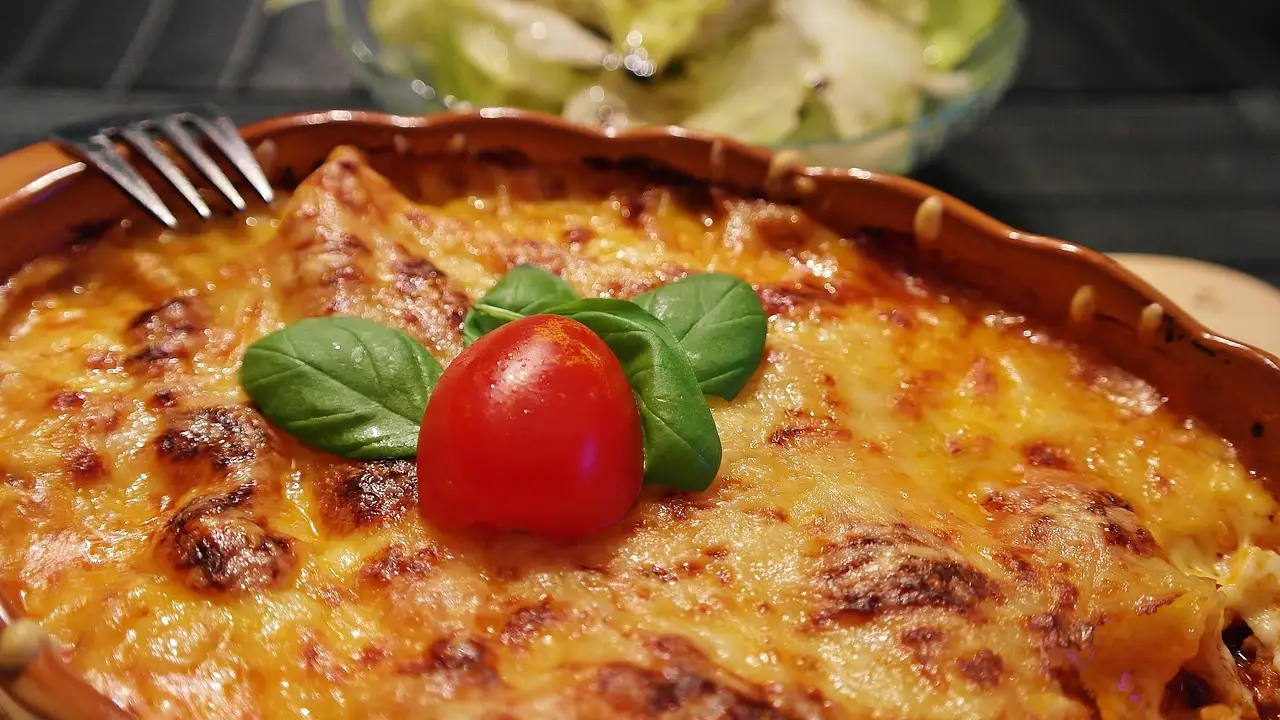

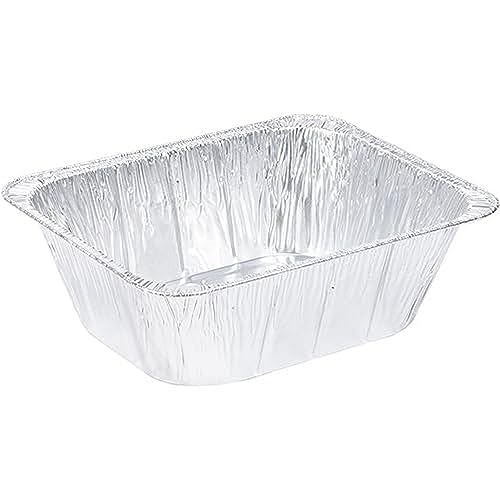
Yes, for many holiday casseroles, disposable aluminum pans work well. They are lightweight, heat-conductive, and sold with or without lids, so they fit baking, freezing, storing, and transport. The limit is strength: thin pans suit sturdier bakes, but wet or heavy fillings need a thicker pan and more support.
Use a disposable pan when you want a direct path from prep to oven to table without washing a bulky dish. Reach for a sturdier casserole dish when the filling is loose, very heavy, or likely to move while hot.
When a disposable pan is the right choice
A disposable foil pan makes sense when the casserole is moderately firm, the recipe fits the pan size, and you want an easy freezer-to-oven option. It also works well for potlucks, gift meals, and holiday batches that need to travel.
For most family casseroles, a 13 x 9 inch aluminum pan is the familiar starting point. If the recipe is larger, a half-size pan can suit bigger side dishes. For very large crowds, a full-size steam table pan is the size class to consider.
When to choose a sturdier dish instead
Choose an oven-to-table casserole dish when the recipe is liquid-heavy, especially if it will move from counter to oven to table several times. A sturdy baking dish also helps when the casserole is part of the main holiday spread and you want a serving vessel that does not flex.
Suppose a baked-egg strata sits loose in the center before baking. That filling can slosh during transport and pull a thin pan out of shape. In that case, a thicker pan or a rigid ceramic dish is the safer call.
Disposable aluminum pan sizes and depths
Pan size matters because depth changes both capacity and risk. Shallow pans are easier to fill and brown, but they are less forgiving with saucy fillings. Deeper pans hold more, yet they still need the right gauge if the casserole is heavy or moving across town.
13 x 9 inch aluminum pan
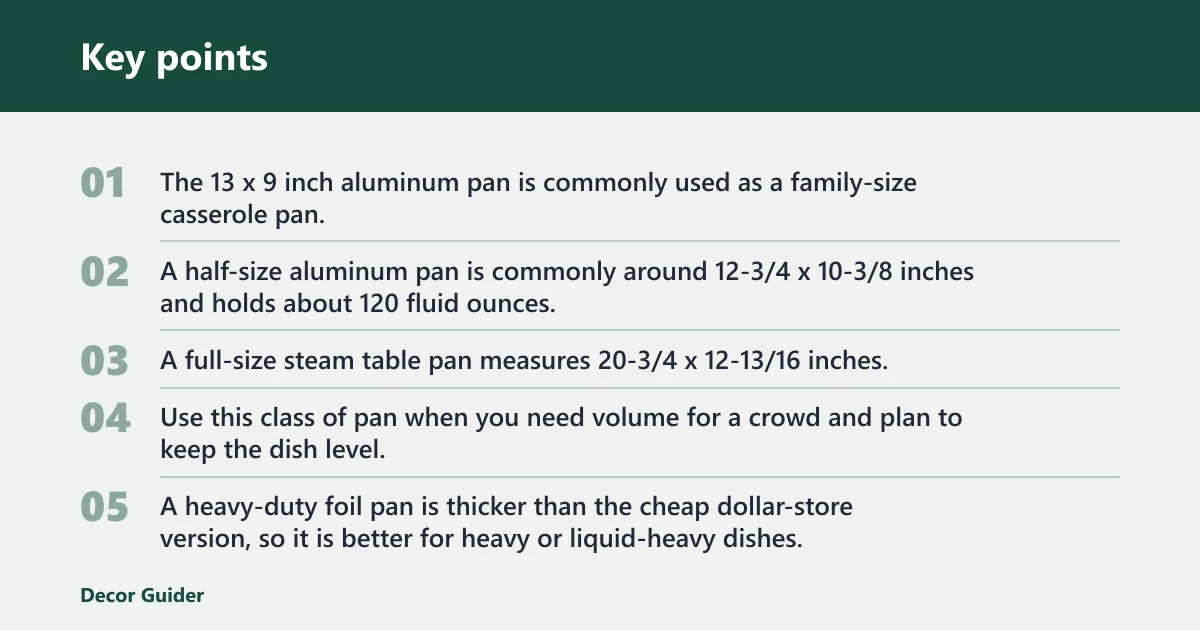
The 13 x 9 inch aluminum pan is commonly used as a family-size casserole pan. It fits many holiday side dishes and most recipes written for a standard rectangular bake dish. It is a practical choice when the filling is dense enough to hold together and you do not need the extra capacity of a larger catering pan.
Half-size aluminum pan
A half-size aluminum pan is commonly around 12-3/4 x 10-3/8 inches and holds about 120 fluid ounces. That makes it a strong match for side dishes like mashed potatoes and mac and cheese when you need more volume than a standard family pan provides.
Because the footprint is larger, a half-size pan is useful when you are feeding a bigger group but still want a pan that fits a standard residential oven. It is a good middle ground for holiday prep.
Full-size steam table pan
A full-size steam table pan measures 20-3/4 x 12-13/16 inches. The deep version is listed at 3-1/8 inches, the medium version at 2-3/16 inches, and the shallow version at 1-11/16 inches. This size is geared toward catering buffets and very large groups.
Use this class of pan when you need volume for a crowd and plan to keep the dish level. It is not the best choice for a single small casserole that will only partly fill the pan.
Heavy-duty foil pan
A heavy-duty foil pan is thicker than the cheap dollar-store version, so it is better for heavy or liquid-heavy dishes. If the casserole is dense, hot, or likely to travel, that added stiffness lowers the chance of bending and sidewall collapse.
When weight is a concern, choose heavy-duty first. Thin pans can work, but only for lighter fillings, shorter trips, and careful support underneath.
Holiday casserole decision table
This table gives a simple yes-or-no framework for common holiday casseroles. Use the pan depth, lid choice, and risk level together. If the dish is saucy, heavy, or egg-based, move up to a thicker pan or a sturdier dish.
| Holiday casserole type | Best disposable pan depth | Lid or foil cover | Freeze? | Bake? | Transport? | Risk level |
|---|---|---|---|---|---|---|
| Stuffing or dressing | Shallow to medium | Tight foil cover for freezing; remove for baking | Yes | Yes | Yes, if supported | Low to medium |
| Green bean casserole | Medium | Foil cover or matching lid for freezing | Yes | Yes | Yes, short trips | Medium |
| Mashed potatoes | Medium to deep | Matching lid preferred; foil works | Yes | Yes | Yes, with a rigid tray under it | Medium |
| Mac and cheese | Medium to deep | Tight foil cover or lid | Yes | Yes | Yes, if the pan is heavy-duty | Medium |
| Sweet potato casserole | Shallow to medium | Foil cover for freezing | Yes | Yes | Yes, short trips | Medium |
| Egg-based breakfast bake | Medium | Tight foil cover only for freezing | Yes, with care | Yes | No, unless pan is sturdy and fully supported | High |
| Very saucy noodle casserole | Deep | Tight foil cover and rigid support | Yes, if thickened | Yes, with caution | No, unless heavy-duty | High |
The table is the decision rule in plain form: the wetter or heavier the casserole, the thicker and deeper the pan should be. If you are unsure, move one step sturdier before you freeze or travel with it.
How to prep a casserole in a disposable pan
For freezer-safe casserole prep, mix the dish, chill it if your recipe calls for that, cover it tightly, label it, and freeze it flat. Many recipes freeze well in disposable aluminum pans, but the pan still needs to fit the filling and the cover has to seal well.
-
Choose the right pan. Match the recipe size to the pan size, then choose a heavy-duty foil pan when the filling is dense or wet. A 13 x 9 inch aluminum pan suits many holiday casseroles; a half-size pan works for larger batches; a full-size steam table pan is for crowd service.
-
Assemble with headspace. Leave about half an inch of headspace at the top so the filling has room to expand as it freezes. That extra space helps prevent doming, seepage, and a lid that will not sit flat.
-
Cover tightly. Use a matching lid or aluminum foil, and press the cover down so it fits tightly and securely. A loose cover lets air in and raises the chance of freezer burn.
-
Label before freezing. Write the dish name and date on the cover before the pan goes into the freezer. Keep the label simple and visible so you can tell at a glance what needs to be baked first.
-
Freeze flat. Set the pan on a level shelf until firm, then move it to a stable spot in the freezer. Frozen disposable-pan casseroles can be kept for up to three months, but quality drops if the cover is loose or the filling is exposed to air.
Picture a green bean casserole packed into a shallow thin pan with no headspace. The topping may touch the cover, the sauce may push upward, and the pan can bow when lifted. A slightly deeper heavy-duty pan avoids that chain of problems.
Can you freeze a casserole in a disposable aluminum pan?
Yes, you can freeze a casserole in a disposable aluminum pan, and many recipes handle that format well. The key is to cover the dish tightly, leave a little room at the top, and label it with the name and date. That makes freezer storage simpler and reduces waste.
Best cover options for freezer storage
Use a matching lid when the pan comes with one, or use aluminum foil wrapped tightly over the top. The goal is a snug seal that blocks air and prevents freezer burn. A loose sheet of foil is not enough.
If the pan will ride in and out of the freezer before baking day, a lid helps more than foil because it stays in place better. Foil still works when you press it firmly around the rim.
Labeling and storage timing
Label the dish name and date before freezing. A freezer-safe casserole prep is commonly kept for up to three months, which gives you a practical window for holiday planning without guessing what is inside.
When the date is visible, you can rotate older pans to the front and use them first. That matters most when you prep several holiday sides at once.
Can you bake and transport one safely?
Yes, but only if the pan, filling, and support match the job. Greasing helps with cleanup and sticking, headspace reduces overflow, and a rigid sheet pan or baking tray keeps the disposable pan from flexing when it is hot or full.
Do disposable aluminum pans need to be greased before baking?
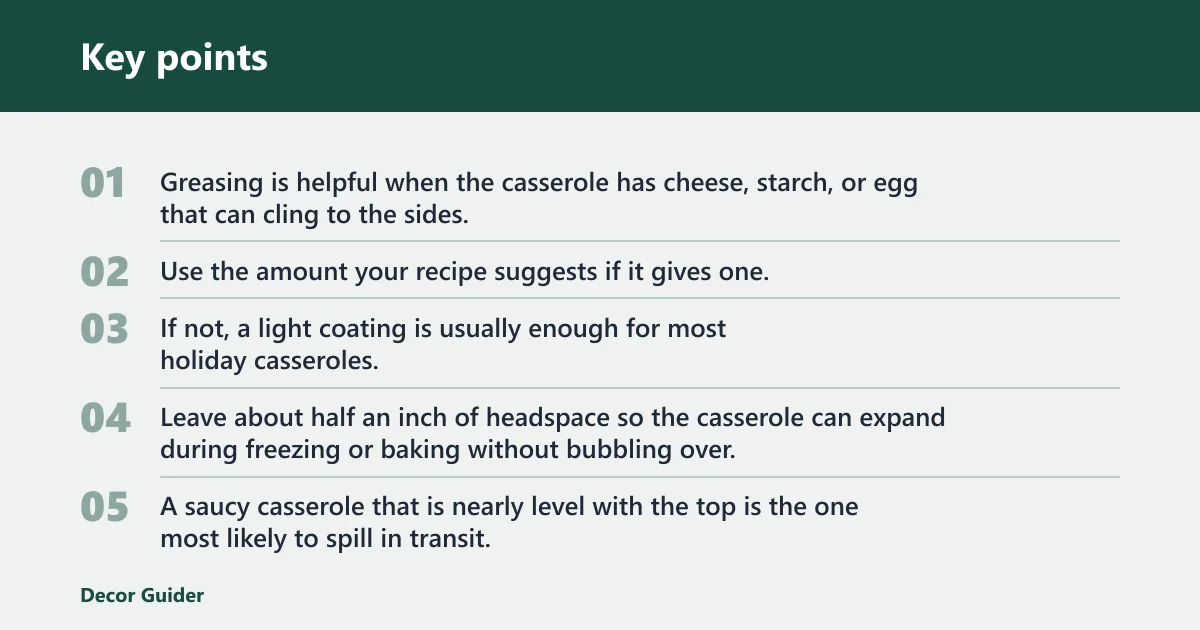
Greasing is helpful when the casserole has cheese, starch, or egg that can cling to the sides. It is not always required, but it makes serving cleaner and reduces stuck-on corners, especially with mashed potatoes, pasta bakes, and breakfast casseroles.
Use the amount your recipe suggests if it gives one. If not, a light coating is usually enough for most holiday casseroles.
How full should a disposable aluminum pan be filled for casserole prep?
Do not fill the pan to the rim. Leave about half an inch of headspace so the casserole can expand during freezing or baking without bubbling over. That buffer also makes it easier to cover the pan securely.
A saucy casserole that is nearly level with the top is the one most likely to spill in transit. If the filling comes close to the rim, move up to a deeper pan.
Can you transport a hot casserole in a disposable aluminum pan?
Yes, but a rigid sheet pan or baking tray is important to keep the disposable pan from flexing when it is hot or full. Place the pan on a rigid baking sheet or tray before you move it, because a hot disposable pan can bend under the weight of the filling. Keep the cover tight and the pan level.
A common first-timer mistake is lifting a full hot pan by the rim alone. The sides can flex, the filling can slosh, and the corner seam can open. A tray underneath solves most of that risk.
When to upgrade to oven-to-table bakeware
Upgrade when the casserole is liquid-heavy, especially if it includes a loose custard, a lot of sauce, or a topping that should stay intact from oven to table. A sturdier oven-to-table casserole dish holds about 5 quarts and often has wide tab handles that make transfer easier.
That style also works well for repeated holiday batches. If the same dish will be baked, cooled, reheated, and served multiple times, sturdier bakeware lowers the chance of bending and can cut down on disposable waste.
For family meals with simple transport, a disposable pan is usually enough. For a large spread with several handoffs, a heavier dish is the safer choice.
Frequently asked questions
Can you prep a holiday casserole in a disposable aluminum pan?
Yes. Many holiday casseroles can be mixed, frozen, baked, and transported in disposable aluminum pans. The best results come from matching the pan depth and thickness to the filling. Thin pans work for firmer casseroles, while heavy-duty foil pans are better for wetter or heavier dishes.
Is it safe to bake a casserole in a disposable aluminum pan?
Yes, as long as the pan is rated for oven use and you keep the filling within the pan’s limits. Disposable foil pans are heat-conductive and made for baking, but a flimsy pan can warp if the casserole is very heavy or very saucy. Use a sturdy sheet pan under it.
Should you use a lid or foil when freezing a casserole in a disposable pan?
Use whichever cover fits tightly and securely. A matching lid is convenient, but aluminum foil can also work if it is pressed snugly over the rim. Either way, the cover should block air to prevent freezer burn and keep the surface from drying out.
What size disposable aluminum pan is best for a 13×9 casserole?
A 13 x 9 inch aluminum pan is the direct match for many rectangular casseroles. If you want more depth or more volume, a half-size pan may be a better fit for larger holiday side dishes. Choose the size that matches the recipe’s fill level, not just the footprint.
Are disposable aluminum pans strong enough for liquid-heavy holiday casseroles?
Sometimes, but only with the right pan. Liquid-heavy casseroles are the ones most likely to warp or spill in a thin foil pan, so heavy-duty foil and deeper walls are safer. If the filling sloshes or feels very loose, a sturdier dish is the better choice.
What disposable aluminum pan size fits most holiday side dishes?
For most holiday side dishes, a 13 x 9 inch aluminum pan is the most common fit. For bigger batches, a half-size pan gives more room and holds about 120 fluid ounces. If you are cooking for a crowd, the full-size steam table pan is the larger catering option.
Products related to this article
Sponsored / affiliate links. As an Amazon Associate I earn from qualifying purchases. I may earn additional commission from eligible campaigns.