Best Half Sheet vs Quarter Sheet Pans for Holidays
Choose half sheet pans if you need one pan to roast, brown, and hold larger holiday side dishes; choose quarter sheet pans if your oven is crowded, you want faster rotation, or you’re portioning smaller batches. Pick wrong, and you lose oven space, slow browning, and end up with uneven batches or extra cleanup. This guide compares fit, batch size, browning, cleanup, and durability so you can pick the right pan.
Choose half sheet pans if you need one pan to roast, brown, and hold larger holiday side dishes; choose quarter sheet pans if your oven is crowded, you want faster rotation, or you’re portioning smaller batches. Pick the wrong size, and you lose oven space, slow browning, and end up with uneven batches or extra cleanup. This guide compares fit, batch size, browning, cleanup, and durability so you can pick the right pan.
Quick comparison
| Product | Badge | Best for | Price | ||
|---|---|---|---|---|---|
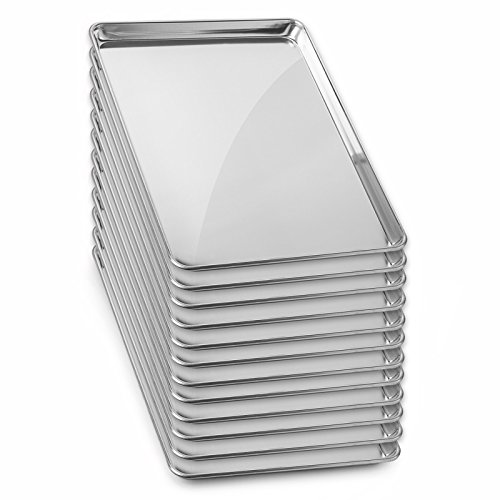 |
GRIDMANN 13" x 18" Commercial Grade Aluminum Cookie SheetGRIDMANN | Our pick | Half sheet · aluminum · 12 pans | $98.99
Price as of 28 Nov 2026
|
View |
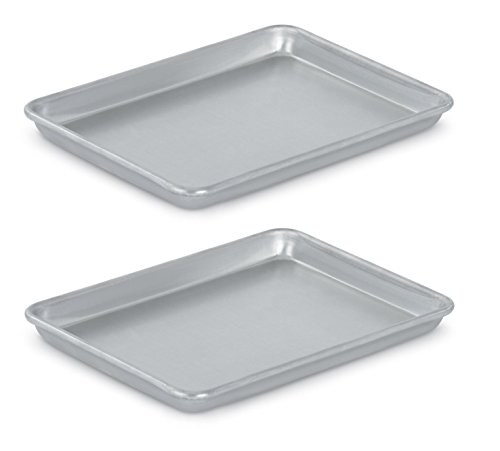 |
Vollrath (5220) Wear-Ever Collection Quarter-Size Sheet PansWear-Ever | Also great | Quarter sheet · aluminum · 2 pack | $23.69
Price as of 28 Nov 2026
|
View |
Half Sheet fits larger holiday jobs and broader roasting runs. Quarter Sheet wins when you need tighter staging, faster swaps, or better use of a small oven.
How we chose
The comparison leans on holiday batch size, oven fit and rack spacing, durability and warp resistance, and cleanup and storage. It also weighs the tasks that actually stack up in a holiday kitchen: cookies, vegetables, bacon, side dishes, and holding prepped ingredients.
Where the pan’s material changes the result, that gets called out directly. Bare aluminum, nonstick, and aluminized steel do different jobs, so the better choice depends on browning, release, and heat tolerance.
Half sheet pan: best for bigger holiday batches
A half sheet pan is the better fit when one pan needs to do more work at once. Taste of Home lists half sheet size as 18 x 13 inches, and that footprint is why it handles cookies, roasted vegetables, and holiday sheet-pan meals with room to spare. Food can sit in a single layer, which helps browning and keeps timing steadier from tray to tray.
The best versions are usually bare aluminum or aluminized steel with a rolled or reinforced rim. Epicurious calls Nordic Ware’s natural aluminum half sheet the best baking sheet overall and identifies it as 20-gauge bare aluminum, which is a useful benchmark because thicker construction resists warp better than thin pans.
The drawback is simple: a half sheet can be too much pan for a small oven or a narrow work surface. If your rack spacing is tight, or you need several pans moving in quick turns, a larger sheet can slow the whole sequence.
Best uses for larger holiday runs
Half sheets are the practical choice for bigger cookie trays, larger vegetable batches, and side dishes that need room to roast instead of steam. They also work well when you need one tray to move from oven to counter to serving area without decanting into another dish.
Materials and durability to look
Bare aluminum conducts heat efficiently and supports even browning, but it can stain or pit with acidic foods, so hand washing is usually the safer route. Aluminized steel is another common durable option, and a rolled or reinforced rim helps the pan stay flatter under heat changes.
Gauge matters too. Eighteen-gauge or heavier construction is favored for anti-warp performance, while thinner pans can twist if they see sharp temperature shifts or a cold pan meets a hot oven.
When a half sheet is too much pan
A half sheet becomes inefficient when you are cooking in small rounds or when your oven can only fit one tray comfortably with airflow around it. In that case, the pan’s larger footprint may reduce rotation speed more than it helps capacity.
Quarter sheet pan: best for smaller ovens
A quarter sheet pan is the better fit when you need smaller batches, quicker swaps, or a pan that can pull double duty as a serving tray. The commercial quarter-size pan listed in the sourced facts is 9 1/2 x 13 inches, and it is marketed for smaller batches and portions. Taste of Home lists quarter sheet size as 13 x 9 inches, which is close enough in everyday kitchen use to show the same compact category.
Quarter sheets are especially useful in crowded holiday prep. They are easier to stage on the counter without taking over the workspace, easier to slide in and out of a small oven, and easier to store when cabinet space is tight. The Vollrath Wear-Ever set is described as using 19-gauge aluminum, wire-reinforced rims, and tapered sides that stack well, which can suit compact kitchens.
The drawback is capacity. A quarter sheet can become inefficient if you need to roast large volumes of vegetables or bake a full cookie run, because you will spend more time cycling pans and less time cooking. It can also mean more parchment changes and more tray handling.
Best uses for portioned baking and holding prep
Quarter sheets are ideal for individual servings, holding chopped herbs or aromatics, and staging ingredients before they go into the oven. A quarter sheet can also double as a serving tray, which is useful when the same pan needs to move from prep to table.
Why smaller pans speed rotation
Smaller pans fit more easily beside other items in a packed oven, which makes it simpler to rotate trays or slide in a second batch while the first one finishes. That matters during holiday cooking, when timing is often tighter than during ordinary weeknight baking.
Say your oven has two usable racks and one holds a roast while the other needs cookies in short rounds. A quarter sheet leaves more breathing room for both pans, so you can keep batch flow moving without blocking heat circulation.
Where quarter sheets fall short
Quarter sheets are less efficient for large side dishes or big cookie batches. If you need three or four rounds of the same item, the smaller pan saves space but can cost you time, and that trade-off matters once the menu grows.
What size is a half sheet pan?
A half sheet pan is commonly listed at about 18 x 13 inches, and that size is a standard reference point for many home kitchens. It is large enough for cookies, vegetables, and sheet-pan meals, but it still fits many conventional ovens better than oversized commercial trays.
That footprint is part of the reason half sheets are the default for broad roasting jobs. The larger surface gives food room to spread, which matters when you want browning instead of crowding.
What size is a quarter sheet pan?
A quarter sheet pan is commonly listed at 9 1/2 x 13 inches, with Taste of Home also listing quarter sheet size as 13 x 9 inches. Either way, it is the smaller, more compact pan and is often treated as a portioning tool as much as a baking sheet.
The smaller footprint helps in tight ovens, narrow racks, and small kitchens. It also makes the pan easier to store, carry, and reuse as a serving tray.
Which one should you buy?
Buy a half sheet if your holiday menu includes one-pan roasting, larger cookie runs, or side dishes that need broad surface area. Buy a quarter sheet if your oven is crowded, your counter space is limited, or you cook in shorter, smaller rounds.
Choose material based on the job. Bare aluminum is the best all-around browning choice, nonstick is easier for release and cleanup, and aluminized steel is a durable middle ground. If you want maximum warp resistance, look for a rolled or reinforced rim and thicker gauge construction.
-
Match the pan to the menu.
Use a half sheet when one tray must carry most of the workload, especially for vegetables, cookies, or reheating sides. Use a quarter sheet when the menu is split into smaller components that need faster turnover. -
Check oven fit first.
Measure the usable rack area and leave room for airflow around the pan. A larger pan that blocks circulation can slow browning more than a smaller pan with better spacing. -
Pick the surface you want.
Bare aluminum is the straightforward choice for even browning. Nonstick helps with release and cleanup, but it may have lower oven limits and can wear faster at roasting temperatures. -
Look for warp resistance.
Reinforced rims and heavier gauges matter most if you move pans between temperature extremes. Thin pans are more likely to flex, especially when a cold pan goes into a very hot oven.
Holiday sheet pan table
| Task | Recommended pan size | Expected batch count | Oven-space benefit | Cleanup notes | Best material choice |
|---|---|---|---|---|---|
| Cookies | Half Sheet | Fewer rounds for a standard batch; more cookies per tray | Good for broad, even spacing on one rack | Parchment makes release easier and reduces scrubbing | Bare aluminum or bare aluminum with parchment |
| Roasted vegetables | Half Sheet | Usually one larger batch per tray | Better spread means less steaming | Acidic glaze can stain bare aluminum, so wash promptly | Bare aluminum or aluminized steel |
| Candied nuts | Quarter Sheet | Smaller, controlled batches | Easy to rotate and watch closely | Silicone mat helps with repeat batches and sticky sugar | Nonstick or bare aluminum with parchment |
| Bacon | Quarter Sheet | Best for smaller portions or breakfast-for-a-few | Fits compact ovens and leaves room for other trays | Grease cleanup is simpler on lined pans | Bare aluminum with parchment |
| Reheating sides | Half Sheet | One larger dish or multiple side portions at once | Useful when you need one pan to move from oven to table | Covering with foil can reduce drying; line for easier cleanup | Bare aluminum |
| Staging ingredients | Quarter Sheet | Several small prepped groups | Keeps the counter organized in tight kitchens | Quick wipe-down is usually enough unless juices spill | Any durable pan; aluminum is the simplest pick |
Choose Half Sheet if… / Choose Quarter Sheet if…
Choose Half Sheet if your holiday cooking centers on one-pan roasting, larger cookie batches, or side dishes that need space to brown evenly. It is also the better pick if you want fewer total batches and less tray shuffling.
Choose Quarter Sheet if your oven is small, your rack space is crowded, or you want to move through smaller rounds quickly. It is also the better choice for holding prepped ingredients, serving small portions, and storing pans in tight cabinets.
Frequently asked questions
Is a half sheet pan better than a quarter sheet pan for holiday batch cooking?
For most larger holiday jobs, yes. A half sheet is better when one pan needs to roast, brown, or hold a bigger side dish. A quarter sheet is better when speed and oven access matter more than capacity, especially in smaller kitchens or when several items need rotating.
How many cookies fit on a half sheet pan vs a quarter sheet pan?
A half sheet generally holds more cookies in one round because its 18 x 13-inch footprint gives you more spacing room. A quarter sheet holds fewer cookies per batch, so you usually need more rounds. Exact counts depend on cookie size and the space you leave for spreading.
Can quarter sheet pans handle roasting vegetables for Thanksgiving sides?
Yes, if the batch is small. Quarter sheets work well for compact portions, but they become inefficient for bigger vegetable loads because the food crowds sooner and browns less evenly. For a full side dish, a half sheet is usually the more practical choice.
Do half sheet pans warp less than quarter sheet pans?
Not automatically. Warp resistance depends more on gauge, rim design, and how fast the pan changes temperature. Thicker pans and rolled or reinforced rims resist flexing better, while thinner pans can warp if they are moved between very hot and very cold conditions.
Should I buy nonstick or bare aluminum sheet pans?
Buy bare aluminum if you want the strongest browning and a simple, durable workhorse. Buy nonstick if cleanup and release matter more than high-heat versatility. Keep in mind that some nonstick sheet pans have lower oven limits, and bare aluminum can discolor with acidic foods.
Which sheet pan size do professional kitchens use most?
Commercial kitchens rely heavily on half-sheet and quarter-size pans because they fit common batch work and staging tasks. The half sheet is the more versatile all-purpose size for larger output, while the quarter size is common where smaller portions, tighter storage, or faster rotation matter more.
Products related to this article
Sponsored / affiliate links. As an Amazon Associate I earn from qualifying purchases. I may earn additional commission from eligible campaigns.