Walfos Universal Lid vs Nuovva Cast Iron Casserole: The Real Pot vs Pan Difference
You might think comparing a universal lid to a cast iron casserole is apples to oranges. But the real question underneath is the pot vs pan difference. That difference shapes every pot and pan you own, and it’s why you reach for one over the other without thinking.
| Our Pick | Runner Up |

|

|
| Walfos Universal Lid for Pots, Pans and Skillets… | nuovva Shallow Cast Iron Casserole with Lid –… |
| See on Amazon | See on Amazon |
As an Amazon Associate I earn from qualifying purchases.
Here’s the bottom line: pots have tall, straight sides for holding liquid and simmering. Pans have low, flared sides for searing and quick evaporation. The Walfos universal lid is a pan accessory. The Nuovva casserole is a pot. And knowing which one fits your cooking style matters more than the brand name.
This matters most if you’re outfitting a first kitchen or replacing worn-out cookware. You need tools that match how you actually cook, not what looks good on a shelf. So let’s break down the pot vs pan difference in practical terms, then decide which of these two products earns a spot in your cabinet.
Quick Answer: The 30-Second Rule
Stand in front of your stove and think about what you’re about to do. If you’re boiling pasta, making soup, or braising a roast, you need a pot. If you’re searing a steak, frying an egg, or reducing a sauce, you need a pan.
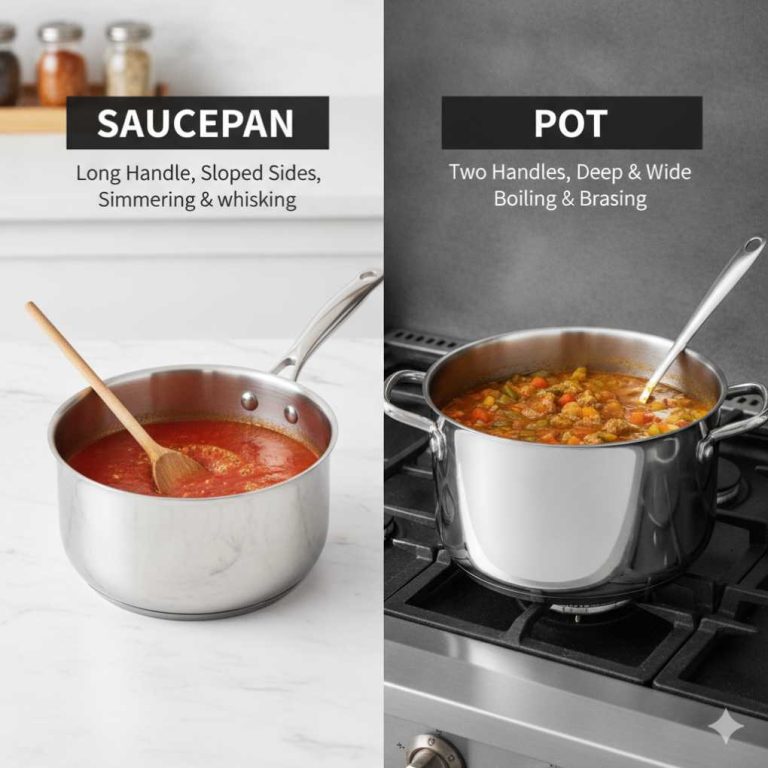
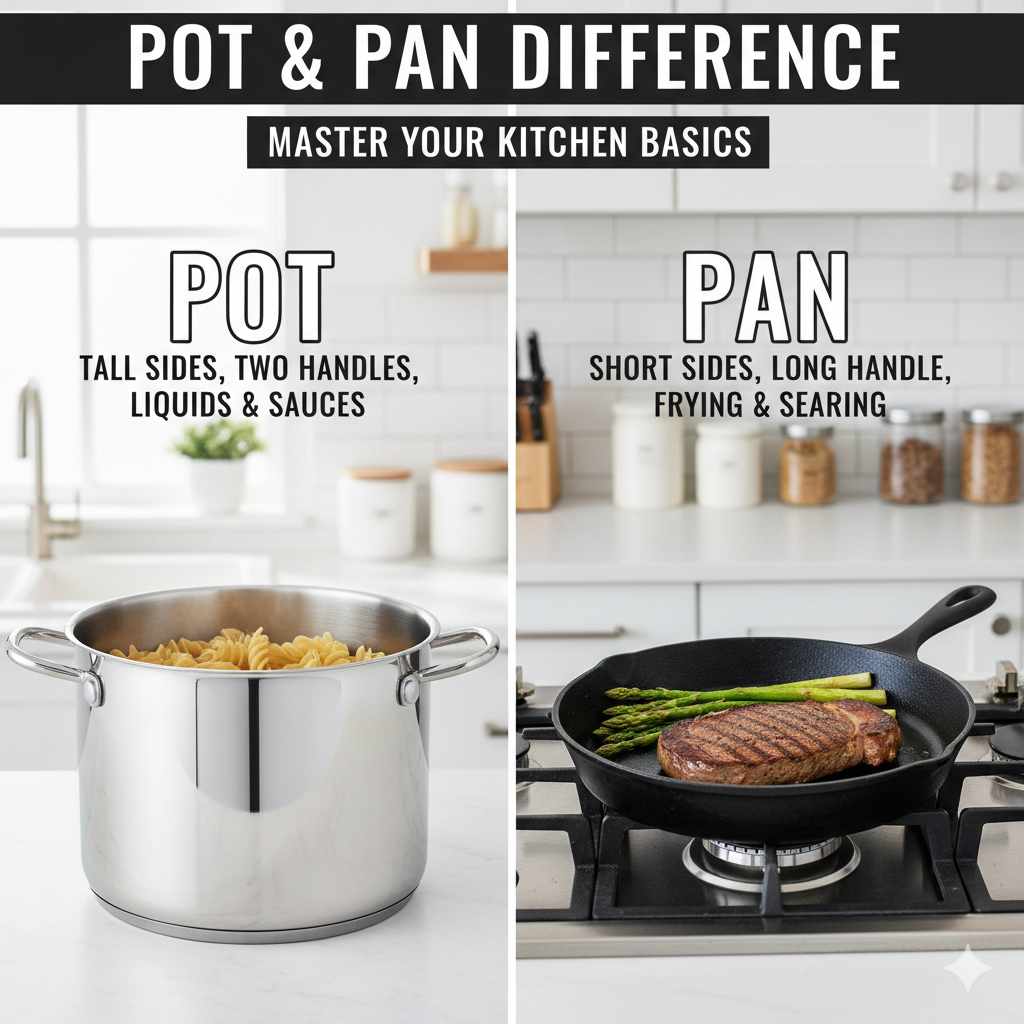
The 30-second rule is simple: look at the sides. Tall and straight means pot. Low and flared means pan. That’s the entire pot vs pan difference in one glance.
Now, the Walfos lid fits both pots and pans from 10 to 12 inches, so it doesn’t force you to choose. The Nuovva casserole is clearly a pot, with its deep, straight sides and tight lid. That difference in shape changes how heat moves, how liquid evaporates, and what you can cook in each.
The Primary Difference: Depth and Sides
Pots are tall. Their straight sides hold volume, so you can fill them with water for pasta or stock. The Nuovva casserole, at 5 quarts, gives you serious capacity for batch cooking. You can brown meat, add liquid, and simmer for hours without splashing over.
Pans are shallow. The Walfos lid is designed for pans up to 12 inches, which means it’s meant for low-profile cooking. You’re not going to boil a gallon of water in a pan. You’re going to sear, sauté, and finish dishes quickly.
Why the Height Matters for Cooking
Tall sides trap steam and heat. That’s good for braising, where you want moisture to stay in the pot. The Nuovva’s tight-fitting lid locks in flavor and moisture, which is exactly what a pot should do. It’s why the casserole excels at slow-cooked dishes.
Low sides let moisture escape. That’s good for searing, because steam is the enemy of a good crust. When you sear in a pan, you want the surface dry so the meat browns, not steams. The Walfos lid, with its steam vent, actually helps here. It lets excess pressure escape, so you can monitor browning without lifting the lid and losing heat.
The Curve of the Sides: Flared vs. Straight
Pans flare outward. That curve makes it easy to flip food with a spatula and toss ingredients. The Walfos lid is built for that shape, with a silicone rim that grips the flared edges of most pans. It’s not perfect on every pan, but it works well on standard skillets and sauté pans.
Pots have straight sides. That’s why a casserole like the Nuovva can hold a tight-fitting lid with no gaps. The straight walls also make it easier to stack ingredients and stir without splashing.
How Sides Affect Evaporation and Searing
Here’s the physics that most people miss. A pan’s wide, open surface area means liquid evaporates faster. That’s why you can reduce a sauce in a pan in minutes, but it takes forever in a tall pot. If you’re making a pan sauce after searing, you want that wide surface.
The Nuovva casserole has a smaller surface area relative to its volume. That means less evaporation, which is perfect for stews and braises where you don’t want the liquid to cook off too quickly. The enamel coating on the Nuovva also helps with even heat distribution, so you get consistent simmering across the bottom.
Handles and Lids: The Physical Clues
Look at the handles. Pans usually have one long handle, because you’re lifting and tossing. The Walfos lid has a silicone knob that stays cool to the touch, so you can grab it mid-cook without a mitt. That’s a pan-focused design.
Pots have two short handles or a loop on each side. The Nuovva casserole has sturdy side handles, which makes sense for a heavy cast iron pot. You need both hands to move it when it’s full.
Lids tell you a lot too. The Walfos lid is a universal fit, which means it’s a compromise. It won’t seal as tightly as a custom lid. But it’s dishwasher-safe and works across multiple pans, which is a huge convenience if you’ve lost lids over the years. The Nuovva lid is custom-fit, so it seals perfectly. That’s why it’s better for slow cooking.
The ‘Hybrid’ Confusion: Sauciers, Rondeaus, and Braisers
Before you buy anything, know that the pot vs pan difference isn’t always black and white. There are hybrids that blur the line.
A saucier has sloped sides like a pan but is deeper like a pot. It’s great for sauces and risotto. A rondeau is wide and shallow like a pan but has straight sides like a pot, making it ideal for braising and batch cooking. A braiser is basically a wide, shallow pot with a lid, perfect for searing then simmering.
The Nuovva casserole is close to a braiser. It’s shallow for a pot, which gives you more surface area for browning, but it still has the depth for liquid. That makes it more versatile than a traditional stockpot.
The Walfos lid doesn’t resolve this confusion. It’s a lid, not a pot or pan. But it works on all these hybrids, which is its strength.
Pot vs. Pan: A Side-by-Side Comparison Table
| Feature | Walfos Universal Lid | Nuovva Cast Iron Casserole |
|---|---|---|
| Core Purpose | Lid for multiple pans and pots | 5-quart cast iron pot with lid |
| Shape | Flat, fits flared sides | Shallow, straight sides |
| Material | Tempered glass, silicone rim | Cast iron with enamel coating |
| Heat Resistance | 450°F silicone, glass for oven | Oven safe up to 500°F |
| Compatibility | Fits 10-12 inch cookware | All cooktops, including induction |
| Cleaning | Dishwasher-safe | Hand wash recommended (enamel) |
| Best For | Covering pans while cooking | Braising, stewing, roasting |
| Storage | Flat, easy to store | Bulky, heavy |
Which Should You Buy First? (A Simple Guide)
If you’re starting from scratch, buy a pan first. Most weeknight cooking is searing, sautéing, and frying. A good 10-12 inch pan covers that. The Walfos lid makes that pan more useful because you can cover it to melt cheese or keep food warm.
Add a pot like the Nuovva when you start making soups, stews, or braises. That’s when you need the depth and the tight lid.
For budget, the Walfos lid is a low-cost add-on that solves a real problem: missing lids. The Nuovva is a bigger investment, but it’s a workhorse that lasts decades if cared for.
For space, the flat Walfos lid stores easily in a drawer. The Nuovva is heavy and takes up cabinet space. If you have a small kitchen, prioritize the lid.
For experience level, beginners benefit from the Walfos lid because it’s forgiving and easy to clean. The Nuovva requires some learning, like controlling heat to avoid sticking, even with the enamel coating.
Pick the Walfos lid if you already own pans and need a versatile cover that’s dishwasher-safe. Pick the Nuovva casserole if you’re ready to invest in a pot that does the heavy lifting for slow cooking.
Final Verdict: Why You Need Both
The pot vs pan difference isn’t about one being better. It’s about matching the tool to the task. The Walfos universal lid is a smart, cheap solution for pan cooking. The Nuovva casserole is a serious pot for serious cooking.
If you can only buy one, think about what you cook most. If it’s quick meals, get the lid and use your existing pans. If it’s weekend braises and batch cooking, get the Nuovva.
Honestly, most kitchens need both. They serve different purposes. The Walfos lid makes your pans more versatile. The Nuovva gives you pot power. Together, they cover the full spectrum of home cooking.
One small caveat: the Walfos lid won’t fit pots with two raised handles, so check your cookware before buying. And the Nuovva is heavy, so it’s not ideal if you have wrist issues.
Frequently Asked Questions
Can I use the Walfos lid on the Nuovva casserole?
Yes, if the Nuovva casserole is within the 10-12 inch diameter range. The Walfos lid is designed to fit most pots, pans, and skillets in that size, but it won’t seal as tightly as the Nuovva’s own lid. For slow cooking, use the original lid. For quick covering, the Walfos works.
Is a cast iron casserole a pot or a pan?
It’s a pot. The straight sides and depth make it a pot, even though the Nuovva is shallower than a traditional stockpot. It behaves like a pot for braising and stewing, but its wide surface also allows for searing. That makes it a hybrid, but it’s closer to a pot than a pan.
What’s the biggest mistake people make with pots and pans?
Using the wrong one for the job. People try to sear in a tall pot and end up steaming the meat. Or they try to boil pasta in a shallow pan and get overflow. Match the tool to the action: tall sides for liquid, low sides for browning.
How do I know if a lid fits my pan?
Measure the diameter across the top of the pan, not the bottom. The Walfos lid fits 10 to 12 inches, so any pan in that range should work. Also check the handle placement. Lids won’t fit pots with two raised handles that get in the way.
For more on specific pan types, see our sauté pan vs frying pan guide. And if you’re deciding between a skillet and a frying pan, read our skillet vs frying pan breakdown. For saucepans specifically, check saucepan vs pot.
Products related to this article
Sponsored / affiliate links. As an Amazon Associate I earn from qualifying purchases. I may earn additional commission from eligible campaigns.