Is an Ikea TV Stand Worth It?
Yes, an IKEA TV stand is worth it if you need clean-looking storage on a moderate budget and can live with flat-pack assembly. The value is strongest when you match the stand to your storage needs, room size, and cable plan; it drops fast if you need extra doors, inserts, legs, or a larger modular setup than you expected.
Verdict on Ikea TV stands

- Fits large TVs up to 85 inches
- Stores consoles, routers, and speakers
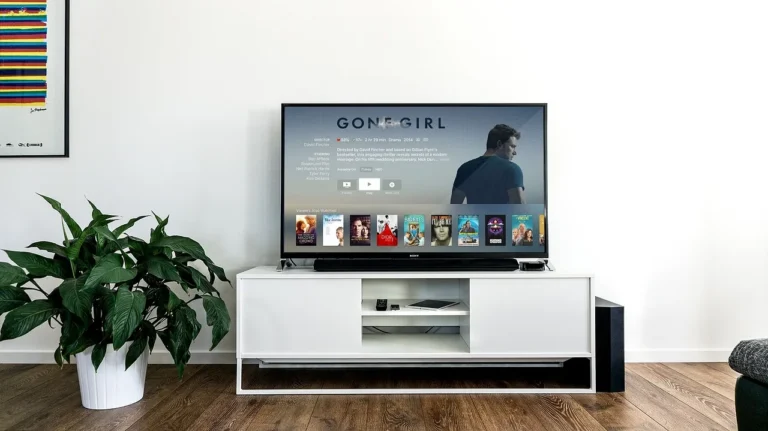
- Helps hide cables and keep spaces tidy
IKEA TV stands are worth it for buyers who want a workable mix of price, storage, and size choices rather than a one-piece luxury cabinet. They are less compelling when you need a very deep, fully finished media unit with no add-ons, or when the extra parts push the total price close to a more complete non-IKEA stand.
IKEA Canada describes TV stands as helping manage clutter and game consoles, and IKEA Germany says its TV stands fit small studios and large family living rooms. That range matters: the line includes very basic open shelves, closed storage, and modular systems that can be configured several ways.
Who gets the most value
Budget buyers, renters, and people who want a stand that can grow with a setup usually get the best value. BESTÅ is the strongest all-around option if you need cable routing, width choices, and a cleaner finished look after add-ons are chosen carefully.
Where the value breaks down
Value breaks down when the base unit looks cheap but the final setup is not. Doors, legs, inserts, and wall anchors can change the real cost. Shallow depth can also make some models awkward for consoles, receivers, or soundbars, even if the shelf width looks generous on paper.
Quick verdict by buyer type
- Budget buyer: LACK is usually the best starting point.
- Renter: LACK or KALLAX works well if you want simple storage and a small footprint.
- Family room buyer: BRIMNES or BESTÅ makes more sense if clutter hiding matters.
- Style-first buyer: HEMNES is the better fit if you want a traditional look without jumping to a custom cabinet.
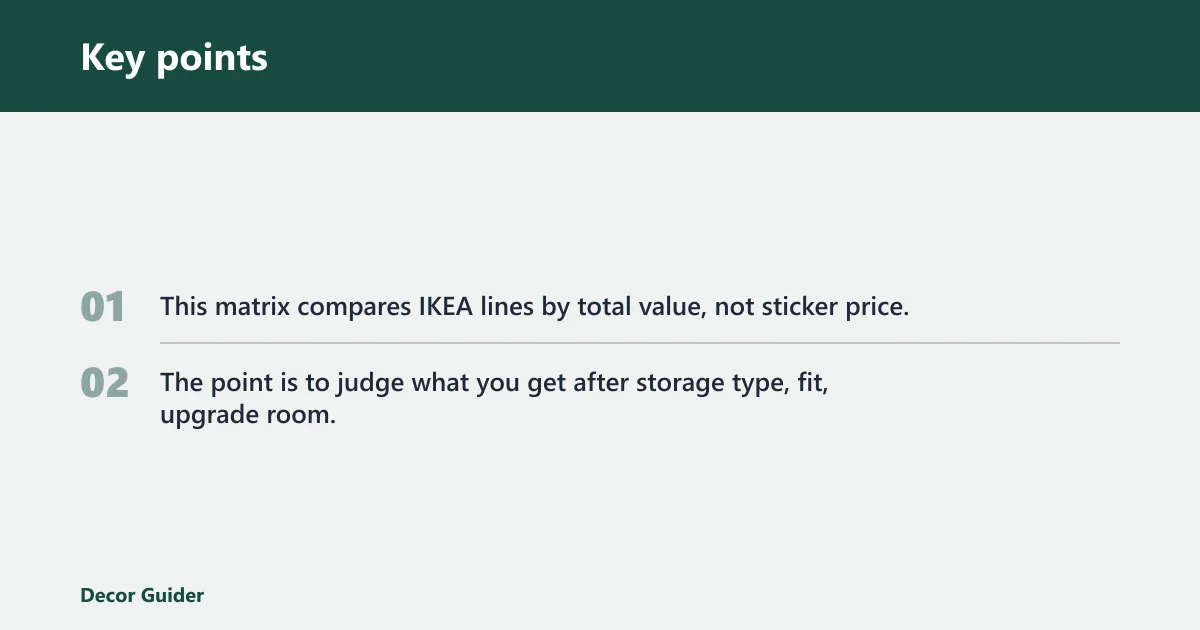
TV stand value matrix
This matrix compares IKEA lines by total value, not sticker price. The point is to judge what you get after storage type, fit, upgrade room, and likely add-on costs are considered.
| Line | Starting price | Storage type | Size fit | Upgrade flexibility | Likely hidden costs | Worth it if | Skip it if |
|---|---|---|---|---|---|---|---|
| LACK | Very low; IKEA Austria lists 90x36x45 cm at €17.99 | Open shelf | Best for small rooms and light setups | Low | Low, but you may need a separate solution for hiding devices | You want the cheapest simple stand and minimal bulk | You need hidden storage or a premium feel |
| BESTÅ | Midrange base price that rises with doors and finishes | Modular; open or closed depending on parts | Good across 120 cm, 180 cm, and 240 cm widths | High | Higher, because doors, legs, and inserts add up | You want a custom fit and cable-friendly routing | You want a one-box purchase with no extra planning |
| BRIMNES | Midrange | Closed storage | Works in medium and larger rooms | Moderate | Moderate, mostly from fit and assembly time rather than add-ons | You want clutter hidden behind doors | You need a very open, airy look |
| KALLAX | Budget to midrange | Open cubbies | Compact to medium setups | Moderate | Moderate if you add boxes, doors, or inserts | You want visible storage with room for bins or consoles | You need cable concealment without extra planning |
| HEMNES | Midrange | Mostly hidden storage | Best in medium and larger rooms | Low to moderate | Lower than BESTÅ, but less flexible overall | You want a traditional look and decent storage | You need a highly configurable media system |
Pros and cons
Pros
- Strong value range, from €17.99 budget options to modular systems.
- Many widths and formats, including 120 cm, 180 cm, and 240 cm choices in BESTÅ.
- Useful storage choices: open shelves, closed doors, drawers, and cubbies.
- Good cable-routing potential on the right models, especially BESTÅ.
Cons
- Add-ons can raise the final cost quickly.
- Open designs can leave consoles, routers, and cords visible.
- Some models feel too shallow for larger gear or deep soundbars.
- Assembly time rises with modular parts and doors.
Is an Ikea TV stand worth it?
Yes, if you want a practical stand and you compare the whole setup instead of the base price alone. IKEA is especially worth it for buyers who need a narrow footprint, a modular layout, or a way to hide clutter without paying for a fully custom cabinet.
It is less worth it if you expect the cheapest model to solve every storage problem. A low-price frame can still need boxes, doors, or extra shelves before it works for your room.
Worth it for budget buyers
Budget buyers usually get the clearest value from LACK. The 90x36x45 cm version is listed in Austria at €17.99, and the design is simple enough for a small TV, a light console setup, or a room where the stand is doing basic duty only.
Worth it for renters
Renters often do well with LACK or KALLAX because both can be moved more easily than a heavy built-in cabinet. Picture a 147×60 cm KALLAX setup in a narrow apartment living room: it can hold bins or devices, but you still need to check how much cable hiding you can manage without extra parts.
Worth it for buyers who want cable control
BESTÅ is usually the strongest choice when cable control matters. Its modular layout gives you more room to route cords, place a router, and organize a console without leaving everything exposed. Closed doors can help too, but only after you factor in the cost of the fronts.
Which Ikea TV stand fits a small living room?
LACK is the easiest fit for very small rooms because it has a simple footprint and a low price point. KALLAX can work when you need a little more storage, but the right choice depends on how much depth you can spare and whether you want open cubbies or a cleaner front.
LACK for the smallest footprints
The LACK TV bench comes in a 90x36x45 cm size, and IKEA US lists one version at 63×13 3/4×14 1/8 inches. That kind of compact footprint helps in tight spaces, but it also limits hidden storage and leaves less room for a router, streamer, or game console.
KALLAX for compact storage
KALLAX is the better small-room choice when you need cube-style storage rather than a bare shelf. IKEA Austria lists a 147×60 cm version, and a 147x39x60 cm format also appears in the range. The tradeoff is that open cubbies can look busy unless you add baskets or boxes.
What depth matters in tight rooms
Depth matters because a stand that looks narrow from the front can still crowd a walkway. A common first-timer mistake is choosing by width alone, then discovering the TV stand blocks a radiator, sticks out past the sofa line, or leaves too little room for cable bends behind the unit.
Are IKEA TV stands sturdy enough for a large TV?
Often yes, but only if the stand matches the TV size, depth, and support pattern. A large screen needs a stable base and enough surface area for the feet or central mount. If the stand is too shallow, too light, or poorly matched to the TV, wobble becomes more likely.
What to check before you buy
Check the width of the stand, the depth of the top surface, and where the TV feet will land. For a large TV, the unit should leave room on both sides of the feet or support the mount cleanly. Also check whether the shelf or cabinet back allows tidy cable routing.
Why depth and support matter
Depth affects stability and gear placement. A shallow unit can make a console or soundbar sit too close to the edge, which is awkward and can feel less secure. A deeper stand usually gives you better spacing for devices and cables, though it takes up more floor area.
When a modular line makes more sense
BESTÅ makes more sense when the TV is large and the media setup is more demanding. Its modular widths, including 120 cm, 180 cm, and 240 cm options, make it easier to match a screen and build in storage for devices, controllers, and remotes without cramming everything onto one shelf.
Bestå to Hemnes comparison
BESTÅ is the strongest modular choice, BRIMNES is the best closed-storage choice, KALLAX suits open cubbies, and HEMNES gives you the most traditional look in this group. The right answer depends less on style and more on whether you want flexibility, concealment, or a simpler build.
BESTÅ for modular flexibility
The same source lists a BESTÅ TV bench with doors, 180x42x38 cm, with 390 reviews and a 3.8 out of 5 star rating. Other variants are also listed around 4.3 out of 5 and 2.4 out of 5, which suggests the system can be strong value when configured well but less satisfying when the finish or part mix is off.
The upside is flexibility. The downside is cost creep. Once you add doors, legs, and finish choices, the total can move well beyond the first number you saw.
BRIMNES for closed storage
BRIMNES is the better pick if you want to hide clutter fast. The same source lists the BRIMNES TV bench at 180x41x53 cm, and it has a 4.5-star rating there. That makes it a strong option for families, shared living rooms, or anyone who wants consoles and cables out of sight.
KALLAX for open cubbies
KALLAX sits between a shelf and a storage cube system. It works best when you want visible compartments, baskets, or a mix of display and storage. It is not the best route if you want the cleanest cable concealment, because open cubbies leave more of the setup exposed.
HEMNES for a traditional look
The same source lists HEMNES at 148x47x57 cm, and also at 183x47x57 cm in the range. Its 4.4-star rating suggests steady buyer approval, especially for people who want a more classic cabinet profile and midrange pricing without going all the way to a highly configurable system.
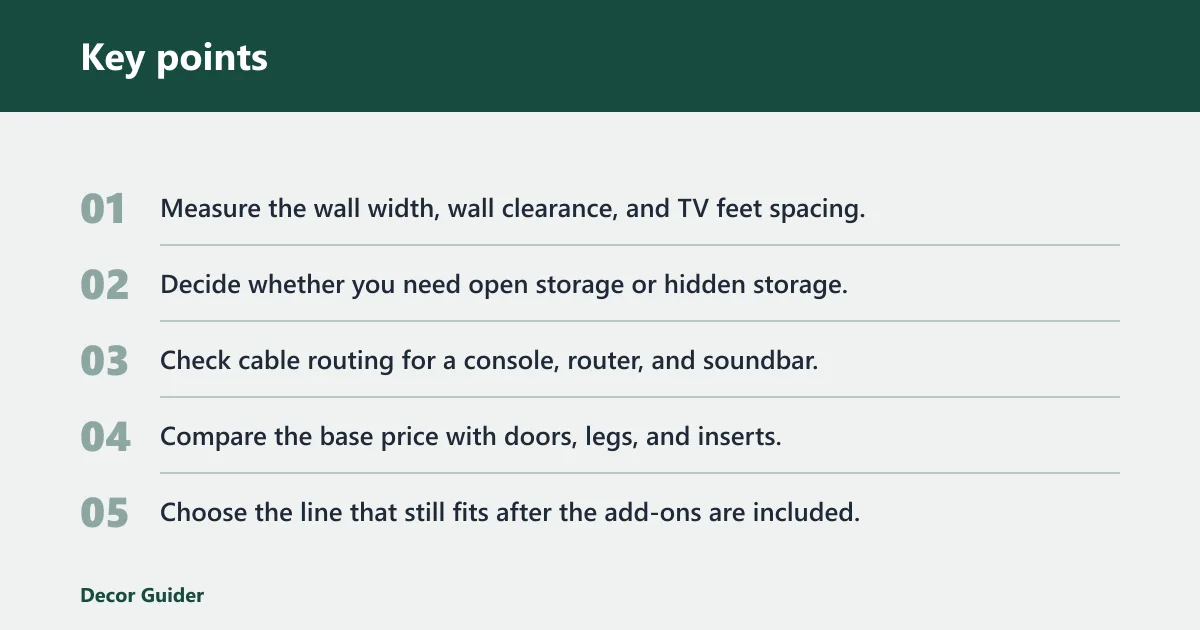
- Measure the wall width, wall clearance, and TV feet spacing.
- Decide whether you need open storage or hidden storage.
- Check cable routing for a console, router, and soundbar.
- Compare the base price with doors, legs, and inserts.
- Choose the line that still fits after the add-ons are included.
Suppose you buy a BESTÅ base because it looks affordable, then add two doors, a finish upgrade, and legs. The final setup can cost much more than the starting unit, but you also get a cleaner look and better cord control than a plain shelf stand.
A common first-timer mistake is choosing an open shelf because it is cheap, then realizing the game console, router, and power strip are always visible. If hidden storage matters, BRIMNES or a closed BESTÅ setup is usually the better spend.
Frequently asked questions
Which Ikea TV stand is best for a budget buyer?
LACK is usually the best budget choice because it keeps the cost low and the footprint simple. The same source lists a 90x36x45 cm version at €17.99, and the design is straightforward. It is best for light storage, not for hiding a lot of media gear.
Are IKEA TV stands good for cable management?
Some are, especially BESTÅ. Closed backs, easier routing, and modular cutouts make it easier to place a router, console, or power strip out of the way. Open shelving lines can still work, but they usually leave more cords visible unless you add extra cable solutions.
Do IKEA TV stands have closed storage or open shelving?
Both. BESTÅ, BRIMNES, and HEMNES can support more hidden storage, while LACK and many KALLAX setups lean open. That choice matters more than style alone because closed storage hides clutter, while open shelving keeps devices and accessories visible.
Are IKEA TV stands easy to assemble?
Most are manageable, but ease varies by line. LACK is the simplest, while BESTÅ takes more time because modular parts and add-ons increase the steps. If you want a quick build, choose a basic model. If you want more flexibility, expect more assembly work.
Products related to this article
Sponsored / affiliate links. As an Amazon Associate I earn from qualifying purchases. I may earn additional commission from eligible campaigns.