Is a Fireplace TV Stand Worth It?
A fireplace TV stand makes sense when you need one piece for a small-to-medium room and the insert can warm the area you actually use. Otherwise, a separate TV stand and heater usually works better. Pick the wrong size, and you waste floor space, get weak heat, and end up with a bulky focal point that crowds the room. This guide breaks down space, heat output, and visual weight so you can decide if the combo piece fits your home.
What a fireplace TV stand actually adds


A fireplace TV stand combines a media console and an electric fireplace insert in one freestanding piece. Fireplace TV stands usually include open shelves or closed cabinets for gear, a top surface for the TV, and an LED flame effect with plug-in supplemental heat. There is no chimney, venting, or gas line to plan around.
Media console plus electric fireplace
Most models are built around a standard electric fireplace insert. Popular Mechanics describes TV fireplace stands as electric, and Bestier notes they need only a standard electrical outlet. The flame effect can run by itself, so you can use the visual effect without heat when the room does not need warming.
That split matters. A TV stand with a fireplace is not a furnace hidden in furniture. It is a storage piece with added atmosphere and modest heat, which is why room fit matters more than the flame graphic.
Storage, flame effect, and plug-in heat
Storage is one of the practical reasons people buy these units. Open shelves can hold a soundbar, router, or game console. Closed cabinets hide controllers, cables, and discs. The tradeoff is bulk: more storage usually means more width and height.
Suppose a renter in a one-bedroom apartment needs one place for a 55-inch TV, a router, and a few consoles. A fireplace TV stand can replace two pieces of furniture. If the room is small, that consolidation can make more sense than adding a separate heater on the floor.
Is a fireplace TV stand worth it?
Yes, when the unit solves two problems at once: TV support and supplemental heat in a room that can fit the size. No, when the stand is mainly decorative, the TV is too large for the base, or the room already feels crowded. The value comes from fit, not from the fireplace look alone.
When the combo saves space
In apartments, compact family rooms, and small living areas, one furniture piece can be more practical than two. Fireplace TV stands are presented as ideal for apartments and small living areas, and that fits when floor space is tight and storage is needed. The combined piece keeps gear organized and can warm the occupied zone without permanent installation.
This is the better buy when the room needs a media center anyway. If you were already shopping for a stand and also wanted a low-level supplemental heat source, the combo can be cost-effective in use, even if the initial price is higher than a plain console.
When it only adds bulk
The unit is a poor fit when the room is large, the ceiling feels low, or the furniture already dominates the wall. In those cases, the fireplace opening adds visual weight without solving a real heating problem. A regular TV stand plus a separate space heater or wall-mounted electric fireplace may be easier to place and easier to replace later.
A common first-timer mistake is buying for the flame effect and forgetting scale. Picture a 70-inch console under a modest 50-inch TV in a narrow apartment living room. The stand can make the room feel shorter and tighter, even before you turn it on.
Fireplace TV stand matrix
This decision matrix scores three common buyer situations against the factors that matter most: fit, heat, safety, bulk, setup, portability, and budget. Use it as a quick filter before you compare finishes or media storage features.
| Buyer scenario | TV width fit | Heat usefulness | Storage need | Safety/anchoring | Visual bulk | Setup ease | Portability | Budget impact | Recommendation |
|---|---|---|---|---|---|---|---|---|---|
| Apartment / renter | Good if TV matches stand width | Good for one room only | High | Medium; anchoring still matters | Medium to high | Good; plug-in only | Medium | Medium | Yes |
| Family room | Good for wider TVs | Good as supplemental warmth | High | High; anti-tip hardware matters | Medium | Good | Low | Medium to high | Maybe |
| Small room | Riskier if stand overwhelms wall | Good only if room size fits output | Medium | High | High | Good | Low | Medium | No unless carefully sized |
How much heat do they give off?
Most fireplace TV stands produce supplemental heat, not whole-home heat. Popular Mechanics estimates output at roughly 4,600 to 5,200 BTUs, and Bestier says heating capacity is typically about 400 to 500 square feet. That is enough for a targeted zone, not a large open-plan space or a cold room with poor insulation.
BTU range and room size
BTU output tells you how much heat a unit can send into a space, but room size decides whether that output feels useful. In a small bedroom or compact apartment living room, roughly 4,600 to 5,200 BTUs may take the edge off. In a bigger room with high traffic and open doorways, the warmth disperses fast.
Bestier’s 400 to 500 square foot figure is a useful upper-end reference, but layout matters. A room with 8-foot ceilings, closed doors, and a nearby seating area will feel warmer than an open living room of the same square footage.
Flame-only mode versus heat mode
The flame effect often works without heat. Bestier says the flame effect operates independently from the heating function, which lets you use the visual feature year-round. That can improve the value of the unit if you want atmosphere in warmer months but only need heat part of the year.
Do not buy one expecting the flame effect to change the heating story. LED flames use little power, but they do not warm the room by themselves.
Why supplemental heat is the right expectation
The same source notes the heat is considered safe for TV use, but safe for a TV is not the same as powerful enough for the whole room. Treat the insert as a zone heater under the console, not as the main source of heat. That keeps expectations realistic and prevents disappointment.
What size fireplace TV stand do you need?
Choose the stand by the TV and the wall, not just by the flame insert. Most fireplace TV stand models run 58–70 inches wide, and POVISON recommends the stand be 4–6 inches wider on each side than the TV. That helps prevent overhang and keeps the piece visually balanced.
Match stand width to TV width
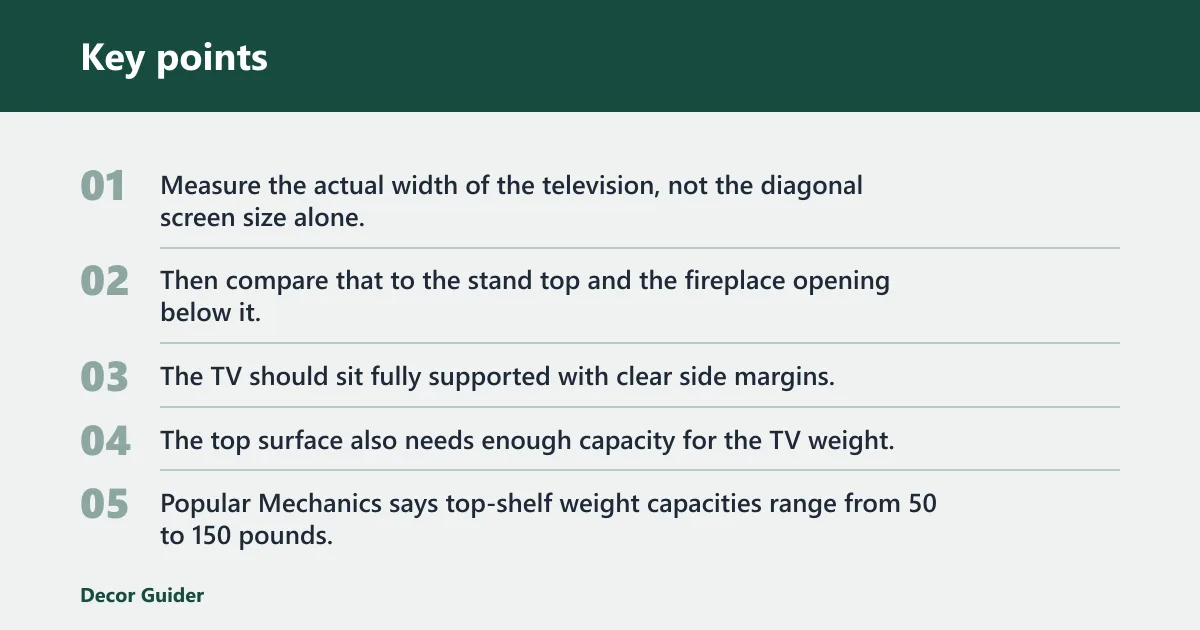
Measure the actual width of the television, not the diagonal screen size alone. Then compare that to the stand top and the fireplace opening below it. The TV should sit fully supported with clear side margins, and the base should look intentional rather than crowded.
The top surface also needs enough capacity for the TV weight. The same source says top-shelf weight capacities range from 50 to 150 pounds. That range is wide enough to make checking the exact model essential, especially for larger screens and heavier older sets.
Check overhang, height, and proportion
Overhang is a problem because it looks awkward and can affect stability. Height matters too. POVISON notes low-profile versions are 18–22 inches tall, which may work better under wall-mounted TVs or in rooms where you want a lower sightline. A tall unit can block sightlines and make a room feel compressed.
Keep proportion in mind. A narrow room with a broad stand can feel more crowded than the same stand in a deeper room. If the furniture line already sits close to the sofa, a shorter, cleaner console often works better than a tall fireplace cabinet.
Watch ceiling height and floor space
Room height matters because the unit adds visual mass below the TV. POVISON warns against rooms under 160 square feet with low ceilings. That warning is worth taking seriously: the fireplace opening, the TV, and the storage sections all stack visual weight into one block.
When the ceiling is 8 feet and the seating area is close, a large fireplace console can feel front-heavy. In that case, a plain stand and separate heat source may fit better and keep the wall visually lighter.
Before you buy: safety and setup checks
Check the load rating, airflow, and anchoring before you focus on finish or flame color. A fireplace TV stand is only a good buy if it can support the TV, keep heat away from electronics, and stay stable in daily use. Those checks matter more in family rooms and homes with children.
Weight capacity and shelf limits
The top shelf must hold the TV, and the interior shelves must hold gear without sagging. The same source lists top-shelf weight capacities from 50 to 150 pounds, but the shelves below may have lower limits. A soundbar, receiver, or game console can add up quickly.
Check the weight rating for each shelf, not only the top. The lower storage sections should not force cables, routers, or consoles into tight, heat-trapped spaces.
Ventilation clearance and heat buildup
Electric fireplace inserts still need breathing room. Keep the back and sides open enough for airflow and follow the manufacturer’s clearance instructions around the heater and electronics. Heat buildup can shorten component life and make the console feel warmer than it should.
The same source says no venting or chimney is needed, but that does not remove the need for spacing. Plug-in convenience is useful; it does not cancel basic clearance rules.
Anti-tip hardware and wall anchoring
Freestanding furniture can tip if a child climbs on it or if the TV sits too high and too heavy. Use the anti-tip hardware that comes with the unit, and anchor it to the wall when the room has children or high-traffic footpaths. The CPSC Anchor It! campaign is often cited as a reminder to treat anchoring as standard safety practice, not an optional extra.
- Confirm the TV weight and compare it with the top-shelf rating.
- Measure the stand width against the TV width, then allow side clearance.
- Check clearance around the heater and behind the console for airflow.
- Plan the outlet location so cords do not cross walking paths.
- Install anti-tip hardware and wall anchoring before daily use.
Choose a finish after the safety checks. Warm wood tones soften the bulk, dark finishes read heavier and more traditional, and lighter finishes can help the unit feel less dominant. Farmhouse looks often work in casual rooms, while modern looks suit simpler walls and cleaner lines.
Storage layout matters too. Open shelves make routers and game consoles easy to reach, but closed cabinets hide clutter better. If you need frequent access to a streaming box or controller dock, make sure the chosen layout still leaves room for airflow and cable management.
Frequently asked questions
Are fireplace TV stands safe for tv?
The same source says the heat is considered safe for TV use, but safety still depends on the specific model, clearances, and shelf ratings. Keep the TV within the top-shelf weight limit, leave space for airflow, and follow the maker’s placement instructions. The insert should not press heat directly into electronics.
Are fireplace TV stands safe?
They can be safe when assembled correctly and anchored properly. The main risks are tipping, blocked ventilation, overloaded shelves, and poor cord placement. Use anti-tip hardware, keep heat clearance around the unit, and do not exceed the listed weight limits. Safety improves when the stand fits the room instead of crowding it.
How much heat do fireplace TV stands give off?
That is supplemental heat for a contained area, not primary heat for a whole house. Open layouts, low insulation, and close-to-the-sofa distances affect how warm it feels.
Can you use a fireplace TV stand in an apartment?
Yes, and that is one of the common use cases. The same source says the unit only needs a standard electrical outlet and no venting, chimney, or professional installation. The main caveat is scale: small apartments can handle the unit better than tight rooms under 160 square feet with low ceilings.
Products related to this article
Sponsored / affiliate links. As an Amazon Associate I earn from qualifying purchases. I may earn additional commission from eligible campaigns.