How to Get Rid of Musty Smell in a Bathroom with No Window
Start by checking humidity, drains, and hidden moisture in that order: run the exhaust fan for about 20 minutes after every shower, keep bathroom humidity around or below 50%, and flush any rarely used drain with water plus a little mineral oil or an enzyme cleaner. Skip that order, and the smell often returns while mold or rot spreads behind walls, under the vanity, or inside the fan. This guide shows how to separate trapped humidity from biofilm and plumbing odors, then fix each one in a bathroom with no window.
Why a windowless bathroom smells musty

A musty smell in a bathroom with no window usually means moisture is staying in the room long enough for mildew, biofilm, or damp materials to start smelling. The odor may come from air that stays humid after showers, textiles that never fully dry, drains that let sewer gas escape, or hidden dampness around plumbing.
That matters because the fix depends on the source. A room can look clean and still smell damp if the air is holding too much water, a shower curtain is staying wet, or a trap under a sink has dried out. A clean surface does not rule out a moisture problem.
Moisture trapped after showers
In a bathroom without a window, steam has nowhere to go unless the exhaust fan or another drying method moves it out. If the fan is weak, noisy, or off, humidity can stay high long after the shower ends. That lingering moisture feeds mildew on grout, caulk, ceilings, and fabric items.
Biofilm and mildew on surfaces
Shower curtains, liners, bathmats, grout lines, and caulk can hold moisture and smell stale even if the room appears tidy. NBC Select describes grout as a place that soaks in moisture and is “a hotbed for mold and mildew.” If the smell is strongest near the shower, these surfaces are the first places to inspect.
Drain odor and hidden plumbing moisture
Some smells are not mildew at all. A dry P-trap, slow drain, or gurgling pipe can let odor move up from the plumbing. Hidden leaks behind a toilet, under a sink, or around supply lines can also keep a bathroom damp enough to smell musty even when the floor looks dry.
Bathroom odor triage table

Use this table to sort the smell before you start scrubbing. The goal is to match the symptom to the likely cause, then use a short fix that works in a bathroom with no window and a permanent fix that stops the odor from returning.
| Symptom | Likely cause | 15-minute fix | Permanent fix |
|---|---|---|---|
| Smell is strongest after showers | Trapped humidity or weak airflow | Run the exhaust fan, open the door, and aim a portable fan toward the fan path | Repair or replace the fan if airflow is weak; keep humidity near 50% |
| Smell clings to shower curtain or liner | Wet textiles or mildew on fabric | Fully extend the curtain and liner; move them so they can dry | Wash or replace smelly curtains and liners; keep them dry between showers |
| Smell rises from tub, shower, or sink drain | Dry trap, biofilm, or slow drain | Run water in the drain; if sewer gas is suspected, refill the trap | Clean the drain, clear slow flow, and fix recurring trap loss |
| Smell comes back after cleaning | Hidden leak or dampness behind fixtures | Check under the sink, behind the toilet, and around supply lines | Repair the leak and inspect for hidden moisture damage |
| Room feels damp most of the time | Humidity above target | Check RH with a hygrometer and start drying the room faster | Improve ventilation or add a dehumidifier to hold near 50% |
| Smell remains after ventilation and drying | Mold or mildew on surfaces or behind fixtures | Clean visible growth and dry the area completely | Fix the moisture source; call a pro if growth is widespread |
| Smell returns quickly after you wipe it away | Active leak, hidden dampness, or failing fan | Inspect for drips, soft caulk, staining, or condensation | Call a plumber, landlord, or mold remediator as needed |
| Bathroom humidity stays above 60% RH | Drying problem that is feeding mold risk | Run the fan, use a dehumidifier, and dry wet surfaces | Find the cause and keep RH near 50% |
What humidity should a bathroom stay at?
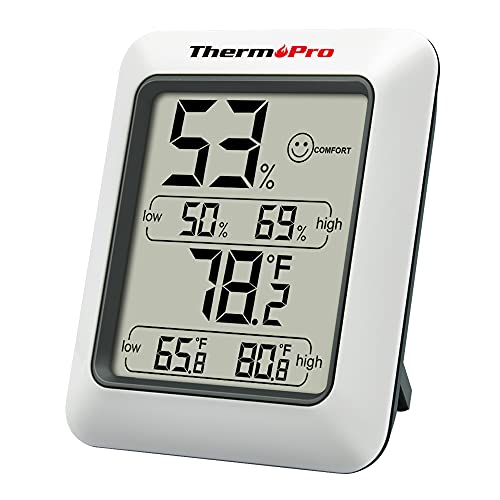
Use a hygrometer and aim for about 50% relative humidity. This Old House recommends roughly 50 percent, and it warns that mold growth occurs at over 60 percent humidity. If the number stays high after showers, the bathroom needs stronger drying, better airflow, or a repair.
A hygrometer matters because smell alone is slow and vague. A room can feel fine and still stay wet enough to support mildew. If the reading rises above 60% after a shower and does not drop back near 50%, treat that as a moisture problem, not a scent problem.
How to use a hygrometer
Place the meter where it can read the room air, not right beside the shower stream or on top of a cold tile surface. Check it before showering, right after, and again after the fan has run for a while. If the number barely moves, ventilation is not doing enough.
Fix the airflow first
Bathroom airflow is the first permanent fix in a room with no window. Run the exhaust fan during the shower and leave it on for about 20 minutes after you finish. Clean the grille and fan blades, and check for weak airflow or a noisy motor. A fan that hums but moves little air is not doing the job.
The fan should vent outdoors, not into an attic or crawlspace. If it dumps moist air into another enclosed space, the odor problem can move out of sight without going away. That setup can create hidden dampness and mold where you cannot see it.
Use a portable fan as a drying aid
Cleanipedia recommends ventilation fans or portable electric fans in rooms with little circulation. A portable fan can help move stagnant air toward the exhaust path after a shower, especially when the room has no window. It is a drying aid, not a substitute for a working vent fan.
Picture a 5-by-8 bathroom with a shower on one wall and a fan over the toilet. If the mirror stays fogged for an hour, the fan is underperforming or the room needs extra drying. In that case, point a portable fan to move moist air toward the exhaust path while the room dries.
Will a dehumidifier help?
Yes, a dehumidifier is often the best backup for an enclosed bathroom with no window. It works best after the shower moisture is removed from the air by the fan or by wiping down wet surfaces. Set it to keep humidity around 50%, and make sure it can drain or be emptied often enough to keep running.
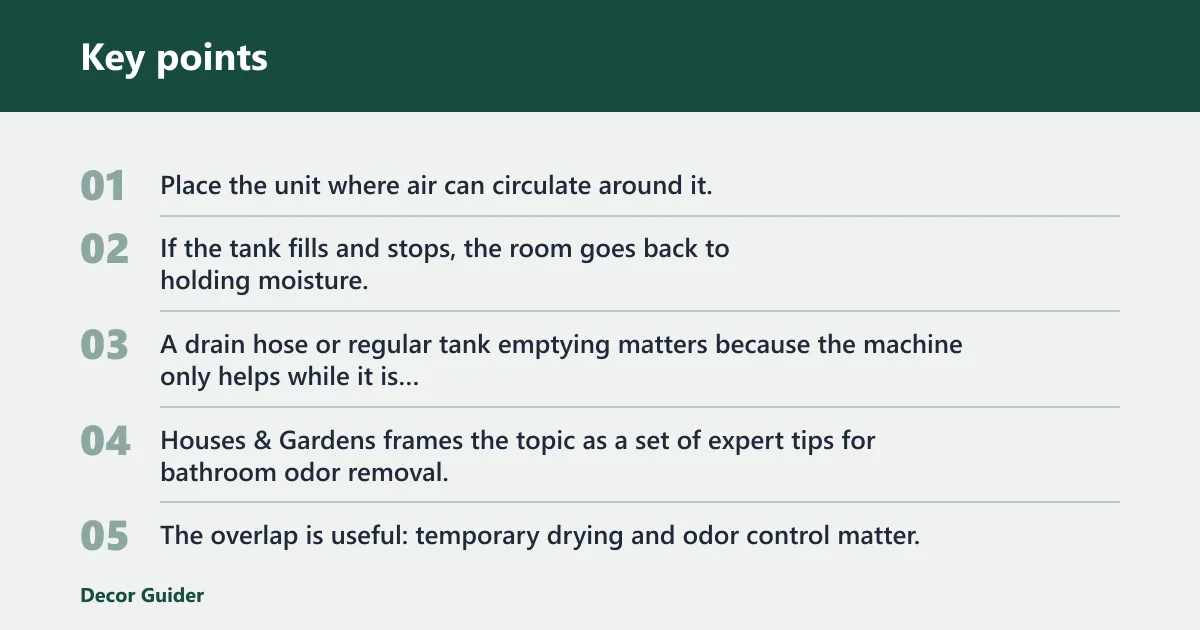
Place the unit where air can circulate around it, not jammed against the tub curtain or tucked behind the toilet. If the tank fills and stops, the room goes back to holding moisture. A drain hose or regular tank emptying matters because the machine only helps while it is actually running.
Houses & Gardens frames the topic as a set of expert tips for bathroom odor removal, while Cleanipedia breaks the process into multiple steps. The overlap is useful: temporary drying and odor control matter, but they do not replace a fix for the moisture source.
Temporary odor control is not the same as a fix
Baking soda can help absorb odors in enclosed spaces. The same source says to use it for up to 24 hours in small enclosed areas, and This Old House notes that bowls of baking soda can be placed around the space. That helps with the smell, but it does not correct damp air, a leak, or a bad drain trap.
Stop wet textiles from holding odor
Shower curtains, liners, towels, and bathmats are common odor sources because they stay damp and trap residue. Fully extend the shower curtain and liner after use so both can dry. Wash or replace them if they still smell after cleaning. Towels and bathmats should be washed frequently and dried fully before reuse.
A common first-timer mistake is folding a damp bathmat and hanging a towel back on the hook while the room is still humid. That keeps the smell in circulation. If the fabrics are sour, gray, or slick with mildew, cleaning the room around them will not be enough.
When to wash or replace smelly fabrics
If a curtain, liner, towel, or mat smells soon after it dries, the odor may be embedded in the fibers or coating. Wash what can be washed and dry it completely. Replace items that keep smelling, especially if you see mildew spots or stiff, discolored edges.
Find the drain smell source
A drain can smell musty because the trap is dry, because biofilm has built up, or because a slow drain is holding dirty water. This Old House notes that dry traps can cause odor and suggests adding water to them. If sewer gas is suspected, refill the trap first before assuming the smell is mold.
How to clean a bathroom drain that smells musty
Start by running water long enough to refill the trap. Then check for slow draining or gurgling, which can point to partial blockage or venting trouble. If the smell returns after a short time, the drain may need deeper cleaning or inspection for a hidden plumbing issue.
- Run water in the sink, tub, and shower drain to refill traps.
- Listen for gurgling or see whether the drain clears slowly.
- Look under the sink and around the toilet base for dampness.
- Clean visible drain buildup if the smell is coming from the fixture itself.
- Check again after the room has dried and the fan has run.
Suppose the bathroom is rarely used, and the guest sink gives off a sewer-like smell after a long empty stretch. In that case, a dry P-trap is a strong possibility. Adding water may solve it, but if the odor comes back every few days, the plumbing needs a closer look.
Check for mold and hidden dampness
Mold and mildew often signal an ongoing moisture source. Look on grout, caulk, ceilings, and behind fixtures. If you see growth on several surfaces at once, or if the smell returns quickly after cleaning, hidden dampness is likely present behind the visible finish.
Leaks and hidden dampness can show up behind the toilet, under the sink, or around supply lines. They may come from a seal failure or a slow plumbing drip. Those problems must be repaired to stop the odor from returning.
Some bathroom mold cleaners need ventilation when used indoors, and some products are labeled “No scrubbing required.” NBC Select also notes that one mold product can protect surfaces for up to four weeks. Those products can help with surface care, but they are not a fix for ongoing dampness.
When to call for help
Call a plumber if the drain gurgles, the trap keeps drying out, or the smell seems tied to a fixture leak. Call a mold remediator if growth is widespread, behind walls, or keeps coming back after you dry and clean the room. Call a landlord if the fan is broken, venting incorrectly, or the leak is not yours to fix.
How do you get rid of a musty smell in a bathroom with no window?
Start with humidity, then airflow, then drains, then hidden moisture. Run the exhaust fan during and after showers, dry wet surfaces, keep fabrics dry, and use a hygrometer so you know whether the room is near 50% RH. If the smell remains, check for a dry trap, a weak fan, or a leak.
The right order matters because deodorizing alone only masks the odor. Baking soda can help for a day, but it will not stop moisture from feeding mildew or plumbing gas from entering the room. Permanent relief comes from fixing the source.
How do I stop a bathroom smelling musty after showering?
Leave the exhaust fan running during the shower and for at least 20 minutes afterward, then dry wet walls, the shower curtain, and the floor edge. If the room still feels damp, add a dehumidifier after the steam is gone. A lingering smell after every shower usually means moisture is not leaving fast enough.
Check whether the fan is actually venting outdoors. If it is noisy, weak, or clogged with dust on the grille and blades, it may move too little air to clear the room. A portable fan can help for drying, but it should not be treated as the main fix.
Frequently asked questions
Why does my bathroom smell musty with no window?
A bathroom with no window can hold steam, damp textiles, drain odor, and hidden plumbing moisture in one small space. If the fan is weak or the humidity stays high, mildew can grow on grout, caulk, curtains, and hidden surfaces even when the room looks clean.
What causes a bathroom to smell damp even when it looks clean?
Humidity above the target, wet towels or mats, a dry trap, or a small leak can all create a damp odor without visible dirt. Mold can also hide on grout lines, behind fixtures, or under the vanity, where it is easy to miss during routine cleaning.
How do I clean a bathroom drain that smells musty?
First, run water to refill the trap. Then check for slow draining or gurgling, which can signal buildup or a vent problem. If the smell is sewer-like or returns quickly, the drain may need more than a surface clean, especially in a bathroom that is rarely used.
Will a dehumidifier help a bathroom with no window?
Yes, especially if the room stays closed and moisture lingers after showers. Set it to hold humidity near 50%, and place it where air can move around it. It works best after the fan has removed the shower steam, and it needs drainage or regular tank emptying.
When should I call a plumber for a musty bathroom smell?
Call a plumber if the drain gurgles, the trap keeps drying out, the smell comes back after refilling the trap, or you see dampness around the toilet, sink, or supply lines. Those signs point to a plumbing source, not a cleaning problem.
Products related to this article
Sponsored / affiliate links. As an Amazon Associate I earn from qualifying purchases. I may earn additional commission from eligible campaigns.