Futon Bunk Cover Problems / Not Working / Troubleshooting
If a futon cover slips, bunches, or will not zip, the issue is often a size, construction, or installation mismatch; measure the mattress and expect only about 1 to 2 inches of stretch tolerance. Ignore the cause and you can tear seams, stress zippers, and keep the cover shifting. This guide explains how to diagnose futon cover fit, slipping, bunching, zipper, seam, shrinkage, and installation problems by symptom.
Futon cover problems at a glance
Start by separating mattress-only covers from full futon sofa slipcovers. A mattress cover fits the cushion itself, while a sofa slipcover must also clear armrests, rails, seat depth, and the back angle. The wrong category is the fastest path to slipping, bunching, and zipper strain.
Size matters too. Twin, full, and queen covers are not interchangeable, and thickness changes fit as much as length and width do. A tri-fold mattress moves differently than a single-piece mattress, so the cover has more points where it can drift or pull.
What you’ll need
- Measuring tape
- Notebook or phone notes for length, width, and thickness
- Futon cover care label
- Seam ripper or small scissors
- Safety pins or cover clips for temporary hold
- Furniture straps or grip pads
- Foam inserts for excess space
- Replacement zipper pull or zipper repair kit
Why does my futon cover keep slipping off?
Slipping usually means the cover is too large, too loose in the corners, or cut for a different futon shape. It can also happen when a cover is built for a mattress only but you are using it on a futon frame with rails, armrest posts, or a steeper back angle.
Check for movement at the corners first. If the cover rotates after sitting or opening the frame, the fit is too loose or the anti-slip support is missing.
- Measure the mattress first. Record length, width, and thickness, then compare those numbers to the cover tag. For futon sofas, also measure arm-to-arm span, seat depth, and corner radius or boxed corners.
- Check the construction match. A single-piece mattress and a tri-fold mattress need different allowances at the fold lines. If the cover is for a different build, it will slide during use.
- Add temporary grip. Use furniture straps, grip pads, or about 2 to 4 foam inserts at the loose edges, then recheck after sitting and folding the frame once.
Futon cover troubleshooting matrix
| Symptom | Likely cause | Quick fix | Tools needed | Repair, replace, or resize |
|---|---|---|---|---|
| Slipping | Too much extra width, loose fit style, smooth polyester or microfiber surface | Center the cover, add grip pads at corners, tighten ties or zipper fully | Grip pads, clips, tape measure | Resize if cover is oversized |
| Bunching | Too much length, tri-fold movement, frame angle pushing fabric inward | Pull fabric flat over folds and add foam inserts at slack zones | Foam inserts, clips | Resize if excess is constant |
| Zipper failure | High seam stress, misalignment, dirt in teeth, thin zipper seam | Realign panels, clean zipper teeth, stop forcing the pull | Soft brush, zipper repair kit | Repair if pull or teeth are intact; replace if teeth separate |
| Seam tearing | Stress at corners, weak double-stitching, cover pulled over a tight frame | Stop using the torn seam and stitch reinforcement along the stress line | Needle, heavy thread, seam ripper | Repair if tear is short; replace if fabric is thinning |
| Shrinkage | Hot wash, hot dry, cotton cover, ignored care label | Follow the care label, then air dry flat or tumble low to keep the original fit | Care label, washer, dryer | Resize only if shrinkage is mild; replace if fit is now too tight |
| Misfit by thickness | Mattress is thicker than the cover allowance | Compare actual thickness to listed fit range and adjust with a thicker-size cover | Measuring tape | Resize |
How do you install a futon cover correctly?
Correct installation starts with the mattress fully opened and aligned in the frame. A cover that is twisted, half-folded, or installed before the mattress is seated will pull to one side and look loose even when the size is correct.
Use the zipper, ties, or elastic in the order the cover was built to close. Zippers usually hold the shape best; ties and elastic need more manual smoothing at the corners.
- Open the futon flat. Place the mattress in its normal open position on the frame so the cover is not fighting the fold line. This matters most with tri-fold construction.
- Align the cover corners. Match the boxed corners or corner radius to the mattress corners before closing anything. If the frame has tall armrests, pull the cover over them only after the mattress is seated.
- Close from center outward. A common approach is to zip or tie the middle first, then work toward each end in about 2-inch adjustments. Recheck after each side so the cover stays centered.
How do I know if my futon cover is the wrong size?
A wrong-size cover will either resist closure or leave visible slack at the edges and middle. If the cover fits the length but not the thickness, it may seem correct until the mattress is folded, when the extra tension or slack can show up.
For sofa slipcovers, measure arm-to-arm span, seat depth, and back angle in addition to the mattress. A sofa-style cover can be the right nominal size and still fail on a futon frame.
Size check guide
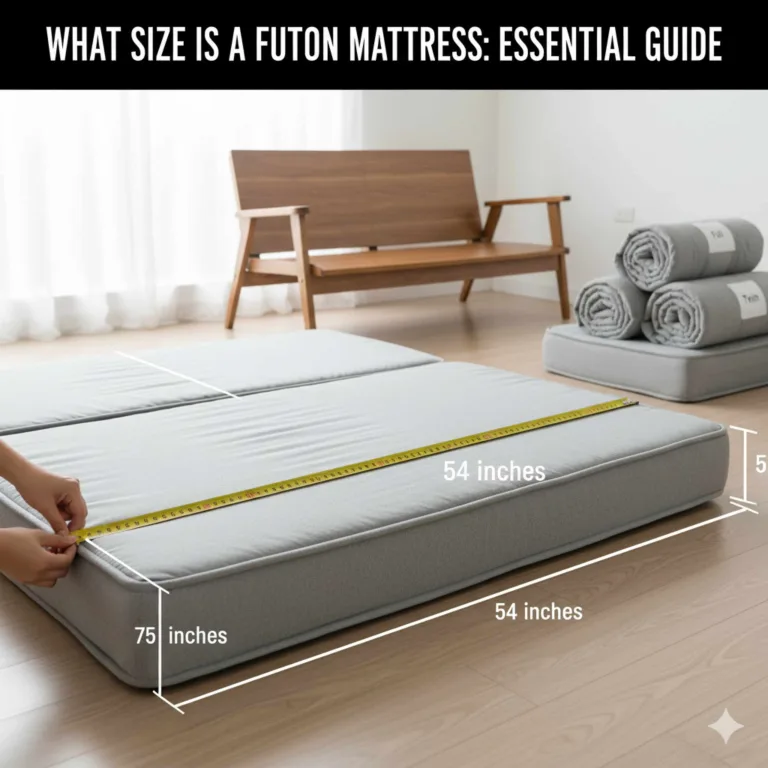
- Twin: common for smaller futons; verify length, width, and thickness separately.
- Full: often the middle size; check whether the frame rails widen the effective footprint.
- Queen: needs the most accurate thickness match because extra fabric becomes visible fast.
Say your full-size cover zips closed but the middle hangs loose after one sit-down. That usually points to excess width or a cover cut for a thinner mattress, not a zipper problem.
When should you repair, resize, or replace it?
Repair works for short seam splits, a damaged zipper pull, or mild looseness that can be corrected with inserts. Resize when the cover is consistently wrong in length, width, or thickness. Replace when fabric is thinning, seam damage keeps returning, or the zipper teeth no longer stay aligned.
- Inspect the weak point. Check corners, zipper seams, and fold lines under bright light. If the fabric looks thin or shiny at the stress point, repair will not last long.
- Reinforce the seam. Use double-stitching on corners and along zipper seams where the pull begins. This helps when the tear is short and the fabric still has body.
- Replace at the threshold. If the zipper separates, seam tears reappear, or pilling has turned into thinning, choose a new cover rather than another patch.
If a microfiber queen cover keeps slipping after clips are added, even though the mattress measures within about 1 inch of the listed size, a tighter-fit style may be needed. The better fix is often a tighter fit style, such as tailored or zippered, rather than more hardware.
Common mistakes
Most trouble comes from treating all futon covers the same. A mattress-only cover cannot solve frame geometry, and a sofa slipcover may be shaped for armrests that your futon does not have.
- Washing cotton or stretch knit on hot settings when the label says cold or warm.
- Using ties or clips as the main fit solution when the cover is already oversized.
- Forcing a zipper over a misaligned seam.
- Ignoring thickness after checking only length and width.
- Using safety pins as a permanent repair on a stressed corner.
Frequently asked questions
Why does my futon cover bunch up in the middle?
Middle bunching usually means the cover has too much length for the mattress or the tri-fold seams are pushing fabric inward. Pull the cover flat across the fold line, then add 2-inch foam inserts under the slack area before closing the zipper again.
Can you use a sofa slipcover on a futon?
Only if the sofa cover matches the futon’s armrest height, arm-to-arm span, seat depth, and back angle. Many sofa slipcovers are cut for fixed sofas, so they shift on a folding frame and leave excess fabric at the back or corners.
Why does the zipper on my futon cover keep breaking?
Repeated zipper failure usually points to seam stress, not only a bad pull. Check whether the cover is too tight across the mattress thickness, then clean the teeth and stop forcing the slider. If teeth separate again, replace the zipper or the cover.
What should I do if my futon cover is too loose?
First confirm that the listed size matches the mattress. If it still runs loose, add grip pads at the corners and use foam inserts to take up the extra space. A consistently loose cover usually needs resizing or a tailored fit style.
How do I fix a futon cover that ripped at the seams?
Clean the torn area, then stitch the seam with heavy thread and reinforce the corner or zipper line with double-stitching. If the tear is near thinning fabric or keeps reopening after use, replacement is the safer choice.
Are stretch futon covers better than zippered covers?
Stretch knit covers are easier to fit on odd shapes and can handle a little size variation, but they may shift more on a smooth frame. Zippered covers usually hold position better when the mattress size is exact and the seam construction is strong.
How do I keep a futon cover from fading or shrinking?
Follow the care label first. A cotton cover usually has the highest shrinkage risk, while polyester and microfiber are less likely to shrink but can still fade if washed hot or dried hot. Cold water, low heat, and air drying give the most predictable result.
Products related to this article
Sponsored / affiliate links. As an Amazon Associate I earn from qualifying purchases. I may earn additional commission from eligible campaigns.