Futon Frame Sticking Problems / Not Working / Troubleshooting
A futon frame that sticks often has one of a few common faults: loose hardware, dry or bent hinges, misaligned side rails, damaged slats, or frame warp. Start by checking the hinge path, then tighten only the hardware that sits in the bind. If you guess and tighten everything, you can worsen the bind, strip bolts, or crack the frame. Match each symptom to the most likely cause, then repair that fault in order.
Use this 5-step triage before you touch the hardware: remove the mattress, check wall and floor clearance, compare left and right travel, inspect the hinge and lock points, then tighten only the loose side evenly. If the frame still binds after that, the problem is usually alignment or a damaged part, not just looseness.
What this guide covers


Start with the symptom, not the bolt. A frame that will not fold, will not lock, clicks without moving, or sticks on one side can point to a different fault in the hinge mechanism, hardware, slats, or frame rails. Wood and metal frames fail in different ways, so the wrong repair can leave the bind in place.
This guide separates the common failure modes and tells you what to inspect before you turn a wrench. It also shows when a part swap is reasonable and when the frame is beyond a safe repair.
Frame clearance and load checks
Clearance needs to cover the full swing of the frame, the wall behind it, and the floor under the legs or rails. Exact clearance can vary by model, so check the frame’s travel instead of relying on one universal number. Load limits also vary by frame, so use the listed rating for that model rather than assuming a standard capacity.
What you’ll need
- Hex key or Allen wrench set in matching sizes
- Socket wrench or nut driver, if the frame uses nuts and bolts
- Phillips screwdriver
- Flashlight
- Dry lubricant for hinges, such as graphite or PTFE spray
- Clean cloth
- Replacement bolts, nuts, and washers in the same thread size and length
- Replacement slat clips or slats, if your frame uses them
- Cardboard or a blanket to protect the floor while you work
Futon troubleshooting matrix
| Symptom | Likely cause | Fastest test | Tools needed | Safe fix | Do not attempt | Replace-vs-repair threshold |
|---|---|---|---|---|---|---|
| Stuck upright | Hinge pivot binding, bent arm, or rail interference | Remove the mattress and watch whether both sides start moving at the same time | Flashlight, hex key, cloth | Clear the folding path, clean the pivots, and tighten only loose hardware | Do not force the frame through the bind or tighten both sides blindly | Replace if a pivot hole is ovaled out or an arm is visibly bent |
| Won’t recline | Locking position jam, warped wood rail, or hardware mismatch | Compare the left and right lock points for equal travel | Hex key, screwdriver, flashlight | Realign the frame and match the correct bolt length and thread | Do not keep cycling the lock if the catch misses at the same spot | Replace if the lock tab or stop is cracked or missing metal |
| One side binds | Misaligned side rail, loose fastener, carpet drag, or humidity swelling in wood | Lift the binding side slightly and retest the motion | Flashlight, hex key, cloth | Square the rail, clear floor contact, and retighten evenly | Do not crank down the loose side until the other side is even | Replace if the rail is cracked, split, or permanently warped |
| Squeaks loudly | Dry hinge point, loose washer, or metal joint corrosion | Move the frame slowly and listen for one pivot point repeating the noise | Dry lubricant, cloth, hex key | Clean the pivot and apply a light dry lubricant at the hinge holes | Do not use oil on a dusty joint unless residue buildup is acceptable | Replace if the squeak comes from a cracked weld or worn-through joint |
| Clicks but won’t lock | Lock teeth misaligned, worn stop, or loose hardware | Stop just before the click and inspect the mating surfaces | Hex key, screwdriver, flashlight | Match hardware on both sides and correct the alignment first | Do not file, hammer, or force the latch into place | Replace if the lock surfaces are rounded off or damaged |
| Frame sags after unfolding | Broken slat, slipped support, or overload beyond rating | Inspect the slats and center support before loading the frame | Flashlight, screwdriver | Replace damaged slats and reset slipped supports | Do not use the frame while the support system is compromised | Replace if the frame rail is bowed or the load rating is being exceeded |
Why is my futon frame stuck and won’t fold down?
A stuck frame usually means the folding path is blocked, a pivot is binding, or one rail is no longer tracking with the other. Start with clearance and hinge movement before you touch random bolts. If the mattress is still on the frame, or a leg is catching carpet, the mechanism can feel seized when it is not.
Check the folding path first
- Remove the mattress. Set it aside so it does not hide a bent arm, a slipped slat, or a floor obstruction.
- Clear the swing zone. Check for wall contact, carpet drag, cords, or baseboard interference before you move the frame.
- Move the frame slowly. If one side starts first, the bind is usually alignment-related rather than a locked hinge.
Inspect hinge pivots and lock points
- Examine the pivot holes. Look for shiny wear, oval holes, rust, or metal dust around the hinge.
- Test the lock position. If the frame stops just before the catch, the stop may be bent or the mating surface may be worn.
- Tighten only loose fasteners. Use the correct Allen wrench size and stop at snug; overtightening can clamp the hinge and make the bind worse.
Rule out rail and slat interference
- Inspect the rails. Wood rails can swell from humidity, and metal arms can bend from overload or a two-person shove in the wrong direction.
- Check the slats. A broken slat or slipped support can jam the motion path or hang below the frame.
- Replace damaged parts. If a rail is cracked or a hinge arm is visibly bent, a repair will not hold for long.
How do you fix a futon frame that won’t lock into place?
Lock failure usually comes from misalignment, worn lock points, or hardware that is too loose on one side. The fix is to restore equal travel across both sides, then check the catch surfaces for wear. If the frame clicks but never seats fully, the stop geometry is usually off.
Match the hardware correctly
- Identify the fasteners. Match thread size, length, and washer diameter before replacing any bolt.
- Snug the frame evenly. Tighten opposite sides in small passes so the frame stays square.
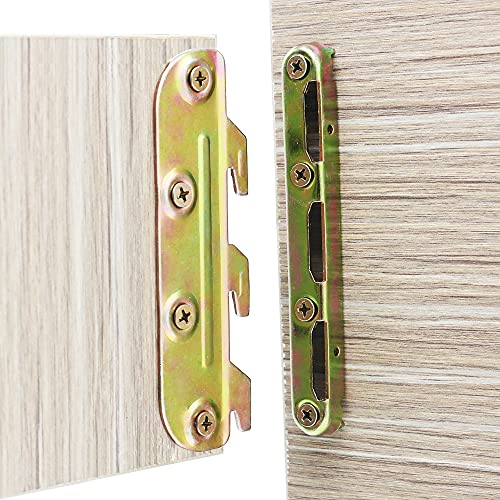
- Replace missing parts. A replacement futon hardware kit can fill gaps, but universal kits only work when the thread and length match the original pieces.
Compare both sides for alignment
- Watch the lock travel. Move both arms at the same speed and see whether one side reaches the stop first.
- Shift the frame square. If one side is leading, loosen the affected corner, realign the rail, then retighten.
- Retest the lock. Stop if the catch still misses after adjustment; repeated forcing can round the lock surfaces.
Decide if the lock is worn out
- Inspect the contact surfaces. Rounded teeth, shallow notches, or cracked tabs are wear indicators.
- Compare the two sides. If one lock point is visibly more worn, the frame will keep shifting out of square.
- Replace the worn piece. If the stop no longer holds shape, part replacement is safer than more tightening.
Why does my futon click but not move all the way?
A click with no full travel usually means one pivot is starting to move, then binding at a second point. That can come from corrosion, a bent joint, or a slat or support piece slipping into the path. Do not keep pushing past the click; that is how stops and arms get bent.
Find the binding point
- Move one inch at a time. Advance the frame slowly and stop at the first hard resistance.
- Inspect the pivot line. Look for dry joints, rusty washers, or metal rubbing marks at the same spot on both sides.
- Check the opposite side. If only one side lags, the problem is usually local, not the whole frame.
Clean and lubricate the moving joints
- Wipe the hinge clean. Remove dust and grit before adding lubricant, because debris can turn into grinding paste.
- Apply dry lubricant. Use a light coat at the pivot points and locking surfaces. Dry lubricant reduces squeak without leaving an oily residue that attracts dust.
- Work the joint gently. Move the frame through its travel and recheck the same pivot after each pass.
Rule out support slip-out
- Inspect the slats. Broken slats, loose clips, or uneven spacing can block the last part of the fold.
- Check load support. A frame that sags under normal use may be beyond its rated capacity or missing a center support piece.
- Replace what slipped. Re-seat any loose support before trying the lock again.
How do you tell if the frame is bent or just dirty?
Dirty joints usually bind at one or two pivot points and improve after cleaning or lubrication. Bent parts do not improve much and often create a visible offset, a gap that changes side to side, or a lock that never lines up. If the frame is warped, cleaning alone will not restore the geometry.
Compare wood and metal failure signs
- Look at the rails. Wood rails show splitting, swelling from humidity, or a twist along the length; metal rails show bent arms, corrosion, or cracked welds.
- Check the fasteners. Loose bolts, missing nuts, or flattened washers can mimic a bent frame by letting one side drop.
- Measure the symmetry. The left and right sides should travel together; if they do not, the frame may be out of square.
Clean first, then judge the result
- Wipe the contact points. Clean dirt, rust flakes, and old residue from the hinge and stops.
- Lubricate once. Use a dry lubricant only at the pivot and lock points, not on fabric or slats.
- Retest under no load. If the frame still binds without a mattress, the structure is more likely damaged than dirty.
Decide when repair stops making sense
- Check the damage type. Cracked rails, bent arms, or worn-through hinge holes are replacement signals.
- Check the load rating. If the frame is regularly carrying more than its listed capacity, recurring bending may be more likely.
- Stop at structural failure. Once the frame deforms, repeated tightening is a short-lived fix.
Common mistakes
Most bad repairs come from treating every symptom as a loose-bolt problem. Tightening a misaligned frame can lock the hinge harder, and oil can leave residue that holds dust on the pivots. Use the symptom to choose the repair, then retest after each change.
- Forcing the frame when it feels jammed
- Tightening all bolts before checking which side binds
- Using the wrong hex key size and rounding the heads
- Replacing bolts without matching thread size and length
- Using oil where a dry lubricant would leave less residue
- Ignoring carpet drag, wall clearance, or base contact points
- Overloading the frame beyond its listed rating
Say your futon clicks halfway up and then stops on the right side. The left side reaches the lock, but the right side drags on carpet and leaves a 1-inch gap. That points to a side-specific alignment problem, not a full hinge failure.
Suppose a wood frame squeaks at the same pivot every time you fold it, but the motion is still smooth after cleaning. That is consistent with a dry hinge point, not a bent rail. If the squeak returns after one cycle, inspect the washer or hinge hole for wear.
Frequently asked questions
How do I loosen a stiff futon frame hinge?
Clean the hinge, then apply a light coat of dry lubricant at the pivot holes and lock surfaces. Work the joint through its travel and wipe off excess. Avoid oil unless residue is not a concern, because it can collect dust and make the hinge gritty again.
Why is my futon frame misaligned on one side?
One-sided misalignment often points to a loose corner, warped wood, a bent metal arm, or carpet drag under one base contact point. Lift the binding side slightly and retest. If the frame stays crooked after a square check, inspect for a cracked rail or worn pivot hole.
What tools do I need to repair a futon frame?
Keep a matching hex key set, a screwdriver, a flashlight, and a cloth close by. Add a socket wrench if the frame uses nuts and bolts. If you replace hardware, match thread size and length rather than buying the closest-looking fastener.
Products related to this article
Sponsored / affiliate links. As an Amazon Associate I earn from qualifying purchases. I may earn additional commission from eligible campaigns.