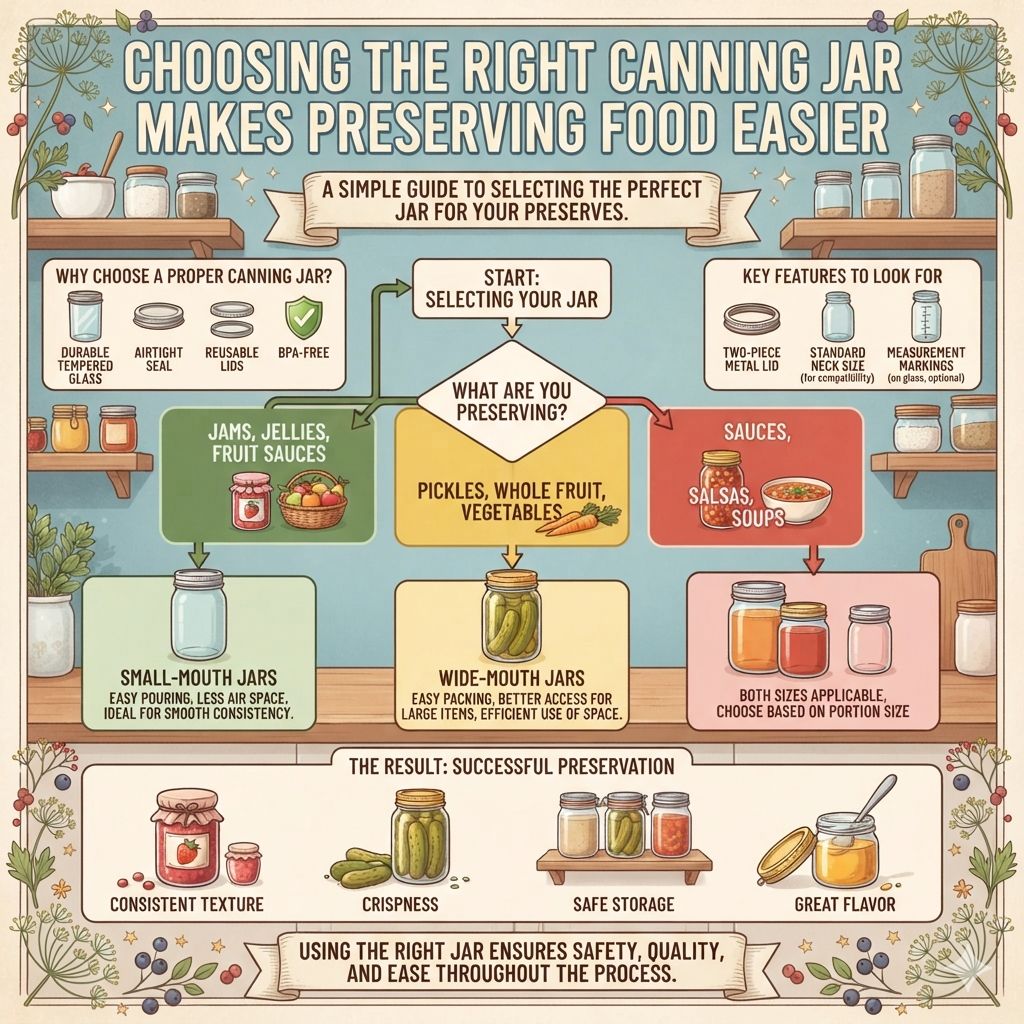
Simply put, wide mouth jars offer easier filling and access, ideal for chunky foods and general use, while regular mouth jars are more traditional, slightly more economical, and better for liquids or smaller items like whole spices. Your choice depends on what you’re canning and your personal preference for usability.
Key Takeaways
- Wide mouth canning jars are superior for easily packing chunky foods, freezing, and general everyday use due to their larger opening.
- Regular mouth canning jars are often slightly cheaper, more traditional, and can be preferable for liquids and smaller food items.
- Consider the type of food you’ll be preserving and your comfort level with filling and emptying jars when choosing between wide mouth vs regular canning jars.
- Both jar types use standard lids and bands, making interchangeability of those components a non-issue.
- While initial cost might differ slightly, the long-term reusability of canning jars makes them a sustainable choice regardless of mouth size.
What Are Wide Mouth Canning Jars?
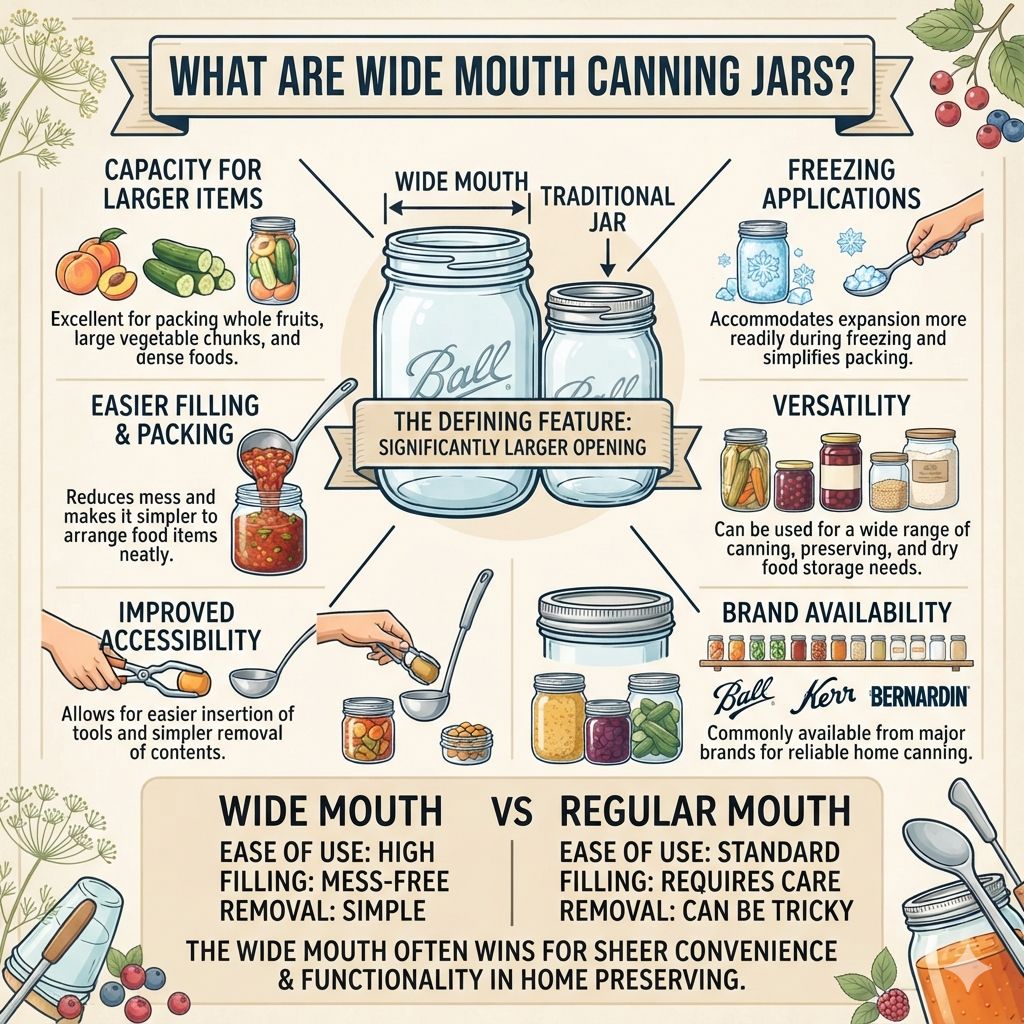
Wide mouth canning jars are designed with a significantly larger opening compared to their traditional counterparts. This widened aperture is their most defining characteristic and offers several practical advantages, especially for home canners.
The primary benefit of a wide mouth is the ease with which you can fill and empty the jar. This is particularly helpful when dealing with larger pieces of fruit or vegetables, such as whole pickles, peaches, or diced tomatoes. Less spillage occurs during filling, and removing the contents later is also much simpler, reducing frustration and waste.
- Capacity for Larger Items: Excellent for packing whole fruits, large vegetable chunks, and dense foods like sauerkraut or chunky salsas.
- Easier Filling and Packing: Reduces mess and makes it simpler to arrange food items neatly within the jar.
- Improved Accessibility: Allows for easier insertion of tools like canning tongs or ladles, and makes it simpler to scoop out the contents later.
- Freezing Applications: The wider opening makes them a popular choice for freezing foods, as it accommodates expansion more readily and simplifies packing.
- Versatility: Can be used for a wide range of canning, preserving, and even dry food storage needs.
- Brand Availability: Commonly available from major brands like Ball, Kerr, and Bernardin.
When considering wide mouth vs regular canning jars for everyday use or freezing, the wide mouth often wins due to its sheer convenience. They can also be used for storing dry goods like flour, sugar, or grains, where easy scooping is a major plus.
What Are Regular Mouth Canning Jars?
Regular mouth canning jars, often referred to as “standard mouth,” are the classic canning jars that have been around for generations. They feature a narrower opening, which was the norm for food preservation for a very long time.
This narrower opening has its own set of benefits and historical significance. While they might be slightly more challenging to fill with large items, they can be more efficient for packing liquids or smaller ingredients, ensuring less air space and a more consistent fill. Many home canners still prefer them for their traditional aesthetic and perceived cost-effectiveness.
- Traditional Design: The iconic canning jar shape most people recognize.
- Ideal for Liquids: The narrower opening can help minimize splashing when filling with liquids.
- Suitable for Smaller Items: Works well for jams, jellies, sauces, pickles, and even small spices or herbs.
- Cost-Effective: Often slightly less expensive per jar than their wide-mouth counterparts.
- Widely Available: Ubiquitous in grocery stores and hardware shops for decades.
- Lid and Band Compatibility: Uses standard canning lids and bands that are interchangeable with wide mouth jars in terms of size compatibility (though the lid type must match the jar mouth).
Despite the rise of wide mouth jars, regular mouth jars remain a staple in many kitchens. They are perfectly capable for most canning tasks, especially when dealing with items that pour or spread easily.
Comparing Filling and Packing: The Practical Difference
The most significant practical difference between wide mouth and regular mouth jars lies in the filling and packing process. This is where the “wide mouth vs regular canning jars” debate truly comes to life for many home canners.
Filling a wide mouth jar is considerably easier. You can use a wider ladle, funnel, or even simply pour ingredients directly into the jar without much fuss. Packing whole fruits like peaches or pears is simpler, as they fit through the opening without extensive maneuvering.
This ease reduces the chances of food particles getting stuck on the jar rim, which can compromise the seal.
| Filling Aspect | Wide Mouth Jar | Regular Mouth Jar |
|---|---|---|
| Ease of Filling with Chunky Foods | Excellent; large pieces fit easily. | Challenging; requires careful placement and smaller pieces. |
| Ease of Filling with Liquids | Good; some splashing possible without a funnel. | Very Good; less prone to splashing. |
| Use of Canning Tongs | Easy to insert and grip jars. | Slightly more difficult to maneuver tongs. |
| Packing Efficiency | High, especially for uniform items. | Can be high if items are layered well. |
On the other hand, regular mouth jars can be easier to fill with liquids, as the narrower opening acts as a natural funnel, reducing the likelihood of drips and spills down the sides of the jar. For small items like spices, seeds, or finely chopped herbs, a regular mouth jar might feel more precise.
Important: Always ensure the rim of the jar is clean and free of food particles before applying the lid and band. This is critical for achieving a vacuum seal and preventing spoilage, regardless of the mouth size.
Lids, Bands, and Sealing: Do They Differ?
A common point of confusion for newcomers to canning is whether lids and bands are interchangeable between wide mouth and regular mouth jars. The answer is both yes and no, depending on what you mean by “interchangeable.”
While both jar types use a two-piece sealing system consisting of a flat lid with a sealing compound and a screw band, the sizes of these components are specific to the jar’s mouth diameter. A lid designed for a wide mouth jar will NOT fit a regular mouth jar, and vice versa. The sealing compound’s shape and diameter are precisely engineered to match the jar’s rim.
However, it’s important to note that within each mouth size category, lids and bands are generally standardized across brands. So, a Ball wide mouth lid will fit a Kerr wide mouth jar, and a Ball regular mouth lid will fit a Kerr regular mouth jar. This standardization is a significant convenience for canners.
- Lid Size: Wide mouth lids are larger in diameter than regular mouth lids.
- Band Size: Wide mouth bands are also larger than regular mouth bands.
- Compatibility: A wide mouth lid MUST be used with a wide mouth jar. A regular mouth lid MUST be used with a regular mouth jar.
- Brand Interchangeability: Lids and bands of the same mouth size are typically interchangeable between major brands like Ball, Kerr, and Bernardin.
- Reusability: Screw bands are reusable indefinitely if they are not damaged or rusted. Lids with the sealing compound are single-use for canning.
- Safety First: Always use new, unused lids for canning to ensure a proper seal.
So, while you can’t mix and match lids between sizes, you can confidently buy lids and bands from different reputable manufacturers as long as they match the mouth size of your jars.
Cost and Availability: Which is More Economical?
When comparing wide mouth vs regular canning jars, cost and availability are factors that can influence purchasing decisions. Historically, regular mouth jars were often more economical.
In many markets, you will find that regular mouth jars are slightly less expensive per jar than wide mouth jars. This can add up if you are purchasing large quantities for an extensive canning season. This price difference can be attributed to manufacturing efficiencies or simply market demand and tradition.
| Factor | Wide Mouth Jars | Regular Mouth Jars |
|---|---|---|
| Typical Unit Price | Slightly Higher | Slightly Lower |
| Availability in Stores | High, especially in specialty kitchen stores. | Very High, ubiquitous in most grocery stores. |
| Bulk Purchase Value | Often sold in cases for better value. | Also available in cases, sometimes at a slightly lower per-jar cost. |
| Replacement Lids/Bands | Priced accordingly for wider diameter. | Priced accordingly for narrower diameter. |
However, availability is generally excellent for both types, particularly from major brands. You can find both wide mouth and regular mouth jars readily available in grocery stores, hardware stores, and online retailers. When buying in bulk or cases, the price difference per jar often narrows.
For many, the slight cost difference is negligible when weighed against the usability benefits offered by wide mouth jars for certain applications.
Warning: Never reuse canning lids for preserving as the sealing compound can degrade, leading to a failed seal. Bands are reusable if free of rust and damage, but lids must be new for each canning batch.
What Foods Are Best Suited for Each Jar Type?
The choice between wide mouth vs regular canning jars often boils down to the type of food you intend to preserve. Certain foods lend themselves better to one mouth size over the other, optimizing the canning experience.
Wide mouth jars are exceptionally well-suited for foods with larger pieces or those that are difficult to pack. Think of whole dill pickles, large pepper rings, whole fruits like peaches or pears, salsas with chunky vegetables, and even homemade sauerkraut or kimchi. The larger opening makes it far easier to get these items into the jar without squishing or damaging them, and also makes it simple to remove them later for serving or eating.
Regular mouth jars, with their narrower opening, are often preferred for more fluid or finely divided foods. This includes jellies, jams, syrups, sauces, honeys, and even pickled items where the produce is finely chopped or sliced into smaller pieces. They are also excellent for canning whole spices or herbs, where the smaller opening helps keep them contained.
For smaller batch canning or when precision in filling is desired, the regular mouth jar can be an excellent choice.
- Wide Mouth Jars Excel For:
- Whole fruits (peaches, pears, apples)
- Whole vegetables (pickles, carrots, beets)
- Chunky salsas and relishes
- Sauerkraut and kimchi
- Diced tomatoes
- Freezing berries or other large items
- Regular Mouth Jars Excel For:
- Jams and jellies
- Syrups and sauces
- Finely chopped pickles or relishes
- Whole spices and herbs
- Honey
- Small batches of individual items
Ultimately, both types of jars are versatile, and you can successfully can a wide array of foods in either. However, using the right jar for the food can significantly improve efficiency and reduce frustration.
Freezing with Wide Mouth vs Regular Mouth Jars
While primarily known for canning, glass jars are also frequently used for freezing food. In this context, the choice between wide mouth vs regular canning jars becomes even more pronounced, with one type offering clear advantages.
Wide mouth jars are generally superior for freezing. The primary reason is the wider opening, which makes it much easier to fill the jar with frozen foods like berries, chopped vegetables, or even leftover soups and stews. It also accommodates the natural expansion of liquids as they freeze, reducing the risk of the jar breaking.
When freezing, it’s crucial to leave ample headspace (the empty space at the top of the jar) to allow for expansion. The wider mouth of these jars makes it easier to judge and create this necessary headspace, contributing to safer freezing practices. Furthermore, removing frozen contents from a wide mouth jar is significantly easier than from a narrow one.
| Freezing Consideration | Wide Mouth Jar | Regular Mouth Jar |
|---|---|---|
| Ease of Filling with Frozen Items | Excellent; easy to scoop and pack. | Difficult; requires careful placement, can lead to breakage. |
| Accommodating Expansion | Good; more forgiving with expansion space. | Less forgiving; higher risk of breakage from expansion. |
| Removing Contents After Freezing | Easy; contents slide out readily. | Difficult; contents can get stuck, requiring tools. |
| Headspace Management | Simpler to achieve optimal headspace. | Requires more careful attention to headspace. |
| Risk of Jar Breakage | Lower, when proper headspace is left. | Higher, especially with liquids due to less forgiving opening. |
Regular mouth jars can be used for freezing, but it requires more caution. You must be extra diligent about leaving adequate headspace and be prepared for a potentially more difficult time removing the frozen contents. For those who freeze frequently, investing in wide mouth jars specifically for this purpose is highly recommended.
Tip: When freezing in glass jars, consider using straight-sided wide mouth jars. They offer maximum usable volume and are less prone to breakage than jars with pronounced shoulders.
Common Mistakes to Avoid with Canning Jars
Whether you’re using wide mouth or regular mouth canning jars, certain common mistakes can lead to failed seals, spoilage, or even safety hazards. Understanding these pitfalls can help you achieve successful preservation every time.
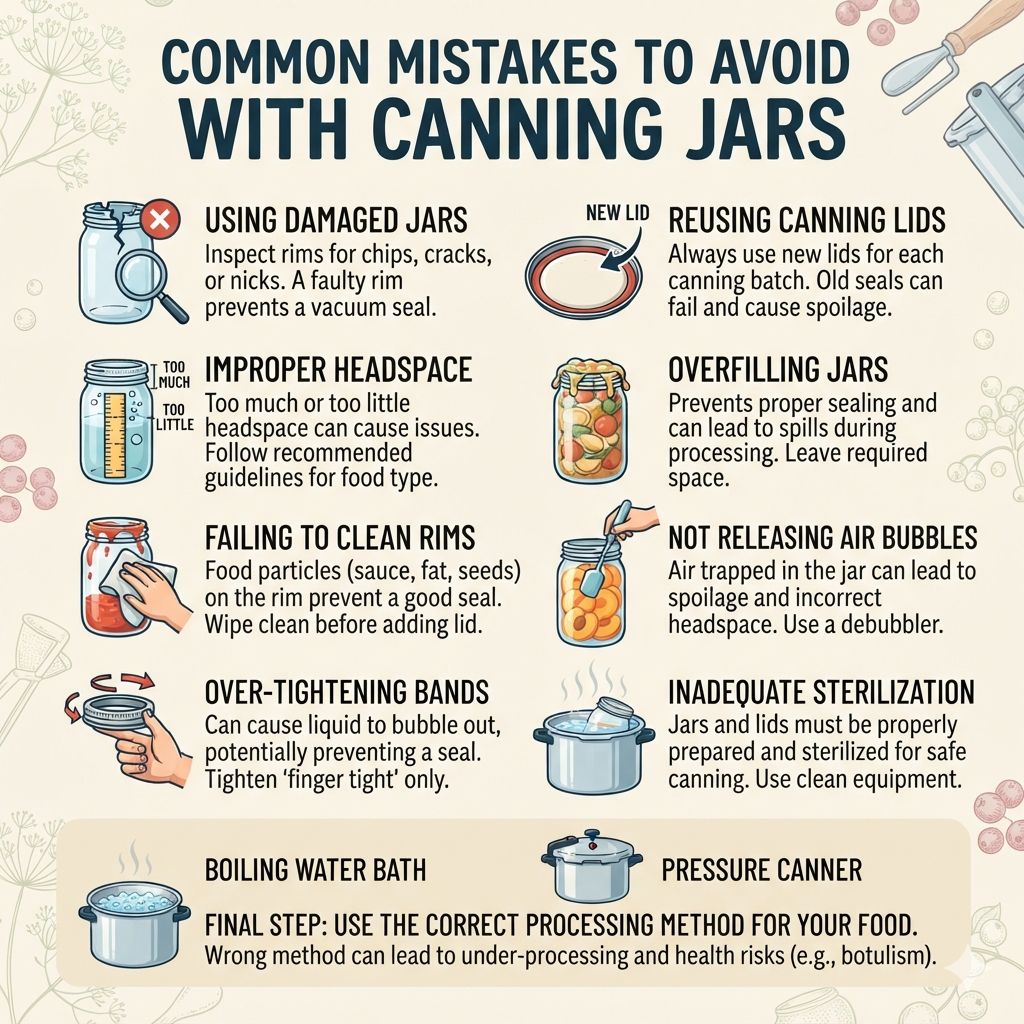
One of the most critical mistakes is using damaged jars. Jars with nicks, chips, or cracks, particularly on the rim where the lid seals, can prevent a vacuum seal from forming. Always inspect your jars thoroughly before filling, especially the rim.
Also, reusing lids for canning is a dangerous mistake, as the sealing compound can be compromised, leading to spoilage.
Another common error is improper headspace. Too little headspace can cause food to bubble out during processing, potentially interfering with the seal. Too much headspace can lead to under-processing and potential spoilage.
For canning, follow recommended headspace guidelines for the specific food you are preserving. For freezing, even more headspace is needed to account for expansion.
- Using Damaged Jars: Inspect rims for chips, cracks, or nicks.
- Reusing Canning Lids: Always use new lids for each canning batch.
- Improper Headspace: Too much or too little headspace can cause issues.
- Overfilling Jars: Prevents proper sealing and can lead to spills.
- Failing to Clean Rims: Food particles on the rim prevent a good seal.
- Not Releasing Air Bubbles: Air trapped in the jar can lead to spoilage.
- Over-tightening Bands: Can cause liquid to bubble out, potentially preventing a seal.
- Inadequate Sterilization: Jars and lids must be properly prepared for canning.
Finally, ensure you are using the correct processing method (boiling water bath or pressure canning) for the type of food you are preserving. Using the wrong method can lead to under-processing and the risk of foodborne illnesses like botulism.
Frequently Asked Questions
What is the main difference between wide mouth and regular mouth canning jars?
The primary difference lies in the diameter of the jar opening. Wide mouth jars have a larger opening (approximately 3 inches) that makes them easier to fill and pack, especially with chunky foods. Regular mouth jars have a narrower opening (approximately 2.75 inches), which is more traditional and can be better for liquids and smaller items.
Can I use regular mouth lids on wide mouth jars, or vice versa?
No, you cannot interchange lids and bands between wide mouth and regular mouth jars. Each mouth size requires its own specific size of lid and band to ensure a proper seal. However, lids and bands of the same mouth size are typically interchangeable between different major brands like Ball and Kerr.
Which type of jar is better for canning fruits and vegetables?
Wide mouth jars are generally better for canning fruits and vegetables, especially if they are whole or in large pieces. The larger opening makes packing much easier and less messy. For finely chopped or pureed items, regular mouth jars can also be effective.
Are wide mouth jars more expensive than regular mouth jars?
Typically, wide mouth canning jars are slightly more expensive per jar than regular mouth jars. However, this difference is often minimal, and the added convenience they offer for filling and packing can be well worth the small additional cost for many canners.
Can I use canning jars for storing dry goods?
Yes, both wide mouth and regular mouth canning jars are excellent for storing dry goods like flour, sugar, pasta, rice, beans, and spices. Wide mouth jars are often preferred for dry goods because they allow for easier scooping and measuring of contents.
Final Thoughts
The choice between wide mouth vs regular canning jars ultimately depends on your specific needs and preferences. Wide mouth jars offer superior ease of use for packing and removing food, making them ideal for chunky items and everyday convenience. Regular mouth jars remain a cost-effective and reliable option, particularly for liquids and smaller preserves.
Both jar types are essential tools for successful home food preservation and offer a sustainable way to store your bounty. Consider the types of foods you most frequently can or store, and choose the jar that best suits your workflow and comfort level.