What Size Tarp Do I Need for a Patio?
For a flat patio cover, add about 12–24 inches to each patio dimension. For a draped cover, add about 2–4 feet per side, then match the tarp to that finished footprint. A tarp that is too small leaves edges open, pulls loose in wind, and wastes money because it cannot anchor properly. This guide shows how to convert patio measurements into tarp size, overlap, anchor method, and the right choice between flat and draped coverage.
This guide is part of our Ratchet straps and tie downs guide series.
What you’ll need


- Tape measure
- Paper or notes app
- Calculator
- Marker or chalk
- Rope, bungees, or straps
- Measuring tape for height if the tarp will drape over furniture, rails, or posts
- A candidate tarp size list from the sizes sold in feet
Patio tarp sizing worksheet
Use this worksheet to turn patio measurements into a minimum tarp size. Start with the patio length and width, then add overlap on all sides. If the patio is exposed to wind, use the larger overlap column. If the tarp will drape over furniture or rails, measure the finished footprint with the added height on the sides that will drop down before choosing a size.
| Field | Sheltered patio | Wind-exposed patio |
|---|---|---|
| Patio length | _____ ft | _____ ft |
| Patio width | _____ ft | _____ ft |
| Desired overlap per side | 12–18 in | 24–48 in |
| Finished minimum tarp length | Length + 2 × overlap | Length + 2 × overlap |
| Finished minimum tarp width | Width + 2 × overlap | Width + 2 × overlap |
| Height allowance for drape | 0 ft for flat cover | Add the object height to each side that will drape |
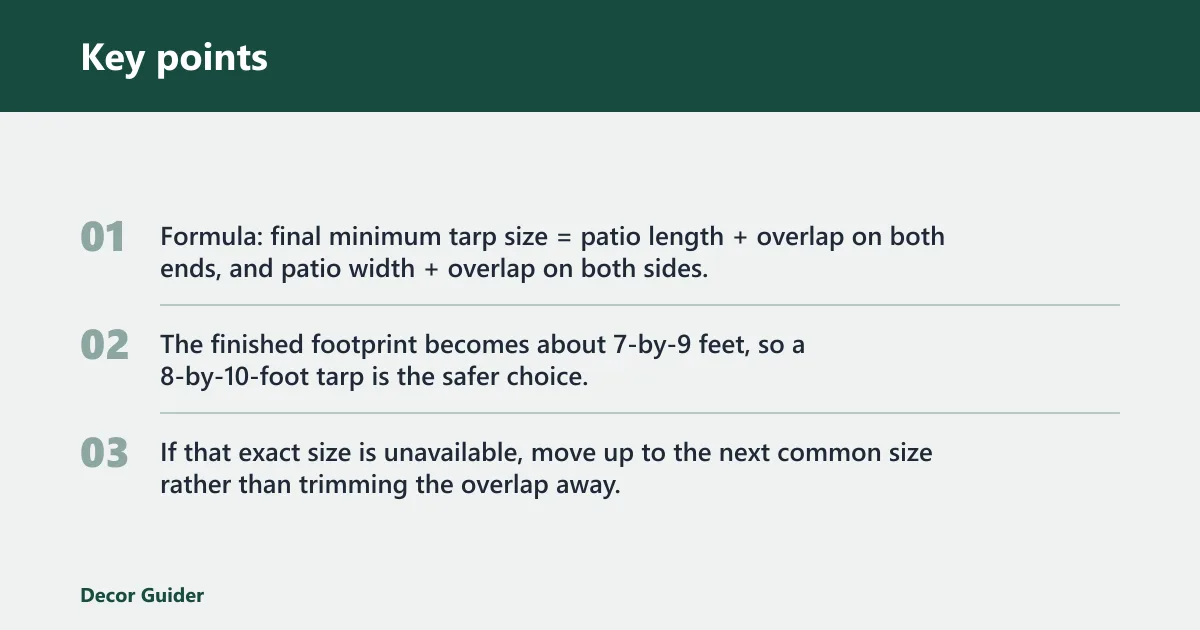
Formula: final minimum tarp size = patio length + overlap on both ends, and patio width + overlap on both sides. For draped coverage, measure the full footprint with the needed drop on the sides that will hang down before you calculate the final size.
Worked example 1: Small furniture cover
Say your patio chair set sits on a 4-by-6-foot space and you want a draped cover that clears the chair backs by 18 inches on each side. The finished footprint becomes about 7-by-9 feet, so a 8-by-10-foot tarp is the safer choice. That leaves room for tie-downs and reduces edge strain.
Worked example 2: Standard rectangular patio
For a 10-by-12-foot patio, a flat rain cover with about 18 inches of overlap on every edge would call for a minimum tarp size of about 13 by 15 feet. If that exact size is unavailable, move up to the next common size rather than trimming the overlap away.
Worked example 3: Windy patio with extra overlap
For a 12-by-20-foot patio in an open yard with crosswind, using about 36 inches of overlap per side would make the finished footprint about 18 by 26 feet. In that setting, tighter grommet spacing and stronger tie-downs matter more than a minimal fit, because a loose edge will catch wind quickly.
What size tarp do you need?
Match the tarp to the patio’s finished footprint, not the slab size alone. For a flat cover, a modest overlap can work if the tarp is anchored on all sides. For draped coverage over furniture, rails, or posts, add the extra height needed so the cover does not lie flat across the top and trap water.
Flat cover versus draped cover
A flat cover sits across a patio surface with overlap at the edges. A draped cover drops over objects or supports, so the tarp needs extra fabric for the sidewalls and any space you want for runoff. If you skip that allowance, the tarp may fit the top but fail at the edges.
How overlap changes the final size
Overlap is not wasted material. It gives you edge anchoring, helps block splash, and makes it possible to secure the tarp without loading the center seam with stress. A practical rule is about 12–24 inches per side for sheltered patios and about 24–48 inches per side where wind is stronger or the anchor points sit farther out.
How to measure your patio for a tarp
- Measure the length. Record the longest straight span in feet, then note any alcoves or corners that stick out.
- Measure the width. Use the widest usable span, not just the open walking path, because the tarp needs to clear the full cover area.
- Add the overlap. Multiply the side overlap by 2 and add that number to both length and width. If the cover will drape, add height for the sides that drop down.
- Round up to a stocked size. Choose the next larger common tarp dimension rather than reducing overlap to force a tight fit.
A common mistake is measuring only the open center of the patio. If a table or railing sits near one edge, the real footprint is larger. Measure from outer edge to outer edge, then add the overlap allowance.
What tarp size works for a patio?
Common tarp sizes are sold in feet, but nominal size is not the same as usable coverage. The amount of coverage you get can vary by product and by how the tarp is cut and finished, so plan for the overlap and tie-downs you need. Common product sizes include 6×8, 8×10, 10×12, and 12×14 feet, and larger listings can go much bigger, such as 24 ft x 40 ft.
Common sizes and usable coverage
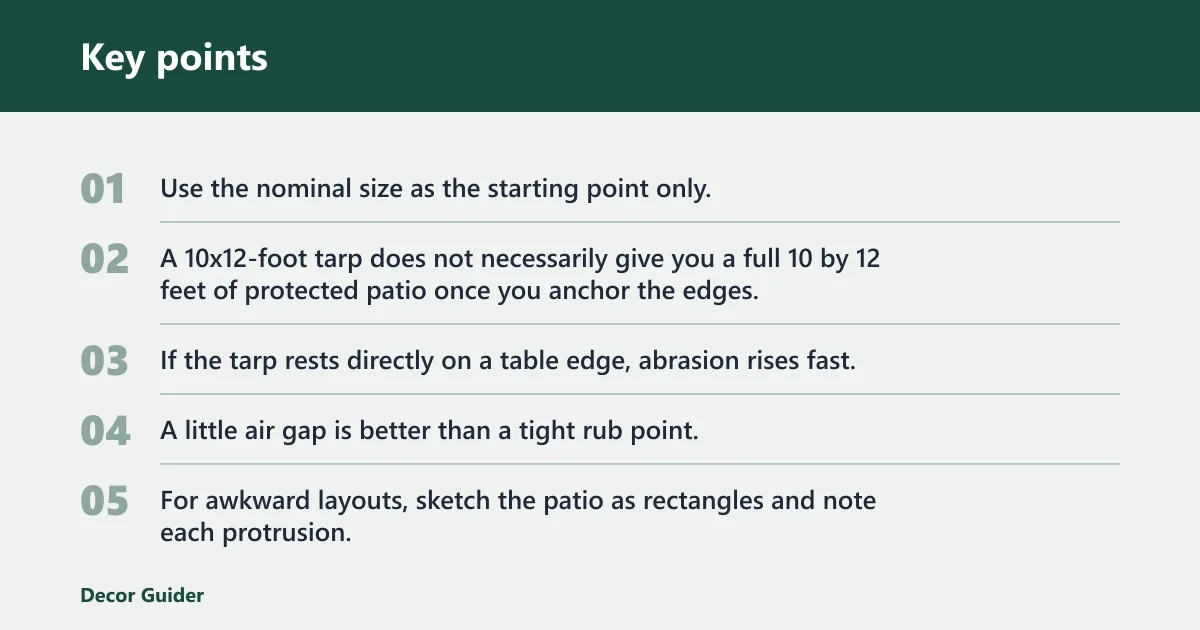
Use the nominal size as the starting point only. A 10×12-foot tarp does not necessarily give you a full 10 by 12 feet of protected patio once you anchor the edges. If you need a 10-by-12-foot finished footprint with 18 inches of overlap, you should shop for a tarp larger than 10 by 12.
| Nominal tarp size | Nominal area | Practical note |
|---|---|---|
| 6×8 ft | 48 sq ft | Works for small furniture or a compact section |
| 8×10 ft | 80 sq ft | Common for a small patio table or stacked chairs |
| 10×12 ft | 120 sq ft | Better for a medium rectangular patio |
| 12×14 ft | 168 sq ft | Fits larger flat coverage with room for tie-downs |
Furniture, rails, and posts
When a tarp must go over furniture, rails, or posts, measure the highest obstruction and add enough height so the fabric does not sit tightly against sharp corners. If the tarp rests directly on a table edge, abrasion rises fast. A little air gap is better than a tight rub point.
For awkward layouts, sketch the patio as rectangles and note each protrusion. Then size the tarp to the largest rectangle that fully covers the target zone. If the patio is L-shaped, separate the shape into two rectangles, measure both, and choose a tarp that covers the area you want to protect.
How thick should a patio tarp be?
Thickness helps, but it does not guarantee durability by itself. Clear patio tarps are commonly sold in 12-mil, 20-mil, and 30-mil thicknesses. A 20-mil tarp equals 0.020 inches thick.
Mil ratings for temporary and longer-term use
Thicker material usually resists wear better, but fastening and exposure still matter. Material choice matters as much as thickness, since a thin cover with poor fastening can fail before a heavier cover that is anchored well.
Polyethylene versus PVC/vinyl
Polyethylene is common for general outdoor coverage because it is widely used and easy to source. PVC/vinyl is the better fit when the cover needs more body or longer service life. Material choice matters as much as thickness, since a thin cover with poor fastening can fail before a heavier cover that is anchored well.
Clear versus opaque tarps
Choose clear tarps when you want light to pass through or when visibility matters under the cover. Choose opaque tarps when you want less light transmission and a simpler visual screen. For patio enclosures, clear material can keep the space brighter; for a furniture wrap or a storage cover, opaque material is often simpler.
How do you secure a patio tarp?
Security depends on grommet spacing, tie-down method, and how much wind the patio gets. Clear tarps may have grommets spaced around 18 inches apart, depending on the product. Tighter spacing gives more tie-down points, which matters when wind can pull at the edges or when the tarp needs to bridge a longer span.
Grommet spacing and tie-down points
More tie-down points spread the load and reduce stress on any one corner. A tarp with wide-spaced grommets can flutter between anchors, which raises wear and makes wind lift more likely. If the patio is exposed, look for closer spacing and plan anchors around the full perimeter.
Rope, bungees, and straps
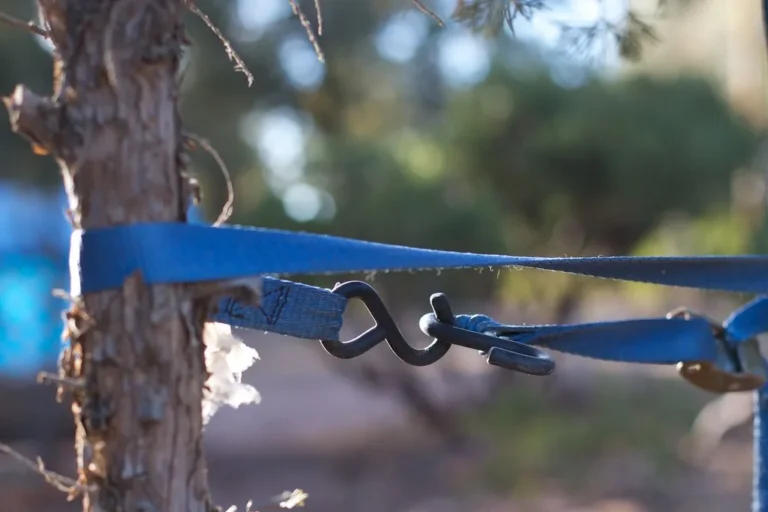
Rope gives firm control and works well with fixed anchor points. Bungees add stretch, which can help absorb gusts, but too much stretch can let the tarp move. Straps are useful when you want a tighter hold with less slippage. Grommet-based anchoring works best when each fastener has its own secure point.
Windy patios versus sheltered patios
Sheltered patios can use a lighter overlap and simpler tie-down pattern. Windy patios need more overlap, tighter spacing, and a stronger anchor pattern. If a patio sits in a crosswind, anchor all sides and avoid large unsupported spans, because wind will find the loose edge first.
Suppose a tarp fits a 10-by-12-foot patio with 12 inches of overlap, but the patio sits on an open corner and the edges flap. Add 12 inches more overlap per side and recheck the fit before buying a larger tarp. That extra margin often matters more than a thicker sheet alone.
Common mistakes
The biggest errors are undermeasuring, treating nominal tarp size as full coverage, and ignoring the effect of wind. Another common miss is forgetting that draped coverage needs height allowance. A tarp can be the right length and still fail if the anchor plan leaves the corners exposed.
- Measuring only the patio floor and skipping rail or furniture height.
- Choosing the exact patio size with no overlap allowance.
- Buying a tarp based on area alone and ignoring the shape.
- Using wide grommet spacing in a windy spot.
- Assuming thicker material solves poor fit or weak tie-downs.
- Skipping drainage space, which lets water pool on flat covers.
Prevention: Recheck the finished footprint after you add overlap and any drape height, then compare it with the next larger stocked tarp size before buying.
Frequently asked questions
What size tarp do I need for a patio?
Measure the patio length and width, then add 12–24 inches per side for a flat cover or 2–4 feet per side for a draped cover. Choose the next larger tarp size that matches that finished footprint, since the labeled size may not match the exact coverage you get once you account for overlap and tie-downs.
How do I measure for a tarp?
Measure the longest length and widest width, then add overlap on every side. If the tarp will cover rails or furniture, measure the height of the highest point too. Use the formula: finished size = patio size + 2 × overlap, with extra height for drape.
What sizes do tarps come in?
Common tarp sizes include 6×8, 8×10, 10×12, and 12×14 feet, with much larger formats available for bigger spaces. Pick size from the finished footprint, not from the patio’s bare floor measurement, or the edges may end up short of the anchors.
How thick should a tarp be for outdoor use?
For clear patio tarps, 12 mil, 20 mil, and 30 mil are common thicknesses. Thickness helps, but material type and fastening still decide how well the tarp lasts outdoors.
Should a tarp be bigger than the patio?
Yes. A patio tarp should usually be bigger than the area it covers so you have overlap for anchoring and runoff. A flat cover may only need 12–24 inches per side, while windy or draped setups usually need more. Too little overhang leaves weak edges.
How much overlap do I need when covering a patio with a tarp?
Use 12–24 inches per side for sheltered patios and 24–48 inches per side for wind-exposed patios. If you are draping over furniture or rails, add the drop height to that overlap. More overlap gives you a better chance of securing the edges without strain.
Products related to this article
Sponsored / affiliate links. As an Amazon Associate I earn from qualifying purchases. I may earn additional commission from eligible campaigns.