Upholstery Protector Cost
DIY upholstery protector spray usually costs roughly $20 to $60 per sofa, while professional fabric protection often costs about $100 to $300 for a standard couch, so the service may make the most sense for large, light-colored, or high-spill-use seating. Skip it or choose badly, and one stain can cost far more than the protection. This guide compares product prices, service pricing, and break-even points by sofa size, fabric type, and household spill risk.
Upholstery protector cost at a glance
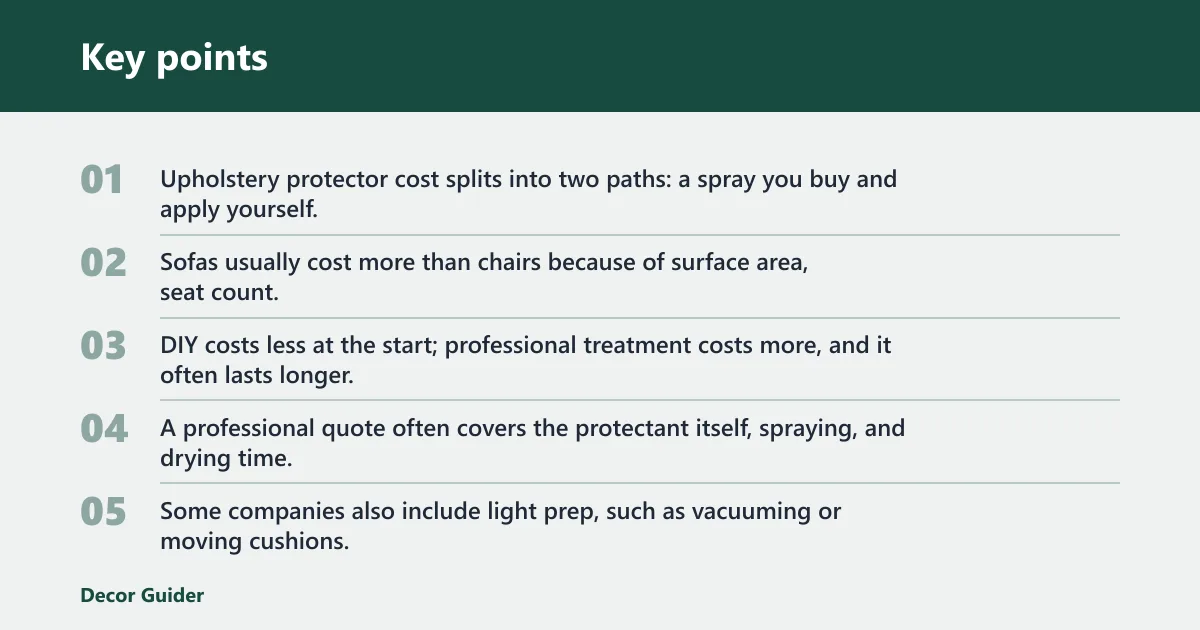


Upholstery protector cost splits into two paths: a spray you buy and apply yourself, or a service that includes labor, equipment, and often a short warranty. Sofas usually cost more than chairs because of surface area, seat count, and the time needed for even coverage. DIY costs less at the start; professional treatment costs more, and it often lasts longer.
What the price usually includes
A professional quote often covers the protectant itself, spraying, and drying time. Some companies also include light prep, such as vacuuming or moving cushions, but deep cleaning is usually separate. If the fabric needs stain removal before application, that can add to the bill.
Why sofas cost more than chairs
A larger piece needs more solution and more labor. A sofa may need protection on cushions, back, arms, and exposed deck areas, while a chair has less total surface. Whole-piece treatment also takes more time than a single-seat touch-up, so pricing rises with the amount of fabric covered.
DIY spray versus professional service
DIY spray keeps cash outlay lower, but the result depends on even application, proper drying, and using the right dilution. A pro service costs more because it includes equipment, trained application, and usually more consistent coverage. For spill-prone households, that difference can matter.
How much does upholstery protector cost?
Professional fabric protection typically ranges from $200 to $500 on average, with sofas and loveseats usually at $150 to $250, sectionals at $200 to $350, and chairs or recliners at $50 to $100 per chair. Full room service can reach $300 to $600+. The final price depends on item size, fabric type, condition, and add-ons.
Per-sofa, loveseat, sectional, and chair pricing
For standard furniture, a single sofa often lands in the middle of the range, while a loveseat may price a bit lower if it has less surface area. Sectionals cost more because they have more seat sections, seams, and cushions to treat. Chairs and recliners are usually the least expensive upholstered pieces on a per-item basis.
How seat count changes the quote
Pricing usually rises with the number of seating areas, not just the number of pieces. A three-seat sofa costs more than a two-seat loveseat because it takes more solution and labor. Whole-home treatment can also trigger minimum service fees, travel charges, or a better bundle price if multiple items are done together.
| Item | Typical price range | Cost driver |
|---|---|---|
| Sofa | $150 to $250 | Three-seat surface area, cushions, arms |
| Loveseat | $150 to $250 | Smaller footprint, fewer cushions |
| Sectional | $200 to $350 | Multiple sections and more seams |
| Chair or recliner | $50 to $100 per chair | Lower total fabric area |
What affects upholstery protector pricing?
Fabric type, porosity, colorfastness, prep work, and add-ons all change the quote. Synthetic fabrics often take less labor than natural fibers, but not every synthetic behaves the same. A clean, colorfast piece costs less to treat than a worn sofa with unknown dye stability or embedded soil.
Fabric type and porosity
Synthetic fibers usually absorb less product than porous natural fibers, so they may need less labor and fewer passes. Natural fibers can hold more liquid and may need a gentler application rate to avoid blotching. If the textile is very open-weave, the technician may need more time for uniform coverage.
Condition, colorfastness, and prep work
Dirty fabric, set-in stains, pet hair, and fading all complicate the job. A protector applied over soil can trap the problem in place. Colorfastness matters because some fabrics can darken or bleed if sprayed too heavily. That risk can make the service slower and more expensive.
Add-ons, taxes, and minimum service fees
Common add-ons include stain-resistant treatment upgrades, waterproofing, and travel or disposal charges. Bulk discounts may apply when you treat several items at once. Taxes can also change the final bill. Some companies set a minimum service fee, which matters most for one chair or a small loveseat.
Upholstery protector cost calculator
This calculator separates product cost from labor cost so you can compare DIY spray with professional treatment. The figures below use the supplied product price and coverage rate for the spray scenario, then compare it with common service pricing for typical furniture sizes.
| Scenario | Estimated total cost | Cost per seat | Likely coverage | Assumed fabric type | Add-on fees | Break-even note |
|---|---|---|---|---|---|---|
| DIY spray | $72.76 per gallon | About $18.19 per ready-to-use gallon equivalent | 200 square feet per mixed gallon | Synthetic, clean, colorfast | Sprayer and masking supplies may add cost | Best when you want the lowest upfront spend and can reapply as needed after wear |
| Single sofa professional treatment | $150 to $250 | About $50 to $83 for three seats | One standard sofa | Average woven upholstery | Prep cleaning may add more | Makes sense if one spill could cost more than the service |
| Loveseat plus sofa bundle | $300 to $450 | About $60 to $90 across five seats | Two main upholstered pieces | Mixed synthetic and natural fibers | Possible bulk discount, possible tax | Often beats buying two separate visits for busy homes |
| Sectional treatment | $200 to $350 | About $67 to $117 for three to five seats | One sectional with multiple sections | Higher-porosity or light-colored fabric | Extra charge for large corner pieces or cushions | Usually worth it when the sectional is the main family seating |
Scenario notes for the calculator
Say your family room has a pale three-seat sofa and a sectional ottoman that gets daily snack use. A pro quote can look expensive at first, but the cost per seat is often lower than replacing a stained cushion cover later.
Suppose a rental unit has a loveseat and one armchair in a synthetic blend. A bundle quote may be the better choice if the provider waives a second trip fee and includes a written guarantee window.
How does DIY spray compare with pro service?
DIY spray is cheaper upfront, but it shifts the work to you and depends on correct mix, even application, and dry time. Professional service costs more because labor and equipment are built in. For large or high-value seating, the service may be easier to justify, especially if the fabric is light colored.
Coverage per gallon and dilution ratios
One gallon of concentrate makes 5 total gallons of ready-to-use solution, and each mixed gallon covers 200 square feet. The product uses a 1 part concentrate to 4 parts water mix, and the recommended spray tip for upholstery is 5001. The listed product price is $72.76 per gallon.
Drying time and reapplication frequency
Drying can take long enough that the furniture should stay out of use until the fabric is fully dry. Professional treatments typically last 1 to 5 years, while consumer sprays often need more frequent reapplication because wear, vacuuming, and cleaning remove protection faster.
When a consumer spray makes sense
A consumer spray fits small jobs, a single chair, or a low-risk room where spills are rare. It also works when you only want a short-term barrier before a move, open house, or rental turnover. It is less appealing on expensive upholstery that needs even coverage and a longer service life.
Is professional fabric protection worth it?
Professional fabric protection is worth it when the furniture is expensive, light colored, used daily, or exposed to kids, pets, or frequent food and drink. It is less valuable on already stain-resistant textiles or on pieces that see little use. The break-even point is usually one avoided stain, not a magic shield.
Break-even by spill risk
If a single spill would mean cleaning fees, a ruined cushion, or visible marks on a white sofa, the service can pay for itself quickly. For low-risk rooms, the math is weaker. The more often a sofa faces drinks, greasy snacks, or muddy paws, the easier the service is to justify.
Pets, kids, and rental properties
Families with pets and children usually get the clearest value because spills and tracked soil are more likely. Rental properties can also benefit when a landlord wants fewer damage claims and faster turnover. High-end white upholstery is another strong candidate because small stains show quickly.
When treated fabric already has stain resistance
Some textiles already carry stain-resistant treatment, so adding another layer may bring limited benefit. That is especially true if the fabric has low porosity or the maker already claims oil and water stain resistance. In those cases, ask whether a second treatment changes the warranty or just adds cost.
Warranty and guarantee terms
Professional companies may guarantee fabrics against stains for 1 to 3 years, while treatments typically last 1 to 5 years. A guarantee may promise re-treatment or limited stain support if the product fails under normal use. It does not usually mean every spill disappears without effort.
What a re-treatment promise may include
A service guarantee may cover one return visit, spot re-application, or help with a stain that was not removed during the first treatment. Some companies also document the product used and the coverage date. Keep that paperwork, because it controls the claim window.
Common exclusions
Most guarantees exclude abuse, dye transfer, neglect, and damage from the wrong cleaning method. They may also exclude already worn fabric, preexisting stains, and incompatible textiles. If the protector was applied unevenly or over dirty fabric, the company may treat that as a preparation issue rather than a covered failure.
Stain resistance versus waterproofing
Stain resistance helps slow liquid uptake and make cleanup easier. Waterproofing is a different promise and should not be assumed from a stain-resistant label. Older Scotchgard-era positioning often focused on broad spill repellency, while newer claims may stress PFAS-free formulas, so read the label closely before you buy.
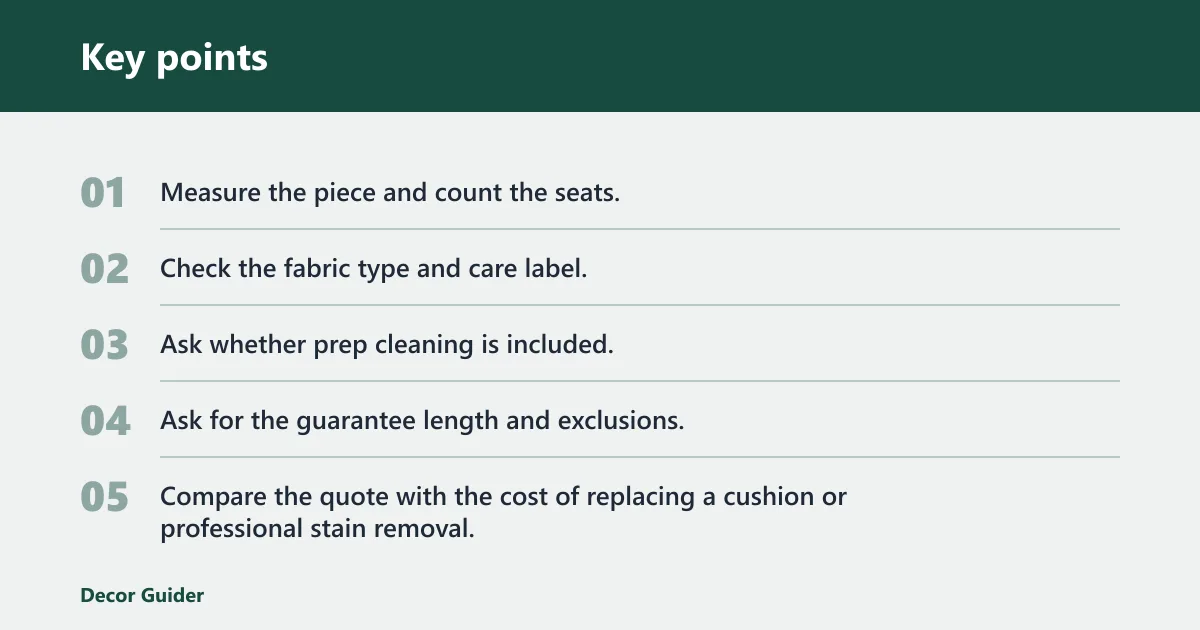
- Measure the piece and count the seats.
- Check the fabric type and care label.
- Ask whether prep cleaning is included.
- Ask for the guarantee length and exclusions.
- Compare the quote with the cost of replacing a cushion or professional stain removal.
Frequently asked questions
How much does upholstery protector cost: professional upholstery protection usually falls?
Professional upholstery protection usually falls in the $200 to $500 average range, with smaller pieces priced lower and larger sectionals priced higher. DIY spray can cost far less upfront, but you need to buy enough product for the full surface area and account for your own labor and dry time.
How much does upholstery protection cost for a sofa?
A standard sofa usually costs $150 to $250 for professional protection. The number changes with fabric type, soil level, and whether the provider includes prep work. A light-colored sofa or a piece with deeper cushions can push the price higher because it takes more time to cover evenly.
How much do upholsterers charge to apply fabric protector?
Upholsterers and fabric-protection companies often charge by item, not by hour. Full room service can reach $300 to $600+ when several pieces are treated.
What does upholstery protector cover?
Upholstery protector is meant to help repel stains and spills, including common food and drink accidents. Many products also make cleaning easier after a spill sits briefly on the surface. It does not mean permanent waterproofing, and it may not help much on already stain-resistant fabric or badly worn textiles.
How long does fabric protection last on a sofa?
Treatments typically last 1 to 5 years, but the actual span depends on wear, vacuuming, cleaning, and how often the sofa gets used. A warranty may run 1 to 3 years, which is shorter than the product life in some cases. Heavy-use family rooms usually need earlier reapplication.
Is professional fabric protection worth it: it is often worth?
It is often worth it for expensive sofas, pale fabric, rentals, and homes with kids or pets. The value is lower on low-use furniture or on textiles that already carry stain-resistant treatment. If one stain would cost more than the service, the math usually favors protection.
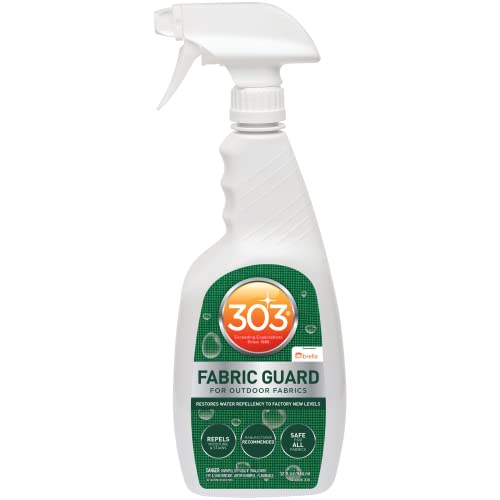
Products related to this article
Sponsored / affiliate links. As an Amazon Associate I earn from qualifying purchases. I may earn additional commission from eligible campaigns.