Sofa Springs Not Working: What to Check
Check the sofa’s spring system, frame, and fasteners first; if coils are broken, webbing is torn, or the spring rail has split, patching the cushions will not hold. If you ignore the source, the sofa will sag again, squeak louder, and fail in the same spot. This guide shows how to identify each suspension fault and choose the least invasive repair that still lasts.
How do you tell what is actually failing?


Start by separating suspension failure from cushion collapse. A seat that feels soft in the middle may only need new foam, while a seat that sags at the front edge, squeaks, or drops lower on one side more often points to springs, webbing, clips, or the frame.
- Look at the seat feel first. If the sofa bottoms out quickly, the cushion may be the problem.
- Listen for squeaks or pops when you sit down. Those usually point to loose fasteners or metal movement.
- Check the underside before buying parts. Bent hooks, rust, and popped staples often tell the real story.
What you’ll need
- Flashlight or work light
- Pliers
- Spring stretcher tool
- Replacement sofa springs should generally match length, wire gauge, curve, and spacing.
- Spring clips or fasteners matched to the frame material and gauge
- Upholstery webbing stapler or heavy-duty stapler
- Staples sized for hardwood or plywood frames
- Measuring tape
- Work gloves and eye protection
Sofa spring diagnosis checklist
| Symptom | Likely cause | Quick test | Repair level | Buy/DIY decision |
|---|---|---|---|---|
| Seat sags in one spot | Loose serpentine spring | Lift the cushion and look for a spring that has unhooked from a clip | Rehook or replace clip | DIY if the frame rail is sound |
| One side feels collapsed and squeaks | Broken coil spring | Press on the seat and look for a gap, kink, or snapped loop | Replace one spring | Buy a matching spring only after measuring length and gauge |
| Seat feels low everywhere | Stretched webbing | Press the webbing span; if it bows far below adjacent straps, it has stretched | Re-web or reinforce | DIY if access is clear and the frame is intact |
| Cushion sinks but underside looks even | Cushion collapse | Set the cushion on the floor and press the center; if it stays soft, foam is the issue | Cushion refill or replacement | Do not order springs yet |
| Sag returns after rehooking | Cracked frame | Inspect corner joints and rail edges for splits or moving joints | Frame repair or reupholstery | Call a pro if the rail is split or staples will not hold |
How do you inspect the springs, webbing, cushions, and frame?
Open the underside, then check the suspension system in layers: springs, webbing, cushions, and the frame. That order matters because a loose spring often sits on top of a stretched strap or a cracked rail, and the visible symptom can be the same: sag, noise, or uneven support.
- Flip and stabilize. Turn the sofa upside down with help and rest it on blankets or blocks so the frame is not twisted. Work from the center out, because a twisted frame can hide the real failure.
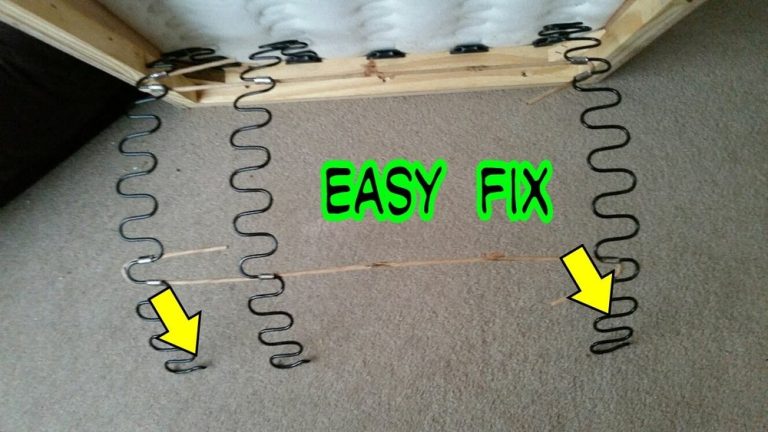
- Inspect the spring type. Look for sofa serpentine springs, coil springs, or eight-way hand-tied springs. Serpentine springs are zigzag metal strips common in modern sofas; eight-way hand-tied systems are far more labor-intensive and usually need upholstery experience.
- Check clips and ties. Look for rust, bent hooks, broken spring clips, and fasteners that have popped free. If a clip has bent open, match the replacement to the frame material and gauge so it holds without cutting into the wood.
- Measure the part before buying. Record spring length, wire gauge, curve, and spring spacing. Also measure seat depth and the distance between anchor points. A replacement spring that is too short, too stiff, or too wide will fail early.
- Press the cushion separately. Remove the cushion and press the foam on the floor. If it collapses and stays sunken, the cushion is likely the problem even if the springs below are intact.
- Probe the frame joints. Press near corner blocks, rail joints, and staple lines. A cracked sofa frame, loose joint, or split rail changes the repair plan because new springs cannot hold against moving wood.
Say your sofa dips on the left side, but the underside shows a serpentine spring that has only slipped out of one clip. In that case, a rehook may solve the problem in minutes. If the same seat also has a split rail, the clip fix will not last.
Serpentine spring checks
Serpentine springs should sit evenly across the seat and hold tension from front rail to rear rail. A loose or broken one often creates a single low spot, a squeak, or a sharp metal click when weight shifts. If the hook end is intact and the rail is sound, reattaching is often enough.
Suspension webbing checks
Webbing can stretch slowly, then cause a broad sag that feels softer than a spring failure. Check for torn straps, loose staples, and webbing that has lost its tension across several inches. If the straps are frayed or the staples have pulled out, re-webbing is usually better than adding new springs on top.
Seat cushion and foam checks
Seat cushions and foam often get blamed for spring trouble. Remove the cushion and compare the seat support underneath with the cushion alone; if the underside is firm but the cushion sinks, the foam has likely broken down. Spring replacement will not fix that problem.
Frame and joint checks
The sofa frame carries every load from the suspension system. Look for cracked rails, loose corner blocks, stripped staple holes, and joints that move when you press on them. If the frame flexes, any spring repair is temporary until the structure is repaired.
When can you reattach, tighten, or replace a spring?
Reattach or tighten a spring only when the metal is intact, the clip or tie point is the failure, and the frame is still solid. Replace the spring when the wire is broken, the coil is bent out of shape, or the spring has lost enough tension that it no longer supports the seat evenly.
- Rehook a loose spring. Use pliers and a spring stretcher tool to guide the spring back into the clip or tie point. Work slowly and keep hands clear of the spring path, because stored tension can snap the metal back.
- Replace a broken spring. Match the replacement sofa spring to the old one’s length, wire gauge, and curve. If the sofa uses serpentine springs, it is usually best to match the spacing between anchor points so the new piece follows the same seat shape.
- Reinforce stretched webbing. Cut new webbing to the same run length, then staple it with an upholstery webbing stapler or heavy-duty stapler into hardwood or plywood only. Use staple lengths suited to the frame so the webbing does not pull out under load.
- Stop if the frame moves. If the rail is cracked or the joints open when pressed, do not keep tightening springs. Frame repair comes first, or the same failure will return.
Suppose a 72-inch sofa has a center dip and a single serpentine spring has unhooked at the rear rail. If the spring length matches and the clip is not rusted through, a rehook plus a new clip may be enough. If the rail has a split near the same anchor point, the repair needs structure work first.
How do you choose the right repair level?
Choose the least invasive repair that addresses the actual fault. A loose spring needs a rehook or clip replacement; stretched webbing needs reattachment or re-webbing; broken metal needs replacement; and frame damage or worn-out cushioning can turn a simple fix into a larger upholstery job.
- Start with the cheapest fix. Replace a bent clip, popped staple, or rusted fastener before ordering a full set of parts. A single failed connector often causes the visible sag.
- Repair one section at a time. If only one serpentine spring is broken, replace that one first and recheck seat height. A partial repair is usually enough when adjacent springs are still evenly tensioned.
- Order matched parts only. Buy replacement sofa springs after measuring length, gauge, curve, spacing, and seat depth. If the sofa uses eight-way hand-tied springs, plan for upholstery work rather than a quick hardware swap.
- Call an upholsterer early. Use professional upholstery repair when the frame is cracked, the suspension system has widespread failure, or the sofa needs full re-webbing. That is often the better choice than stacking quick fixes on a failing base.
Common first-timer mistake is replacing the spring first, then finding out the cushion foam had collapsed the whole time. Check the cushion separately before you buy parts, or you may spend money on hardware that does nothing.
If that didn’t work, try this next
- Recheck the clip path. Confirm the spring sits fully in the clip and the clip itself is tight to the rail. If a fastener is loose, the spring will slip again under load.
- Move to adjacent supports. Inspect the neighboring spring or webbing strip for the same wear pattern. A nearby failure often makes the first repair look incomplete.
- Escalate to frame repair. If the seat still sags after a correct spring or webbing fix, the frame likely flexes under weight. At that point, repair the rail or arrange full reupholstery.
Common mistakes
Most bad repairs happen because the wrong part gets replaced first. A spring swap will not fix a collapsed cushion, and new webbing will not hold if the rail is split or the staples are too short.
- Buying springs before measuring length, wire gauge, curve, and spacing.
- Ignoring rusted clips, bent hooks, or popped staples.
- Using a staple gun that cannot seat staples fully into hardwood or plywood.
- Trying to fix an eight-way hand-tied system as if it were a simple serpentine setup.
- Skipping the frame check and treating every sag as a spring problem.
Prevention is simple here: check fasteners and underside wear early, before the seat starts dropping. A loose clip or a stretched strap is easier to correct than a frame rail that has begun to split.
Frequently asked questions
How to fix a broken sofa spring
A broken spring usually needs replacement rather than being bent back into shape. Measure the old spring’s length, wire gauge, curve, and anchor spacing before buying the new part. If the broken spring is paired with rusted clips or a cracked rail, those problems need repair too.
How to fix sagging couch springs
Check whether the sag comes from springs, webbing, or foam. A broad soft dip often points to stretched webbing or cushion collapse, while a narrow low spot suggests one spring or clip has failed. Match the fix to the fault before ordering parts.
Products related to this article
Sponsored / affiliate links. As an Amazon Associate I earn from qualifying purchases. I may earn additional commission from eligible campaigns.