Sofa Legs Loose or Wobbling: Troubleshooting Guide
Tighten the leg plate or bolts first. If the screw spins, the hole is stripped, or the frame is cracked, stop and repair the support before use. A wobble can widen holes, break the frame, and make the sofa unsafe. This guide shows how to find the failure point, match the fix, and know when replacement is safer.
Why is my sofa leg loose or wobbling?

A loose or wobbling sofa leg usually comes from one of three places: the leg hardware, the frame connection, or the floor. Loose leg bolts are the most common cause, but a spinning threaded insert, a ripped-out T-nut, a bent leg, or a height mismatch can feel the same.
Start with a simple check: does the wobble follow one leg, or does the whole sofa rock? That split tells you whether to tighten hardware, level the feet, or stop for a frame repair.
Loose fastener or worn threads
If the leg shifts only when you push on that corner, the fastener may have loosened from vibration over time. Hex bolts can back out gradually, and screw-in legs can work loose if the threads are still intact but no longer snug.
Leg hardware failure
If the leg turns without resistance, the hardware has likely failed. A spinning leg can mean stripped threads in a threaded insert, or a T-nut that has loosened or pulled free from the frame.
Floor-caused wobble
If the sofa feels solid off the floor but rocks once set down, the floor or height difference may be the cause. On hard flooring, even a 2mm height difference can be enough to create noticeable rocking.
How do you tell if the floor is the problem?
Use a spirit level to separate floor movement from leg or frame failure. Check side to side and front to back with the sofa unloaded first. If the sofa sits level when lifted slightly or moved to another spot, the floor is likely part of the problem.
Use a spirit level side to side
Place the level across the front edge, then across the back edge. If one side reads level and the sofa still rocks, the issue is more likely one leg or one mounting point than the floor itself.
Use a spirit level front to back
Check from the front rail to the back rail. A sofa that reads level in both directions but still rocks often has a single short leg, a worn foot, or uneven hardware at one corner.
Check with the sofa unloaded
Remove throw blankets, cushions, and anything stored under the frame. Press down lightly on each corner, then release. If the wobble changes with load, the frame may be flexing or a mounting point may be opening under weight.
Say your sofa rocks only on the left front corner, but the spirit level reads true across the seat. That points to one worn foot or one loose attachment, not a room-wide floor issue.
What tools and parts do you need?
For first-pass diagnosis, a small set is enough. Keep a spirit level, Allen keys, wrenches, and the right replacement parts for your sofa’s leg design. Have furniture shims or felt pads ready if uneven floor height is part of the problem.
Tools
- Small spirit level. Use it front to back and side to side to separate floor issues from leg issues.
- Allen key set. Many hex bolts use an internal hex drive.
- Wrench set. Some hex bolts use an exterior nut or bolt head.
- Flashlight. Helps you inspect cracked wood, missing washers, and loose hardware.
- Vacuum or brush. Clear debris before tightening so parts seat correctly.
Parts and fix materials
- Hex bolts. Replace corroded or rounded hardware with the same size and thread.
- Thread-locking compound. Use a small amount on intact bolts to slow re-loosening.
- Furniture shims. Use under the shorter leg on uneven floors.
- Felt pads. Useful for small height corrections and floor protection, especially on hardwood floors.
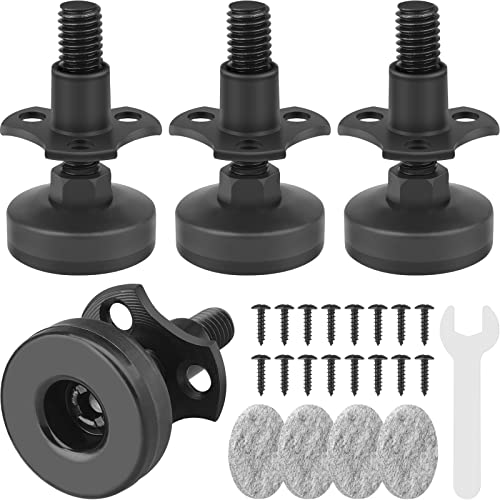
- Leveling feet. Replace worn or stripped adjusters when fine height control is needed.
- Replacement leg hardware. Buy threaded inserts, T-nuts, or mounting plates that match the sofa design.
Know the leg type first
Screw-in legs thread directly into the frame or a metal insert. Plate-mounted legs attach with bolts to a fixed plate. Sectional connectors join sofa sections and can create a side-to-side wobble that looks like a leg problem.
Do not buy a generic replacement before you identify the attachment style. A fix for screw-in legs will not solve a damaged plate, and a connector issue will not improve by tightening a foot.
Sofa wobble troubleshooting matrix
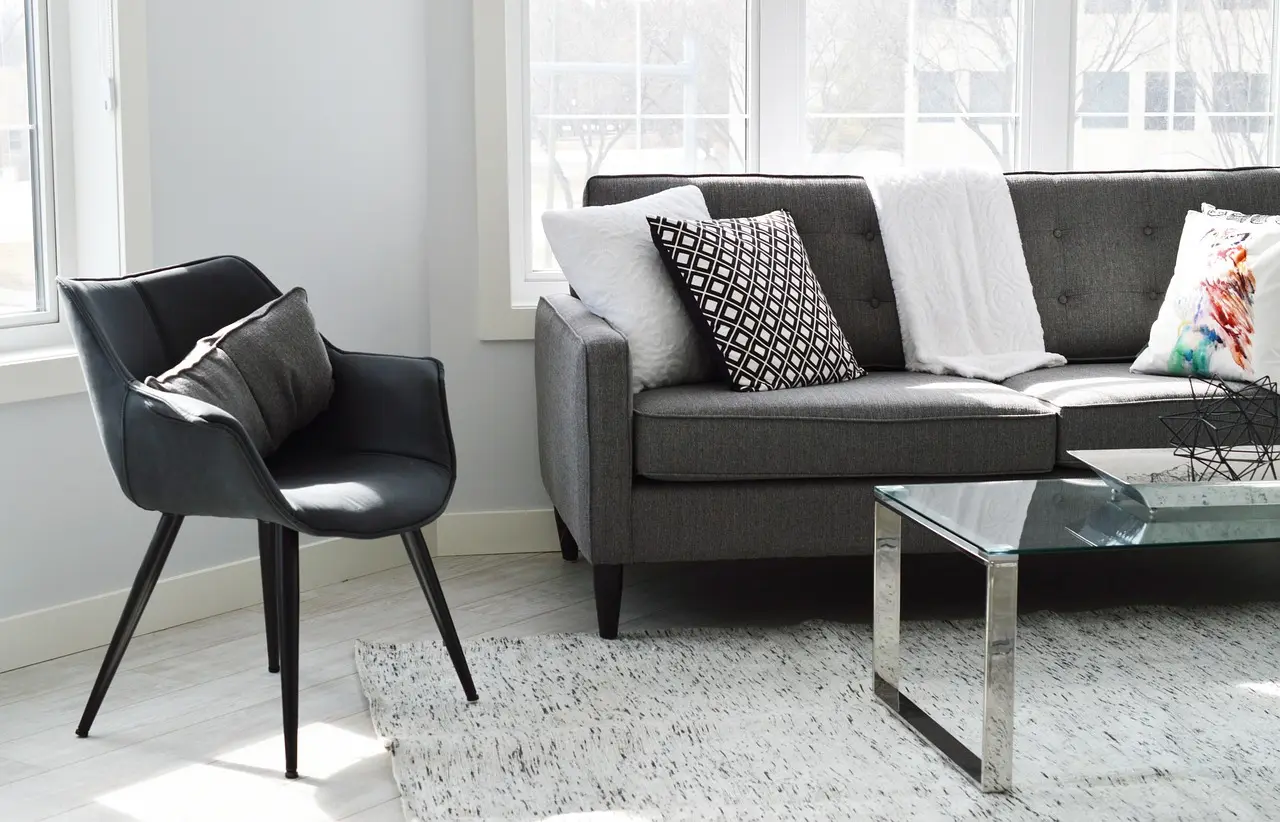
Use this matrix to match the symptom to the smallest safe fix. If a leg spins freely, the threads have likely failed. If the frame splits, cracks, or pulls away from the hardware, normal use should stop until the support is repaired or replaced.
| Symptom | Likely failure point | Quick test | Temporary fix | Permanent fix | When to call a pro |
|---|---|---|---|---|---|
| One corner rocks when pressed | Loose hex bolt or loose screw-in leg | Twist the leg by hand and listen for movement | Tighten the fastener to snug, not forced | Reset the bolt with thread-locking compound if threads are intact | If the bolt will not tighten or the hole enlarges |
| Leg spins freely | Stripped threaded insert | Turn the leg through several full rotations with no bite | Remove the leg to prevent further damage | Replace the insert or repair the frame hole | If the insert is spinning inside the frame |
| Leg pulls outward under load | Ripped-out T-nut | Check for a missing, loose, or tilted embedded nut | Do not sit on that corner until secured | Replace the T-nut and restore the mounting hole | If the wood is split or torn around the hardware |
| Sofa rocks only on hard flooring | Uneven floor or short leg | Use a spirit level front to back and side to side | Add a furniture shim or felt pad under the short leg | Adjust or replace leveling feet | If the floor difference is large or repeated shimming fails |
| One leg sits visibly lower | Worn leveling foot or bent leg | Compare all corners on a flat surface | Use a shim to even the height | Replace the leg or leveling foot | If the leg is bent, cracked, or unstable |
| Whole frame creaks with wobble | Loose frame joint or sectional connector | Press the arms and back while watching the joint | Tighten accessible hardware only if threads are sound | Repair the frame joint or connector hardware | If the frame opens, flexes, or cracks |
| Wobble returns after a few days | Fastener loosening from vibration | Mark the bolt position, then recheck after normal use | Retighten and add thread-locking compound | Replace worn hardware that no longer holds tension | If the same fastener keeps backing out |
| Corner feels loose but hardware looks intact | Hidden frame damage or cracked mounting plate | Inspect with a flashlight for splits or gaps | Stop using the sofa if movement increases | Replace the damaged support or mounting plate | Any visible crack, split, or metal deformation |
How do you tighten a loose sofa leg?

If the hardware still catches threads and the frame is sound, tighten the connection first. For most repairable wobble, this takes minutes, and most wobbly sofas can be fixed in under 15 minutes without special skills. Stop if the fastener spins, binds, or tears the wood.
-
Inspect the connection.
Lift the sofa corner slightly and look for the exact attachment type: hex bolt, screw-in leg, or a plate with bolts. Check for missing washers, cracked wood, or metal pulled away from the frame before you turn anything.
-
Snug the fastener.
Use the matching Allen key or wrench and tighten until the movement stops. Do not force the hardware after resistance increases sharply, because overtightening can damage threads or crush the frame around the mount.
-
Recheck the wobble.
Set the sofa back down and press on the repaired corner. If the wobble remains, test the neighboring leg and the floor. The problem may be a short leg rather than a loose bolt.
Hex bolts and Allen key fasteners
Hex bolts are common on plate-mounted legs and some frame brackets. Tighten them with the correct Allen key or wrench so the head is fully seated. Thread-locking compound can help an intact bolt resist repeat loosening, but it will not repair stripped hardware.
Screw-in legs
For screw-in legs, back the leg out, inspect the threads, and reinstall it straight. If the leg catches cleanly but loosens again, the thread interface is wearing out. If it will not catch at all, move to insert or T-nut repair.
Leveling feet and felt pads
Adjust leveling feet only after you confirm the sofa is otherwise sound. If one corner is short by a small amount, use felt pads or furniture shims to fine-tune the height, especially on hardwood floors where a tiny gap can create a noticeable rock.
Picture a three-seat sofa that is level in the center but rocks on one front corner. If the leg hardware is tight, a thin shim under the short leg may solve the problem without touching the frame.
How do you fix stripped threads or a spinning insert?
A spinning leg or insert means the hardware has failed, not just loosened. If threads no longer catch, thread-locking compound will not help. At that point, repair or replacement of the insert, T-nut, or mounting point is the safe path.
-
Remove the leg carefully.
Unscrew the leg or bolt without forcing the damaged hole. If the hardware is already spinning, keep pressure steady so the opening does not enlarge further.
-
Inspect the insert or nut.
Look for stripped threads, a loose metal insert, or a T-nut that has shifted inside the frame. If the hardware moves in the wood, the frame opening has likely been damaged.
-
Replace the failed part.
Install a matching threaded insert, T-nut, or mounting plate if the frame material can still hold it securely. If the surrounding wood is split or crushed, replacement of the support is safer than trying to force a new bite.
Threaded insert damage
A threaded insert sits inside a wooden frame and gives the leg a metal thread to bite into. If the insert strips, the leg may spin freely. Repair is only sensible if the surrounding wood is still solid enough to hold a new insert of the correct size.
T-nut failure
A T-nut sits in or behind the frame and can rip out if the sofa has been overloaded or the hardware was cross-threaded. If it is loose, tilted, or missing teeth, replace it before putting weight back on the leg.
When replacement beats repair
Replace the leg or mounting hardware when the leg itself is bent, the frame is cracked, or the hole has widened so much that a new fastener will not hold. A fastener that no longer grips is a stop condition, not a tightening problem.
How do you stop a sofa leg from loosening again?
Once the repair is sound, keep the hardware from backing out by tightening correctly, using thread-locking compound on intact bolts, and correcting load or floor issues. Recheck the sofa after the first few days of use, then again after any move or room rearrangement.
Use thread-locking compound on intact bolts
Apply a small amount only to clean, intact threads. It helps slow vibration loosening on sound hardware, but it is not a cure for stripped threads, a spinning insert, or a cracked frame.
Check load and floor conditions
Uneven loading can make one corner work harder than the others. If the sofa sits on a hard floor with a small height difference, correct that with a shim, felt pad, or leveling foot so the repaired leg is not carrying extra movement.
Set a simple maintenance interval
A common rule of thumb is to recheck the bolts after about the first week, then after any major move, floor cleaning, or room change. If the same corner loosens again, the hardware is probably worn out and needs replacement instead of repeated tightening.
Frequently asked questions
Why is my sofa leg loose and wobbling?
The most common cause is a loose bolt or screw-in leg, but the real problem can also be a stripped insert, a ripped-out T-nut, a bent leg, or an uneven floor. Check the attachment type first so you do not tighten the wrong part and miss a damaged mount.
How do I tighten a sofa leg that keeps coming loose?
Tighten the hardware with the correct Allen key or wrench, then add a small amount of thread-locking compound if the threads are intact. If the fastener loosens again soon after, stop and inspect for worn threads, a loose insert, or frame damage.
How can I tell if the problem is the leg, the frame, or the floor?
Use a spirit level side to side and front to back, then press each corner while the sofa is unloaded. One bad corner usually points to the leg or mounting hardware. A level sofa that still rocks often points to the floor.
What tools do I need to fix a wobbling sofa leg?
Start with a small spirit level, Allen key and wrench sets, and a flashlight. Keep furniture shims, felt pads, and the correct replacement hardware nearby. Those items cover the most common repair paths without forcing you to guess at the cause.
When is a sofa leg repair not safe to DIY?
Stop when the leg spins freely, the frame is cracked, the wood is split, or a T-nut has torn out and will not stay seated. Those failures can spread quickly under weight, so the safer move is repair or replacement of the support before regular use.
How do I fix stripped sofa leg threads or a spinning insert?
If the leg turns with no bite, the threads are stripped or the insert has failed. Remove the leg, inspect the hardware, and replace the insert or T-nut if the surrounding wood is still sound. If the frame is damaged, do not keep forcing the connection.
Products related to this article
Sponsored / affiliate links. As an Amazon Associate I earn from qualifying purchases. I may earn additional commission from eligible campaigns.