Dresser Width Chart: Standard Sizes and Fits
Choose a dresser about 24 to 36 inches wide for tighter bedrooms or about 40 to 54 inches wide for standard rooms, and leave at least about 24 inches of walkway in front. In practice, that front space is often closer to 36 inches for comfortable use. Too-wide drawers can block doors, crowd bed clearance, and make daily use awkward. This guide gives a dresser width chart by room size, bed size, and common use so you can measure fit before you buy.
How wide is a dresser?
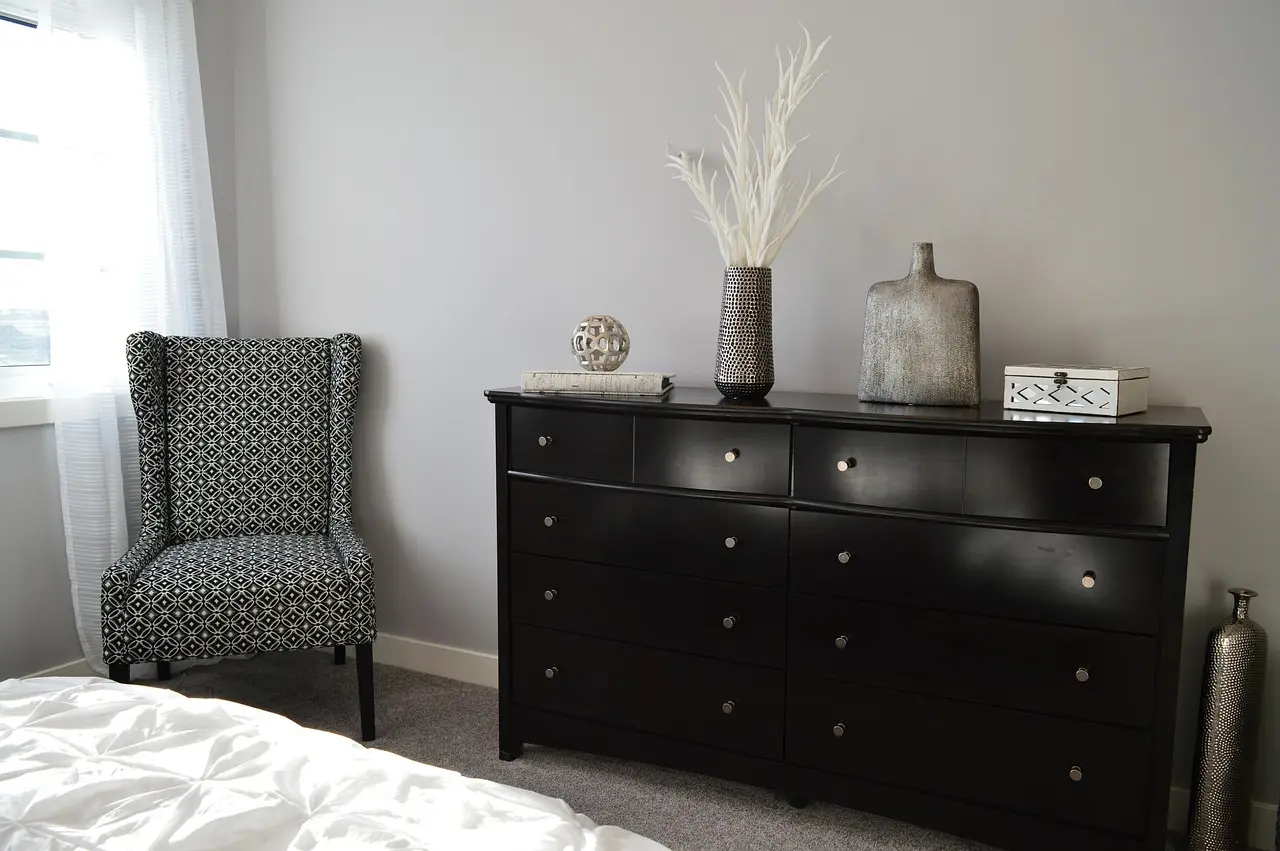


A dresser’s width usually falls into one of four common retail bands: small bachelor chests at about 30 to 36 inches, standard horizontal dressers at 48 to 60 inches, tall or vertical chests at 30 to 40 inches, and double or triple dressers at 60 to 72 inches. Those are typical product ranges, not hard rules, and width matters most because it drives wall fit and usable top space.
Height and drawer count matter too. A standard six-drawer dresser measures roughly 60 inches wide and 34 inches tall, while a six-drawer layout may use two shallow top drawers and four deeper lower drawers. More width usually means more surface and more storage spread across the top row.
A wider dresser works best when you need space for a lamp, basket, or changing area. A taller chest makes more sense when the room is short on wall length and you want storage without giving up walking space.
Dresser width chart
| Room size | Bed size | Wall length needed | Dresser depth | Exact wall span formula | Minimum front clearance | Bed-foot clearance needed | Recommended dresser width range | Recommended dresser type | Best use case | Won’t fit if… |
|---|---|---|---|---|---|---|---|---|---|---|
| Under about 110 sq ft | Twin or full | At least 36 to 48 inches of open wall, after doors and trim are counted | Typically the shallowest option in the room works best here | Open wall should be wider than the dresser width plus the room needed for ends, trim, and door swing | 36 inches | At least the same clearance shown in the chart, measured from the dresser face to the bed edge if the bed is opposite | 30 to 36 inches | Small dresser or bachelor’s chest | Tight rooms, nursery corners, secondary storage, or a narrow path beside the bed | The drawers face the bed or door and the remaining path falls short of the front clearance |
| About 110 to 160 sq ft | Full, queen, or compact king layout | About 54 to 66 inches of open wall | Choose a depth that still leaves room to walk past the front edge | Open wall should cover the full dresser width and still leave room for drawer use and side trim | 36 inches | At least the same clearance shown in the chart, especially when the dresser faces the bed | 48 to 60 inches | Standard horizontal dresser | Most primary bedrooms that need usable top surface and balanced storage | The room has a door swing, bed foot, or closet path that cuts into the front clearance |
| Over 180 sq ft | Queen or king | About 72 to 84 inches of open wall | Deeper bodies need more standing room in front, so plan carefully | Open wall should allow the dresser width plus enough room at each end so it does not dominate the wall | 36 inches | At least the same clearance shown in the chart, even when the bed frame is tall | 60 to 72 inches | Double dresser | Larger bedrooms, shared rooms, or layouts that can support a wide storage wall | The wall also has a window, radiator, or other obstacle that shortens the usable span |
| Any size room with limited floor space | Any | At least 30 to 40 inches of usable wall | Typically the narrowest practical depth for the room layout | Open wall should allow the body plus drawer use without forcing a side-step around the room | 36 inches | At least the same clearance shown in the chart, with extra attention if the bed sits close by | 30 to 40 inches | Tall or vertical chest | Small bedrooms where saving floor space matters more than top-surface area | The dresser depth and front clearance together squeeze the route to the bed or closet |
The wall-length numbers above assume the dresser sits on a clear wall, not inside a tight alcove. A dresser should occupy no more than about 60 percent of the wall it sits on, or the room can start to feel cramped and harder to navigate.
What dresser width fits a small bedroom?
For a small bedroom under about 110 square feet, a tall chest under 36 inches wide usually wins because it saves floor space. In that size room, a wider dresser can crowd the bed, shrink the walking path, and make drawer access awkward if the door swing or closet path is close by.
Small rooms usually need vertical storage first. A tall or vertical chest is around 30 to 40 inches wide, so it takes less wall span than a horizontal dresser. That makes it easier to keep the 36 inches of clear floor space in front of the drawers.
Best dresser types for tight rooms
- Bachelor’s chest. At about 30 to 36 inches wide, it works well in a nursery, guest room, apartment bedroom, or beside a closet door where every inch counts.
- Tall chest. It gives you more storage height without spreading across the floor, which helps when the bed already takes most of the usable wall length.
- Compact horizontal dresser. A 48-inch model can work in a small room if the wall is open and the bed is not pushing into the same traffic lane.
Picture a 9-by-11-foot bedroom with a queen bed and a closet door on the same wall. A 60-inch dresser may leave too little room to step in front of the drawers. A 32-inch chest on the opposite wall keeps the path open and still gives room for folded clothing.
Where a small dresser works best
Small dressers work best near a clear wall segment, at the foot of a bed with enough standing space, or in a nursery where the top is used for baskets and daily items. They also fit apartment bedrooms where circulation matters more than a large top surface.
They are a poor choice for a long blank wall when storage needs are high. In that case, a wider horizontal dresser usually gives better capacity without looking undersized.
Wide dresser or tall dresser?
Choose a wide dresser when you want a larger top surface and the room has enough wall length. Choose a tall dresser when floor space is the limit and you mainly need storage. Double dressers suit larger rooms because they add both width and surface, but they need more wall and more clearance.
Standard horizontal dresser
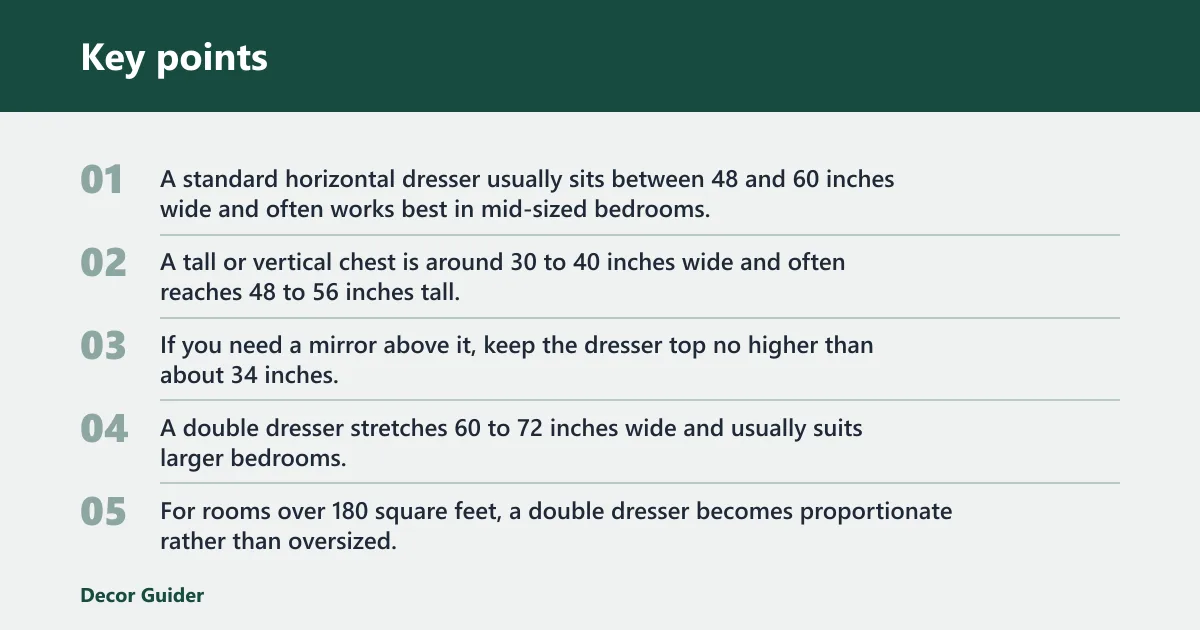
A standard horizontal dresser usually sits between 48 and 60 inches wide and often works best in mid-sized bedrooms. It offers a useful top for a lamp, mirror, tray, or folded clothes, and it usually has six drawers arranged in a balanced layout.
This is the safest pick for many bedrooms between 120 and 160 square feet. A 52 to 58 inch width often fits well when the wall is open and the dresser is not competing with a closet door or window trim.
Tall dresser or vertical chest
A tall or vertical chest is around 30 to 40 inches wide and often reaches 48 to 56 inches tall. It fits small rooms by saving floor space, but the top surface is limited, so it works best when the top will hold only a few items.
If you need a mirror above it, keep the dresser top no higher than about 34 inches. That keeps the mirror usable and helps the wall composition stay balanced under most ceiling heights.
Double dresser
A double dresser stretches 60 to 72 inches wide and usually suits larger bedrooms. It gives more storage spread across the face of the piece, and it often pairs with a mirror when the wall can support the added width.
For rooms over 180 square feet, a double dresser becomes proportionate rather than oversized. In a smaller room, though, the same width can crowd the bed and leave too little room for passing through.
A common first-timer mistake is choosing a wide dresser for a room that already has a large bed and two bedside tables. The dresser may look right on paper, but the real issue is the path in front of it. If that path falls under 36 inches, drawers can feel hard to use every day.
Mirror placement above dresser
For mirror placement above a dresser, choose a mirror that is usually narrower than the dresser so the edges do not overhang awkwardly. A centered mirror looks best when it is aligned with the dresser centerline and the top edge sits with enough space above the dresser to feel intentional, not crowded.
A common hanging approach is to leave a small gap above the dresser top so the mirror does not sit flush against the furniture. If the dresser is already tall, or if the ceiling feels low, a mirror can make the wall feel crowded and is often better skipped in favor of a cleaner open wall.
Skip the mirror when a window competes for the same wall, when the ceiling height makes the stack feel compressed, or when the dresser is already doing the visual work on its own. In those cases, the room usually looks calmer with fewer elements on the wall.
How much clearance does a dresser need?
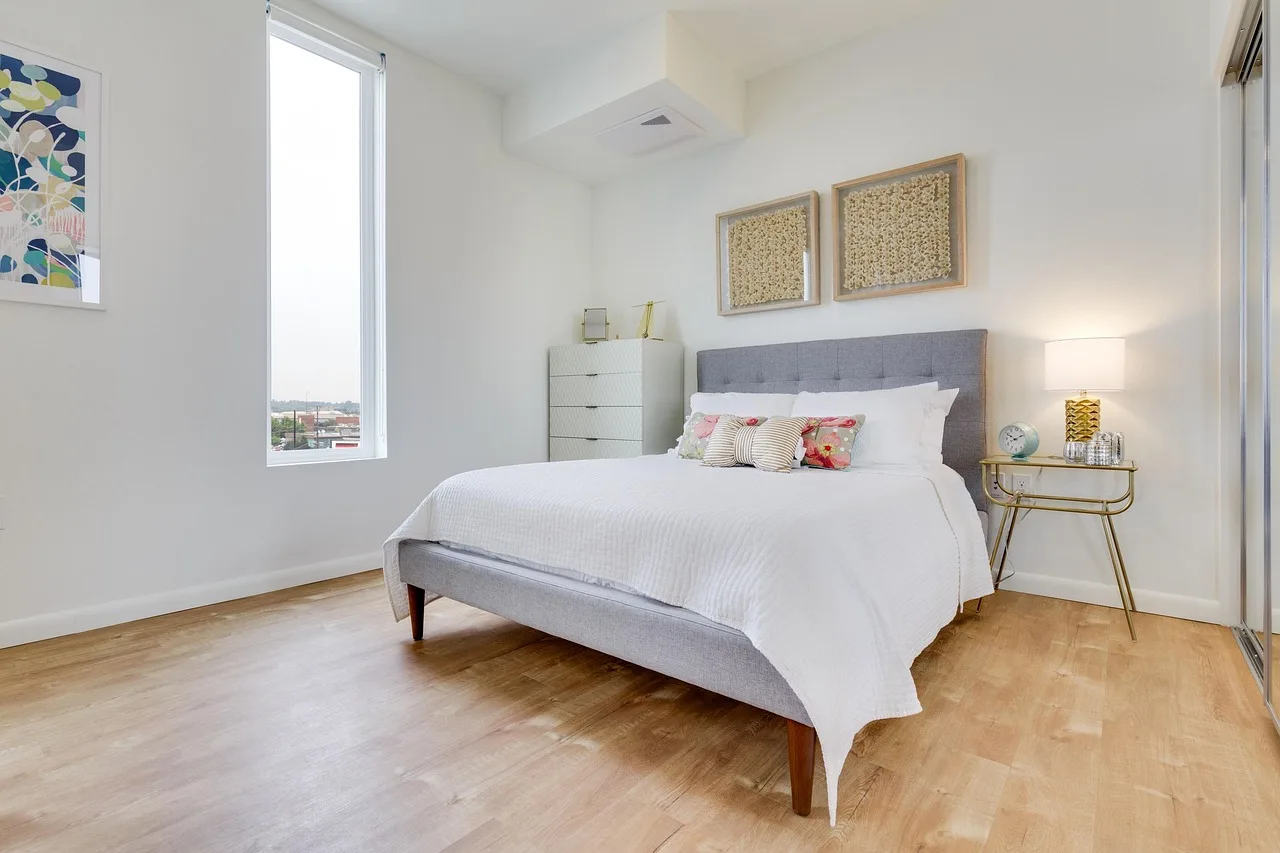
A dresser needs at least 36 inches of clear floor in front of it for drawer opening and standing room. That number matters as much as the width itself, because a dresser that fits the wall can still fail if the drawers hit the bed, a door, or a traffic lane.
Front drawer clearance
The 36-inch allowance gives enough room for a drawer to open and for you to stand in front of it without turning sideways. In a tight room, that clearance may be reduced in practice by door trim, bed corners, or another piece of furniture, which makes the dresser harder to use.
Bed-foot clearance
If the dresser faces the bed, measure the space from the dresser front to the bed foot or footboard. The opening needs to stay usable even when the bedspread hangs down, since soft bedding can steal several inches of walking room.
Suppose a room has 40 inches between the foot of the bed and the opposite wall. A dresser with a 20-inch-deep body may technically fit, but only 20 inches remain for standing room. That is too tight for comfortable drawer use because the space falls short of the 36-inch minimum.
Wall, door, and traffic path checks
- Measure the open wall. Record the usable wall width after subtracting baseboard heaters, window trim, light switches, and door casing. Use the remaining span, not the full wall length, when you compare dresser widths.
- Check the swing path. Open closet doors, bedroom doors, and nearby cabinet doors fully. If a door swing crosses the dresser zone, the dresser needs to move or shrink.
- Mark the drawer zone. Add the dresser depth and the 36-inch front clearance on the floor with painter’s tape. This shows whether the piece will block a route or crowd the bed end.
- Allow for hardware. Handles, molding, and overhangs can make a dresser feel wider than the label suggests. Add extra room if the pulls stick out far enough to hit a doorway or wall return.
Awkward layouts need extra caution. Angled walls can steal usable width at the dresser ends. Radiators can make a full-width piece impossible. Windows can block a mirror above the dresser and may also reduce the wall span enough that a 60-inch dresser no longer makes sense.
Drawer dimensions and interior depth
Drawer size affects what the dresser can actually hold. For socks and underwear, 3 to 4 inches of interior depth is enough. For folded sweaters and jeans, 6 to 8 inches works better. A six-drawer dresser can use two shallow drawers on top and four deeper drawers below, which helps separate small items from bulkier clothing.
Full-extension glides matter because they let you reach farther into the drawer. Without them, the back section can be hard to access, which lowers usable capacity even when the dresser width looks adequate.
Will it fit in your bedroom?
Use the bedroom’s real wall span, not the floor plan guess. A dresser can fit by width and still fail if the bed blocks the opening, the closet door swings into it, or the piece is too deep for the remaining path. Measure the room, then compare the label to the actual clear space.
- Measure the open wall. Measure from obstacle to obstacle: corner to window trim, closet casing to baseboard heater, or door frame to radiator. Subtract anything that blocks the dresser ends.
- Measure front clearance. Confirm at least 36 inches from the dresser face to the nearest obstacle in front of it. If the bed sits opposite, measure to the mattress edge and bed frame, not just the wall.
- Check dresser depth. Compare the body depth and any handle overhang with the remaining walkway. A deep dresser can cut too far into the room even when the width looks fine.
- Test the full path. Make sure you can walk from the door to the closet, bed, and dresser without turning sideways. If the route narrows at one point, that bottleneck matters more than the room’s total square footage.
For nursery dressers, choose a width that leaves room for the changing surface and safe standing space in front. For shared bedrooms, a wider dresser often works better because storage demand is higher, but only if both sides of the room still have clear access. For apartment bedrooms, a tall chest is often the cleaner choice when the room is long on function and short on wall space.
Frequently asked questions
How wide is a typical dresser?
A typical dresser is usually 48 to 60 inches wide. Standard horizontal dressers sit in that range, while a standard six-drawer dresser measures roughly 60 inches wide and 34 inches tall. Smaller bachelor’s chests and taller vertical chests can be narrower, so width depends on the type you choose.
How tall is a standard dresser?
A standard dresser is often about 34 inches tall. That height works well for everyday access and leaves room for a mirror above it when needed. If you plan to place a mirror overhead, the dresser top should sit no higher than about 34 inches so the mirror stays usable.
Should I choose a wide dresser or a tall dresser?
Choose a wide dresser if you want more top surface and the room has enough wall length. Choose a tall dresser if you need to save floor space and the top will hold only a few items. In smaller rooms, the tall chest usually wins; in larger rooms, the wide dresser feels more proportionate.
Products related to this article
Sponsored / affiliate links. As an Amazon Associate I earn from qualifying purchases. I may earn additional commission from eligible campaigns.