Bookshelf Depth Chart: Standard Sizes and Uses
Use about 8–10 inches of shelf depth for most paperbacks and standard hardcovers; about 11–12 inches is commonly used for art books, and about 12–14 inches for oversized or display storage. Shallow shelves waste usable book space, and deep shelves leave a back row hidden. This bookshelf depth chart matches common book sizes, built-ins, decor storage, and tight room clearances.
How deep is a bookshelf?



A standard bookshelf is commonly 10 to 14 inches deep, which fits most books without creating dead space. In millimeters, that is about 254 to 356 mm. What you store sets the depth: paperbacks, hardcovers, art books, and decor each need a different fit.
Standard depth in inches and millimeters
General bookshelves have standard depths of 10 to 14 inches. That range covers most freestanding units, modular units, and many built-ins, while shallower wall-mounted designs work when floor space is tight. The shorter end suits books and small decor; the deeper end suits oversized volumes and display objects.
What standard depth fits best
If your shelves will hold mostly novels and paperbacks, 10 to 12 inches is the practical target. If you want room for large hardcovers, baskets, framed objects, or layered decor, 12 to 14 inches is safer. Any deeper shelf should have a clear purpose, since extra depth can hide the back row.
| Use case | Recommended depth | Millimeters | Typical book depth | Max practical depth before back-row waste | Recommended shelf spacing | Choose this if | Best for |
|---|---|---|---|---|---|---|---|
| Paperbacks and standard novels | 8–10 in | 203–254 mm | Usually shallow to medium spines | About 10–12 in | 10–12 in | You want light book storage with little overhang and minimal wasted depth | Light book storage with little overhang |
| Standard hardcovers | 10–12 in | 254–305 mm | Medium-depth spines and mixed reading stacks | About 12 in | 10–12 in | You need a practical everyday shelf for a mixed home library | Most home libraries and mixed reading stacks |
| Large art books | 11–12 in | 279–305 mm | Deeper and wider volumes | About 12–14 in | 12–15 in | You store oversized spines and want room for careful handling | Oversized spines and taller display pieces |
| Decor-only shelves | 10–12 in | 254–305 mm | Varies by object | About 12–14 in | 12–15 in | You want vases, framed art, bowls, and mixed decor to sit safely without crowding the front edge | Vases, framed art, bowls, and mixed decor |
| Built-ins and alcoves | 12–14 in | 305–356 mm | Mixed depths, including larger books and decor | About 14 in | 12–15 in | You want permanent storage with flexibility for books and display pieces | Permanent storage with broader object mix |
Common bookshelf types and dimensions
Different bookshelf types solve different space problems. Freestanding and modular units usually sit in the middle of the depth range, wall-mounted units stay slimmer, and built-ins are usually deeper because they are fixed in place and often need to hold books plus decor. Adjustable shelving is the easiest way to fine-tune that fit.
Freestanding bookshelf dimensions
Freestanding bookshelves commonly range from 10 to 14 inches deep. They are flexible, easy to move, and available in many height and width combinations, which makes them the default choice for most rooms. That standard depth works well when you need storage without giving up too much floor clearance.
Wall-mounted bookshelf dimensions
Wall-mounted bookshelves commonly range from 6 to 12 inches deep. They suit hallways, small rooms, and display-heavy walls. Because they are often used for lighter storage, they work better for paperbacks, small objects, and decor than for heavy oversized books.
Built-in bookshelf dimensions
Built-in bookshelves commonly range from 12 to 14 inches deep. That deeper profile suits permanent installations, alcoves, and rooms where the shelving is meant to hold mixed storage. Built-ins also work well when you want the back edge to line up cleanly with a wall or recess. For planning the vertical openings, Adjustable shelving helps match shelf height to the items you store.
-
Measure the items first.
Check the deepest book or object you plan to store, then add room for finger clearance and a little rear space. A shelf that matches the object depth too closely can make it hard to lift books out without scraping the back.
-
Pick the depth by use.
Use 10 to 12 inches for most books, 11 to 12 inches for art books, and 12 to 14 inches for oversized books or decor. That keeps the shelf from becoming either cramped or overly deep for the job.
-
Check the room clearance.
Confirm that doors, walkways, and corners still clear the unit after it is placed. Front clearance matters as much as shelf depth, especially in small rooms where a deeper bookcase can narrow circulation.
What shelf spacing do books need?
Most books need enough vertical space above them to remove and return them easily. Ordinary books generally need 10 to 12 inches of shelf spacing, while bigger books or ornamental objects may need 12 to 15 inches. Adjustable shelving lets you match each tier to the items you actually store.
Ordinary books and adjustable shelving
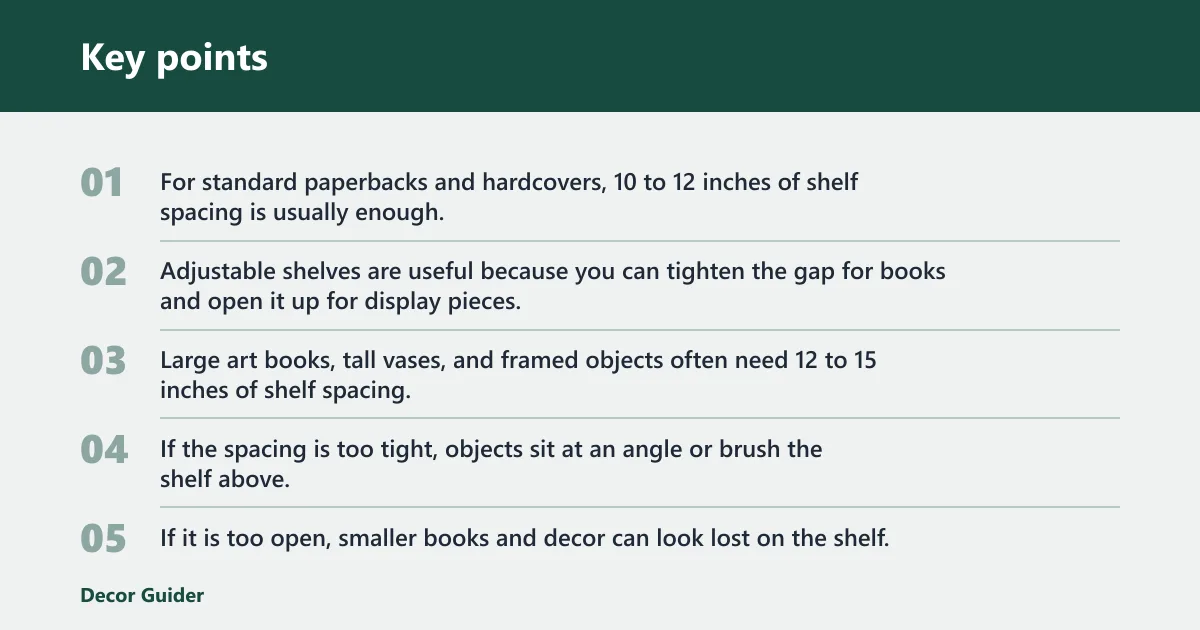
For standard paperbacks and hardcovers, 10 to 12 inches of shelf spacing is usually enough. Adjustable shelves are useful because you can tighten the gap for books and open it up for display pieces. That helps prevent wasted vertical space.
Bigger books and decor objects
Large art books, tall vases, and framed objects often need 12 to 15 inches of shelf spacing. If the spacing is too tight, objects sit at an angle or brush the shelf above. If it is too open, smaller books and decor can look lost on the shelf.
Rear support and bookend clearance
Rear support matters when shelves are deep enough for two rows or when books are placed with bookends. Leave enough depth so the front row does not lean forward and the back row does not disappear behind it. A common first-timer mistake is choosing a deep shelf without planning for bookends, then finding that the back row is hard to reach.
How much clearance do you need around bookshelves?
Clearance affects whether a bookshelf feels comfortable to use, not only whether it fits against a wall. Front clearance should let you stand and pull books without hitting a door or table. Side clearance matters near corners, trim, and traffic paths, especially in smaller rooms.
Front clearance for walkways and doors
Small-room front clearance should be 24 to 30 inches. Medium-room front clearance should be 30 to 36 inches. Large-room front clearance should be 36 to 48 inches. Those ranges help you open doors, pass by the shelf, and reach the back edge without awkward turns.
Side clearance near walls and corners
Leave enough side space so the bookshelf does not trap a baseboard, outlet, or door casing. In corners and alcoves, a shallower unit often fits better because it preserves the room’s walking line. Hallway bookshelves benefit from the same logic: keep the profile narrow enough that people do not brush the shelves.
Room-size-based clearance guidance
Small rooms usually work best with shallower shelves and tighter overall footprints. Medium rooms can handle standard freestanding units with more comfortable walk space. Large rooms can take deeper units, but the extra depth still needs a purpose, such as oversized books, display storage, or built-in millwork.
How do room size and layout change bookshelf depth?
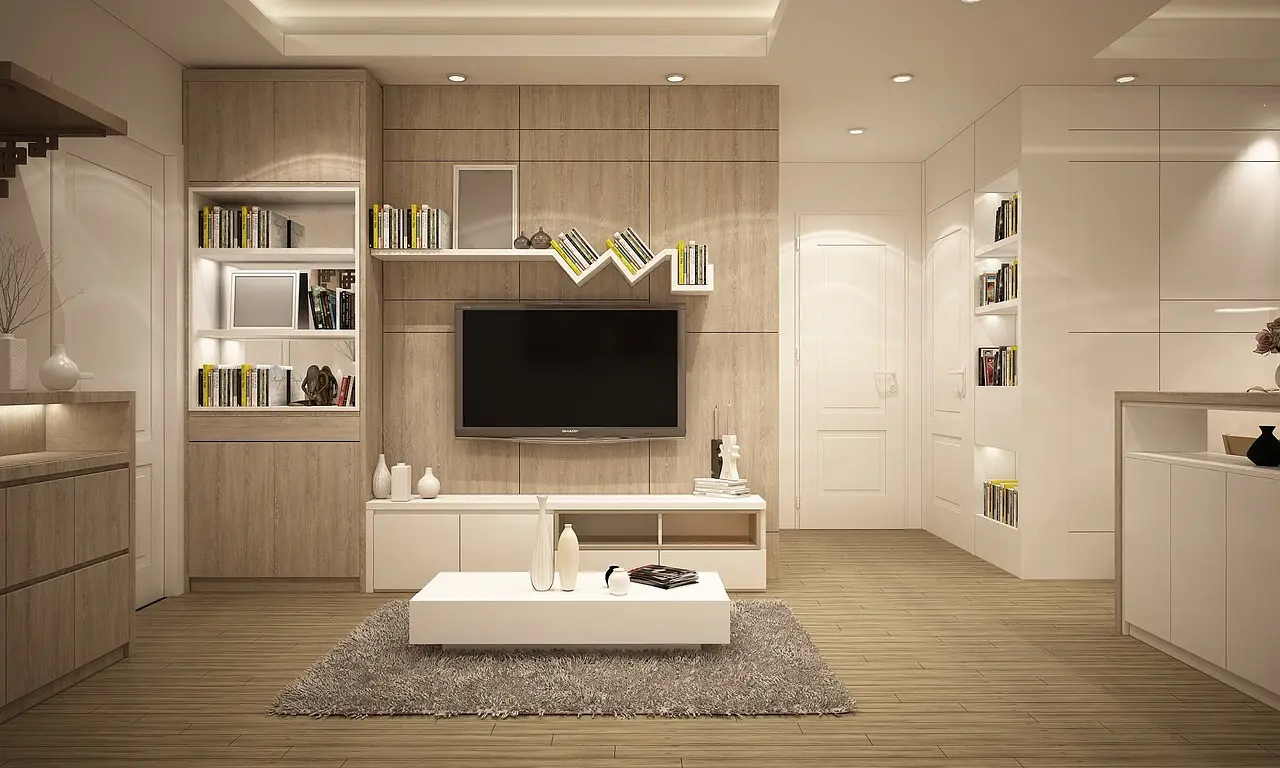
Room size changes how much depth you can use. A small room usually benefits from 10 to 12 inches of depth, a medium room can take 12 to 14 inches, and a large room can also use 12 to 14 inches when the shelving is meant to anchor a wall or alcove. Layout matters as much as floor area.
Small rooms and renter-friendly shallow units
Small room bookshelves are recommended at 10 to 12 inches deep. That depth usually keeps the unit useful without blocking circulation or making the room feel crowded. Wall-mounted shelves can work well here because they reduce floor use and suit lighter storage.
Medium rooms and standard freestanding shelves
Medium room bookshelves are recommended at 12 to 14 inches deep. That range fits most freestanding units and leaves enough room for mixed storage. If the shelf will hold mostly novels, you can stay at the shallow end of the range and avoid extra bulk.
Large rooms and deeper built-ins
Large room bookshelves are recommended at 12 to 14 inches deep. Bigger rooms can support deeper units visually and physically, especially when the shelf is built in or used for a substantial book collection. The depth still should match the contents, not the room alone.
Say your shelves are meant for a row of paperbacks in a hallway alcove. An 8-inch shelf can fit the books, but 10 inches usually gives better finger clearance and less risk of cover overhang at the front edge.
Suppose a living room shelf will hold art books and a few ceramic objects. A 12-inch shelf is usually the safer target, because a 10-inch shelf may leave the objects too close to the front, while a 14-inch shelf may push the visual center too far back for easy access.
Material and weight limits to check
Material affects how much weight a shelf can carry and how much sag you may see over time. Solid wood, MDF or engineered wood, metal, and glass all behave differently under load. Depth matters here too, because deeper shelves often invite heavier items. For the cleanest setup, pair the material with the intended load and shelf spacing.
Solid wood
Solid wood is a common choice for heavier books and longer spans. It is generally the best fit when you want a strong freestanding or built-in shelf that can handle daily use. Heavier books still need support brackets or a sturdy frame if the shelf span is wide.
MDF and engineered wood
MDF and engineered wood are widely used because they are affordable and consistent in shape, but they need careful weight planning. They can work well for standard books and decor when the shelf span is moderate and the hardware is solid. Deep shelves with heavy books deserve extra attention to sag.
Metal and glass
Metal shelving often handles weight well and suits slimmer profiles, especially in wall-mounted or modular designs. Glass shelves are usually better for light decor than for dense book storage. If you want books on glass, keep the load modest and check the maker’s weight rating before buying.
Frequently asked questions
These shorter answers cover the most common shelf-depth and spacing questions without repeating the same wording in different ways.
How deep should a bookshelf be for most homes?
For most homes, 10 to 14 inches is the practical bookshelf-depth range. The lower end works best for paperbacks and standard hardcovers, while the deeper end suits art books, decor, and built-ins. If you are trying to avoid wasted space, 10 to 12 inches is usually the safest all-around choice.
What shelf depth works best for books and decor?
When a shelf needs to hold both books and decor, 12 inches is often the best middle ground. It gives enough room for larger volumes and decorative objects without creating a deep back row that is hard to use. If the room is tight, move closer to 10 to 12 inches instead.
How much vertical spacing should I leave between shelves?
Most bookshelves work well with 10 to 12 inches of vertical spacing for standard books. Taller items such as art books or display pieces often need 12 to 15 inches. If you want a flexible setup, adjustable shelves make it easier to tune each opening to the actual contents.
What is the safest choice for a narrow hallway or small room?
For a narrow hallway or small room, a shallower shelf is usually safer and easier to live with. A depth of 10 to 12 inches often gives enough storage while preserving circulation and door clearance. Wall-mounted units can also help when floor space is limited and the load is light.
Products related to this article
Sponsored / affiliate links. As an Amazon Associate I earn from qualifying purchases. I may earn additional commission from eligible campaigns.